The Client
Our client, a leading Texas-based Nutritional AI startup, specializes in providing personalized meal recommendations and real-time nutritional insights. To train their AI models effectively, they required access to comprehensive menu information from thousands of restaurants nationwide. By partnering with us, they leveraged our expertise in Large-Scale Menu Data Collection USA, enabling them to build a rich dataset that encompassed a wide variety of cuisines and dietary preferences. Using our solutions, they were able to Scrape 1 Million+ Restaurant Menus In The USA, ensuring that their AI algorithms had the depth and breadth of data needed for accurate nutrient analysis. Additionally, our services facilitated Extracting Restaurant Menu Data Across Multiple Cities USA, allowing the client to capture regional menu variations and trends efficiently. This collaboration not only accelerated their product development but also strengthened their competitive edge in the growing health-tech and nutrition AI market.
Key Challenges
- Data Volume and Diversity
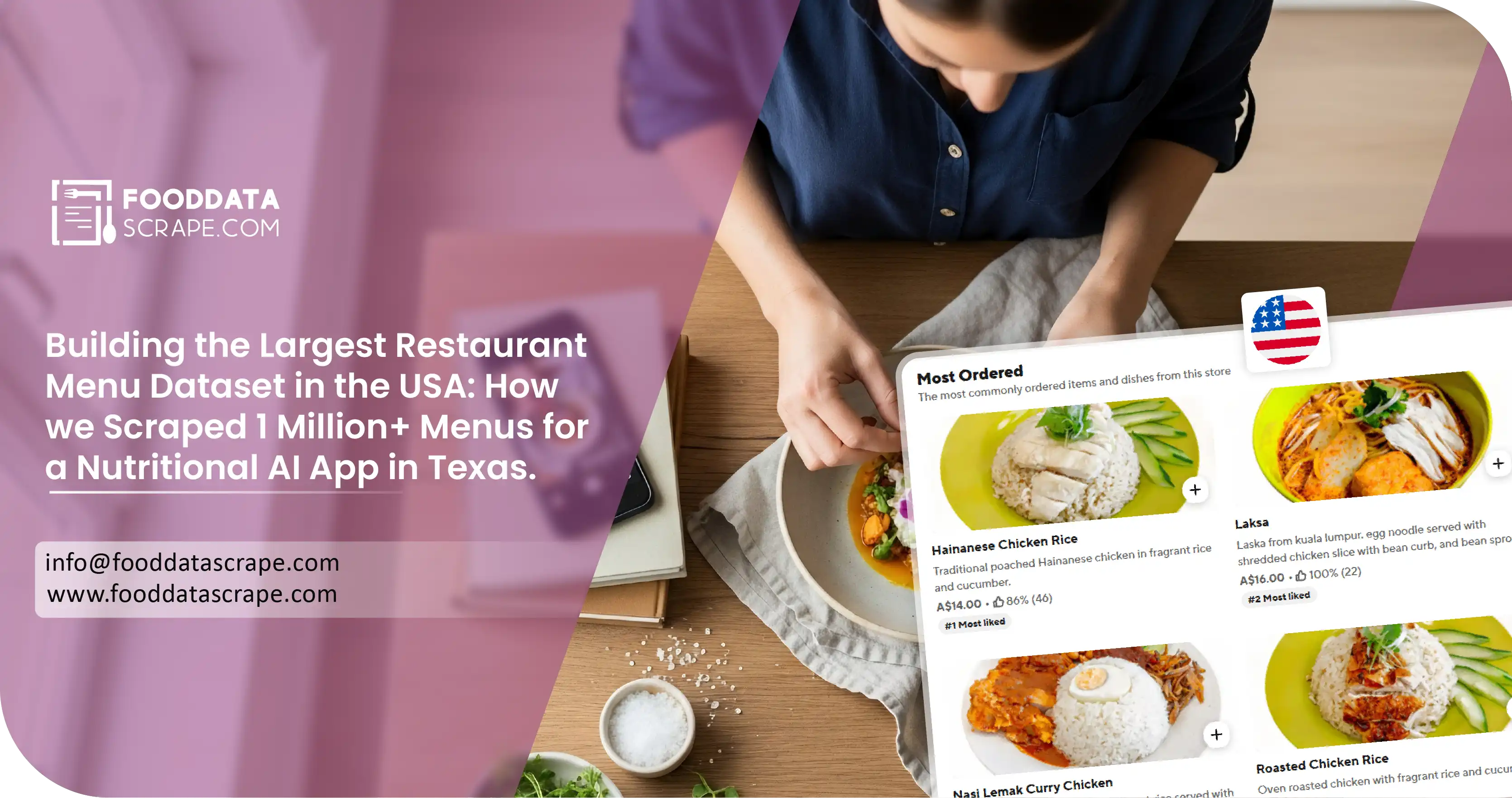
The client faced challenges managing vast menu data from thousands of restaurants across Texas. Utilizing our Texas Restaurant Menu Data Scraper, they overcame inconsistencies in dish formats, ingredients, and nutritional details to ensure comprehensive coverage for AI training. - City-Specific Variations
Menus differed significantly between cities, requiring precise, location-specific extraction. With our expertise in Web Scraping City-Wise Menu Data USA, the client captured regional menu trends efficiently, addressing discrepancies in menu updates and ensuring their AI had accurate, city-level dietary information. - Real-Time Updates
Restaurants frequently update menus and pricing, complicating data accuracy. Leveraging Web Scraping Food Delivery Data, we automated regular updates, enabling the client’s AI app to provide real-time nutritional insights while minimizing manual intervention and data lag.
Key Solutions
- Automated Data Extraction Framework
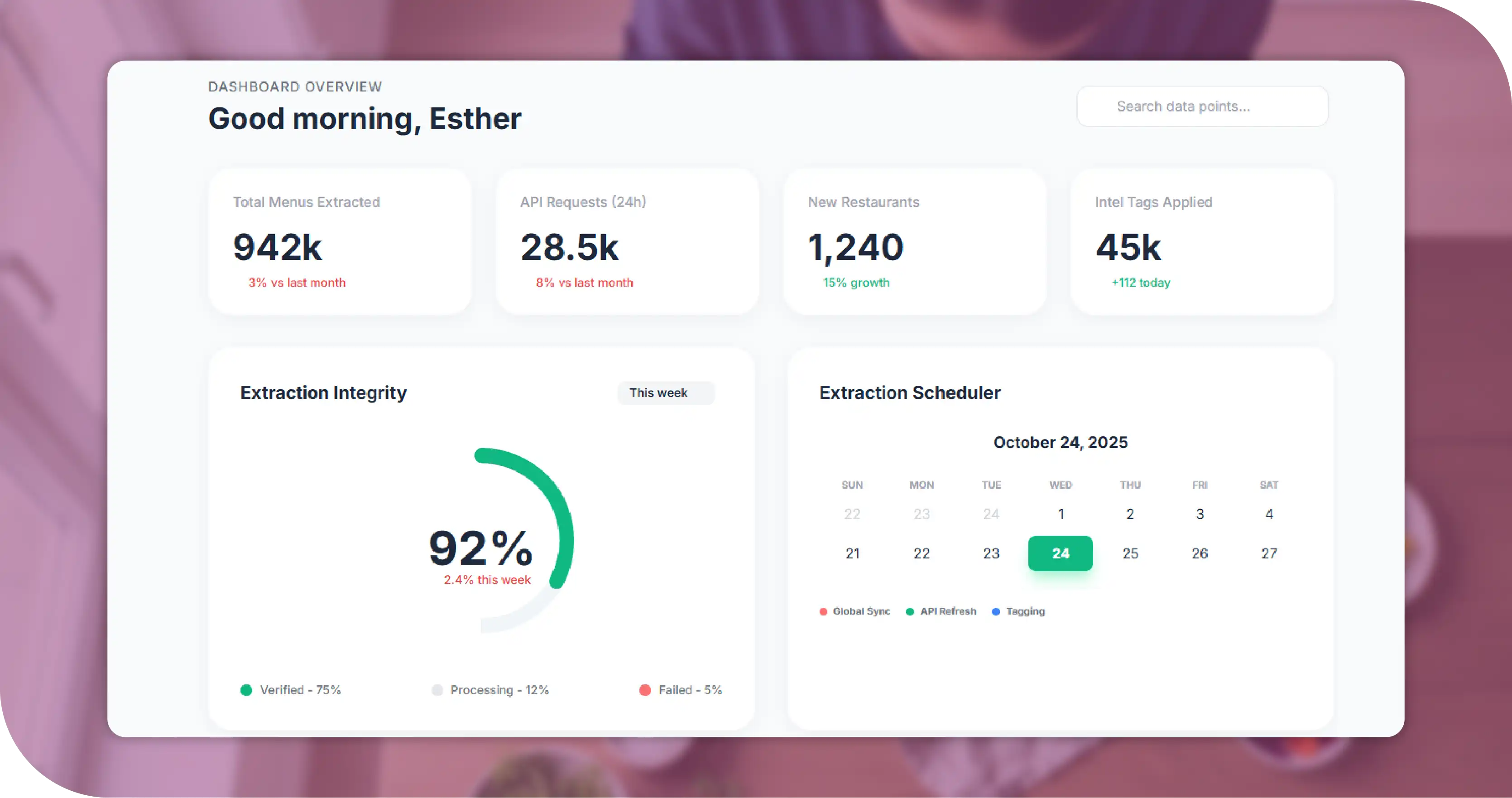
We implemented advanced pipelines to Extract Restaurant Menu Data from diverse restaurant websites and delivery platforms, transforming unstructured content into standardized datasets. This ensured high-quality, AI-ready data while significantly reducing manual intervention and improving scalability across millions of menu records. - API-Driven Real-Time Data Access
Our Food Delivery Scraping API enabled continuous data flow with automated refresh cycles. This ensured the client received up-to-date menu items, prices, and availability, allowing their AI application to deliver real-time nutritional insights with improved speed, accuracy, and reliability. - Advanced Data Intelligence Layer
We enhanced datasets using Restaurant Data Intelligence, applying tagging, categorization, and enrichment techniques. This helped the client uncover trends, improve recommendation accuracy, and deliver highly personalized dietary insights based on cuisine, ingredients, and regional food consumption patterns.
Sample Data
| Restaurant Name | City | Cuisine | Dish Name | Calories | Price (USD) | Platform | Last Updated |
|---|---|---|---|---|---|---|---|
| Burger Hub | Houston | Fast Food | Classic Cheeseburger | 520 | 8.99 | Uber Eats | 2026-03-28 |
| Green Bowl | Austin | Healthy | Quinoa Veg Bowl | 350 | 10.50 | DoorDash | 2026-03-29 |
| Spice Route | Dallas | Indian | Chicken Biryani | 680 | 13.25 | Grubhub | 2026-03-30 |
| Pasta Palace | San Antonio | Italian | Alfredo Pasta | 610 | 12.75 | Uber Eats | 2026-03-27 |
| Taco Fiesta | El Paso | Mexican | Chicken Tacos | 420 | 9.40 | DoorDash | 2026-03-28 |
| Ocean Grill | Houston | Seafood | Grilled Salmon | 450 | 15.20 | Grubhub | 2026-03-26 |
| Vegan Delight | Austin | Vegan | Tofu Stir Fry | 300 | 11.10 | Uber Eats | 2026-03-30 |
| BBQ Nation | Dallas | BBQ | Smoked Ribs | 750 | 18.50 | DoorDash | 2026-03-29 |
| Pizza Corner | San Antonio | Italian | Margherita Pizza | 540 | 11.99 | Grubhub | 2026-03-28 |
| Fresh Greens | Houston | Salads | Caesar Salad | 280 | 9.80 | Uber Eats | 2026-03-30 |
Methodologies Used
- Multi-Source Data Collection Strategy
We gathered menu data from multiple sources, including restaurant websites, aggregator platforms, and delivery apps. This ensured comprehensive coverage across cuisines and locations while minimizing data gaps, enabling the client to access diverse and reliable datasets for AI-driven analysis. - Dynamic Crawling and Scheduling
Our system used intelligent crawlers with scheduled runs to capture frequent menu updates. This approach ensured data freshness by detecting changes in pricing, availability, and new items, helping maintain an up-to-date dataset aligned with real-time restaurant offerings. - Data Cleaning and Standardization
We applied robust data preprocessing techniques to remove inconsistencies, duplicates, and formatting issues. Standardizing dish names, ingredients, and units ensured uniformity across datasets, making it easier for AI models to process and analyze information accurately. - AI-Ready Data Structuring
We transformed raw data into structured formats with proper tagging, categorization, and labeling. This enabled seamless integration with machine learning models, improving training efficiency and ensuring accurate outputs for nutritional insights and recommendation engines. - Quality Assurance and Validation
We implemented multi-level validation checks to ensure data accuracy and completeness. Automated and manual verification processes helped identify anomalies, ensuring high-quality datasets that the client could rely on for consistent performance and trustworthy AI-driven outcomes.
Advantages of Collecting Data Using Food Data Scrape
- Scalable Data Acquisition
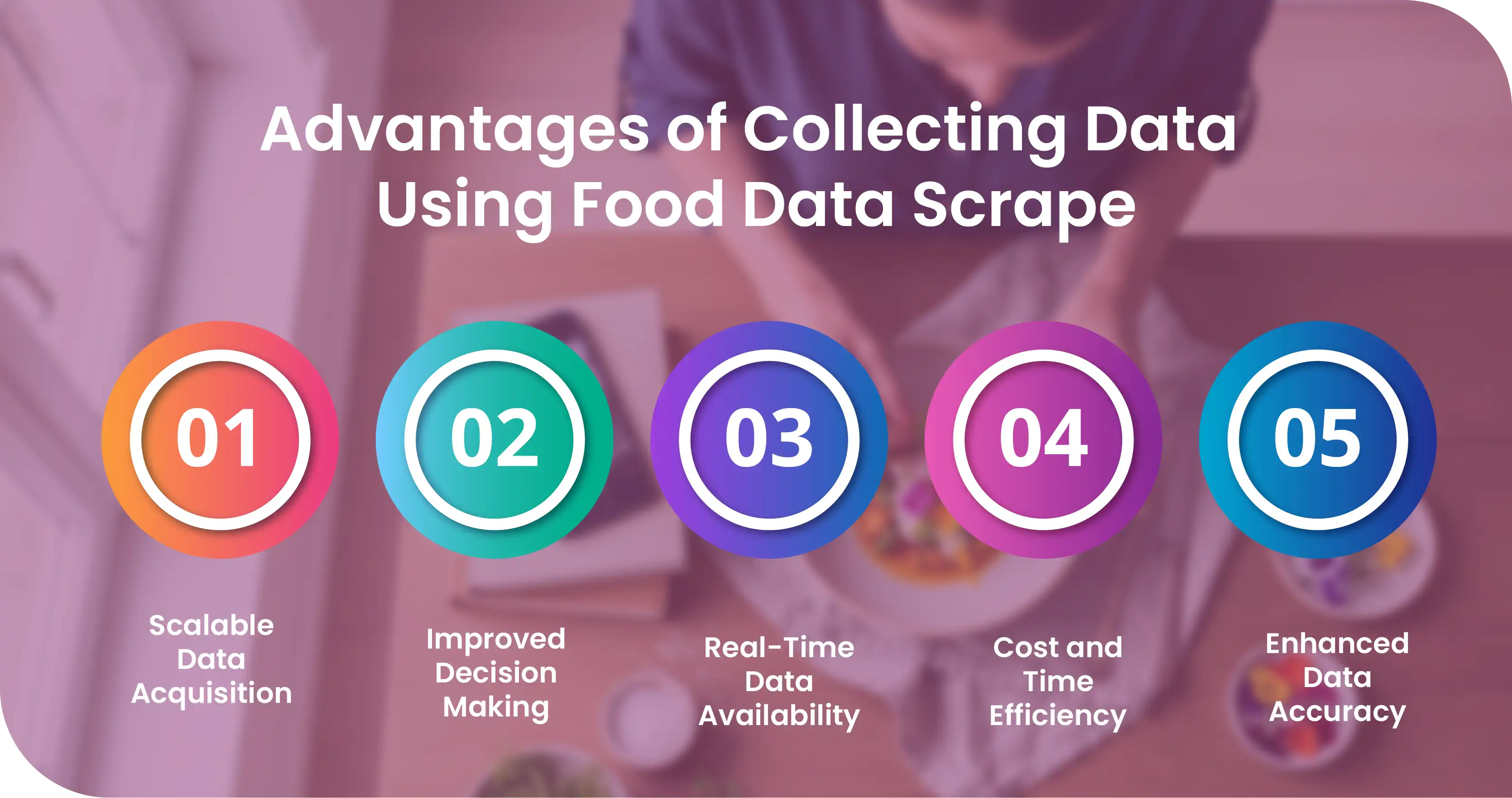
Our services enable businesses to collect massive volumes of data efficiently without infrastructure limitations. This scalability supports rapid expansion, allowing clients to grow their datasets seamlessly while maintaining performance, consistency, and reliability across multiple regions and restaurant categories. - Improved Decision-Making
Access to structured and accurate data empowers businesses to make informed decisions. With deeper insights into menu trends, pricing, and customer preferences, clients can refine strategies, optimize offerings, and stay ahead in a highly competitive food and technology landscape. - Real-Time Data Availability
We ensure continuous data updates, allowing businesses to stay aligned with dynamic market changes. Real-time access to updated menus and pricing helps clients deliver accurate insights, enhance user experience, and respond quickly to evolving customer demands. - Cost and Time Efficiency
Automating data collection significantly reduces manual effort and operational costs. Businesses can focus on core activities while our systems handle large-scale data extraction, processing, and updates, resulting in faster turnaround times and improved overall productivity. - Enhanced Data Accuracy
Our advanced validation and quality checks ensure highly accurate and consistent datasets. This minimizes errors and discrepancies, enabling businesses to rely on trustworthy information for analytics, model training, and delivering precise, data-driven outcomes to end users.
Client’s Testimonial
"Working with this team has been a game-changer for our Nutritional AI platform. Their ability to deliver large-scale, accurate, and structured menu data exceeded our expectations. The datasets were consistently updated, clean, and perfectly aligned with our AI model requirements. This significantly accelerated our development timeline and improved the precision of our nutritional insights. Their technical expertise, responsiveness, and commitment to quality made the entire collaboration seamless. We now have a reliable data foundation that continues to power our innovation and user experience."
— Head of Data Science
Final Outcome
The final outcome of this project delivered significant value to the client by transforming fragmented menu data into a powerful, AI-ready resource. With access to comprehensive and continuously updated datasets, the client enhanced their platform’s accuracy and scalability through advanced Food delivery Intelligence capabilities.
Additionally, the implementation of a robust Food Price Dashboard enabled clear visibility into regional pricing variations, supporting smarter decision-making and competitive benchmarking. The availability of well-structured Food Datasets ensured seamless AI integration, faster model training, and improved recommendation accuracy.
Overall, the solution streamlined operations, minimized manual effort, and empowered the client to deliver highly personalized, real-time nutritional insights, strengthening their position in the competitive health-tech market.