The Client
The client is a fast-growing retail analytics company specializing in consumer goods intelligence across e-commerce and quick commerce ecosystems. Their core focus is on improving pricing visibility, product benchmarking, and real-time market monitoring for FMCG and pharmacy categories. They rely heavily on structured data pipelines to understand shifting consumer demand, promotional intensity, and cross-platform pricing differences. By integrating advanced analytics and automated data systems, the client enhances decision-making for brands, distributors, and category managers. To strengthen their data ecosystem, they adopted Personal Care Product Data Extraction API for high-frequency tracking of grooming and hygiene product listings across multiple digital shelves.
They also implemented Household Essentials Price Monitoring Scraper to monitor daily price fluctuations and identify competitive discount strategies in essential goods categories.
Additionally, OTC Pharma Product Data Scraping Insights enabled deeper visibility into over-the-counter medicine trends, availability patterns, and regulatory pricing variations.
Overall, these capabilities helped the client build a scalable intelligence system for better forecasting and category optimization.
Key Challenges
- Fragmented Pricing Across Electronics Platforms
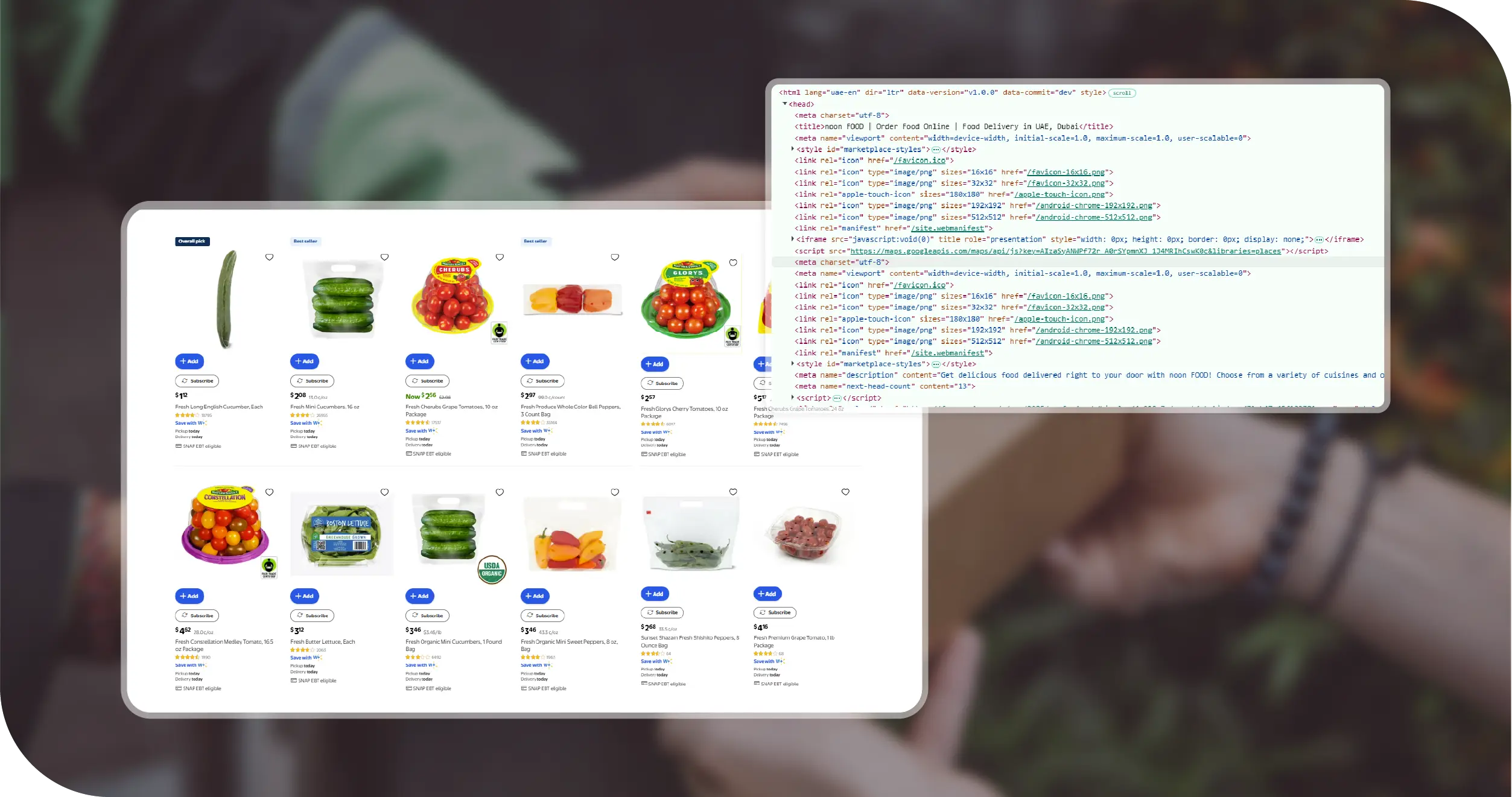
The client struggled with inconsistent pricing updates across multiple e-commerce and quick commerce platforms, making it difficult to maintain real-time accuracy and competitor parity. Managing fast-changing discounts and dynamic pricing models in electronics created visibility gaps in decision-making processes. Electronics Pricing Intelligence Web Scraping helped standardize and unify fragmented data streams, improving market tracking efficiency and reducing manual reconciliation errors across categories and devices. - Limited Visibility in Niche Product Segments
Tracking gifting, premium, and specialty product categories was challenging due to inconsistent listings, seasonal fluctuations, and poor data availability across platforms. The client faced difficulty in identifying emerging demand patterns and pricing shifts for curated product segments. Gifting & Specialty Items Data Extraction enabled structured monitoring of these niche categories, but initial challenges included incomplete data capture and frequent catalog changes affecting analytical consistency. - Complex Multi-Offer Bundle Tracking in Quick Commerce
The client found it difficult to decode rapidly changing combo offers, cross-category bundles, and limited-time deals across quick commerce apps. Pricing structures were highly dynamic and varied by location and time, creating inconsistencies in tracking performance. Quick Commerce Combo Deals Tracking posed challenges in aligning basket-level data with real-time promotional changes, impacting accuracy in offer comparison and optimization strategies.
Key Solutions
- Unified Real-Time Data Infrastructure
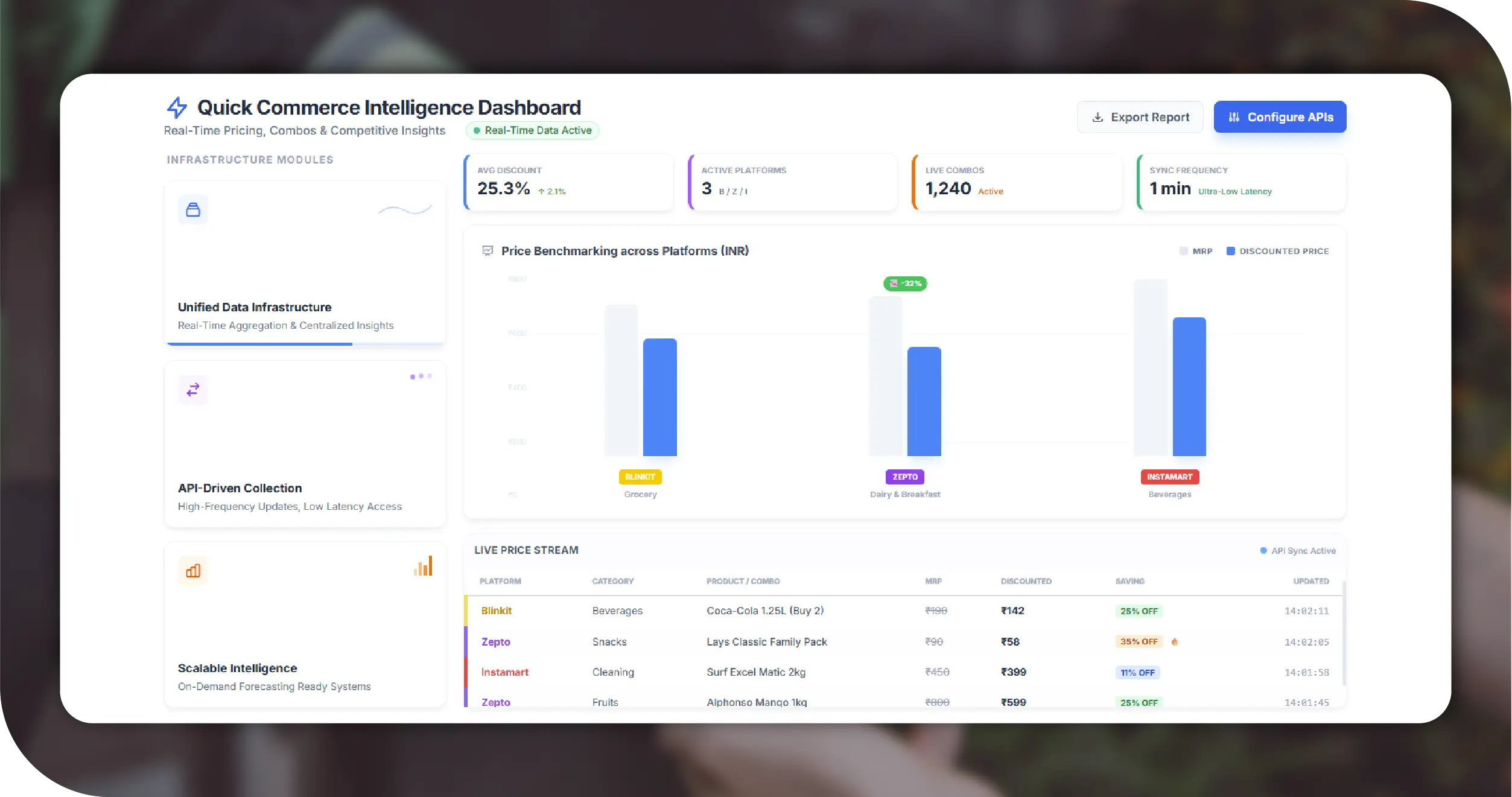
We implemented a scalable pipeline that aggregates pricing, product listings, and promotional data from multiple platforms into a unified system. This enabled the client to monitor fast-moving quick commerce ecosystems efficiently and reduce manual tracking efforts across categories with improved accuracy and speed. Quick Commerce Datasets formed the backbone of this centralized intelligence layer, ensuring consistent and structured insights delivery. - Advanced API-Driven Data Collection
To improve automation and data freshness, we deployed a robust extraction framework capable of handling high-frequency updates from multiple apps simultaneously. This reduced latency in capturing pricing changes and bundle variations across competitive platforms. Web Scraping Quick Commerce Data ensured continuous ingestion of real-time offers and basket-level intelligence for better decision-making and market responsiveness. - Scalable Intelligence API Integration
We built a flexible API layer that allowed seamless access to structured pricing, combo deals, and SKU-level insights across quick commerce platforms. This empowered the client's analytics teams to generate dashboards and predictive models with ease. Quick Commerce Data Scraping API enabled scalable, on-demand data access for advanced forecasting and competitive benchmarking.
Sample Data
| Platform | Product Category | Product / Combo Offer | MRP (₹) | Discounted Price (₹) | Combo Details | Discount % | Timestamp |
|---|---|---|---|---|---|---|---|
| Blinkit | Snacks | Chips + Cold Drink | 120 | 89 | Buy 2 Save | 25% | 10:05 AM |
| Zepto | Beverages | Juice Pack Combo | 200 | 149 | 3 for 2 Offer | 25.5% | 10:07 AM |
| Instamart | Household | Cleaning Essentials | 350 | 279 | Bundle Deal | 20.3% | 10:10 AM |
| Blinkit | Snacks | Biscuit Family Pack | 150 | 99 | Multi-Pack | 34% | 10:12 AM |
| Zepto | Beverages | Energy Drink Combo | 180 | 135 | Buy 1 Get 1 | 25% | 10:15 AM |
| Instamart | Personal Care | Shampoo + Soap Pack | 300 | 225 | Combo Savings | 25% | 10:18 AM |
| Blinkit | Beverages | Soft Drink Crate | 600 | 450 | Bulk Discount | 25% | 10:20 AM |
| Zepto | Snacks | Namkeen Combo Pack | 250 | 175 | Festival Deal | 30% | 10:22 AM |
| Instamart | Household | Kitchen Essentials | 400 | 310 | Combo Offer | 22.5% | 10:25 AM |
| Blinkit | Personal Care | Face Wash + Cream | 320 | 240 | Skincare Deal | 25% | 10:28 AM |
Methodologies Used
- Multi-Source Data Aggregation Framework
We designed a structured system to collect information from multiple digital commerce platforms simultaneously. This ensured continuous inflow of pricing, product, and promotional data. The framework normalized inconsistent formats into a unified structure, enabling seamless downstream analysis and reliable intelligence generation across categories and time intervals. - Real-Time Data Capture Mechanism
A high-frequency capture approach was implemented to monitor rapidly changing product listings and offers. The system continuously tracked updates at short intervals, ensuring minimal latency between market changes and data availability. This methodology improved responsiveness and allowed accurate reflection of dynamic pricing environments. - Structured Data Cleaning and Standardization
Collected data was processed through multiple validation layers to remove inconsistencies, duplicates, and incomplete records. Standardization rules were applied to align product names, pricing formats, and category mappings, ensuring uniformity across datasets. This improved analytical accuracy and reduced errors in reporting and insights generation. - Intelligent Basket-Level Mapping System
We developed a methodology to map individual products into complete basket structures for deeper behavioral analysis. This allowed tracking of combined purchases, promotional pairings, and bundle configurations. The system enabled better understanding of consumer purchasing patterns and helped identify cross-product relationships effectively. - Scalable API-Driven Delivery Architecture
A modular architecture was built to deliver processed insights through structured endpoints. This enabled seamless integration with client dashboards and analytics tools. The system supported high-volume requests, ensured low latency responses, and allowed flexible scaling based on data demand and usage intensity across operations.
Advantages of Collecting Data Using Food Data Scrape
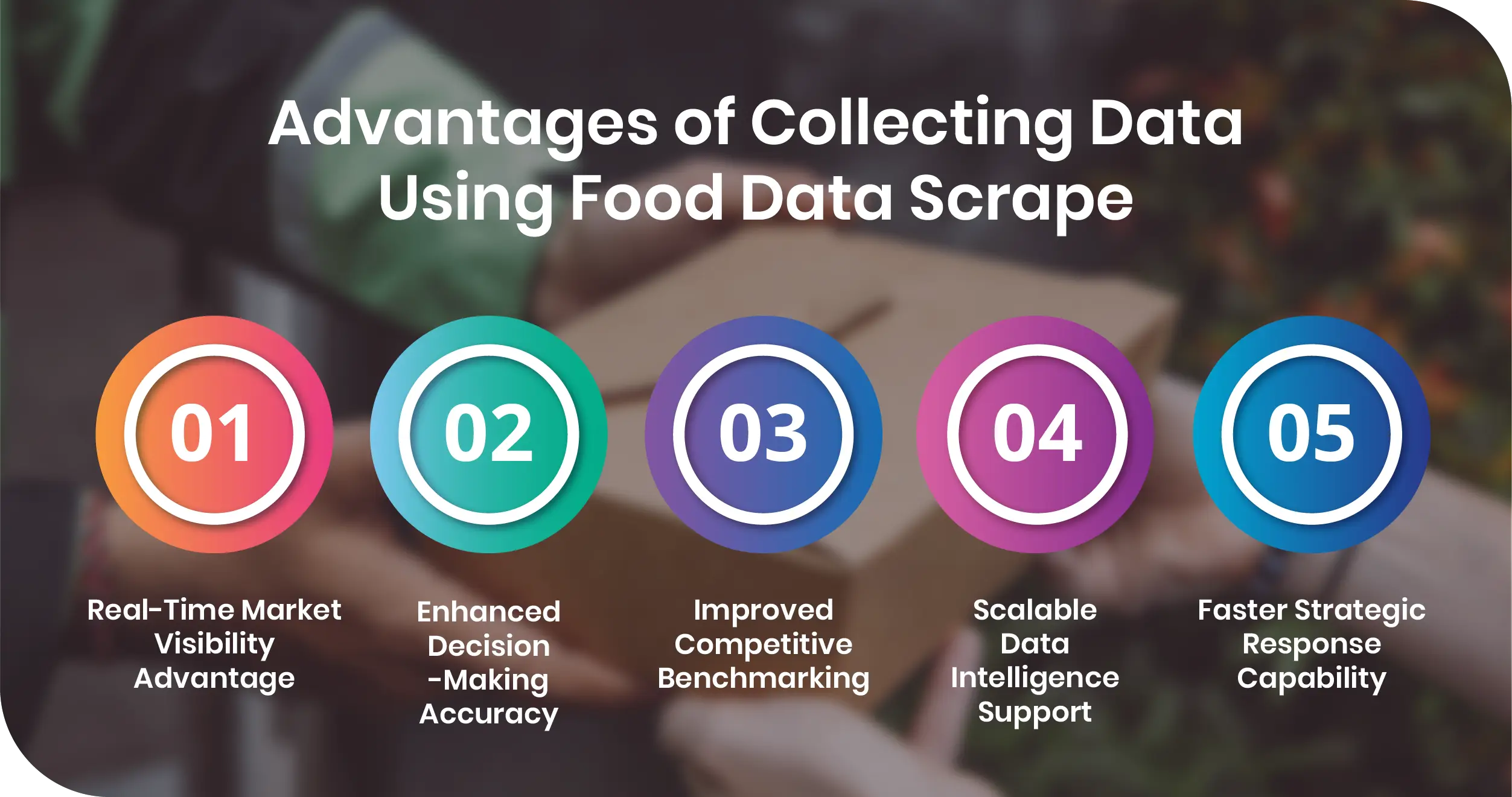
- Real-Time Market Visibility Advantage
Our service enables continuous tracking of rapidly changing market conditions across multiple digital platforms. Clients gain immediate visibility into pricing updates, promotional shifts, and product availability, allowing them to react quickly, optimize strategies, and stay ahead of competitors in dynamic retail environments. - Enhanced Decision-Making Accuracy
By providing structured and reliable datasets, the solution reduces dependency on fragmented or outdated information. Businesses can make more confident pricing, marketing, and inventory decisions based on accurate insights, improving operational efficiency and minimizing risks associated with guesswork or incomplete market understanding. - Improved Competitive Benchmarking
The system enables detailed comparison across competitors at product, category, and basket levels. This helps organizations understand pricing strategies, discount patterns, and promotional effectiveness, allowing them to refine their own positioning and develop more competitive and profitable market approaches over time. - Scalable Data Intelligence Support
The infrastructure is designed to handle growing data volumes without compromising performance. Whether monitoring a few categories or large-scale markets, the solution scales efficiently, ensuring consistent delivery of insights and supporting expanding business needs across multiple regions and product segments. - Faster Strategic Response Capability
With timely and structured insights, businesses can quickly adapt to market fluctuations. This reduces decision lag and improves responsiveness to competitor actions, seasonal trends, and consumer demand shifts, ultimately enabling stronger agility and improved performance in highly competitive digital commerce ecosystems.
Client’s Testimonial
"Working with the data intelligence team has significantly improved our ability to understand real-time market dynamics and pricing behavior across multiple digital platforms. The structured insights helped us streamline decision-making, optimize promotional strategies, and improve category performance with greater accuracy. We particularly value the consistency, speed, and depth of the data delivered, which has strengthened our competitive positioning in a fast-moving environment. The solutions provided have reduced manual effort and enhanced our analytical capabilities across teams."
— Head of Digital Strategy
Final Outcome
The engagement delivered a significant transformation in how the client monitors, analyzes, and responds to fast-changing retail market conditions. By implementing a structured intelligence framework, the client achieved real-time visibility into pricing trends, promotional strategies, and basket-level consumer behavior across multiple platforms. Decision-making became faster and more data-driven, reducing dependency on manual tracking and fragmented reports. The business also improved its ability to identify competitive opportunities and optimize product positioning across categories. Overall operational efficiency increased as teams gained access to clean, structured, and actionable insights. The solution also strengthened forecasting accuracy and enhanced strategic planning across marketing and merchandising functions. Ultimately, the adoption of Quick Commerce Data Intelligence Services enabled the client to build a scalable, future-ready analytics ecosystem that supports sustained growth and stronger competitive advantage in dynamic digital commerce environments.