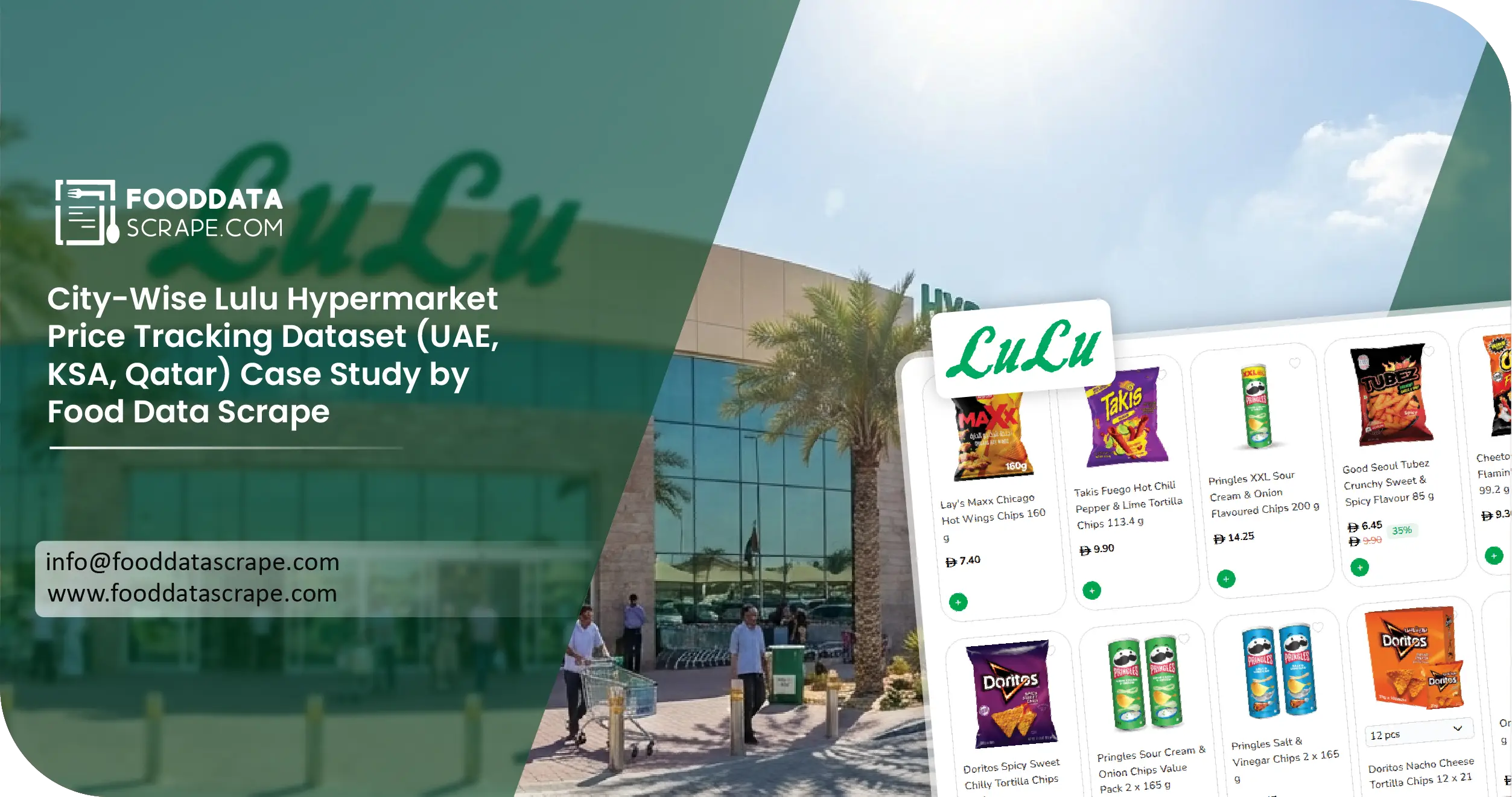
About the Retailer: Lulu Hypermarket
Lulu Hypermarket is one of the largest retail chains in the Middle East, operating hundreds of stores across the UAE, KSA, and Qatar. Known for a wide assortment of groceries, fresh produce, FMCG, electronics, and private-label products, Lulu serves millions of customers daily. Because Lulu operates city-specific pricing strategies influenced by logistics, demand, competition, and local regulations, it is an ideal candidate for city-level price intelligence.
Business Problem
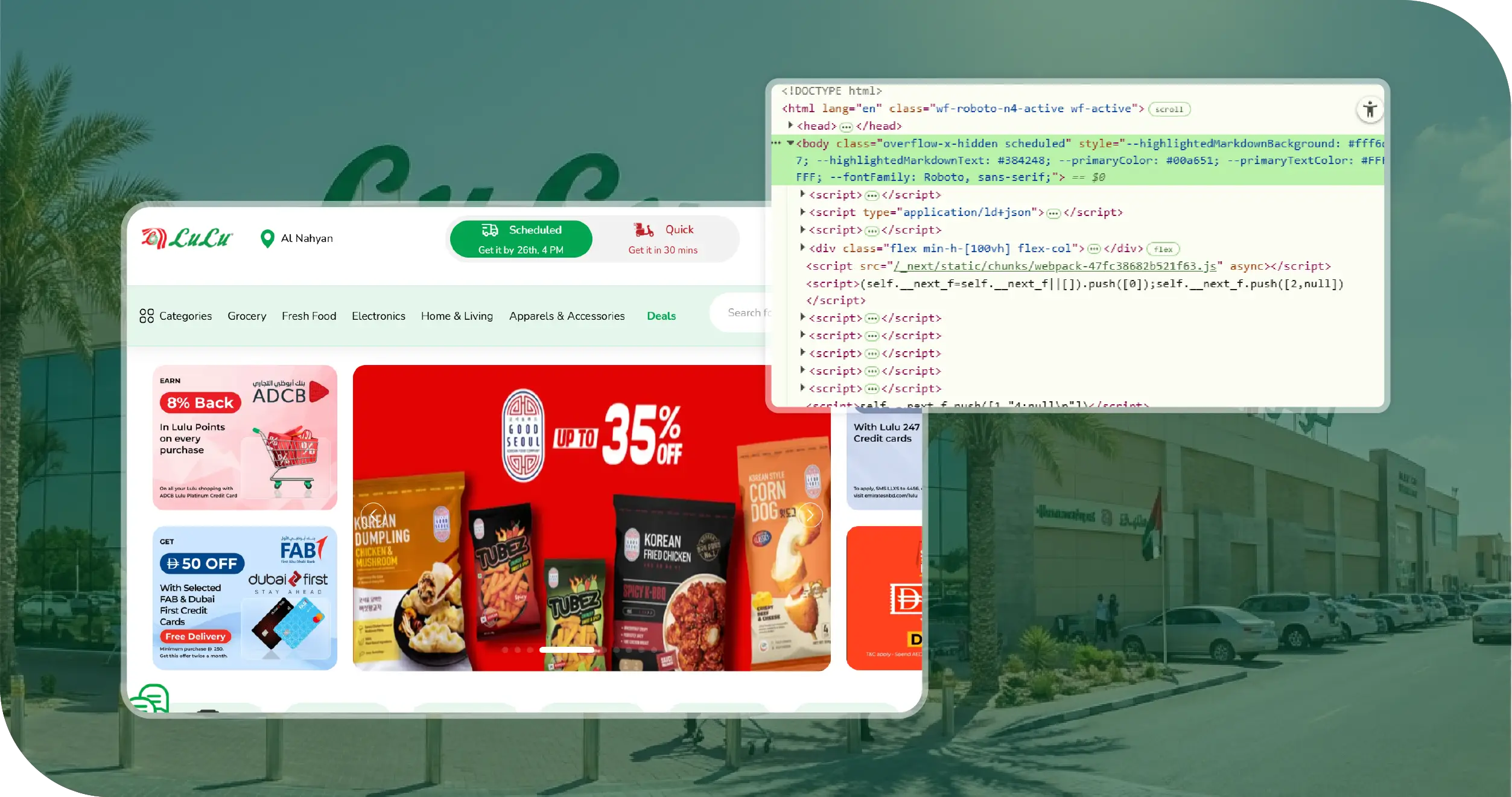
Large retailers like Lulu Hypermarket follow localized pricing, not a single national price. However, most market analysis relies on country-level averages, which hide important insights.
Challenges faced by brands and analysts
- No visibility into city-wise SKU pricing
- Difficulty tracking promotion timing differences between cities
- Inconsistent data on out-of-stock behavior
- Manual price checks that are slow and incomplete
- No historical dataset to analyze pricing trends over time
Food Data Scrape was engaged to build a structured, scalable, and automated dataset that solves these issues across three countries and multiple cities.
Project Objectives
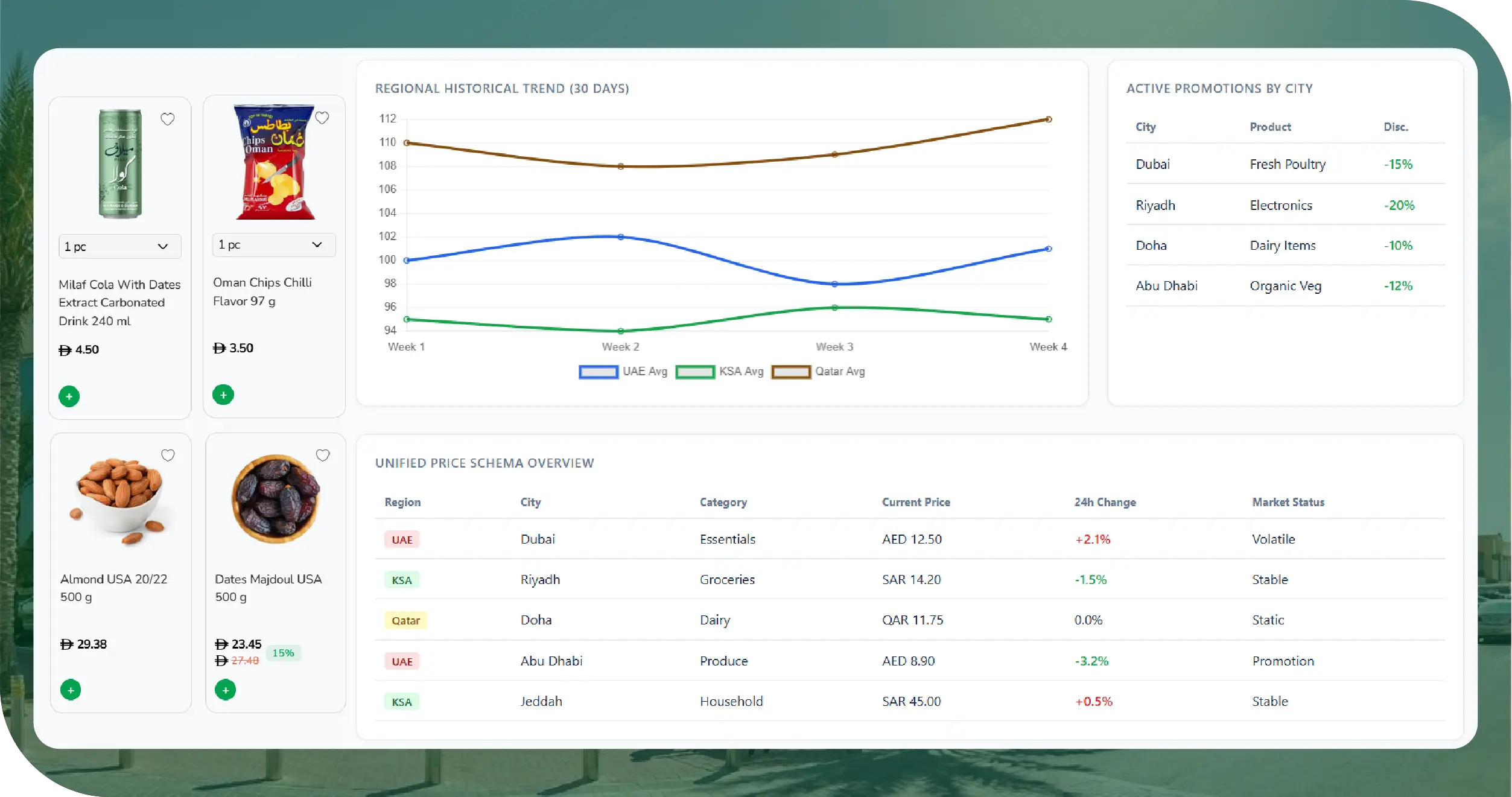
The goal was to deliver a production-ready pricing intelligence dataset with the following objectives:
- Track Lulu Hypermarket prices city by city
- Cover UAE, KSA, and Qatar in one unified schema
- Capture daily price changes and promotions
- Enable historical trend analysis
- Deliver clean, analytics-ready data for BI tools
Geographic Coverage
United Arab Emirates (UAE)
- Dubai
- Abu Dhabi
- Sharjah
- Al Ain
- Ajman
Saudi Arabia (KSA)
- Riyadh
- Jeddah
- Dammam
- Khobar
- Mecca
Qatar
- Doha
- Al Rayyan
- Al Wakrah
Each city is treated as a distinct pricing market.
Data Scope and Categories
Food Data Scrape tracked products across high-impact retail categories:
- Staples and groceries
- Fresh fruits and vegetables
- Dairy and bakery
- Packaged foods
- Beverages
- Household essentials
- Personal care
- Lulu private labels
Data Points Captured
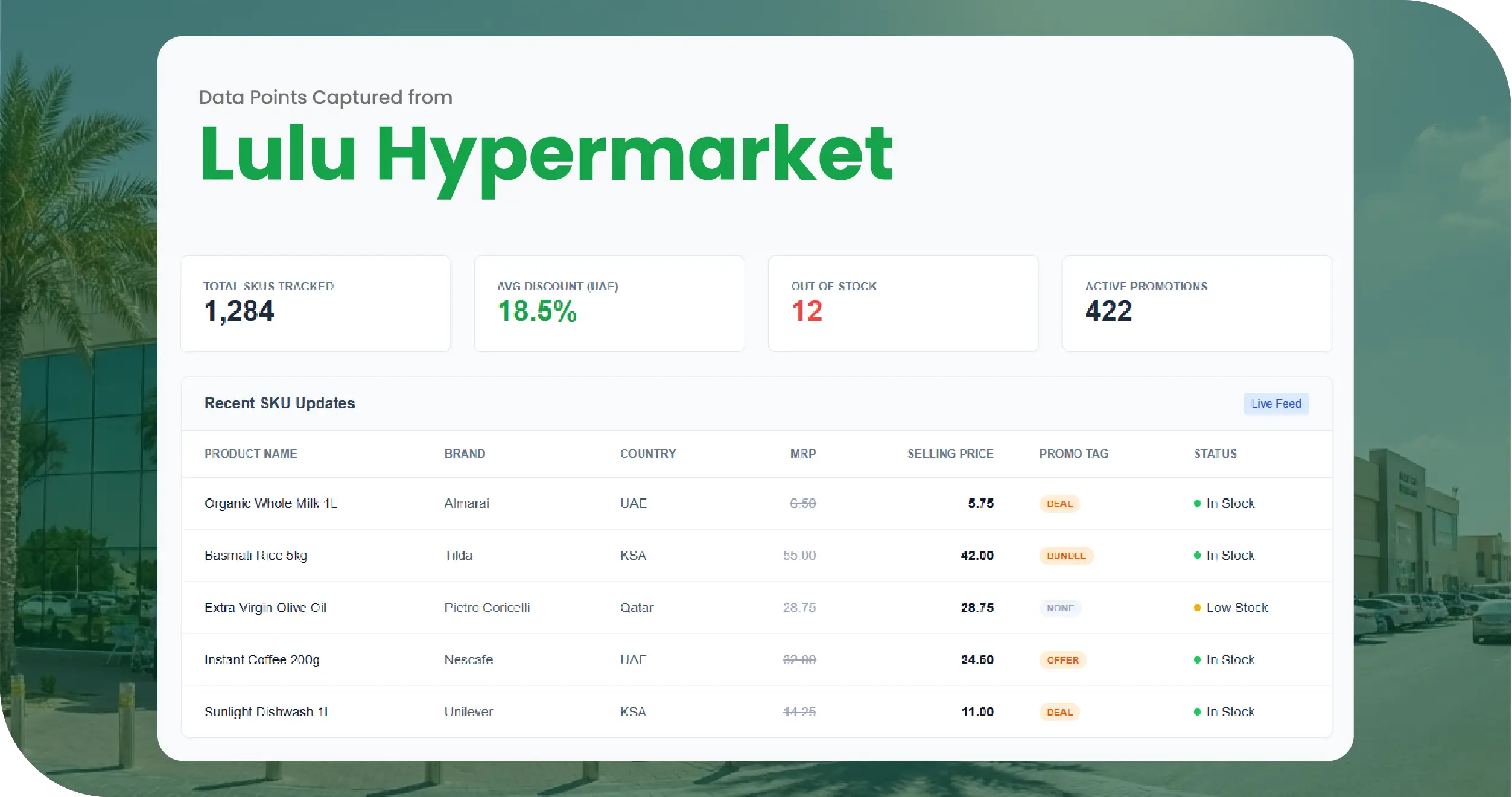
Each SKU record in the dataset includes:
- Country
- City
- Store identifier
- Product name
- Brand
- Category and sub-category
- Pack size and unit
- MRP
- Selling price
- Discount percentage
- Promotion tag (offer, deal, bundle)
- Stock availability
- Date and time stamp
- Product URL
Sample Data Snapshot
Below is a simplified example of the city-wise dataset structure.
| Country | City | Product Name | Brand | Pack Size | MRP | Selling Price | Discount | Stock |
|---|---|---|---|---|---|---|---|---|
| UAE | Dubai | Basmati Rice Premium | India Gate | 5 kg | AED 58.00 | AED 49.95 | 14% | In Stock |
| UAE | Abu Dhabi | Basmati Rice Premium | India Gate | 5 kg | AED 58.00 | AED 52.50 | 9% | In Stock |
| KSA | Riyadh | Fresh Milk Full Cream | Almarai | 2 L | SAR 12.00 | SAR 11.25 | 6% | In Stock |
| KSA | Jeddah | Fresh Milk Full Cream | Almarai | 2 L | SAR 12.00 | SAR 10.95 | 9% | Limited |
| Qatar | Doha | Sunflower Oil | Lulu | 3 L | QAR 28.00 | QAR 24.90 | 11% | In Stock |
Data Collection Methodology
Food Data Scrape used a robust multi-layer scraping and validation framework.
Step 1: City-Specific Store
Mapping Each Lulu Hypermarket city page and store context was identified to ensure accurate price localization.
Step 2: Automated Crawling
- Daily crawls scheduled per city
- Adaptive handling of dynamic content
- Anti-bot compliant crawling logic
Step 3: Data Normalization
- Unified currency handling
- Standardized units and pack sizes
- Clean category taxonomy
Step 4: Quality Checks
- Duplicate removal
- Price anomaly detection
- Stock status validation
Update Frequency
- Daily price updates for all tracked SKUs
- Hourly refresh during major promotions (on request)
- Historical archive retained for long-term analysis
Key Insights Unlocked
City-Wise Price Variation
The same product often shows 5%–18% price variation between cities within the same country. Urban hubs like Dubai and Riyadh show faster price corrections compared to secondary cities.
Promotion Timing Gaps
Promotions frequently launch earlier in flagship cities. For example:
- Dubai promotions appear 1–2 days before Sharjah
- Riyadh leads Jeddah during national sales
Private Label Aggression
Lulu private-label products are consistently priced 8%–20% lower than national brands, with deeper discounts in price-sensitive cities.
Stock-Driven Pricing
Out-of-stock events often trigger short-term price increases in nearby cities, especially for fresh and dairy products.
Use Cases
FMCG Brands
- Monitor city-level pricing compliance
- Benchmark against Lulu private labels
- Optimize distributor pricing strategies
Retailers and Aggregators
- Track competitor pricing city by city
- Identify discount intensity by region
- Improve promotion planning
Market Research Firms
- Analyze inflation impact locally
- Study urban vs semi-urban pricing trends
- Build city-level CPI indicators
Data Teams and BI Analysts
- Feed dashboards and forecasting models
- Power price elasticity analysis
- Support demand forecasting
Data Delivery Formats
Food Data Scrape delivers the dataset in multiple formats:
- CSV and Excel
- JSON via API
- Database ingestion
Custom schemas are supported for enterprise clients.
Compliance and Ethics
- Publicly available data only
- No personal or customer data collected
- Robots.txt and platform terms respected
- Secure data handling and access controls
Why Food Data Scrape
Food Data Scrape specializes in large-scale retail and grocery intelligence projects across global markets. Our strengths include:
- Deep experience in Middle East retail data
- City-level and store-level precision
- Scalable scraping infrastructure
- Clean, analytics-ready datasets
- Custom dashboards and API support
Final Outcome
The City-Wise Lulu Hypermarket Price Tracking Dataset empowered stakeholders with granular, actionable, and reliable pricing intelligence across UAE, KSA, and Qatar. Instead of relying on averages, teams can now make decisions based on how prices actually behave at the city level. This case study demonstrates how Food Data Scrape transforms raw online pricing into structured intelligence that drives smarter retail and FMCG decisions across the Middle East.