The Client
The client is a rapidly growing consumer food brand specializing in chilled and frozen ready-to-cook products, with a strong presence across major metropolitan markets. As demand for instant meal solutions increased, the brand recognized the need for accurate, real-time visibility into product availability across quick commerce platforms. To address this challenge, the company adopted CMC Products Availability Analytics on Q-Commerce Platforms to better understand how its products were performing across different cities and partner apps. By leveraging advanced data extraction capabilities, the client was able to Extract Out-Of-Stock And In-Stock Data For CMC Products, enabling proactive inventory planning and faster replenishment decisions. A centralized Q-Commerce Stock Monitoring Dashboard For CMC Products empowered stakeholders with actionable insights, improving coordination between sales, supply chain, and distribution teams while strengthening overall market responsiveness.
Key Challenges
- Frequent Stock-Outs Across Cities: The client struggled with unpredictable stock availability across multiple cities and platforms. Without centralized insights, achieving CMC Stock-Out Reduction Using Q-Commerce Data Extraction was difficult, leading to missed sales opportunities, poor customer experience, and inefficient replenishment planning.
- Lack of Unified Data Visibility: Managing inventory across different platforms was complex due to fragmented information. The absence of consolidated Quick Commerce Datasets made it challenging to compare availability trends, understand regional demand variations, and align supply chain decisions with real-time market conditions.
- Manual and Delayed Data Collection: Relying on manual checks limited data accuracy and scalability. Without automated Web Scraping Quick Commerce Data, the client faced delays in identifying out-of-stock issues, reacting to demand spikes, and maintaining consistent product visibility across fast-moving q-commerce platforms.
Key Solutions
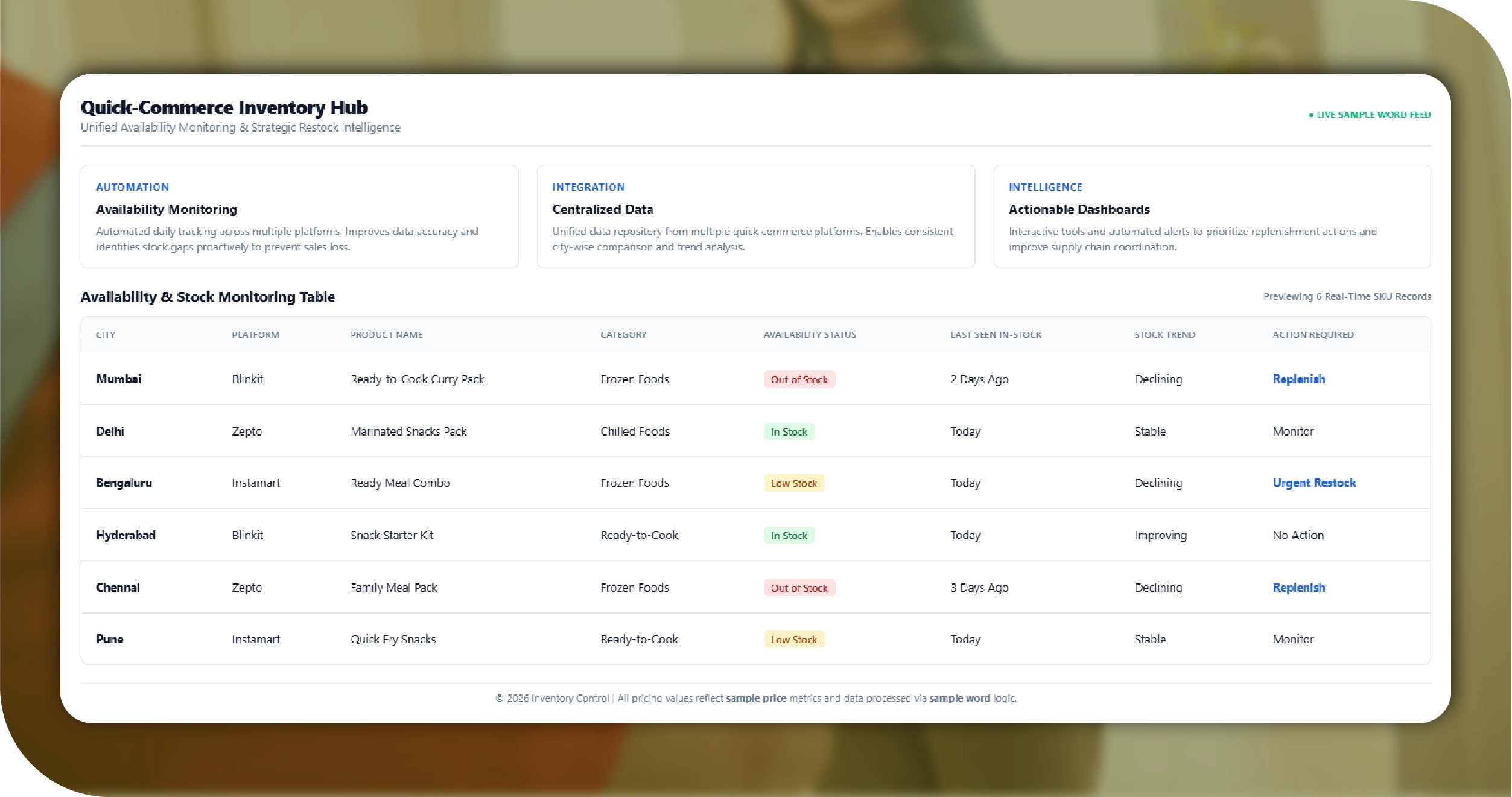
- Automated Availability Monitoring: We implemented an automated system to track product availability across multiple platforms daily. This eliminated manual checks, improved data accuracy, and enabled faster identification of stock gaps, helping teams act proactively instead of reacting to sales losses.
- Centralized Data Integration: Our solution unified data from multiple quick commerce platforms into a single structured repository. This enabled consistent comparison across cities, simplified reporting, and allowed stakeholders to analyze availability trends, demand patterns, and platform-wise performance efficiently.
- Actionable Dashboards and Alerts: We delivered interactive dashboards with real-time updates and automated alerts. These tools helped teams quickly identify recurring availability issues, prioritize replenishment actions, and improve coordination between sales, operations, and supply chain teams.
Sample Availability & Stock Monitoring Table
| City | Q-Commerce Platform | Product Name | Category | Availability Status | Last Seen In-Stock | Stock Trend (7 Days) | Action Required |
|---|---|---|---|---|---|---|---|
| Mumbai | Blinkit | Ready-to-Cook Curry Pack | Frozen Foods | Out of Stock | 2 Days Ago | Declining | Replenish |
| Delhi | Zepto | Marinated Snacks Pack | Chilled Foods | In Stock | Today | Stable | Monitor |
| Bengaluru | Instamart | Ready Meal Combo | Frozen Foods | Low Stock | Today | Declining | Urgent Restock |
| Hyderabad | Blinkit | Snack Starter Kit | Ready-to-Cook | In Stock | Today | Improving | No Action |
| Chennai | Zepto | Family Meal Pack | Frozen Foods | Out of Stock | 3 Days Ago | Declining | Replenish |
| Pune | Instamart | Quick Fry Snacks | Ready-to-Cook | Low Stock | Today | Stable | Monitor |
Methodologies Used

- Multi-Source Data Collection: We gathered product availability and pricing information from multiple quick commerce platforms using automated extraction tools. This approach ensured comprehensive coverage across cities and stores, reducing data gaps and providing a reliable foundation for accurate analysis.
- SKU-Level Data Structuring: Collected data was organized at the individual product level to maintain consistency and clarity. Each item was standardized with unique identifiers, enabling precise tracking of availability, changes, and trends across platforms and geographic locations.
- Daily Monitoring Framework: A scheduled monitoring system was implemented to capture updates at regular intervals. This allowed for timely detection of changes in stock status and ensured that all insights were based on the most recent information available.
- Data Validation and Quality Checks: We applied automated validation rules and manual audits to eliminate duplicates, inconsistencies, and errors. This ensured high data accuracy and reliability before analysis and reporting were performed.
- Insight Generation and Reporting: Advanced analytics techniques were used to convert raw data into meaningful insights. Findings were presented through structured reports and dashboards, enabling stakeholders to understand trends, identify issues, and take informed operational actions.
Advantages of Collecting Data Using Food Data Scrape
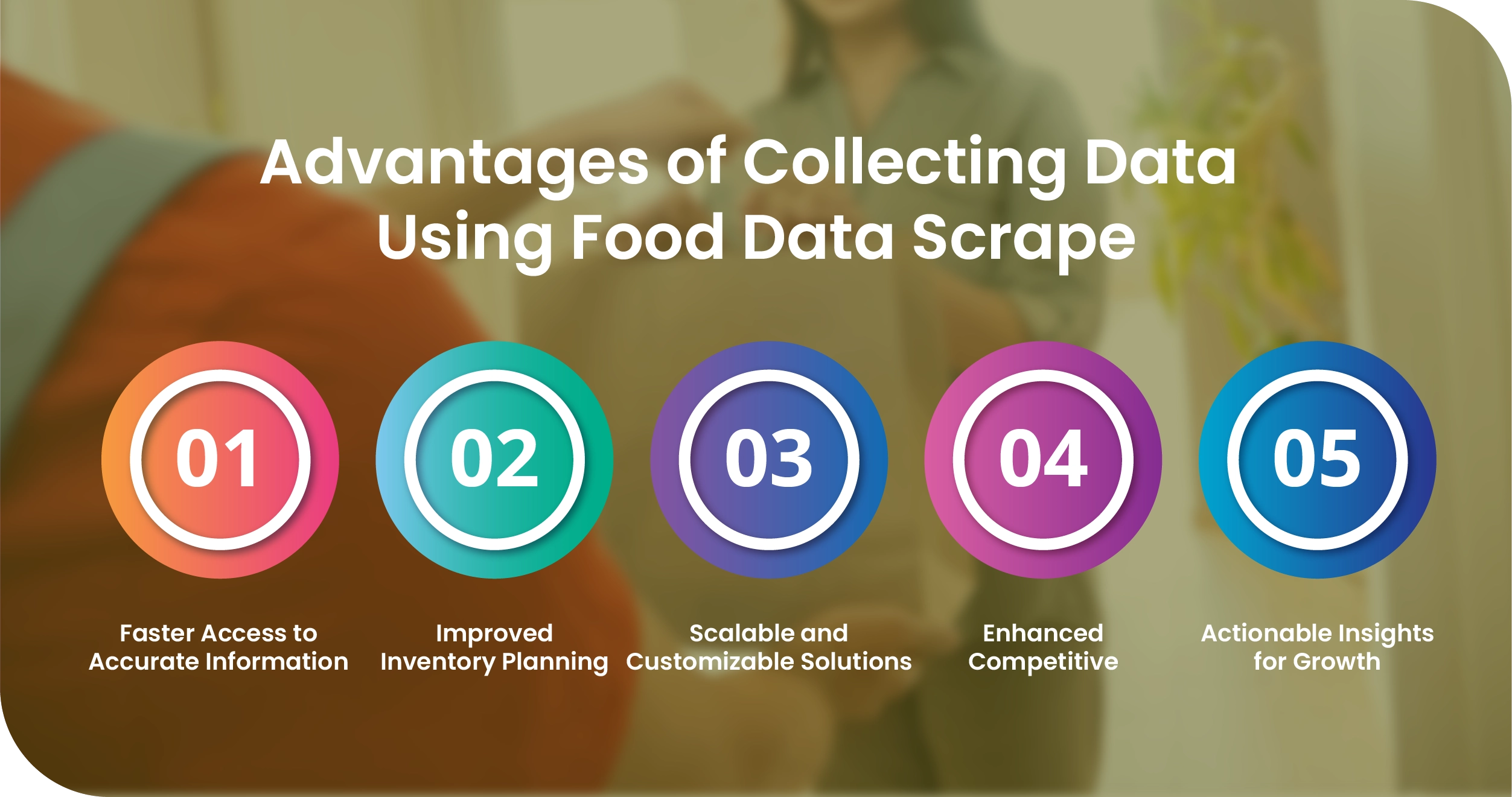
- Faster Access to Accurate Information: Our services provide timely and reliable product-level insights, enabling businesses to respond quickly to market changes. Automated processes reduce manual errors and ensure that decisions are based on the most current and accurate information available.
- Improved Inventory Planning: By delivering detailed visibility into product availability across multiple platforms and locations, our solutions help prevent stock shortages and overstocking. This leads to better demand forecasting, smoother replenishment cycles, and reduced operational inefficiencies.
- Scalable and Customizable Solutions: Our data collection framework is designed to scale with your business needs. Whether tracking a few products or thousands, the solution adapts easily and can be customized to match specific reporting and analysis requirements.
- Enhanced Competitive Awareness: We enable continuous monitoring of market movements and competitor activity. This allows businesses to identify pricing shifts, availability gaps, and emerging trends early, supporting proactive strategies rather than reactive decision-making.
- Actionable Insights for Growth: Raw information is transformed into clear, actionable insights through structured analysis and visual reporting. This empowers teams across sales, operations, and supply chain functions to align strategies, improve performance, and drive sustainable growth.
Client’s Testimonial
“The insights we gained transformed how we manage product availability across quick commerce platforms. What once required manual checks and delayed decisions is now handled through accurate, timely data. The visibility into daily availability trends helped our teams reduce stockouts, improve replenishment planning, and align sales with real market demand. The dashboards are intuitive, actionable, and easy for multiple teams to use. Most importantly, the data-driven approach has significantly improved operational efficiency and customer satisfaction. We now make confident decisions backed by reliable insights rather than assumptions.”
Head of Supply Chain & Operations
Final Outcomes:
The implementation of a structured data-driven approach delivered measurable improvements across operations and decision-making. With enhanced visibility into product availability and stock trends, the client successfully reduced stockouts, improved replenishment accuracy, and strengthened coordination between sales and supply chain teams. The adoption of the Quick Commerce Data Scraping API enabled automated, real-time access to reliable data, eliminating manual monitoring and delays. As a result, business teams were able to respond faster to demand fluctuations and prioritize high-performing products more effectively. Additionally, Quick Commerce Data Intelligence Services transformed raw data into actionable insights through intuitive dashboards and reports. These outcomes led to improved operational efficiency, higher on-shelf availability, better customer satisfaction, and sustainable growth across key urban markets.