The Client
The client is a rapidly growing food-tech enterprise focused on delivering data-driven insights to restaurant chains and cloud kitchens across global markets. Their primary objective was to better understand evolving consumer tastes, optimize menu strategies, and enhance customer engagement through actionable intelligence.
They aimed to Extract Consumer Food Preferences Data from multiple digital platforms to capture real-time shifts in cuisine popularity, ingredient choices, and regional demand patterns.
Additionally, they sought to Scrape Consumer Food Preferences Data at scale, ensuring consistent and structured datasets that could support predictive analytics and strategic decision-making.
To strengthen customer-centric strategies, the client also deployed a Review-Based Food Insights Data Scraper, enabling them to analyze feedback, identify service gaps, and improve overall dining experiences. By leveraging these capabilities, the client positioned itself as a leader in data-backed innovation within the competitive food industry.
Key Challenges
- Inconsistent Data Quality and Accuracy
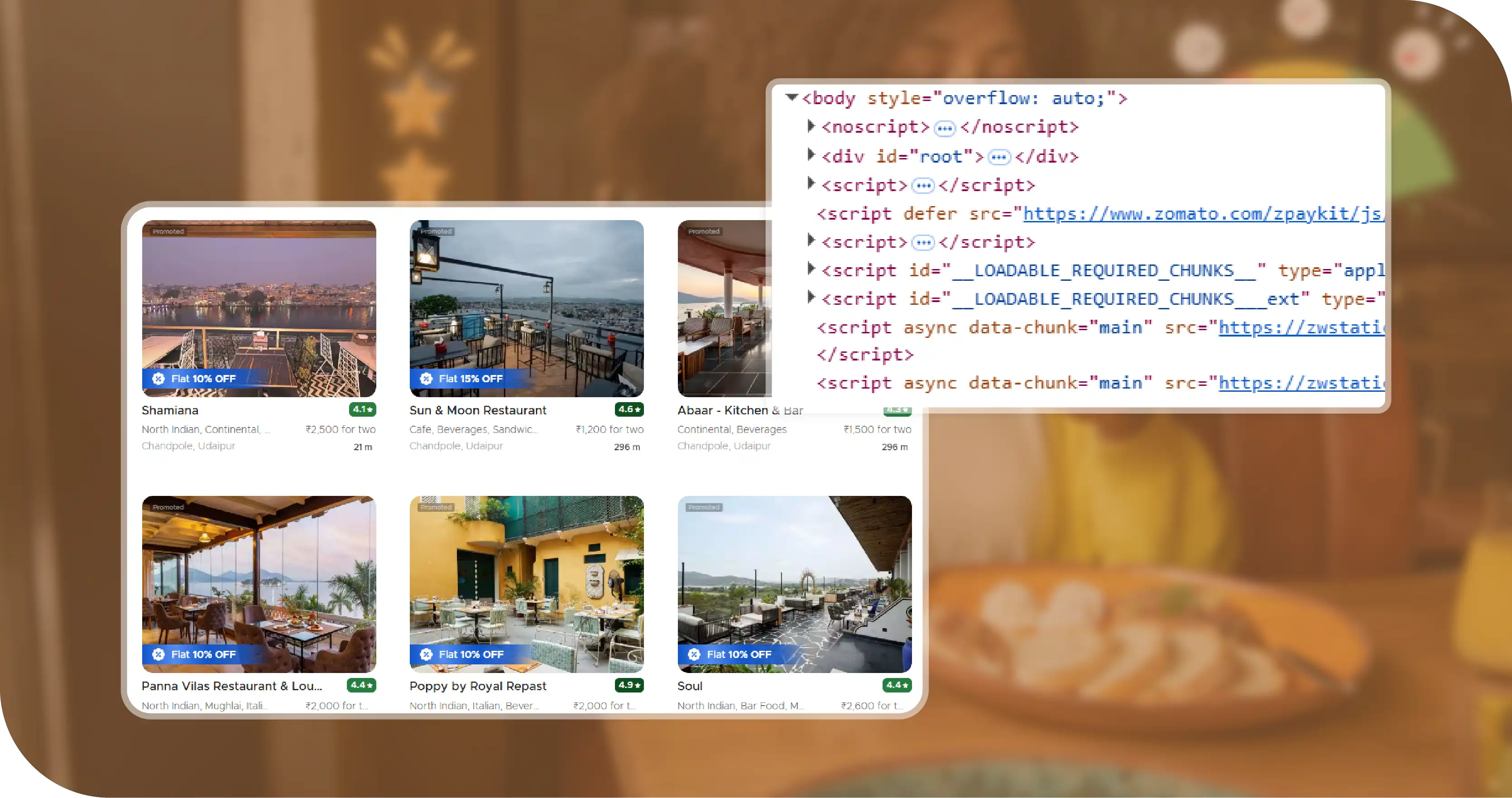
While implementing Web Scraping Food Delivery Data, the client encountered issues with duplicate entries, missing fields, and inaccurate information. These inconsistencies reduced data reliability, making it difficult to generate precise insights and required additional cleaning and validation efforts. - Frequent Platform Structure Changes
During attempts to Extract Restaurant Menu Data, frequent UI and backend changes across food delivery platforms disrupted extraction processes. This required constant updates to scraping logic, increasing maintenance efforts and delaying timely data collection for analysis and reporting. - Limited Data Accessibility and Integration
Using a Food Delivery Scraping API, the client faced challenges in accessing complete datasets and integrating them with existing systems. Compatibility issues and partial data availability restricted seamless workflows, affecting the overall efficiency of analytics and decision-making processes.
Key Solutions
- Unified Data Aggregation Framework
We implemented a centralized system powered by Restaurant Data Intelligence to consolidate fragmented datasets from multiple sources into a structured pipeline. This improved consistency, minimized errors, and enabled seamless integration for accurate analytics and informed decision-making across restaurant operations. - Real-Time Insights and Monitoring System
Our solution leveraged Food delivery Intelligence to track live menu updates, pricing fluctuations, and customer interactions. This allowed the client to respond quickly to dynamic market trends and optimize strategies using continuous, real-time data streams. - Interactive Pricing and Analytics Dashboard
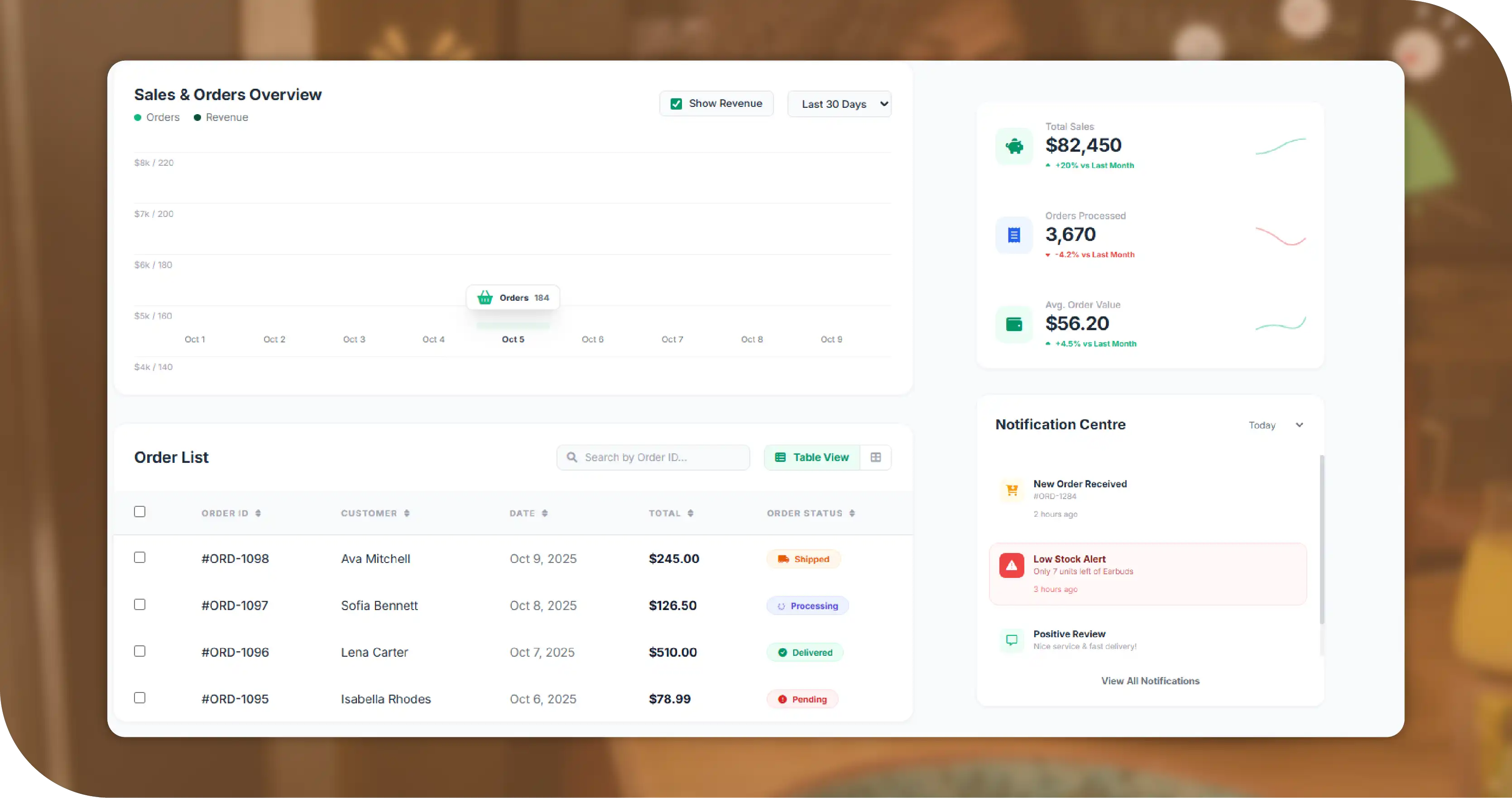
We designed a scalable Food Price Dashboard to visualize trends, monitor competitor pricing, and analyze demand patterns. This enabled stakeholders to make quick, data-driven decisions and enhance pricing strategies effectively.
Sample Data
| Metric Type | Platform Source | Sample Data | Frequency | Insight Generated |
|---|---|---|---|---|
| Restaurant Name | Uber Eats | Spice Hub, Food Corner, Urban Bites | Daily | Market presence tracking |
| Location | Zomato | New York, Los Angeles, Chicago | Daily | Regional demand analysis |
| Menu Items | DoorDash | Burger, Pizza, Pasta, Sushi | Real-time | Popular dish identification |
| Price Range | Swiggy | $5–$20 per item | Real-time | Pricing strategy optimization |
| Customer Ratings | Google Reviews | 3.5, 4.2, 4.8 | Hourly | Quality and satisfaction insights |
| Review Sentiment | Yelp | Positive, Neutral, Negative | Hourly | Customer feedback analysis |
| Order Volume | Foodpanda | 150–500 orders/day per restaurant | Daily | Demand forecasting |
| Discount Offers | Aggregator Apps | 10%, 20%, Buy 1 Get 1 | Real-time | Promotion effectiveness |
| Delivery Time | Logistics Platforms | 25–45 minutes | Daily | Operational efficiency |
| Cuisine Type | Multi-source | Italian, Chinese, Indian, Mexican | Weekly | Consumer preference trends |
Methodologies Used
- Multi-Source Data Collection Approach
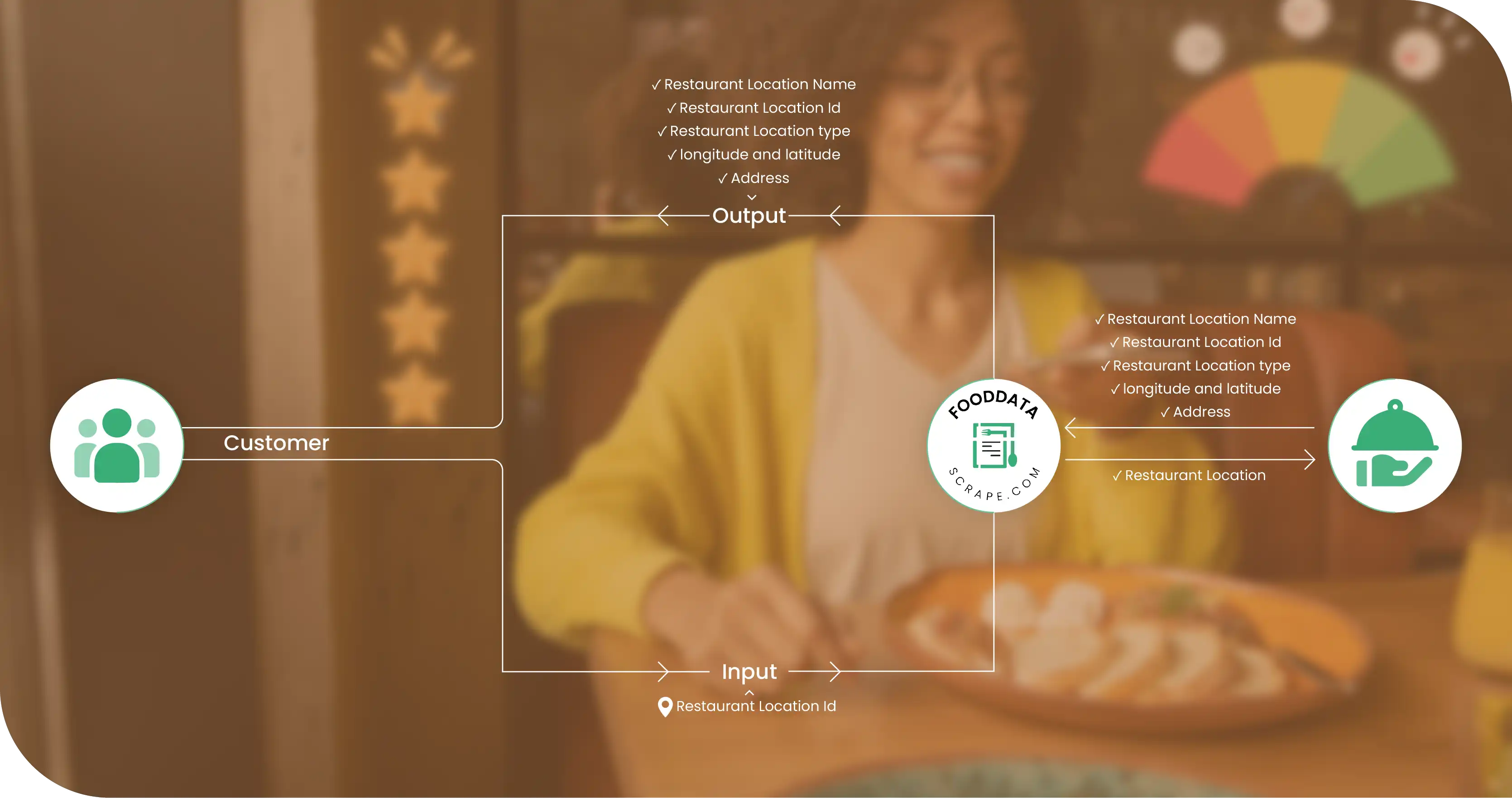
We gathered data from multiple online platforms, including restaurant websites, delivery apps, and review portals. This ensured comprehensive coverage of menus, pricing, and customer feedback, allowing the client to access diverse datasets for accurate analysis and broader market understanding. - Automated Data Extraction Framework
An automated system was deployed to collect structured and unstructured data at scale. It ensured consistent data flow, minimized manual intervention, and improved efficiency while maintaining accuracy across large volumes of continuously changing restaurant and customer-related information. - Data Cleaning and Standardization Process
Collected data was processed through rigorous cleaning and normalization techniques to remove duplicates, correct inconsistencies, and standardize formats. This ensured high-quality datasets, making them reliable for advanced analytics, reporting, and strategic decision-making across multiple business functions. - Real-Time Data Processing Pipeline
A real-time processing pipeline was implemented to capture and update data dynamically. This allowed the client to monitor live changes in pricing, menu items, and customer behavior, enabling faster responses to market trends and improving overall operational agility. - Advanced Analytics and Visualization Techniques
We applied analytical models and visualization tools to transform raw data into meaningful insights. Interactive dashboards and reports helped stakeholders easily interpret trends, compare performance metrics, and make data-driven decisions to optimize business strategies and customer engagement.
Advantages of Collecting Data Using Food Data Scrape
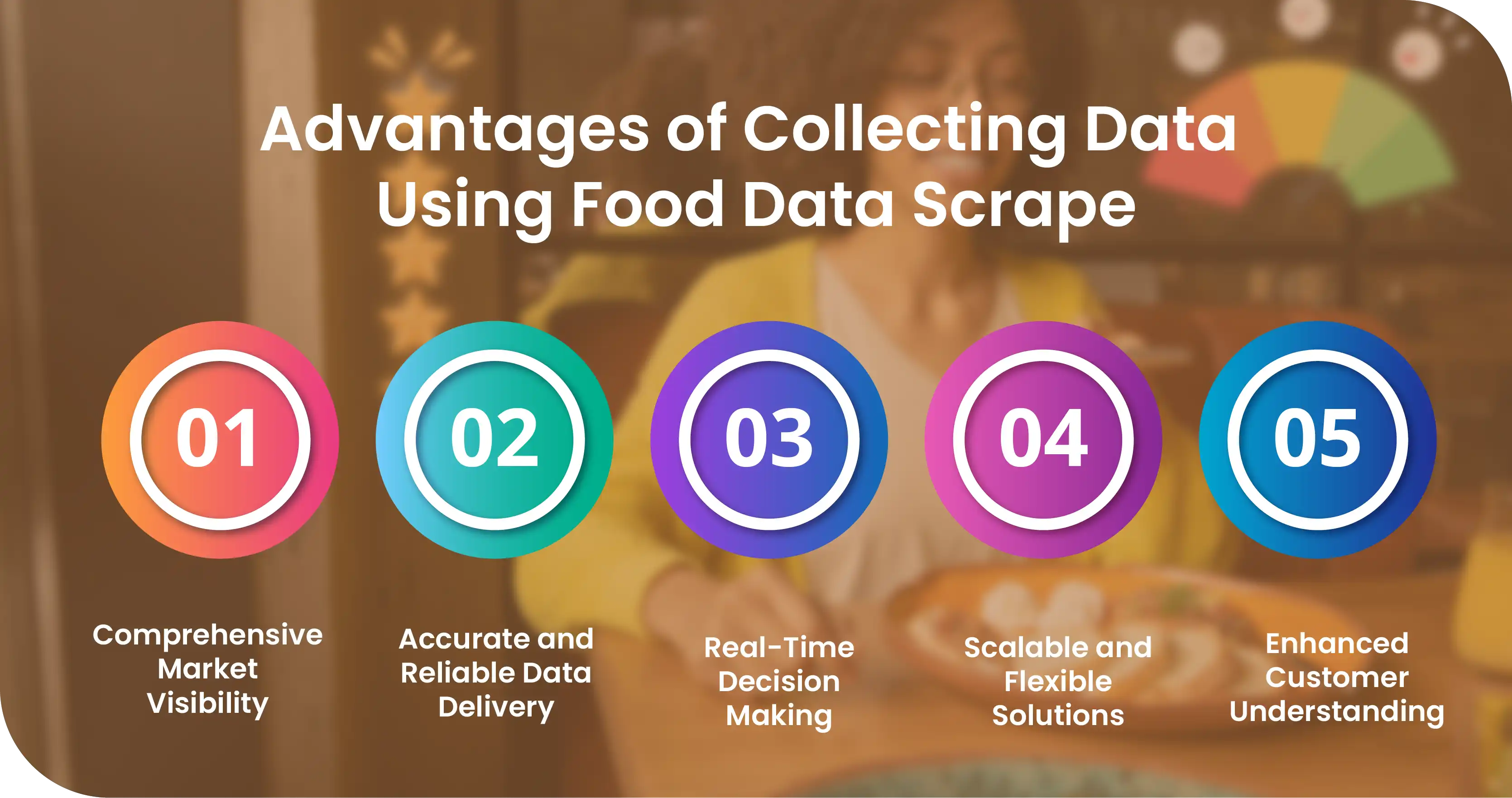
- Comprehensive Market Visibility
Our services provide complete visibility into restaurant ecosystems by collecting extensive datasets across platforms. This enables businesses to understand market dynamics, track competitors effectively, and uncover hidden opportunities that support strategic planning and long-term growth initiatives in competitive environments. - Accurate and Reliable Data Delivery
We ensure high-quality data through advanced validation, cleansing, and monitoring processes. This accuracy helps businesses rely on insights without concerns about inconsistencies, empowering teams to make confident decisions based on trustworthy and well-structured information collected from multiple sources. - Real-Time Decision Making
With continuous data updates, our solutions enable real-time monitoring of trends, pricing, and customer behavior. Businesses can quickly adapt strategies, respond to demand fluctuations, and stay ahead of competitors by leveraging timely insights that reflect current market conditions. - Scalable and Flexible Solutions
Our infrastructure supports large-scale data extraction and adapts to evolving business needs. Whether expanding into new markets or increasing data volume, clients benefit from flexible solutions that grow alongside their operations without compromising performance or efficiency. - Enhanced Customer Understanding
By analyzing customer preferences, reviews, and ordering patterns, businesses gain deeper insights into consumer behavior. This helps improve personalization, refine offerings, and deliver better experiences, ultimately increasing customer satisfaction, loyalty, and overall brand value.
Client’s Testimonial
"Working with this team has significantly transformed how we approach market intelligence and customer insights. Their ability to deliver accurate, real-time data helped us refine our menu strategy, optimize pricing, and better understand evolving consumer preferences. The structured datasets and intuitive dashboards made analysis seamless and actionable across departments. We were particularly impressed by their scalability and responsiveness to our changing requirements. Their solution empowered us to make faster, data-driven decisions and stay ahead in a competitive landscape."
— Head of Data Analytics
Final Outcome
The final outcome of the project delivered significant value by transforming raw, unstructured information into highly actionable insights. The client gained access to comprehensive and well-structured Food Datasets, enabling deeper analysis of consumer preferences, pricing trends, and competitor strategies. This resulted in improved menu optimization, better pricing decisions, and enhanced customer engagement.
With real-time data visibility, the client was able to respond quickly to changing market dynamics and identify emerging food trends ahead of competitors. Operational efficiency also improved as automated data pipelines reduced manual efforts and errors. Overall, the solution empowered the client to make faster, data-driven decisions, strengthen market positioning, and achieve sustainable growth in a highly competitive food industry landscape.