News
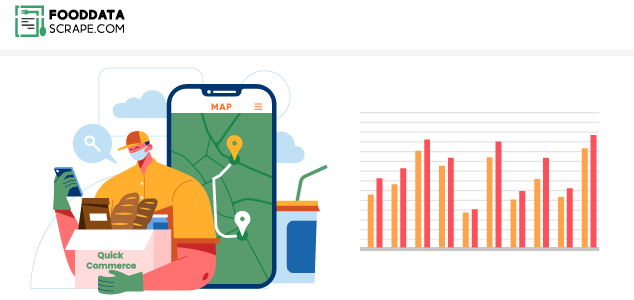
The quick commerce ecosystem is rapidly evolving into a highly data-dependent retail model, where dark stores act as micro-fulfillment hubs powered by real-time analytics. Every order, SKU movement, and delivery cycle is now being tracked to improve speed, efficiency, and customer satisfaction. Retailers are shifting from traditional forecasting methods to continuous, data-led decision systems that respond instantly to demand fluctuations.
Dark Store & Quick Commerce Data Insights reveals how hyperlocal operations are no longer just logistics centers but intelligence-driven ecosystems that help brands understand granular demand patterns and optimize inventory placement across cities.
Real-Time Intelligence Driving Market Competition
Quick commerce platforms are competing on speed, availability, and precision. Businesses are leveraging behavioral signals, purchase frequency, and delivery performance data to fine-tune their operations. This shift has made predictive analytics a necessity rather than an advantage.
Quick Commerce Data Intelligence is enabling companies to forecast demand surges, optimize delivery routing, and dynamically adjust inventory levels based on live consumer behavior patterns across micro-markets.
Automation and API-Led Data Ecosystems
To keep up with fast-moving demand cycles, organizations are increasingly adopting automated data pipelines. These systems continuously pull structured insights from multiple platforms, reducing manual effort and improving accuracy in decision-making.
Quick Commerce Data Scraping API plays a critical role in enabling real-time extraction of pricing updates, product availability, and delivery timelines—helping businesses build scalable intelligence systems for faster operational response.
Food Delivery Data as a Competitive Intelligence Layer
Food delivery platforms have become one of the richest sources of quick commerce intelligence. From menu changes to pricing shifts, every update provides valuable insights into market trends and customer preferences.
Food Data Scrape helps businesses extract and analyze restaurant menus, promotional strategies, and pricing fluctuations. This allows companies to identify trending cuisines, benchmark competitors, and refine their own offerings based on real-time market behavior.
Dark Store Optimization Through Structured Data
Dark stores are now functioning as precision-driven fulfillment centers where data governs every operational decision. From stocking patterns to delivery efficiency, analytics is driving performance improvements across the supply chain.
Dark Store Quick Commerce Datasets provide structured insights into SKU performance, order density, and regional demand clusters, enabling businesses to optimize inventory distribution and reduce wastage at scale.
Final Outlook: Data-Driven Growth in Quick Commerce
The future of quick commerce is increasingly defined by real-time intelligence and structured data ecosystems. While APIs and datasets power operational speed, Food Data Scrape plays a crucial role in unlocking granular visibility into food delivery trends, restaurant performance, and evolving customer preferences. By extracting and analyzing food ecosystem data at scale, businesses can identify demand shifts earlier, refine menu strategies, and stay ahead in highly competitive hyperlocal markets.
In this evolving landscape, combining quick commerce intelligence with Food Data Scrape capabilities ensures businesses are not just reacting to trends—but actively shaping them.