News
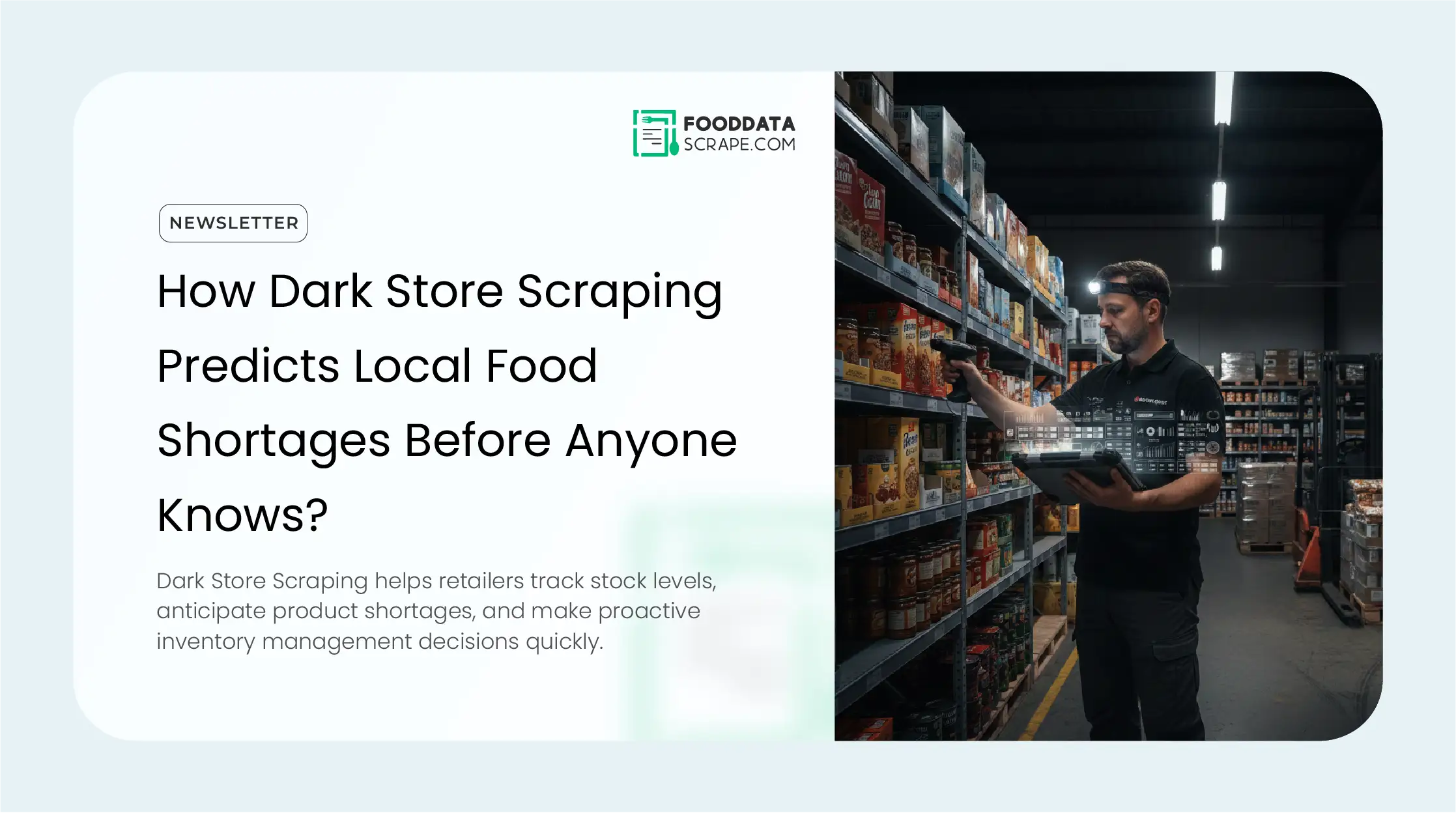
In today’s fast-moving grocery and quick-commerce ecosystem, staying ahead of supply shortages is crucial for both retailers and consumers. Unexpected product unavailability can lead to lost sales, dissatisfied customers, and logistical challenges. Enter Dark Store Scraping, a cutting-edge technology that allows businesses to track inventory and detect potential shortages before they become visible to the general public.
Dark stores—fulfillment centers optimized for online grocery delivery—often reflect real-time product availability trends in a local area. By analyzing these data points, businesses can predict which items may face stock-outs, enabling proactive decisions in replenishment, pricing, and customer communication. With Real-Time Dark Store Inventory Scraping Insights, companies gain unparalleled visibility into item-level stock trends, understanding fluctuations in demand and supply at a granular level.
One of the most powerful applications of this approach is the integration of Dark Store Product Availability Intelligence API, which allows automated data extraction and real-time updates across multiple locations. Using this API, retailers can seamlessly track thousands of SKUs simultaneously, enabling them to spot early warning signals of potential shortages. This insight is particularly valuable for high-demand items, seasonal products, and essential groceries where delayed action can result in significant losses.
To further enhance predictive capabilities, businesses employ strategy to Scrape Dark Store Inventory Levels for Early Warning Signals, which systematically monitors stock levels, replenishment cycles, and product movement patterns. By identifying trends such as rapid depletion of certain items or slower restocking schedules, companies can forecast shortages days in advance and take corrective measures such as redistributing stock, notifying suppliers, or offering alternative products to consumers.
Moreover, Real-Time Dark Store Stock Monitoring ensures that decision-makers are continuously informed about inventory changes. Unlike traditional reporting methods that rely on manual audits or delayed POS data, real-time scraping captures immediate shifts in stock levels, providing actionable intelligence when it matters most. This approach helps grocery chains, quick-commerce platforms, and FMCG brands reduce stock-out risks and optimize fulfillment efficiency.
The benefits extend beyond inventory management. By using Grocery Delivery Scraping API Services, businesses can combine dark store insights with delivery platform data, analyzing how local demand interacts with product availability. This holistic perspective allows companies to anticipate consumer behavior, adjust marketing strategies, and maintain consistent service levels, even during high-demand periods or unforeseen supply disruptions.
Additionally, Food Data Scrape plays a critical role in predicting shortages. By extracting structured datasets on product availability, pricing, and regional sales trends, data-driven platforms can identify patterns indicating potential scarcity. For instance, sudden spikes in demand for a particular SKU across multiple dark stores can trigger early alerts, giving retailers the opportunity to act before customers experience stock-outs.
In conclusion, leveraging Dark Store Scraping and associated real-time inventory monitoring solutions empowers retailers to stay ahead of supply chain challenges. Integrating APIs, automated data extraction, and advanced analytics provides the foresight needed to predict local food shortages accurately. By combining these tools with comprehensive Food Data Scrape, businesses can optimize inventory, enhance customer satisfaction, and maintain operational efficiency in an increasingly competitive grocery delivery landscape.