Our Client
The client operates a rapidly growing nationwide online grocery pricing and retail intelligence platform that enables retailers, analysts, and grocery supply chain brands to monitor product pricing trends across multiple delivery platforms. Using Amazon Fresh Grocery Details Data Extraction API in USA, they required structured datasets to enhance forecasting and pricing optimization dashboards. Their teams relied heavily on automated monitoring for store-level price shifts, promotional activities, and SKU fluctuations. With the Amazon Fresh Grocery Inventory Data Scraping API in USA, they needed detailed product descriptions, variations, allergens, nutrition profiles, and fulfillment availability. The organization also aimed to Extract Amazon Fresh Grocery Product Details and Prices in USA at scale for competitive benchmarking and buyer-level insights. The client prioritized performance, accuracy, and continuous scalability to streamline reporting workflows for pricing teams, supply chain planners, and consumer behavior researchers.
Key Challenges
- Data Availability & Format
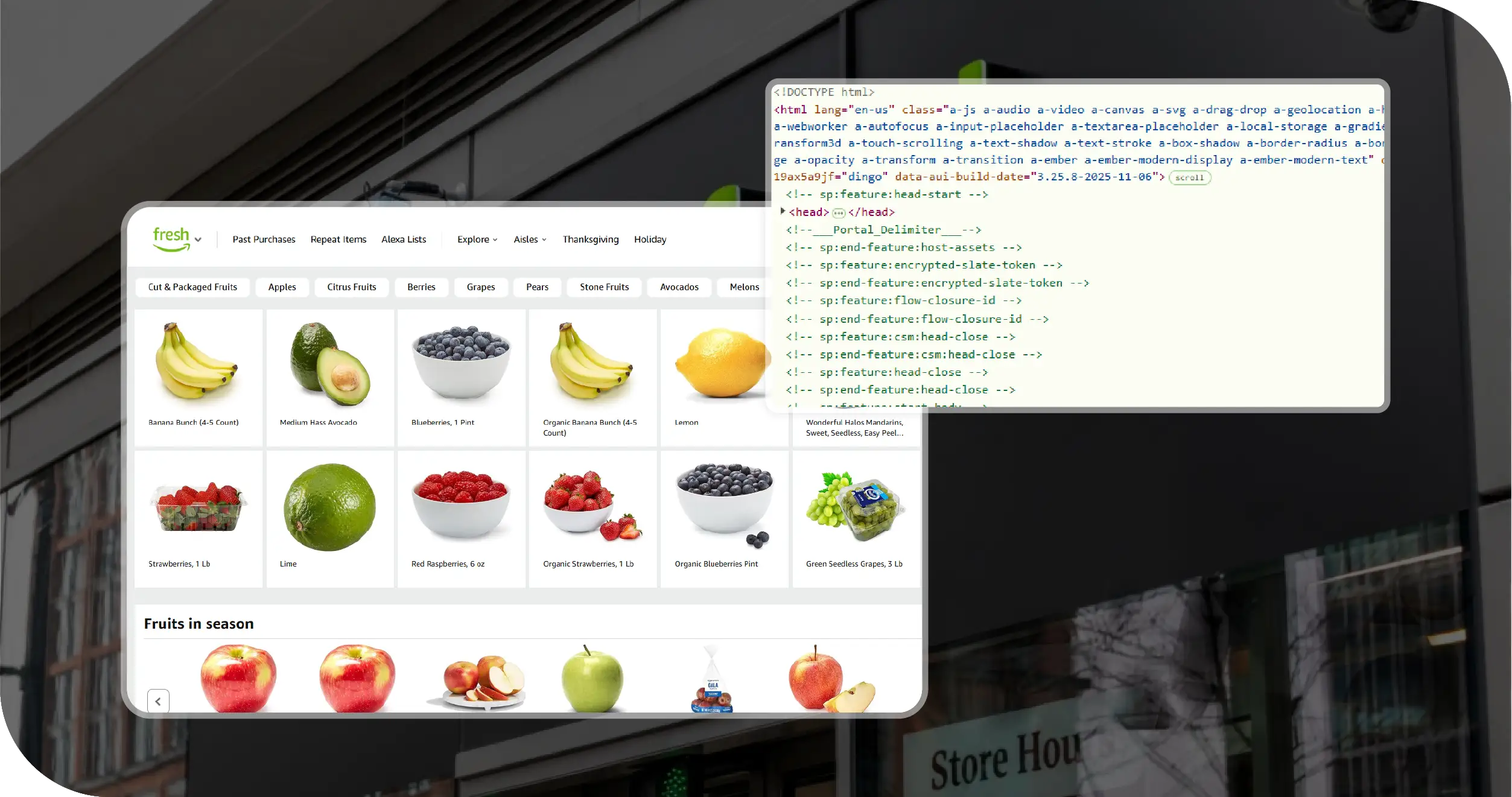
The client struggled to Extract Amazon Fresh Grocery Product Listings in USA due to inconsistent formatting across regions and product categories. Variations in delivery slots, regional pricing, and stock availability resulted in unreliable manual reporting and incomplete intelligence for decision-makers. - Scalability & Automation
Existing methods could not support growing SKU counts or new store expansions. Without automated Amazon Fresh Grocery Data Scraping, tracking frequent daily updates, seasonal pricing, and promotional changes became resource-intensive, slow, and error-prone. - Real-Time Stock Monitoring
Capturing inventory fluctuations for building a Amazon Fresh Grocery Delivery Dataset was challenging because product availability changed frequently throughout the day, especially across high-demand items like fresh produce, dairy, and beverages.
Key Solutions
- Automated Scraping Architecture
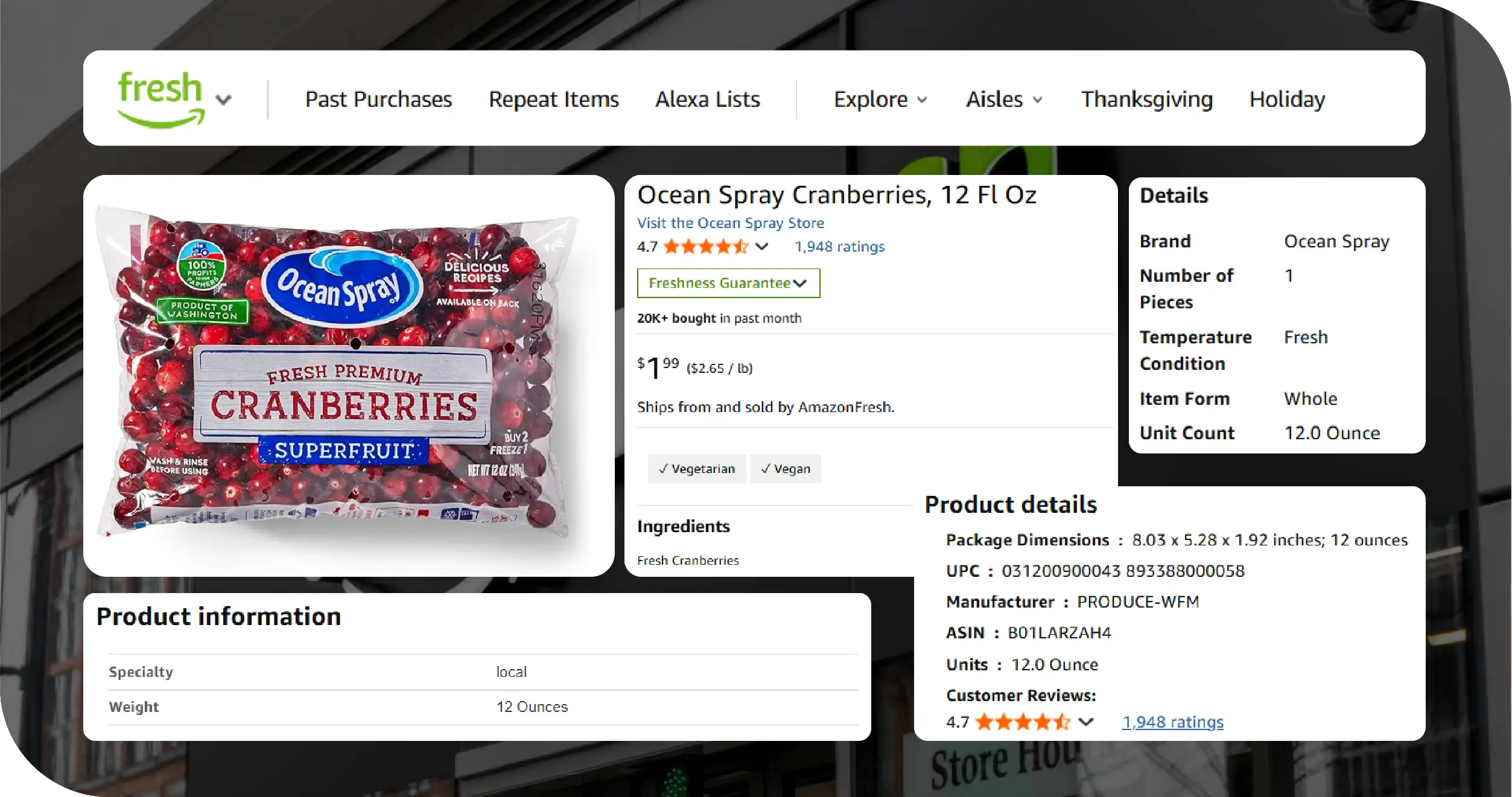
Using Grocery App Data Scraping services, a fully automated extraction system was deployed to collect structured and consistent product-level data across multiple regional Amazon Fresh locations. - Real-Time Data Delivery System
Through Grocery Delivery Scraping API Services, real-time feeds were implemented to monitor pricing fluctuations, SKU activity, promotional tagging, restocking cycles, and delivery slot visibility. - Performance Dashboard
A visual Grocery Price Tracking Dashboard was implemented that allowed stakeholders to track real-time price shifts, promotional events, and availability across product categories and delivery zones.
Sample Table
| Product Category | SKU Count | Region | Availability Status | Last Price Update |
|---|---|---|---|---|
| Fresh Produce | 235 | New York | In Stock | 4 hours ago |
| Dairy & Eggs | 118 | California | Limited | 2 hours ago |
| Pantry Items | 420 | Texas | In Stock | 1 hour ago |
| Frozen Foods | 157 | Florida | Out of Stock | 6 hours ago |
| Snacks & Beverages | 310 | Illinois | In Stock | 3 hours ago |
Methodologies Used
- Data Flow Blueprinting
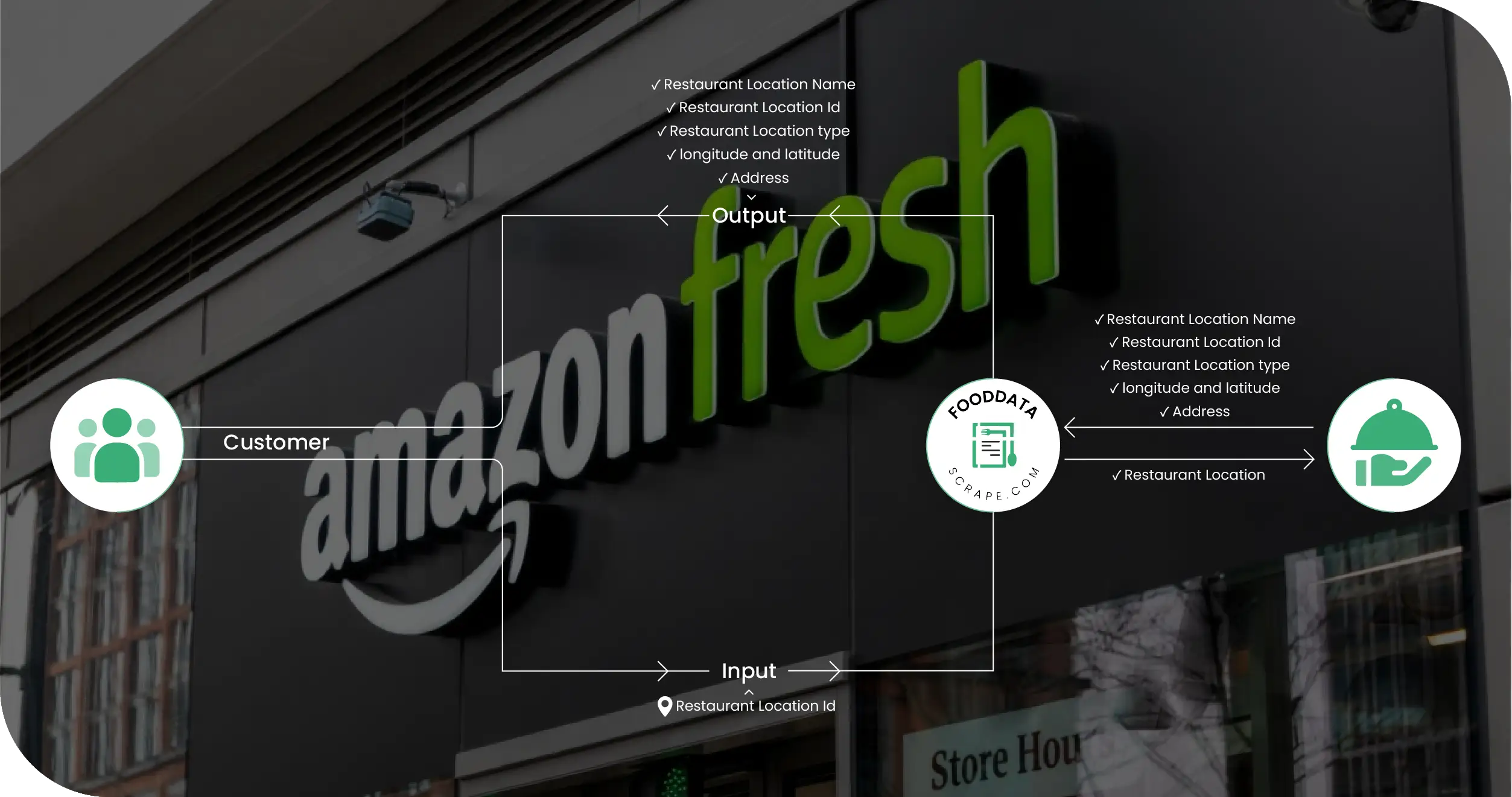
We created a complete blueprint for data pipelines, extraction layers, and validation workflows to ensure consistency, accuracy, and long-term scalability across large datasets and API integrations. - Automated Crawling and Parsing
Automated bot frameworks were designed to capture product-level data, metadata, timestamps, and multi-region pricing behavior with minimal human intervention. - Data Cleaning & Normalization
All extracted data was standardized, classified, converted, enriched, and deduplicated to ensure uniform structure suitable for various analytical and reporting systems. - Continuous Quality Monitoring
Automated validation checks ensured freshness, accuracy, and schema alignment, detecting inconsistencies before delivery to client platforms. - Real-Time Scheduling and Scaling
Data pipelines were configured for on-demand scalability and scheduled executions aligned with high-impact update windows such as weekends, seasonal campaigns, and new product launches.
Advantages of Collecting Data Using Food Data Scrape
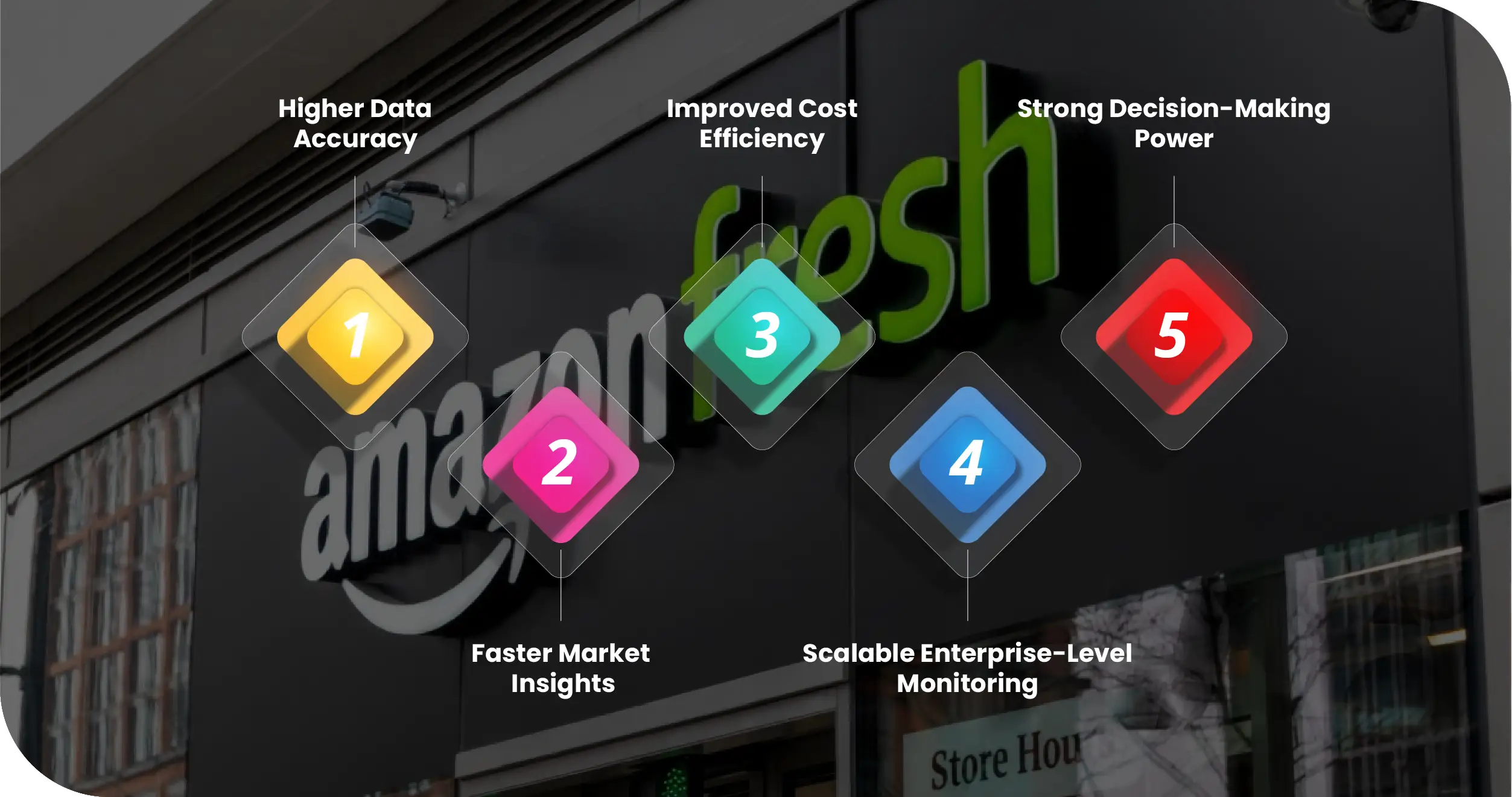
- Higher Data Accuracy
Automated collection eliminates manual errors, ensuring precise and reliable information that supports better business intelligence, planning, and competitive benchmarking across multiple categories. - Faster Market Insights
Real-time data availability enables businesses to monitor seasonal patterns, competitor movements, and pricing strategies significantly faster compared to manual research or periodic reporting cycles. - Improved Cost Efficiency
Automation reduces labor workload, operational expenses, and the need for repeated manual intervention—making long-term data acquisition more affordable. - Scalable Enterprise-Level Monitoring
The system adapts to expanding regions, categories, and new delivery channels, ensuring future readiness without redevelopment. - Strong Decision-Making Power
Access to structured datasets strengthens research, forecasting models, price intelligence, and strategic execution for retail and supply chain teams.
Client’s Testimonial
"As Director of Retail Pricing Strategy, I can confidently say this project transformed our analytics capabilities. The automation accuracy, scalability, and real-time delivery exceeded expectations. Our reporting speed increased, and our forecasting accuracy dramatically improved. The technical team ensured flawless execution and continuous support throughout implementation. Their professionalism and deep understanding of data systems allowed us to focus more on analysis and less on processing. We now operate with precision and confidence."
Director of Pricing Strategy
Final Outcome
The implementation resulted in enhanced competitive insights and improved business forecasting accuracy. With Grocery Pricing Data Intelligence, the client gained powerful real-time visibility into pricing changes, SKU variations, and availability patterns across different regions and categories. The integration enabled automated data analytics and stronger reporting workflows. Using Grocery Store Datasets, the client now monitors trends, seasonal pricing patterns, and market shifts with minimal effort, resulting in improved planning, operational efficiency, and strategic execution.