Introduction
The Super Bowl is more than a championship game. It is one of the largest food and beverage consumption events of the year in the United States. While wings, pizza, and nachos command attention on the plate, soda dominates the beverage table. From early grocery runs to last-minute restocks, carbonated drinks move at exceptional velocity in the days leading up to kickoff.
For brands and retailers aiming to Extract Super Bowl Soda Trends 2026 - Brand Performance & Consumer Preferences, the event represents a live case study in high-volume demand, impulse purchasing, and flavor experimentation. Companies looking to Scrape Super Bowl Soda Brand Performance 2026 gain a granular view of how legacy colas, lemon-lime classics, and emerging functional beverages compete in real time. At the same time, Web Scraping Super Bowl Soda Pricing & Promotions reveals how discounts, bundles, and display placements influence basket size and brand switching behavior.
Understanding these trends requires a close look at brand performance, flavor shifts, pricing strategy, and the deeper psychology of consumer choices during game day hosting.
Beverages as the Backbone of Game Day Hosting
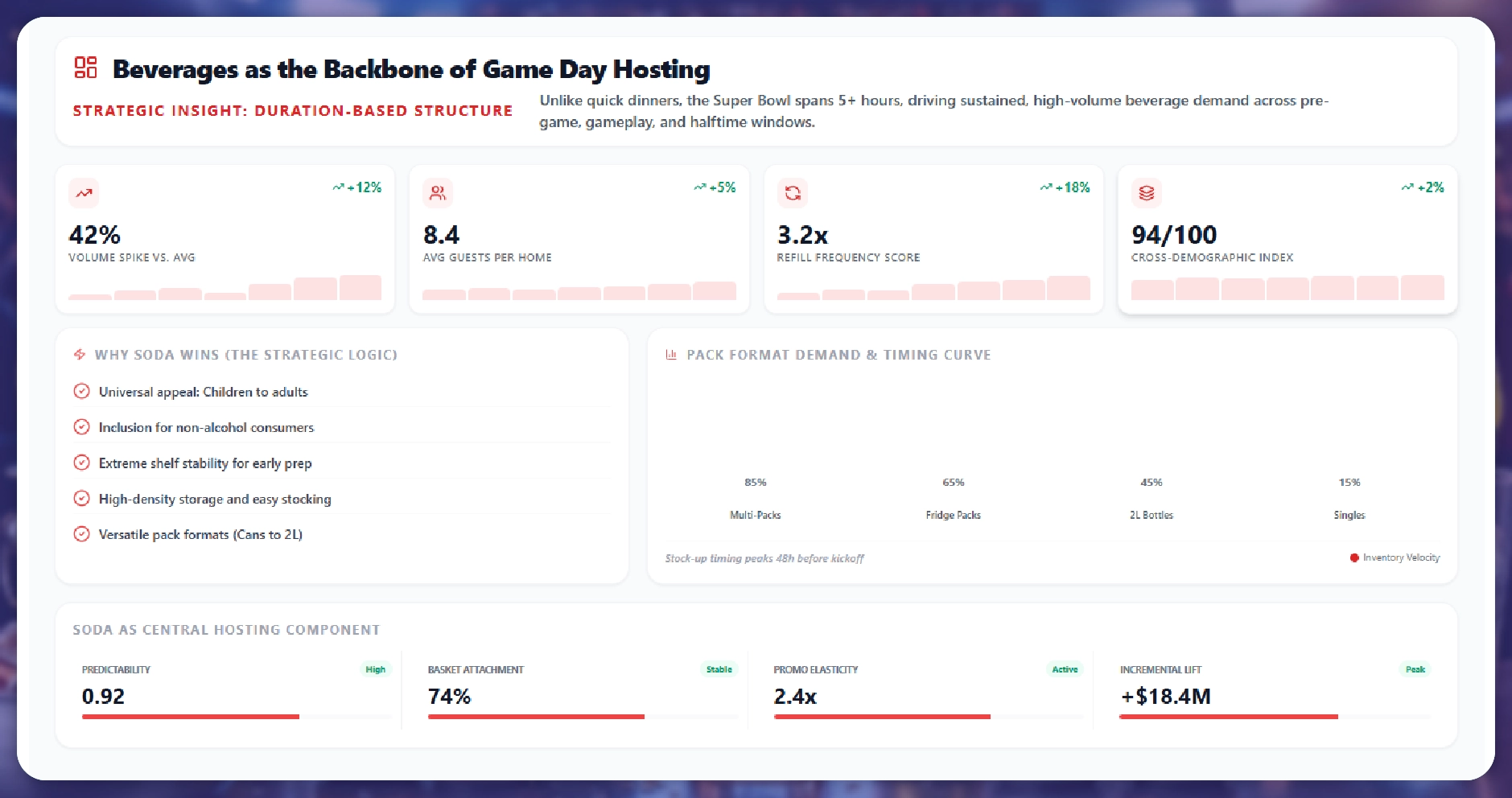
Super Bowl gatherings are structured around duration. Unlike quick dinners or casual snacks, the game stretches for hours, including pre-game coverage and halftime entertainment. That extended viewing window drives beverage purchases that are:
- High in volume
- Shared across guests
- Replenished multiple times
- Selected for broad appeal
Soda becomes the safest and most scalable choice. It appeals to children, adults, and non-alcohol consumers alike. Its shelf stability and pack sizes make it easy to stock up early. Multi-packs, fridge packs, and 2-liter bottles often see dramatic spikes in demand during the week leading up to the event.
Because of this purchasing behavior, soda is not just another beverage category. It is a central component of the hosting strategy.
Legacy Giants Still Anchor Volume
Despite rapid innovation in the beverage aisle, traditional colas continue to dominate total share during the Super Bowl. The reasons are structural rather than emotional alone.
First, familiarity lowers risk. When buying for a group, hosts choose brands that guarantee acceptance. Second, established brands invest heavily in advertising during the event itself, reinforcing top-of-mind awareness. Third, large pack formats and aggressive promotions give these brands logistical advantages in retail.
Cola remains the anchor of the category. Lemon-lime sodas follow closely, especially because they pair easily with salty snacks. Citrus-based drinks often rise in relevance due to their ability to cut through greasy, high-fat foods.
While emerging brands are gaining attention, they are not yet displacing legacy leaders in total volume. Instead, they are carving out specialized roles.
Functional Soda: Growing Through Occasion Fit
Functional soda brands—often marketed around gut health, lower sugar, or plant-based ingredients—are finding their place during the Super Bowl in a strategic way.
Rather than competing directly for mainstream cola share, they target consumers who want balance during heavy eating occasions. These buyers may be:
- Moderating sugar intake
- Seeking digestive comfort
- Hosting mixed-age groups
- Exploring better-for-you alternatives
The growth pattern of functional sodas indicates a transition from novelty to menu integration. Instead of relying solely on social buzz, these brands are appearing more frequently in restaurant offerings and curated grocery placements.
For analysts aiming to Extract Super Bowl Soda SKU Performance Data, SKU-level insights reveal that functional beverages often over-index in urban markets, specialty grocery chains, and online grocery platforms. This suggests that demographic and channel segmentation plays a larger role than raw advertising spend.
Turn competitive data into winning strategy—start leveraging our advanced scraping solutions to stay ahead of the market.
Flavor Innovation: The Real Battlefield
If volume is stable at the top, flavor is where disruption happens.
Super Bowl demand provides the perfect environment for experimentation. Consumers are already in a festive mindset, making them more open to trying new formats—provided the base flavor remains familiar.
Recent flavor themes include:
- Fruit-forward twists on classic cola
- Exotic citrus such as yuzu
- Blood orange and seasonal citrus blends
- Remix formats with added syrups or cream elements
The rise of “customization-led” soda—often referred to as dirty soda—demonstrates that innovation does not always require reformulating the core liquid. Add-ins, flavored syrups, cream textures, and mix-ins allow brands and retailers to refresh existing SKUs with minimal production change.
Monitoring social engagement through tools that Scrape Super Bowl Soda Reviews & Ratings helps identify which flavor concepts generate repeat purchases versus one-time curiosity spikes.
The distinction between scaling formats and trend-driven formats is critical for planning limited-time offers (LTOs). Social momentum alone does not guarantee sustainable sell-through.
Pricing Strategy and Promotional Warfare
The Super Bowl is one of the most promotional weeks of the year for beverage retailers. Discounts are not random; they are strategic.
Common pricing tactics include:
- Buy-two-get-one-free offers
- Multi-pack bundling
- Cross-category bundles with chips or frozen appetizers
- Loyalty program discounts
Through Cross-Platform Super Bowl Soda Price Comparison Scraping, brands can track how their products are positioned across big-box retailers, regional grocers, and online delivery apps. Small pricing differences can shift large volumes during peak demand windows.
Retailers often use soda as a traffic driver. Deep discounts on leading brands increase store visits, with profits recouped through complementary snack purchases.
Analyzing these shifts through Web Scraping Grocery Data uncovers how pricing elasticity changes in the final week before kickoff. Many consumers make an initial bulk purchase early, followed by smaller top-up trips closer to game time.
The Rise of Online and Quick-Commerce Channels
Another defining feature of recent Super Bowl cycles is the growth of online grocery and quick-commerce platforms. Last-minute soda orders are increasingly fulfilled through same-day delivery services.
Integrating insights from a Grocery Delivery Extraction API allows brands to observe:
- Real-time stock availability
- Surge pricing
- Delivery time windows
- Bundle recommendations
Digital shelves introduce a new layer of competition. Search placement, sponsored listings, and algorithmic recommendations influence brand exposure.
Data visualized through a Grocery Price Dashboard helps marketing and category teams detect sudden price drops, flash promotions, or inventory shortages that could affect performance.
Food Pairings Shape Beverage Preference
Soda does not operate independently from food. Its performance is directly tied to what consumers are eating.
- Lemon-lime sodas align with greasy, salty foods such as nachos and pepperoni pizza.
- Cola complements smoky barbecue flavors and grilled meats.
- Higher-caffeine sodas often pair with spicy wings, helping sustain energy through extended viewing.
Functional sodas appear more frequently alongside protein-heavy spreads, where digestion and pacing matter more.
For retailers and foodservice operators, pairing logic can increase attachment rates. Bundled pricing—pizza plus soda, wing platter plus soda—simplifies decisions and increases basket size.
Understanding broader game day food trends strengthens beverage forecasting accuracy.
Social Signals vs Menu Reality
One of the most interesting Super Bowl soda patterns is the divergence between social conversation and real-world placement.
Some flavors experience explosive social growth but limited shelf penetration. Others show moderate online buzz yet achieve strong in-store performance due to distribution scale.
Brands must balance:
- Social excitement
- Menu adoption
- Retail availability
- Price competitiveness
Data-driven monitoring helps distinguish between fleeting virality and long-term adoption.
Regional Variations in Consumer Preferences
Super Bowl soda consumption is not uniform across the country. Regional preferences influence performance.
- Southern markets may favor sweeter profiles.
- West Coast consumers may lean toward functional or lower-sugar options.
- Urban markets often display higher flavor experimentation.
Analyzing regional sell-through patterns supports localized marketing campaigns and inventory planning.
How Food Data Scrape Can Help You?
- Real-Time SKU Insights
Our data scraping services deliver continuous visibility into brand and SKU-level performance across online grocery and retail platforms. You can track which flavors, pack sizes, and variants are accelerating in demand and which are slowing down. This enables faster inventory decisions, smarter assortment planning, and more targeted promotional execution during peak sales periods. - Dynamic Pricing Intelligence
We monitor live pricing, discounts, bundles, and limited-time promotions across multiple retailers. This helps you benchmark competitors, detect sudden price drops, and identify promotional gaps. With structured competitive pricing insights, your team can optimize margins while staying attractive to price-sensitive consumers. - Cross-Channel Benchmarking
Our scraping solutions consolidate data from grocery websites, delivery apps, and digital marketplaces into one unified view. This allows you to compare assortment depth, stock availability, and digital shelf placement across platforms. The result is clearer channel-level strategy and stronger competitive positioning. - Consumer Sentiment Analysis
We extract and analyze ratings, reviews, and feedback signals to uncover what customers truly value. From flavor preferences to packaging convenience and health claims, these insights help refine marketing messages, improve product development, and align offerings with evolving consumer expectations. - Predictive Demand Forecasting
By transforming scraped data into structured dashboards and trend models, we support proactive planning rather than reactive reporting. You can anticipate demand spikes, evaluate campaign performance, and test new product strategies using reliable, real-time market intelligence.
Conclusion: Turning Insights into Action
Super Bowl soda trends reveal a category that is stable at its core yet dynamic at its edges. Legacy colas maintain dominance through familiarity and scale. Functional beverages expand through occasion relevance and health positioning. Flavor innovation drives excitement, while pricing strategy determines volume shifts.
For brands and retailers, the key is not choosing between tradition and experimentation—but managing both simultaneously.
Advanced Grocery Data Intelligence transforms raw sales and promotional metrics into actionable strategy. Structured Grocery Datasets allow teams to evaluate SKU velocity, pricing elasticity, and cross-category correlations at scale.
When these insights are visualized through a robust Grocery Price Tracking Dashboard, decision-makers gain clarity on what to discount, what to promote, and what to test next season.
As Super Bowl consumption continues to evolve, soda brands that align flavor innovation, functional benefits, and pricing precision will remain at the center of game day baskets—earning repeat pours long after the final whistle.
Are you in need of high-class scraping services? Food Data Scrape should be your first point of call. We are undoubtedly the best in Food Data Aggregator and Mobile Grocery App Scraping service and we render impeccable data insights and analytics for strategic decision-making. With a legacy of excellence as our backbone, we help companies become data-driven, fueling their development. Please take advantage of our tailored solutions that will add value to your business. Contact us today to unlock the value of your data.