
Quick commerce platforms rely heavily on time-sensitive promotions to drive user engagement and increase order frequency. Flash sales, limited-time discounts, and coupon-based offers are widely used strategies that encourage impulse buying and increase platform competitiveness. Monitoring these promotions across leading grocery delivery platforms provides valuable insights into pricing dynamics, category-level discount trends, and consumer purchasing behavior.
Real-time promotional monitoring helps retailers, brands, and analysts understand how frequently deals appear, how long they remain active, and which product categories receive the highest discounts. Such insights allow companies to optimize pricing strategies, plan marketing campaigns, and evaluate competitive positioning within the fast-growing digital grocery ecosystem.
Data-driven tracking of short-duration deals also enables businesses to detect promotional patterns across different time windows, including peak meal hours and weekend campaigns. With structured datasets and continuous monitoring systems, organizations can transform raw promotional data into actionable insights that improve demand forecasting, inventory planning, and promotional effectiveness in highly competitive online grocery marketplaces.
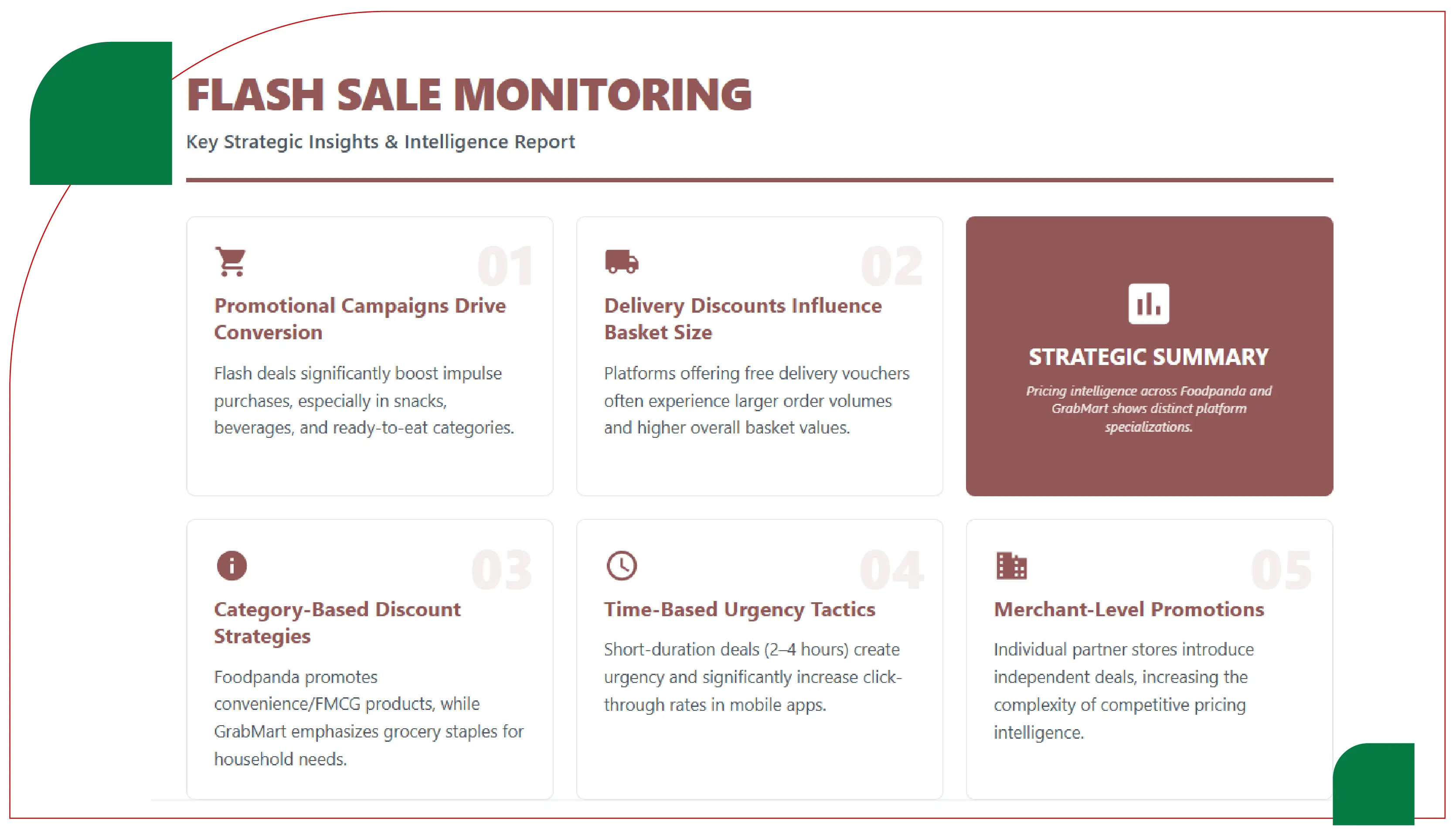
Promotion Frequency – Platforms launch multiple short-duration discounts daily to stimulate frequent purchasing behavior.
Category Focus – Snacks, beverages, and ready-to-eat items dominate most time-sensitive promotions.
Timing Patterns – Discounts typically appear during lunch, evening, and weekend peak shopping hours.
Discount Depth – Promotional reductions generally range between moderate and high percentage price cuts.
Market Competition – Dynamic promotional campaigns intensify rivalry between major quick-commerce grocery platforms.

The rapid expansion of quick-commerce platforms has intensified competition in the grocery delivery sector across Southeast Asia. Platforms such as Foodpanda and GrabMart continuously introduce flash sales, voucher promotions, and limited-time deals to increase customer acquisition and drive order frequency. Monitoring these dynamic promotions is critical for retailers, FMCG brands, and analytics teams seeking competitive insights into pricing strategies and consumer behavior.
This research report explores the value of Flash Sale & Limited-Time Deal Scraping Intelligence - Foodpanda vs GrabMart and how automated data collection enables businesses to analyze promotional trends, discount frequency, product-level price fluctuations, and category-specific sales patterns across grocery delivery ecosystems.
The need for Foodpanda Vs GrabMart Promotional Price Monitoring has increased significantly because grocery platforms update prices and promotions multiple times per day, especially during peak shopping hours and weekend campaigns.
Businesses increasingly rely on automated systems to Extract Foodpanda vs GrabMart Limited-Time Deals Data, enabling them to track real-time promotional campaigns across thousands of SKUs and stores simultaneously.
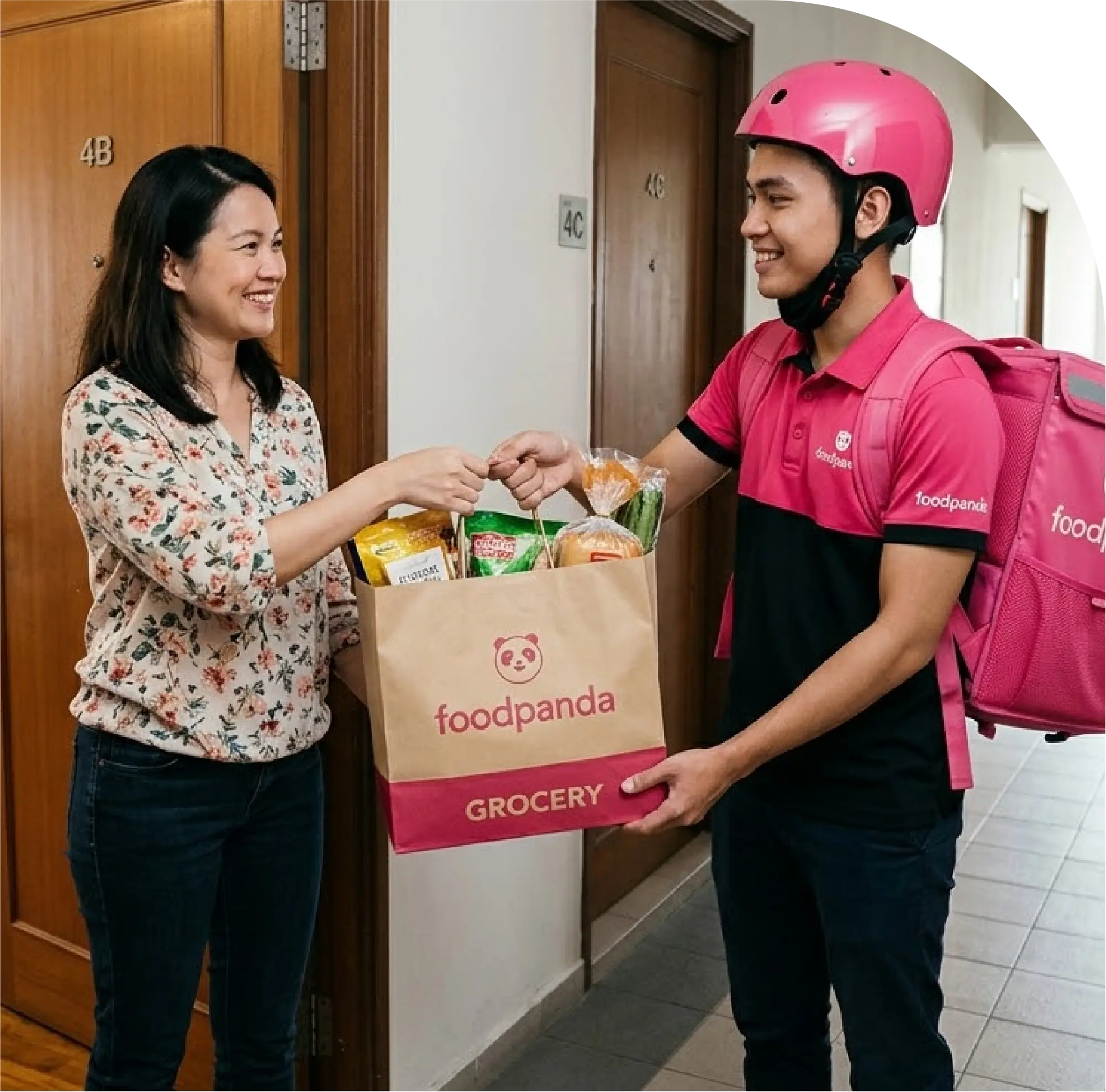
Foodpanda operates one of the largest quick-commerce grocery networks in Asia through its pandamart cloud stores, offering thousands of products and delivering groceries within roughly 25 minutes in many markets.
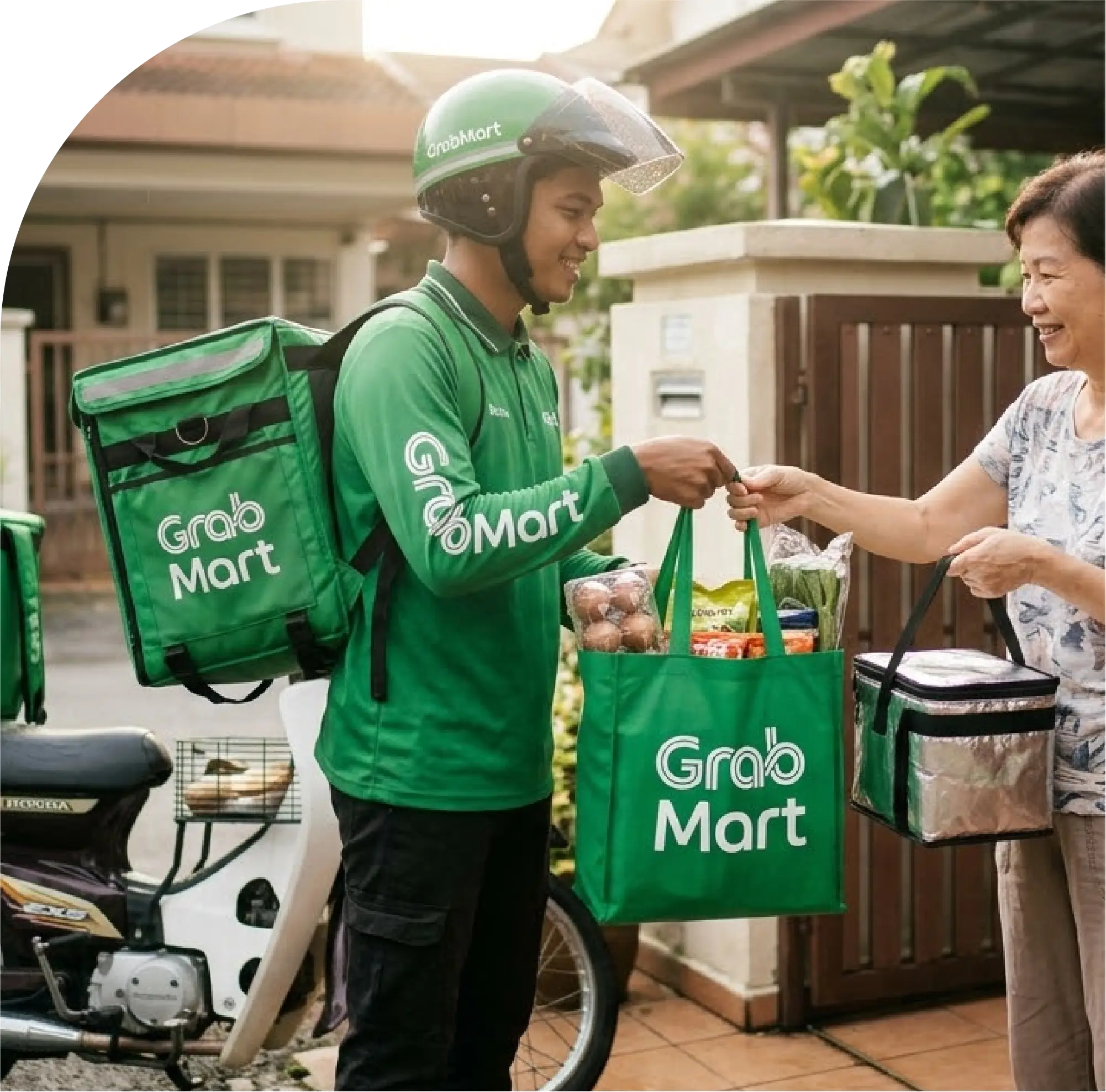
Meanwhile, GrabMart integrates supermarkets, pharmacies, and specialty retailers into a single marketplace, offering a broad selection of items and enabling deliveries often within about one hour depending on location.
These platforms frequently launch flash promotions on beverages, snacks, dairy, and household essentials, making continuous data monitoring essential for competitive intelligence.
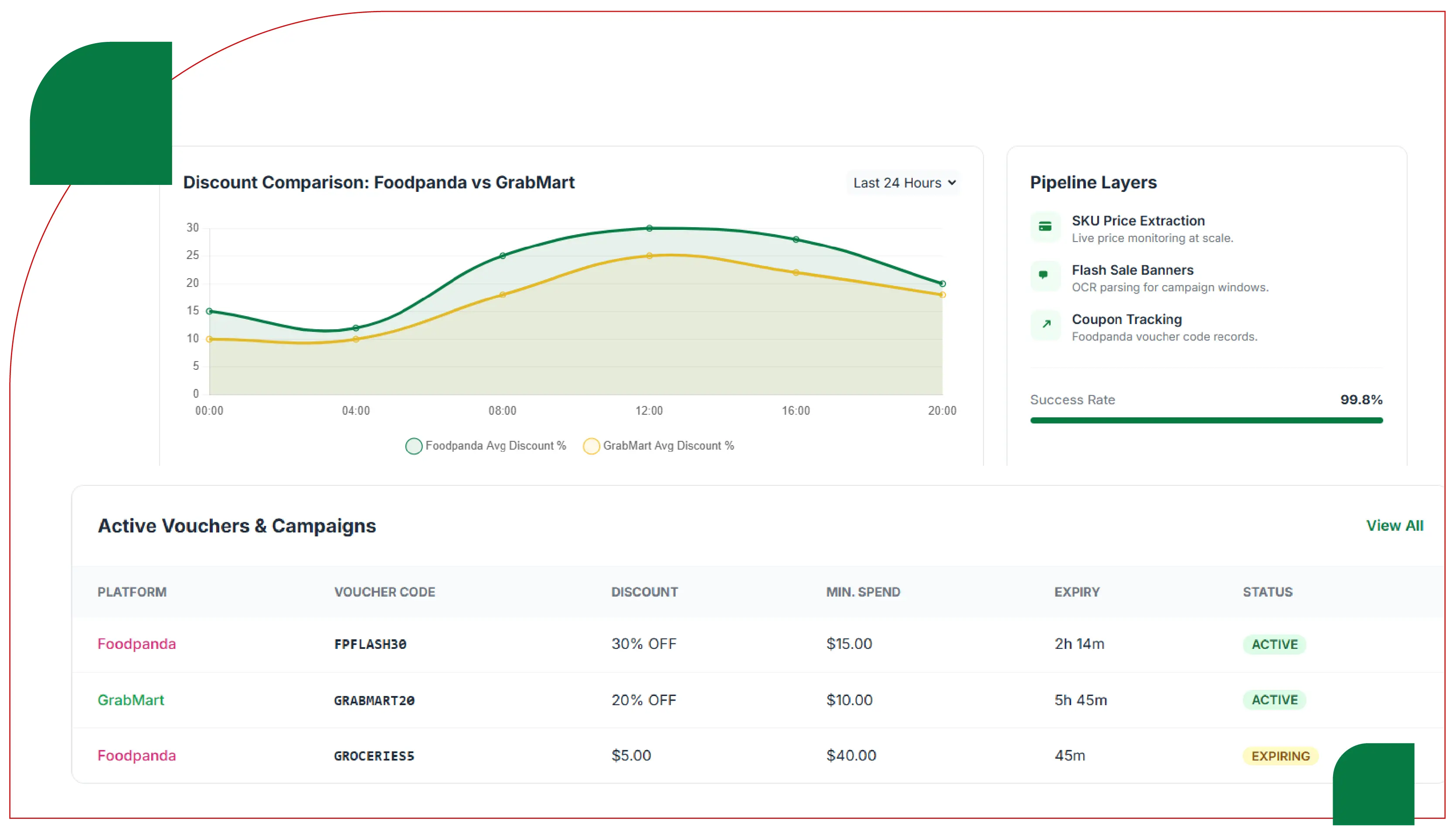
Modern analytics platforms rely on automated pipelines to capture grocery promotion data. Scraping systems monitor product pages, promotional banners, coupon codes, delivery charges, and limited-time campaign windows.
The process typically includes the following data layers:
Through advanced pipelines, businesses can Scrape Foodpanda vs GrabMart Flash Sale Data at scale, capturing thousands of promotional changes across multiple cities and store partners every hour.
Another important component is Foodpanda Deal And Coupon Data Extraction, which records voucher codes, percentage discounts, minimum order values, and expiry durations associated with promotional campaigns.
Retail intelligence teams also use Competitive Discount Monitoring Foodpanda Vs GrabMart to compare how different platforms position their discount campaigns for similar product categories.
| Metric | Foodpanda (Pandamart / Shops) | GrabMart | Insights |
|---|---|---|---|
| Average Flash Sale Frequency | 4–6 promotions per day | 3–5 promotions per day | Foodpanda typically runs more frequent short-term promotions |
| Average Discount Range | 15% – 45% | 10% – 40% | Foodpanda often pushes higher discounts during weekend events |
| Most Promoted Categories | Snacks, Beverages, Frozen Foods, Instant Meals | Fresh Produce, Beverages, Household Items | GrabMart focuses more on grocery staples |
| Flash Sale Duration | 2–6 hours | 3–8 hours | GrabMart campaigns usually run longer |
| Coupon Stackability | Voucher + Store Discount | Mostly Voucher-Based | Foodpanda offers more layered promotions |
| Campaign Peak Timing | 12 PM – 2 PM, 7 PM – 10 PM | 11 AM – 1 PM, 6 PM – 9 PM | Peak promotional windows align with meal and grocery demand |
| Seasonal Campaigns | Payday Sales, Mega Flash Weekends | Grab Deals Day, Partner Store Promotions | Both platforms rely on periodic mega campaigns |
| Product Count per Flash Sale | 100–300 SKUs | 80–250 SKUs | Similar promotional scale |
| Delivery Fee Discounts | Frequent free delivery vouchers | Limited-time free delivery | Foodpanda uses delivery discounts more aggressively |
| Merchant Participation | Cloud stores + partner retailers | Mostly partner supermarkets | Merchant ecosystem differs significantly |
Data extracted from promotional tracking dashboards shows that beverage brands, snack manufacturers, and dairy suppliers dominate flash sales across both platforms due to high impulse purchase rates.
Platforms increasingly integrate GrabMart Flash Sale Price Scraping tools to track real-time changes across product listings and promotions.
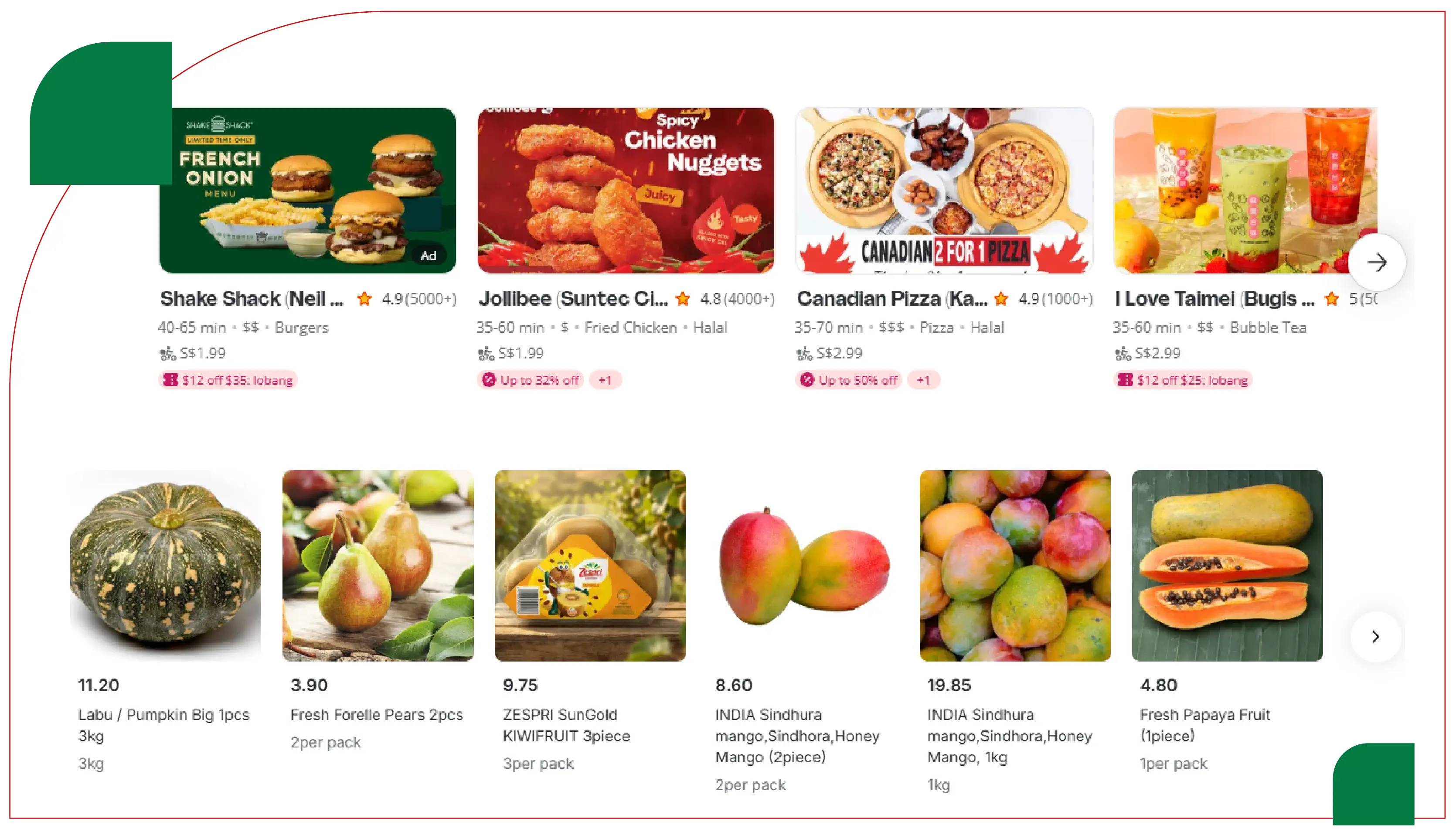
To build a competitive analytics ecosystem, organizations deploy multiple extraction APIs and automated monitoring layers.
One important system is the Foodpanda Grocery Delivery Scraping API, which collects product listings, prices, discounts, ratings, and inventory updates across thousands of pandamart SKUs.
Similarly, the GrabMart Grocery Delivery Scraping API captures merchant-level data including store promotions, SKU availability, bundle offers, and flash deal banners.
These systems form the backbone of large-scale Web Scraping Grocery Data infrastructure used by retail intelligence companies and market researchers.
Typical data points extracted include:
These datasets are delivered through structured pipelines using a Grocery Delivery Extraction API, enabling seamless integration into business intelligence platforms.
| Product Category | Product Example | Platform | Regular Price (USD Equivalent) | Flash Sale Price | Discount % | Coupon Applied | Promotion Duration |
|---|---|---|---|---|---|---|---|
| Beverages | Coca-Cola 1.5L | Foodpanda | 2.20 | 1.60 | 27% | Yes | 4 Hours |
| Snacks | Lay’s Classic Chips | Foodpanda | 1.80 | 1.20 | 33% | Yes | 3 Hours |
| Dairy | Milk 1L | Foodpanda | 2.40 | 1.85 | 23% | No | 5 Hours |
| Instant Meals | Cup Noodles | Foodpanda | 1.50 | 0.99 | 34% | Yes | 2 Hours |
| Fresh Produce | Bananas (1kg) | GrabMart | 2.10 | 1.75 | 17% | No | 6 Hours |
| Frozen Foods | Chicken Nuggets | GrabMart | 5.40 | 4.10 | 24% | Yes | 4 Hours |
| Beverages | Energy Drink 250ml | GrabMart | 2.80 | 2.10 | 25% | Yes | 5 Hours |
| Household | Dishwashing Liquid | GrabMart | 3.60 | 2.80 | 22% | No | 8 Hours |
| Breakfast Items | Cornflakes | Foodpanda | 4.50 | 3.25 | 28% | Yes | 6 Hours |
| Ice Cream | Chocolate Tub | GrabMart | 6.20 | 4.75 | 23% | Yes | 5 Hours |
These datasets help businesses build predictive models to understand which categories are most frequently discounted and which promotional strategies generate the highest conversion rates.
Many analytics teams integrate this data directly into a Grocery Price Dashboard that tracks live pricing across delivery platforms.
Flash sales and limited-time promotions have become a fundamental growth strategy in the quick-commerce industry. As platforms like Foodpanda and GrabMart continue expanding their grocery delivery ecosystems, real-time promotional intelligence becomes essential for brands, retailers, and data analytics firms.
Automated monitoring systems enable businesses to identify price fluctuations, track discount frequency, and analyze the effectiveness of promotional campaigns. With the integration of advanced dashboards and automated extraction tools, companies can transform raw promotional data into actionable insights.
Modern analytics platforms increasingly rely on Grocery Price Tracking Dashboard technologies to visualize discount patterns, promotional cycles, and SKU-level pricing changes.
At the same time, large-scale Grocery Data Intelligence ecosystems are helping brands understand competitive pricing dynamics across quick-commerce platforms.
These insights are powered by structured Grocery Datasets, enabling companies to make data-driven decisions on pricing strategy, promotional planning, and inventory optimization in the rapidly evolving digital grocery marketplace.
If you are seeking for a reliable data scraping services, Food Data Scrape is at your service. We hold prominence in Food Data AggregatorFood Data Aggregator and Mobile Restaurant App Scraping with impeccable data analysis for strategic decision-making.