Introduction
The modern food ecosystem is no longer defined only by taste, service, or brand reputation. It is increasingly defined by pricing intelligence across channels, where the same dish can have multiple price points depending on whether it is ordered in-store, via an app, or through third-party delivery platforms. This has created a powerful need for structured analytics that can measure, compare, and optimize pricing differences at scale.
Food Delivery vs In-Store Pricing Data for Gap Analysis is now widely used to understand how restaurants adjust prices across offline menus and online platforms to balance profitability and demand.
These variations are not accidental—they are driven by commissions, delivery logistics, packaging costs, and platform-specific promotional strategies.
Understanding the Core Pricing Problem
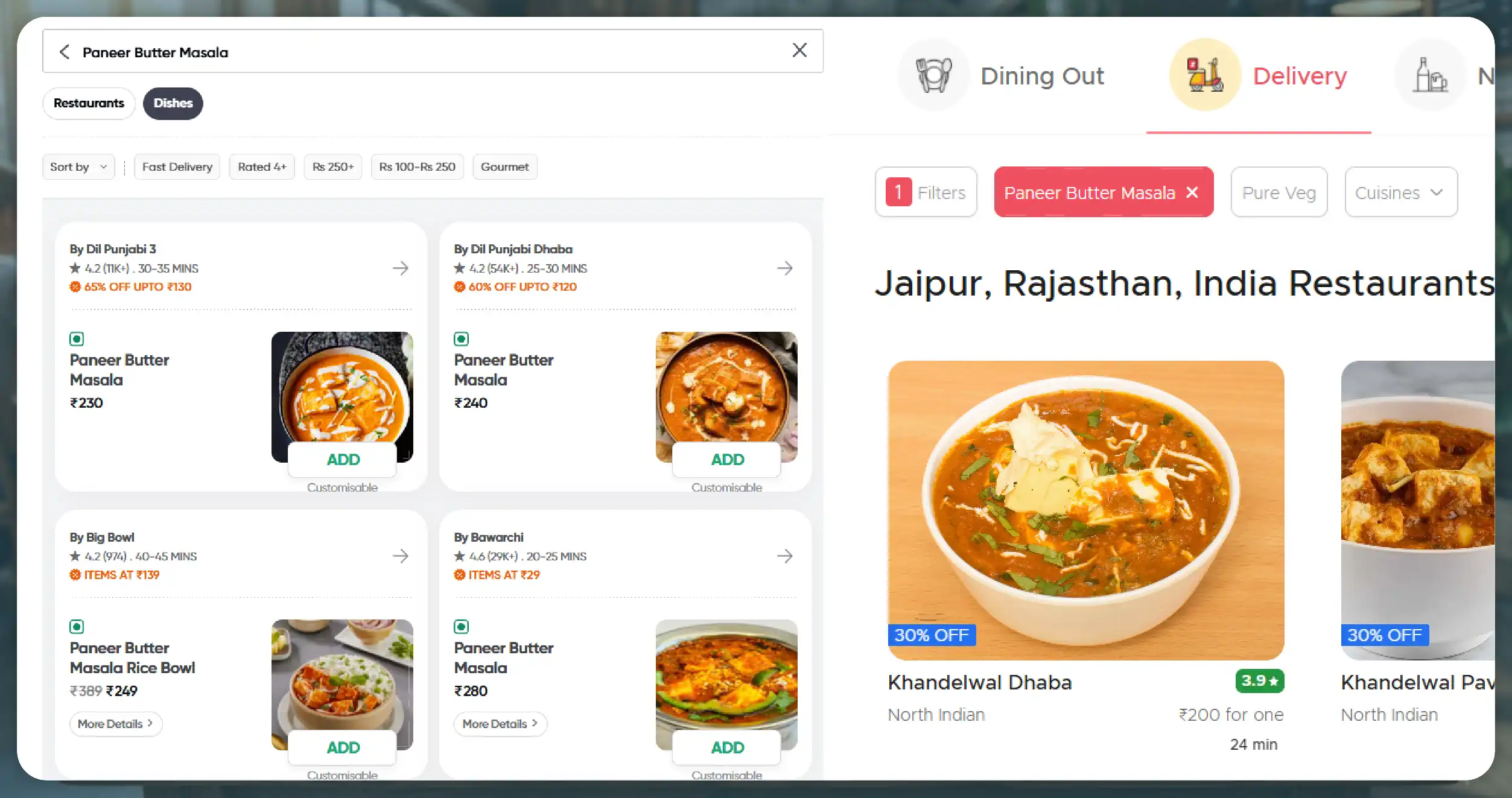
Restaurants today operate in a multi-channel pricing environment. A single item such as “Paneer Butter Masala” might have:
- One price in the physical restaurant
- A higher price on Swiggy
- A slightly different price on Zomato
- Occasional discounts during promotions
This inconsistency makes manual tracking impossible at scale.
Food Delivery vs In-Store Price Data Scraping enables automated collection of these variations across thousands of restaurants, cities, and cuisines, creating a structured foundation for pricing analytics.
When this data is captured continuously, businesses can clearly identify how pricing evolves over time and across platforms.
Real-Time Intelligence in Food Pricing
Pricing in the food industry is dynamic. Unlike traditional retail, food delivery platforms change prices frequently based on demand, time slots, and campaign strategies.
Real-Time Restaurant Pricing Data Extraction helps capture these fluctuations instantly, ensuring that even short-term discounts or surge pricing models are included in analysis.
This real-time visibility allows businesses to:
- Track live price changes
- Detect sudden markups
- Monitor competitor pricing shifts
- Evaluate platform-specific pricing behavior
Why Price Gaps Exist Between Delivery and Dine-In?
The gap between in-store and delivery pricing is influenced by multiple economic factors:
- Platform commission fees (15%–35%)
- Packaging and handling charges
- Delivery logistics costs
- Promotional discount recovery
- Dynamic demand-based pricing
- Regional tax and operational differences
Restaurants often increase online prices to maintain margins after platform deductions.
Food Delivery Pricing Intelligence vs In-Store Benchmarking helps quantify how much of this markup is applied per category, restaurant type, and location.
Large-Scale Data Collection Strategy
To analyze pricing gaps effectively, data must be collected at scale from multiple sources simultaneously.
The need to Scrape Food Delivery vs In-Store Price Gap Analysis allows businesses to automate extraction of menu prices from both offline and online sources, enabling structured comparison models.
This includes:
- Menu item names
- Price variations
- Combo offers
- Add-on pricing
- Category-level grouping
Item-Level Pricing Comparison
One of the most powerful use cases is item-level matching across platforms.
Delivery App vs Offline Menu Pricing Comparison focuses on identifying identical food items and comparing their prices across delivery apps and physical menus.
However, challenges arise due to:
- Different naming conventions (“Chicken Burger” vs “Spicy Chicken Burger”)
- Portion size variations
- Bundle differences
- Platform-specific menu customization
Advanced matching algorithms solve these inconsistencies using NLP-based mapping techniques.
Web Scraping and Data Infrastructure
At the core of pricing intelligence is a robust data extraction system that continuously collects structured food data.
Web Scraping Food Delivery Data enables large-scale extraction of restaurant listings, pricing, and menu structures from delivery platforms.
This ensures:
- Continuous monitoring of thousands of restaurants
- Updated datasets every few hours or days
- Scalability across cities and countries
Building Structured Restaurant Datasets
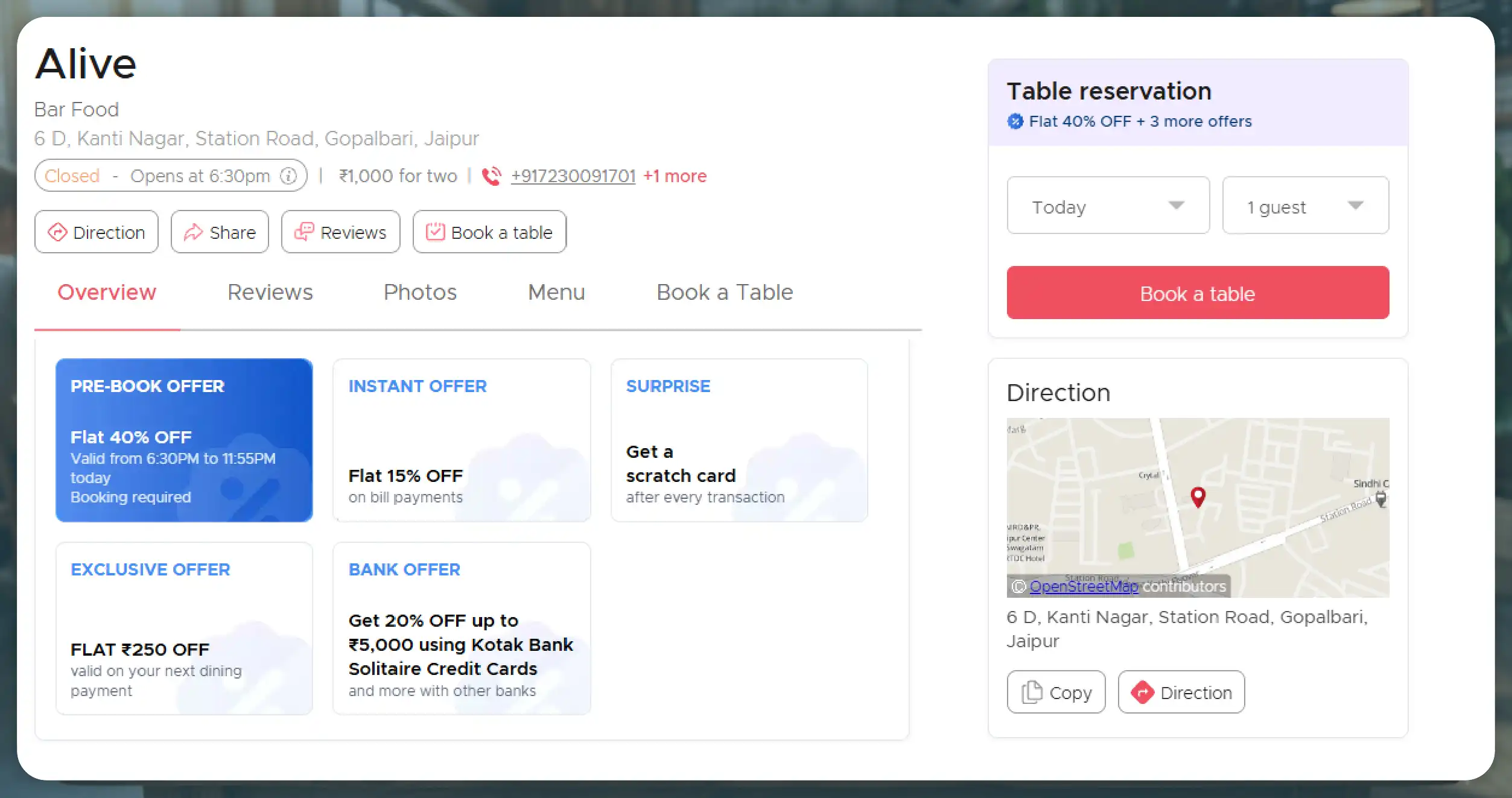
A major component of pricing analysis is structured menu extraction.
Extract Restaurant Menu Data to ensure that every menu item is captured with:
- Item name
- Description
- Price
- Variants (size, portion)
- Add-ons (extra cheese, toppings)
- Category tagging
This structured approach enables accurate comparison between offline and online pricing ecosystems.
Role of APIs in Food Pricing Intelligence
APIs simplify the process of collecting and integrating food data into analytics systems.
Food Delivery Scraping API provides real-time structured access to restaurant pricing, menus, and availability data across multiple platforms.
This eliminates manual scraping complexity and ensures:
- Standardized data formats
- Faster integration
- Real-time updates
- High scalability for enterprise systems
Restaurant Data Intelligence Ecosystem
Modern analytics goes beyond simple price tracking.
Restaurant Data Intelligence combines:
- Pricing data
- Customer demand patterns
- Competitor behavior
- Promotion tracking
- Location-based trends
This creates a full ecosystem for predictive pricing and strategic decision-making.
Detailed Comparison Table: Pricing Gap Analysis
| Food Item | In-Store Price (₹) | Swiggy Price (₹) | Zomato Price (₹) | Average Price Gap % | Key Insight |
|---|---|---|---|---|---|
| Veg Burger | 110 | 135 | 140 | 20–27% | Consistent markup across apps |
| Chicken Biryani | 200 | 235 | 240 | 17–20% | Stable pricing variation |
| Margherita Pizza | 260 | 310 | 320 | 19–23% | Delivery premium clearly visible |
| Cold Coffee | 95 | 120 | 125 | 25–31% | Beverage category highly inflated |
| Paneer Wrap | 140 | 165 | 170 | 18–21% | Moderate and consistent gap |
| French Fries | 85 | 105 | 110 | 23–29% | Small items show high percentage gap |
| Masala Dosa | 90 | 110 | 115 | 22–27% | Regional food also impacted |
| Chocolate Shake | 120 | 150 | 155 | 25–29% | High markup on beverages |
This table clearly shows that beverages and small snacks tend to have the highest percentage markups, while main meals show relatively moderate differences.
Business Applications of Pricing Gap Analysis
Pricing gap analysis is used across multiple industries:
- Restaurant Chains
They optimize pricing strategies to balance margins across dine-in and delivery channels. - Food Aggregators
They analyze pricing behavior to ensure fair marketplace practices and competitive balance. - Market Researchers
They study consumer sensitivity to delivery pricing vs in-store pricing. - Investors
They evaluate restaurant profitability models and platform dependency risks.
Key Challenges in Food Pricing Analytics
Despite technological advances, several challenges remain:
- Frequent menu updates across platforms
- Non-standardized item naming
- Dynamic pricing changes during peak hours
- Platform-specific promotional offers
- Anti-scraping restrictions
Solving these requires advanced automation, AI-based matching, and scalable infrastructure.
Strategic Impact of Pricing Intelligence
Organizations that adopt pricing intelligence systems gain significant advantages:
- Better margin optimization
- Improved customer retention
- Competitive benchmarking
- Demand forecasting
- Regional pricing insights
These insights allow businesses to make data-driven pricing decisions rather than relying on assumptions.
Future of Food Pricing Analytics
The future lies in predictive and automated pricing systems that continuously optimize restaurant menus in real time based on market conditions.
AI models will soon be able to:
- Predict competitor price changes
- Recommend optimal pricing per location
- Adjust delivery vs dine-in strategies dynamically
How Food Data Scrape Can Help You?
- Real-Time Pricing Intelligence
Our services continuously extract live food delivery and in-store prices, helping you track market changes instantly and accurately across platforms. - Competitor Benchmarking Insights
We collect structured competitor data to compare pricing strategies, enabling businesses to optimize menus and stay ahead in competitive markets. - Large-Scale Data Automation
We automate extraction of thousands of restaurant menus, saving time, reducing manual effort, and ensuring consistent, scalable data collection processes. - Accurate Market Trend Analysis
Our scraping solutions identify pricing patterns, demand shifts, and seasonal trends, helping businesses make data-driven strategic decisions efficiently and confidently. - Custom Food Data Solutions
We provide tailored datasets based on requirements, including cuisine type, region, or platform, ensuring highly relevant and actionable business insights.
Conclusion
The gap between delivery and in-store pricing is becoming one of the most important analytics areas in the food industry. Businesses that understand and optimize this gap can significantly improve profitability and customer satisfaction.
Food delivery Intelligence is evolving into a core decision-making layer for restaurants and aggregators, enabling smarter pricing strategies and real-time market responsiveness.
A centralized Food Price Dashboard helps visualize pricing gaps across platforms instantly, while large-scale Food Datasets power predictive models that reshape how pricing decisions are made in the food industry.
If you are seeking for a reliable data scraping services, Food Data Scrape is at your service. We hold prominence in Food Data Aggregator and Mobile Restaurant App Scraping with impeccable data analysis for strategic decision-making.