About the Client
The client is a fast-growing food delivery technology brand operating across multiple urban regions in Latin America. Their primary objective was to strengthen category performance and improve pricing competitiveness using high-quality intelligence sourced from online marketplaces. Using Web Scraping Rappi Restaurant Listings & Prices, we helped the client monitor restaurant growth trends, fees, promotions, cuisine mix shifts, and delivery performance. The integration of Rappi Food Menu and Price Data Scraper allowed precise tracking of item-level changes including portion size updates, bundle offers, and discount strategies. Leveraging Rappi Food Marketplace Data Scraping Services, the client extracted menu and marketplace intelligence to refine revenue models, optimize growth campaigns, and support strategic planning. The client now uses automated pricing alerts, trend dashboards, and competitor reporting frameworks created using the dataset.
Key Challenges
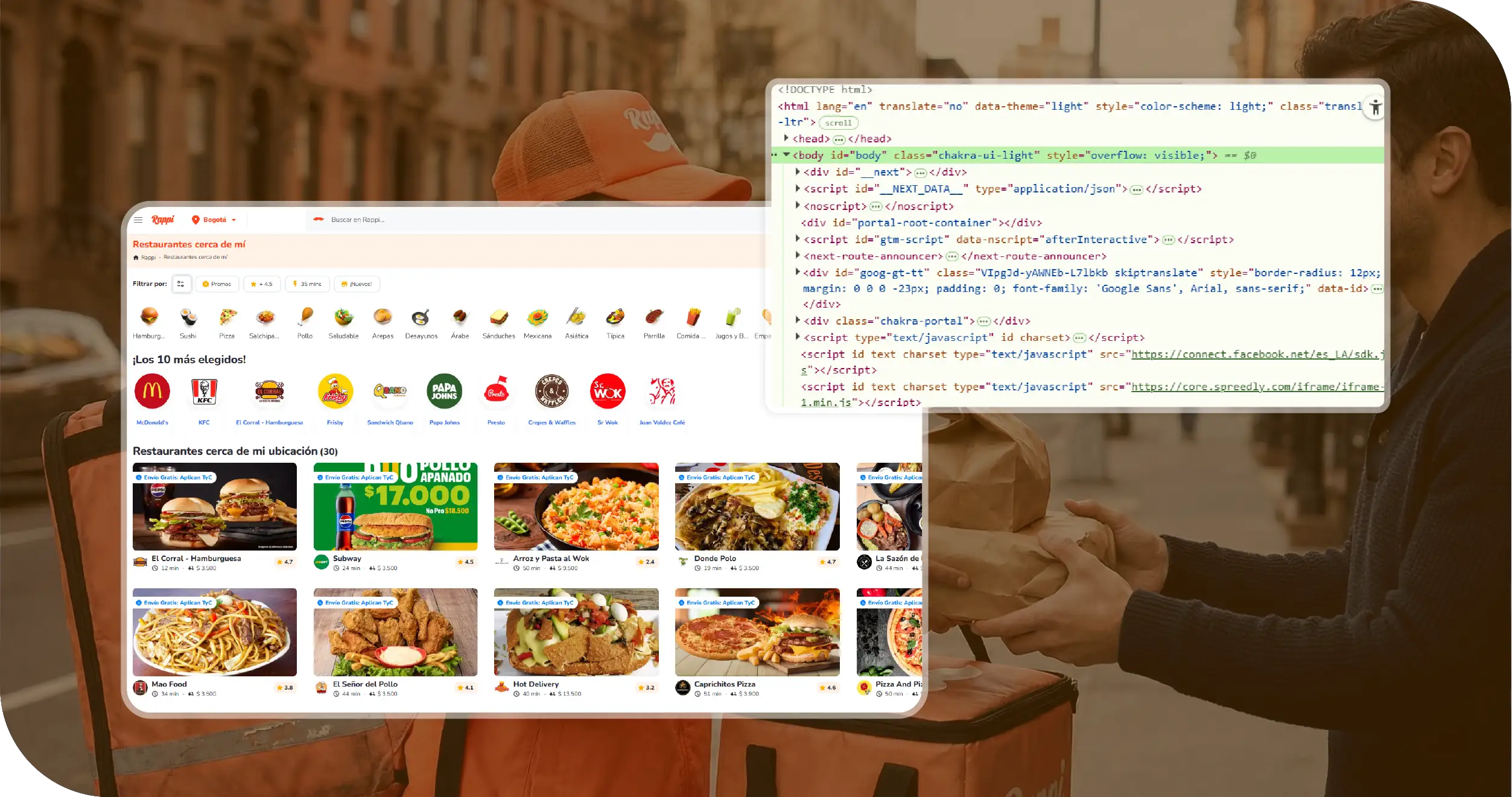
- Inconsistent Marketplace Structure : Variations in restaurant and menu formatting across regions made structured extraction difficult. Using data extracted from Rappi Food Delivery Dataset, we addressed inconsistent formatting by organizing data using classification rules to support analytics and menu normalization for reporting accuracy.
- Rapid Listing & Price Changes : Dynamic pricing, new listings, and frequent menu updates required real-time monitoring. With Rappi Food Delivery Scraping API, automated crawlers were optimized to track changing prices, delivery fees, and promotions to maintain continuously updated datasets for decision-making.
- Data Accessibility & Scale : Extracting large datasets across cities and segments required scalable systems. With Extract Rappi Food Delivery Data, we deployed distributed crawlers capable of capturing millions of rows with optimal accuracy, ensuring high performance without system downtime.
Key Solutions
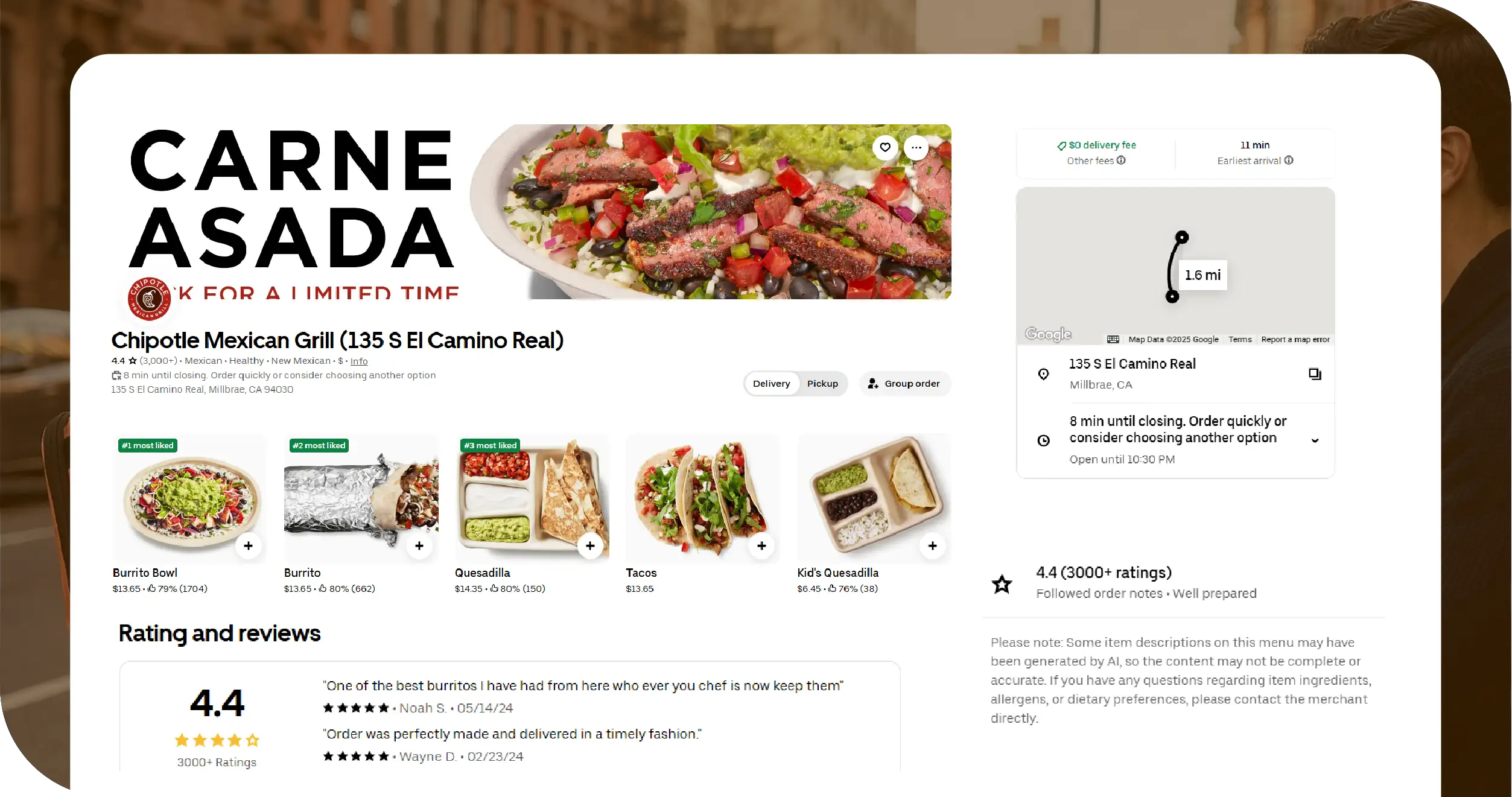
- Automated Menu Pipelines : We deployed Food Delivery Data Scraping Services to extract structured menu items, pricing fields, availability status, cuisine tags, and restaurant metadata using scalable automated pipelines ensuring consistent updates for competitive monitoring.
- Real-Time Trend Dashboards : Using Food Delivery Scraping API Services, the client received live insights on menu fluctuations, pricing strategies, discounts, and customer rating movements through automated dashboards supporting instant decision-making and reporting.
- Centralized Intelligence Repository : We provided a unified data warehouse powered by Restaurant Data Intelligence Services, enabling seamless connection to BI dashboards, predictive analytics tools, and marketing systems for automated intelligence processing.
Sample Data Table
| Restaurant Name | Cuisine Type | Avg Price | Delivery Fee | Rating |
|---|---|---|---|---|
| Tacos El Primo | Mexican | $7.50 | $1.99 | 4.6 |
| BurgerHouse | Fast Food | $9.20 | $2.49 | 4.4 |
| SushiGo | Japanese | $12.80 | $3.10 | 4.7 |
| PastaBello | Italian | $10.10 | $2.30 | 4.5 |
Methodologies Used
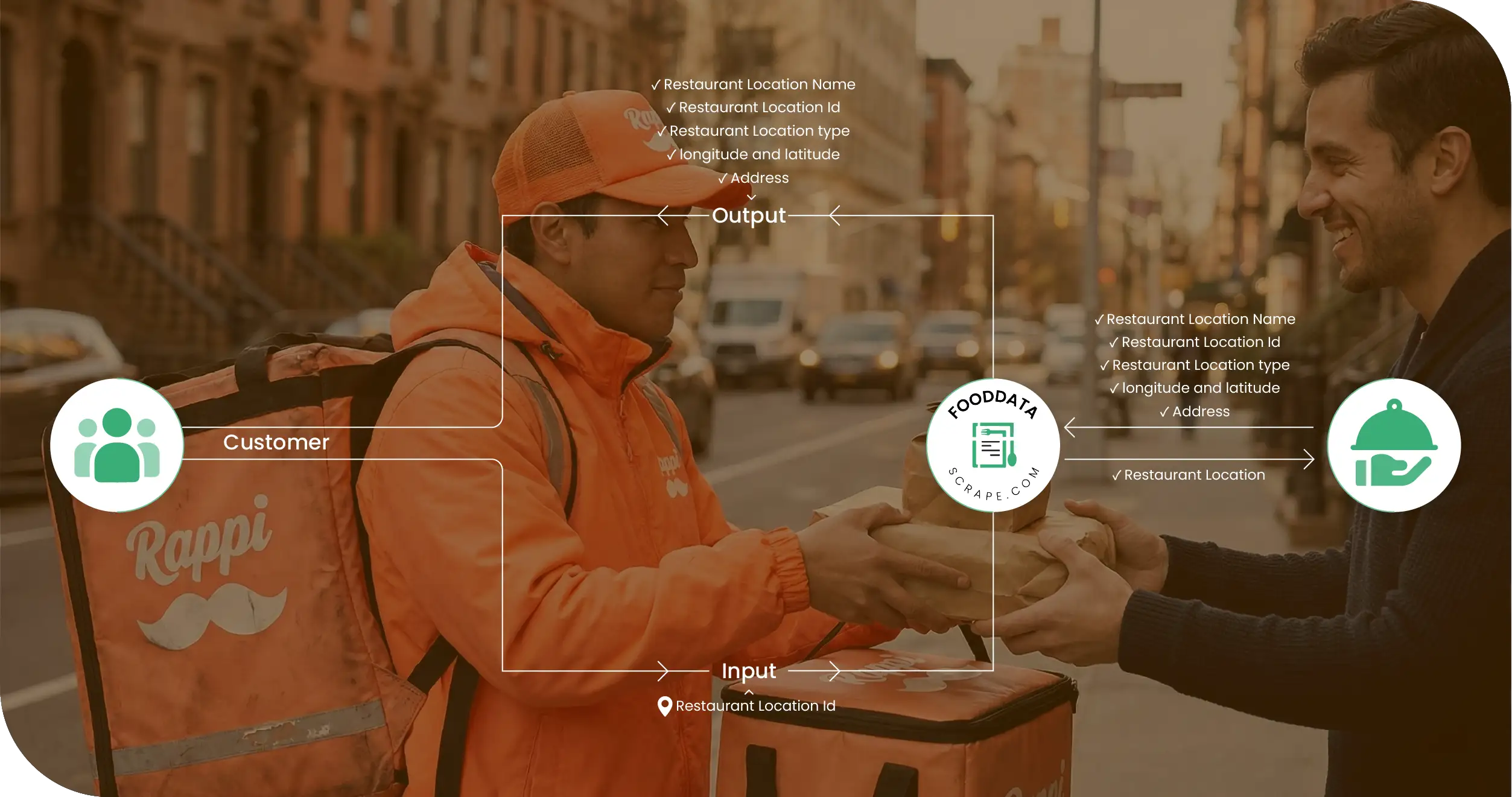
- Structured Web Crawling : Implemented systematic crawling patterns to scan menu pages, extract data, and ensure structured formatting across categories while preserving regional variations.
- Data Parsing Framework : Parsed raw HTML and API responses into structured formats ensuring item-level accuracy, eliminating unstructured inconsistencies in text descriptions, pricing values, and filters.
- Validation & Cleansing : Validated extracted records against internal quality rules to remove duplicates, correct errors, and normalize fields such as price ranges, category labels, and item units.
- Automated Refresh Scheduling : Configured automated update frequencies to track changing menu items, prices, promotions, and restaurant availability at daily or hourly intervals.
- Analytics Integration : Integrated cleaned datasets with dashboards, predictive models, and business intelligence tools to support trend forecasting, cost analysis, and strategic reporting.
Advantages of Collecting Data Using Food Data Scrape
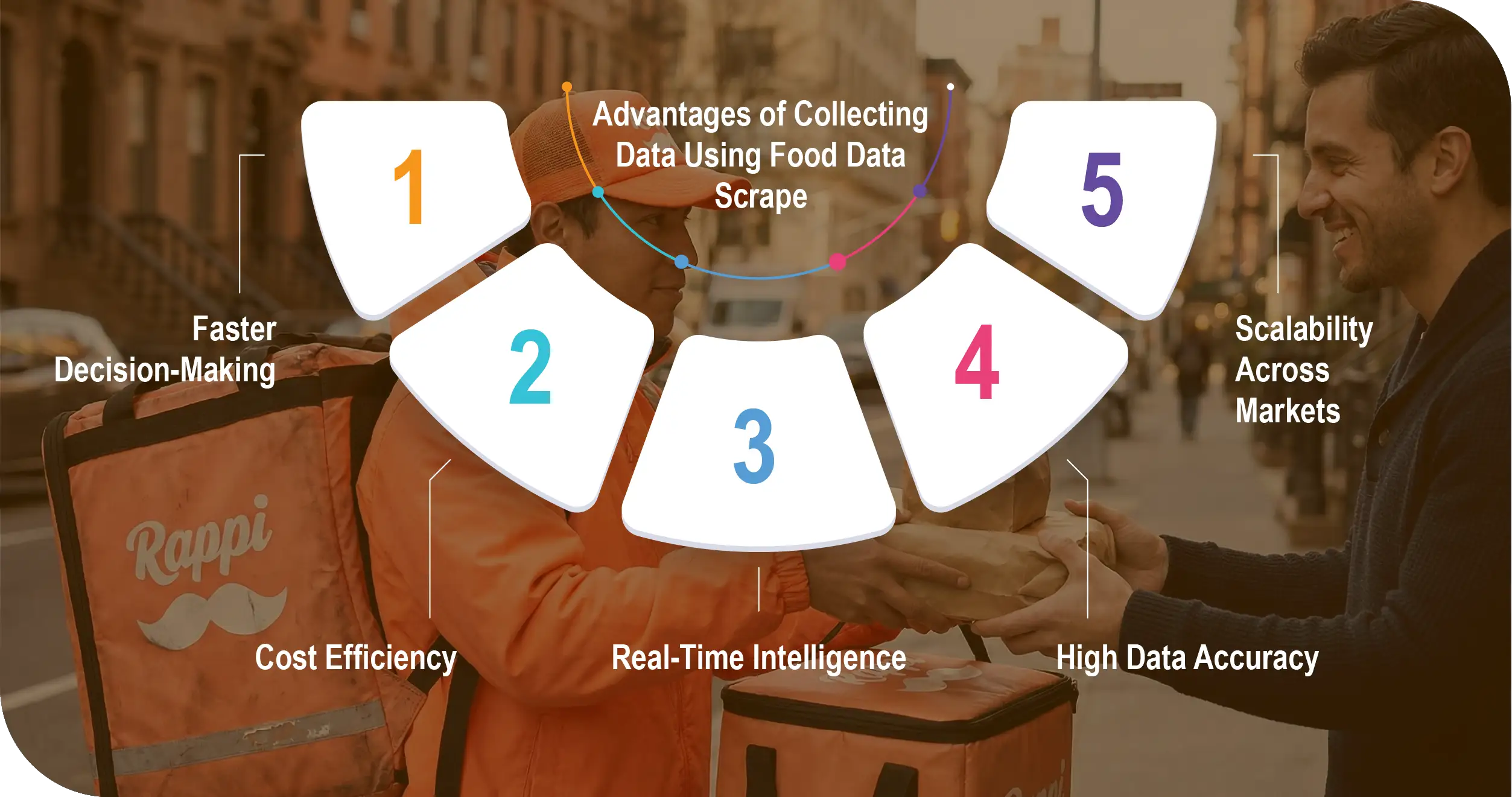
- Faster Decision-Making : Clients receive structured, ready-to-use intelligence that accelerates decision cycles across pricing, menu strategy, and demand forecasting.
- Cost Efficiency : Automated extraction eliminates repetitive manual research, saving time and reducing labor investment.
- Real-Time Intelligence : With continuously refreshed datasets, businesses react quickly to changing trends, competitor shifts, and new promotions.
- High Data Accuracy : Validation frameworks ensure structured records without duplicates or incorrect entries.
- Scalability Across Markets : The system easily adapts to new regions, categories, and restaurant ecosystems without technical overhaul.
Client Testimonial
"Working with this data intelligence team transformed how we analyze food delivery ecosystems. The Rappi-based dataset allowed us to compare competitors, optimize menu pricing, and evaluate customer responses to new product launches with precision. The automated dashboards gave our operational and marketing teams real-time insights that previously took weeks to compile. The accuracy, speed, and scalability of the dataset exceeded expectations and now plays a crucial role in our growth strategy."
Strategy Lead
Final Outcome
The implementation of structured intelligence empowered the client to elevate menu strategy, pricing accuracy, and competitive benchmarking. With insights powered by Food delivery Intelligence services, the client improved portfolio alignment and response time to competitor price movements. Using the Food Price Dashboard, real-time monitoring helped streamline promotional campaigns and category expansion decisions. The integrated Food Delivery Datasets now power predictive analytics, enabling more strategic decision-making across product innovation, growth planning, and operational execution.