The Client
The client is a data-driven food intelligence company focused on improving procurement visibility and cost optimization across the FMCG and food supply chain ecosystem. It specializes in aggregating pricing signals from multiple retail and wholesale channels to help businesses make faster and more accurate purchasing decisions. By leveraging advanced analytics and structured datasets, the client supports enterprises in managing volatile food inflation and supply chain fluctuations.
Real-Time Food Price Tracking with Web Scraping enables the client to continuously monitor market pricing shifts and benchmark costs across suppliers for better procurement planning and margin control.
The strategy to Scrape grocery raw material cost data is used by the client to identify cost variations in essential inputs like grains, oils, dairy, and packaged ingredients across regions and vendors.
However, the method to Scrape grocery SKU-level pricing data allows the client to maintain granular visibility at product level, ensuring accurate price comparisons, demand forecasting, and strategic sourcing decisions across retail networks.
Key Challenges
- Inconsistent Data Structures Across Sources
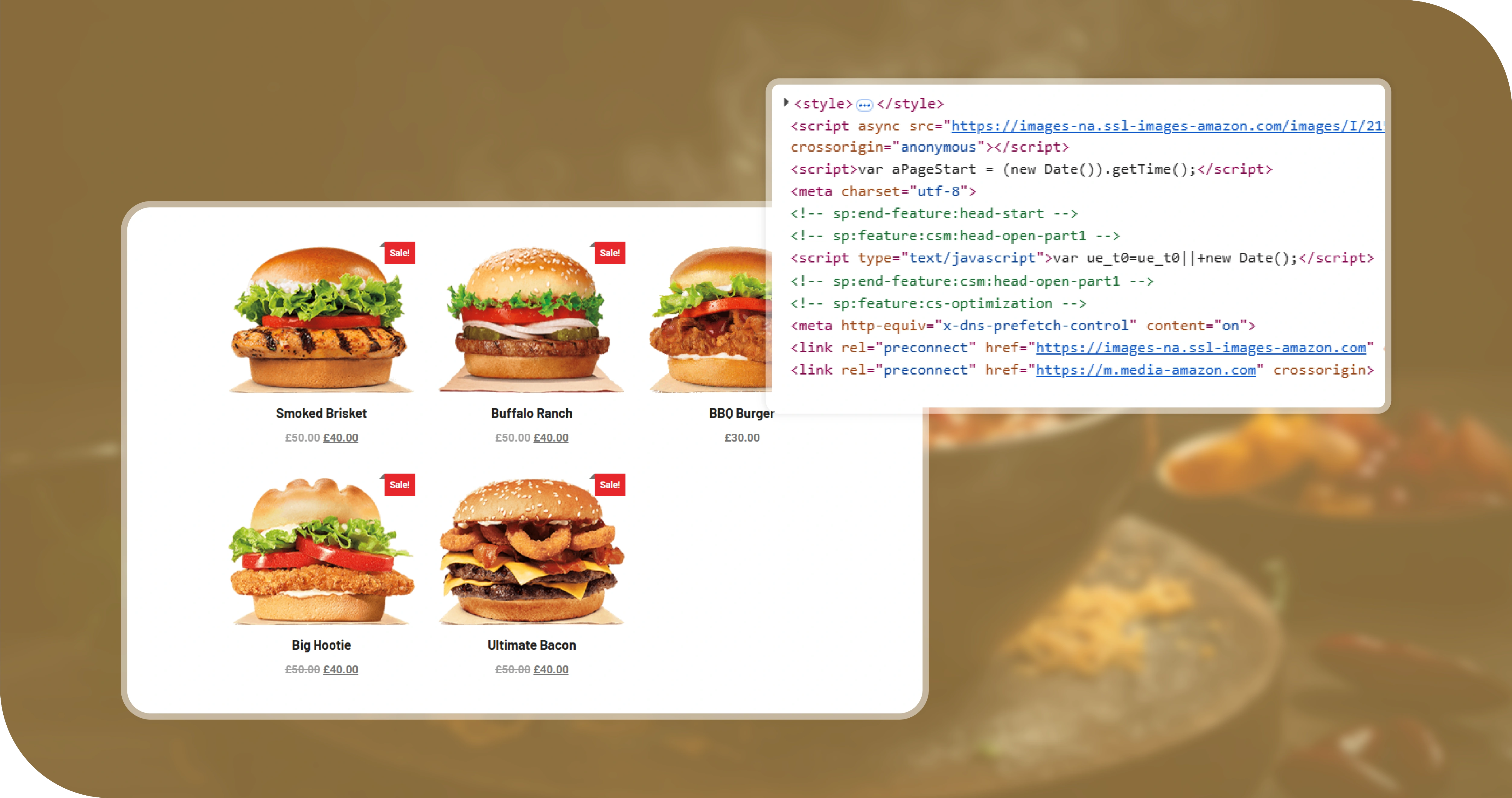
The client struggled with highly inconsistent pricing formats across retailers, wholesalers, and distributor feeds, making normalization difficult. Different update frequencies and missing attributes reduced accuracy in benchmarking. Implementing grocery price scraping API helped, but continuous schema alignment and validation remained a significant operational challenge across systems and workflows. - Delayed Insights for Pricing Decisions
The client faced delays in converting raw grocery data into actionable insights, impacting procurement speed and cost optimization decisions. Batch processing and lagging updates reduced responsiveness in volatile markets. Building Retail grocery price intelligence required advanced pipelines, but maintaining real-time accuracy across fluctuating price environments remained difficult. - Scaling Extraction Across Dynamic Websites
Frequent website layout changes, anti-bot mechanisms, and high-volume SKU tracking created major scaling challenges for the client’s data operations. Ensuring uninterrupted extraction without data loss was complex. Expanding Web Scraping Grocery Data systems required continuous maintenance, adaptive crawlers, and infrastructure scaling to handle millions of daily product-level requests.
Key Solutions
- Centralized Delivery Data Integration System
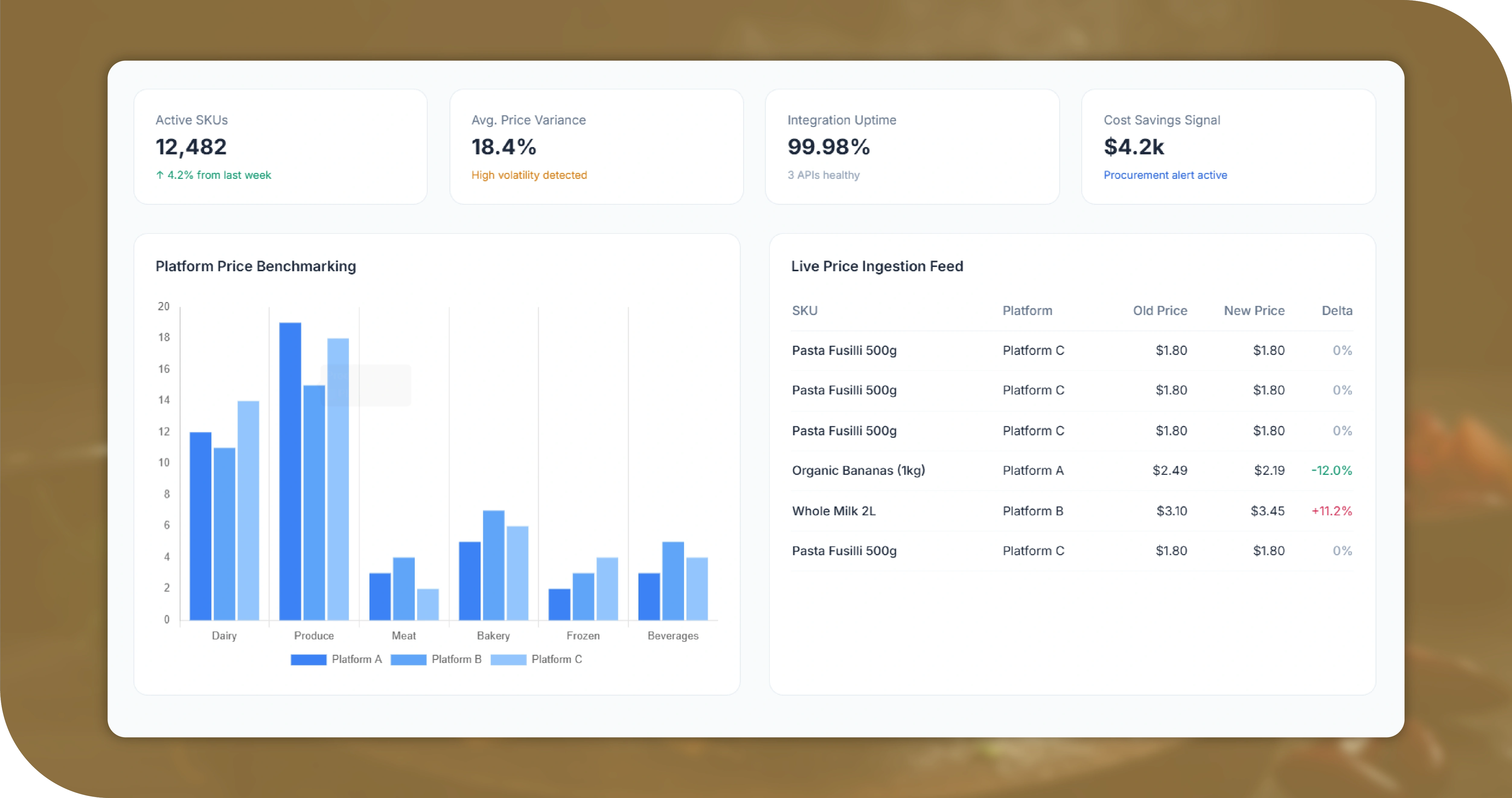
We implemented an integrated pipeline that consolidates multiple grocery delivery platforms into a unified structure for better pricing visibility and analytics accuracy. The system improves operational control and reduces fragmentation across datasets. Grocery Delivery Extraction API enables seamless ingestion of real-time delivery data across SKUs, categories, and regions. - Real-Time Pricing Intelligence Interface
We developed a dynamic intelligence layer that converts raw grocery pricing signals into actionable insights for procurement and merchandising teams. This supports faster decision-making and cost optimization. The Grocery Price Dashboard provides an interactive view of price fluctuations, supplier trends, and category-level benchmarking in real time. - Advanced Monitoring & Visualization Layer
We built a scalable monitoring framework that continuously tracks grocery pricing changes across thousands of products and suppliers with high accuracy. This enhances visibility into market volatility and cost shifts. The Grocery Price Tracking Dashboard delivers real-time alerts, historical comparisons, and SKU-level performance insights for strategic planning.
Sample Data
| SKU ID | Product Name | Category | Platform | Base Price (₹) | Discount (%) | Final Price (₹) | Raw Material Cost (₹) | Packaging Cost (₹) | Freight Cost (₹) | Supplier Region | Last Updated | Stock Status |
|---|---|---|---|---|---|---|---|---|---|---|---|---|
| SK101 | Refined Sunflower Oil 1L | Edible Oil | Instamart | 165 | 10 | 148.5 | 92 | 18 | 12 | North India | 2026-05-06 | In Stock |
| SK102 | Basmati Rice 5kg | Grains | Zepto | 520 | 8 | 478.4 | 310 | 25 | 22 | Punjab | 2026-05-06 | In Stock |
| SK103 | Whole Wheat Flour 10kg | Staples | Blinkit | 420 | 5 | 399 | 240 | 20 | 18 | Haryana | 2026-05-06 | Low Stock |
| SK104 | Milk Powder 1kg | Dairy | Swiggy Instamart | 610 | 12 | 536.8 | 410 | 35 | 28 | Maharashtra | 2026-05-06 | In Stock |
| SK105 | Sugar 1kg | Sweeteners | Zepto | 55 | 4 | 52.8 | 32 | 5 | 6 | Uttar Pradesh | 2026-05-06 | In Stock |
| SK106 | Cooking Salt 1kg | Essentials | Blinkit | 25 | 0 | 25 | 12 | 3 | 4 | Gujarat | 2026-05-06 | In Stock |
| SK107 | Tomato Ketchup 500g | Condiments | Instamart | 90 | 15 | 76.5 | 48 | 10 | 8 | Karnataka | 2026-05-06 | In Stock |
| SK108 | Instant Noodles Pack | Packaged Food | Swiggy Instamart | 120 | 10 | 108 | 65 | 12 | 10 | Delhi NCR | 2026-05-06 | In Stock |
Methodologies Used
- Multi-Source Data Aggregation Methodology
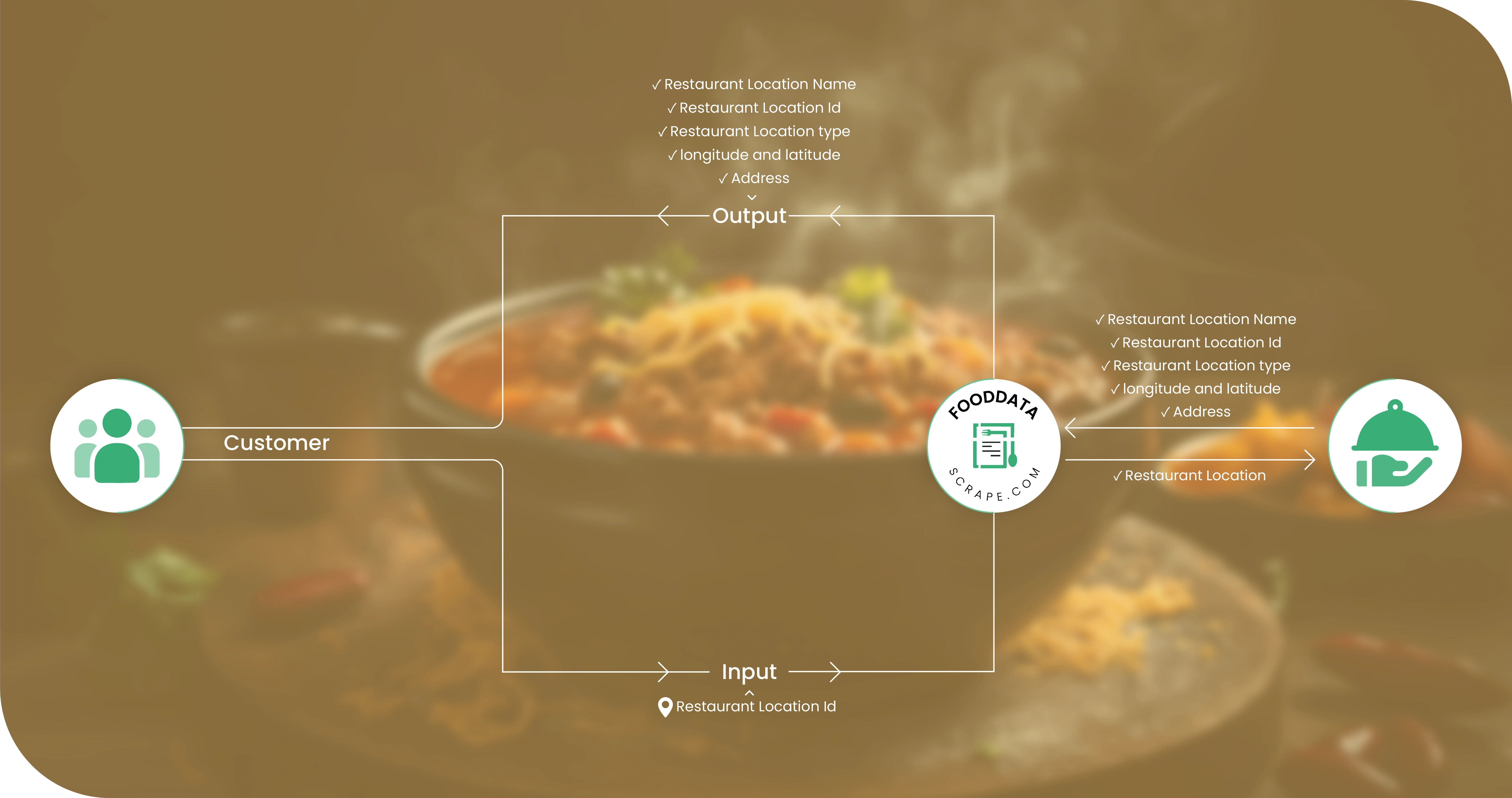
We implemented a multi-source aggregation approach to collect structured and unstructured data from multiple grocery platforms simultaneously. This ensured comprehensive coverage across retailers, reduced data gaps, and enabled consistent comparison of pricing, availability, and cost components across different supply chain channels effectively. - Dynamic Web Crawling Framework
We designed adaptive crawling systems capable of handling frequently changing website structures and product page layouts. The framework intelligently detects changes in HTML patterns and adjusts extraction logic automatically, ensuring uninterrupted data collection without manual intervention while maintaining accuracy and speed at scale. - Data Normalization and Standardization Layer
A robust normalization process was applied to convert heterogeneous data formats into a unified schema. This included cleaning, deduplication, and standard unit conversion across SKUs, enabling reliable analytics, better comparability, and improved decision-making for pricing and procurement teams across operations consistently. - Real-Time Processing Pipeline Architecture
We built a streaming-based processing system that ingests and processes pricing data in near real time. This architecture minimizes latency between data collection and insight generation, enabling faster detection of price shifts, cost variations, and market fluctuations across multiple product categories efficiently. - Scalable SKU-Level Tracking System
A high-performance tracking system was developed to monitor thousands of SKUs continuously across multiple platforms. It ensures granular visibility into product-level pricing and availability trends, supporting long-term forecasting, competitive benchmarking, and strategic sourcing decisions across dynamic and fast-changing grocery ecosystems reliably.
Advantages of Collecting Data Using Food Data Scrape
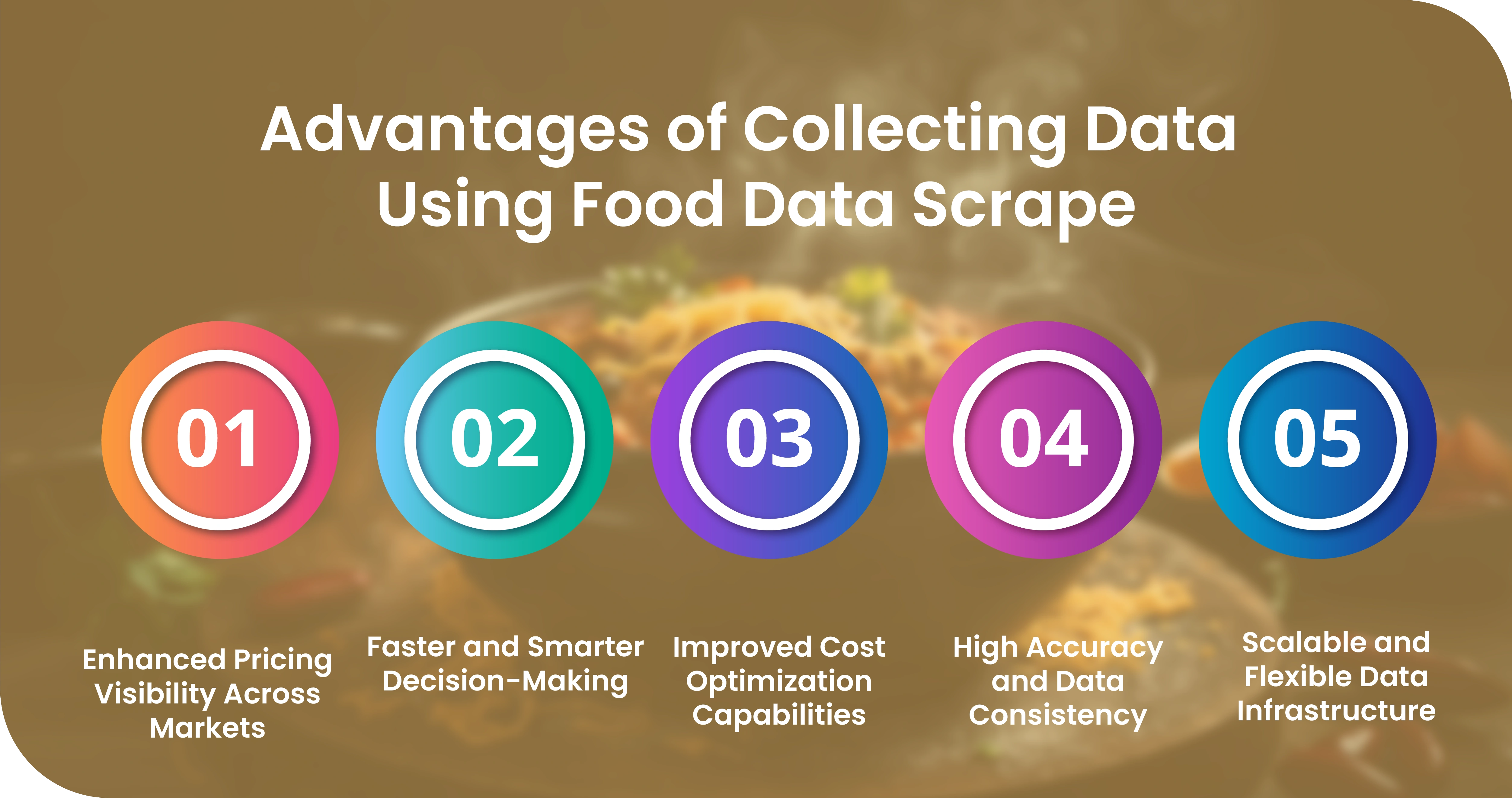
- Enhanced Pricing Visibility Across Markets
Our solutions provide complete visibility into price movements across multiple suppliers and channels. This helps organizations quickly identify fluctuations, compare costs effectively, and make informed purchasing decisions that improve margin control and strengthen overall procurement strategy across dynamic and competitive markets. - Faster and Smarter Decision-Making
By delivering structured and timely data, our systems reduce delays in analysis and reporting. Businesses can react faster to market changes, optimize sourcing strategies, and adjust pricing decisions with confidence, ensuring operational agility and improved responsiveness in highly volatile supply environments. - Improved Cost Optimization Capabilities
Our approach helps organizations break down cost components such as sourcing, packaging, and logistics. This enables better understanding of cost drivers, leading to optimized procurement strategies, reduced wastage, and improved overall efficiency in managing supply chain expenditures across product categories. - High Accuracy and Data Consistency
We ensure that collected information is cleaned, standardized, and validated before analysis. This reduces errors caused by inconsistent formats or missing values, allowing businesses to rely on accurate insights for forecasting, budgeting, and long-term strategic planning across procurement operations. - Scalable and Flexible Data Infrastructure
Our systems are designed to handle large-scale data requirements across thousands of products and suppliers. This scalability ensures continuous performance even as data volume grows, supporting expanding business needs without compromising speed, accuracy, or reliability in analytics and reporting processes.
Client’s Testimonial
“Our experience working with the data solutions team has been extremely valuable for our procurement and pricing operations. The ability to access structured, real-time insights across multiple grocery categories has significantly improved our decision-making speed and cost visibility. Their systems helped us understand price fluctuations, supplier variations, and logistics impacts in a much more granular way than before. The consistency and accuracy of the data have strengthened our forecasting models and operational planning. Overall, the collaboration has enhanced our efficiency and given us a strong competitive advantage in managing large-scale grocery pricing intelligence.”
— Head of Supply Chain Analytics
Final Outcome
The final outcome of the project delivered significant transformation in how the client manages pricing, procurement, and supply chain visibility across grocery categories. By implementing structured data pipelines and real-time analytics, the organization achieved stronger control over cost fluctuations and supplier-level variations. Decision-making speed improved due to timely and accurate insights, enabling better forecasting and procurement efficiency. The system also enhanced transparency across multiple product categories and regions, reducing manual effort and errors.
Grocery Data Intelligence empowered the client to convert raw market signals into actionable insights for strategic planning and cost optimization across operations.
Additionally, standardized Grocery Datasets provided a reliable foundation for analytics, benchmarking, and long-term business intelligence, helping the client maintain consistency, scalability, and accuracy in pricing decisions across a highly dynamic market environment.