Our Client
The client, a global retail analytics firm, wanted accurate seasonal intelligence to refine pricing, assortment, and promotion strategies during peak holidays. Using Christmas Grocery Basket Data Extraction from Walmart, they gained visibility into bundled products, discount patterns, and fast-moving SKUs across regions. With deeper benchmarking needs, the team leveraged Extract Christmas Grocery Basket Data from Tesco to compare private labels, festive offers, and category-wise price shifts in the UK market. To complete the European view, Web Scraping Christmas Grocery Basket Data from Carrefour delivered insights on localized bundles, regional preferences, and cross-country demand trends. Together, these datasets helped the client identify gaps in competitor pricing, optimize festive bundles, and forecast demand with higher accuracy. The consolidated analysis reduced manual research time, improved campaign timing, and supported data-driven decisions for inventory planning, supplier negotiations, and holiday promotions. As a result, the client achieved better market alignment, improved margins, and stronger competitive positioning during the Christmas season.
Key Challenges
- Fragmented Multi-Platform Data Access
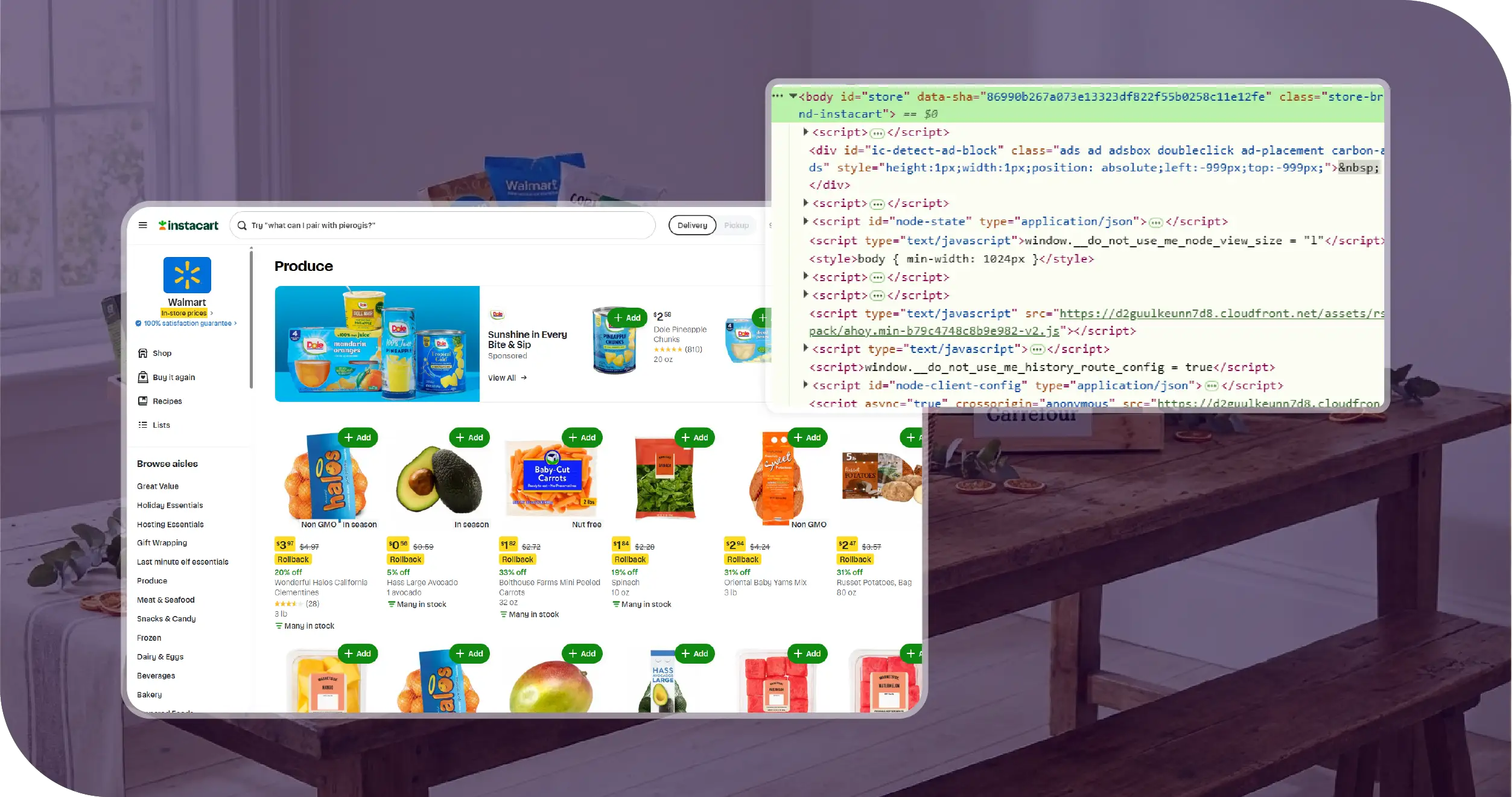
The client struggled to collect consistent grocery delivery data across regions due to frequent platform changes, rate limits, and anti-bot measures. Integrating data reliably from Amazon Fresh Grocery Delivery Scraping API required continuous monitoring and technical adjustments to maintain accuracy. - Inconsistent Pricing and Availability Updates
Rapid price fluctuations, dynamic discounts, and real-time stock changes created gaps in analysis. Capturing uniform datasets from Walmart Grocery Delivery Scraping API was challenging, as promotions and availability varied by location, time slot, and delivery window. - Limited Cross-Market Comparability
Differences in product naming, bundle structures, and private labels reduced comparability across countries. Normalizing data extracted via Tesco Grocery Delivery Scraping API demanded advanced mapping logic to align categories, SKUs, and promotional formats for meaningful insights.
Key Solutions
- Unified Data Collection Framework
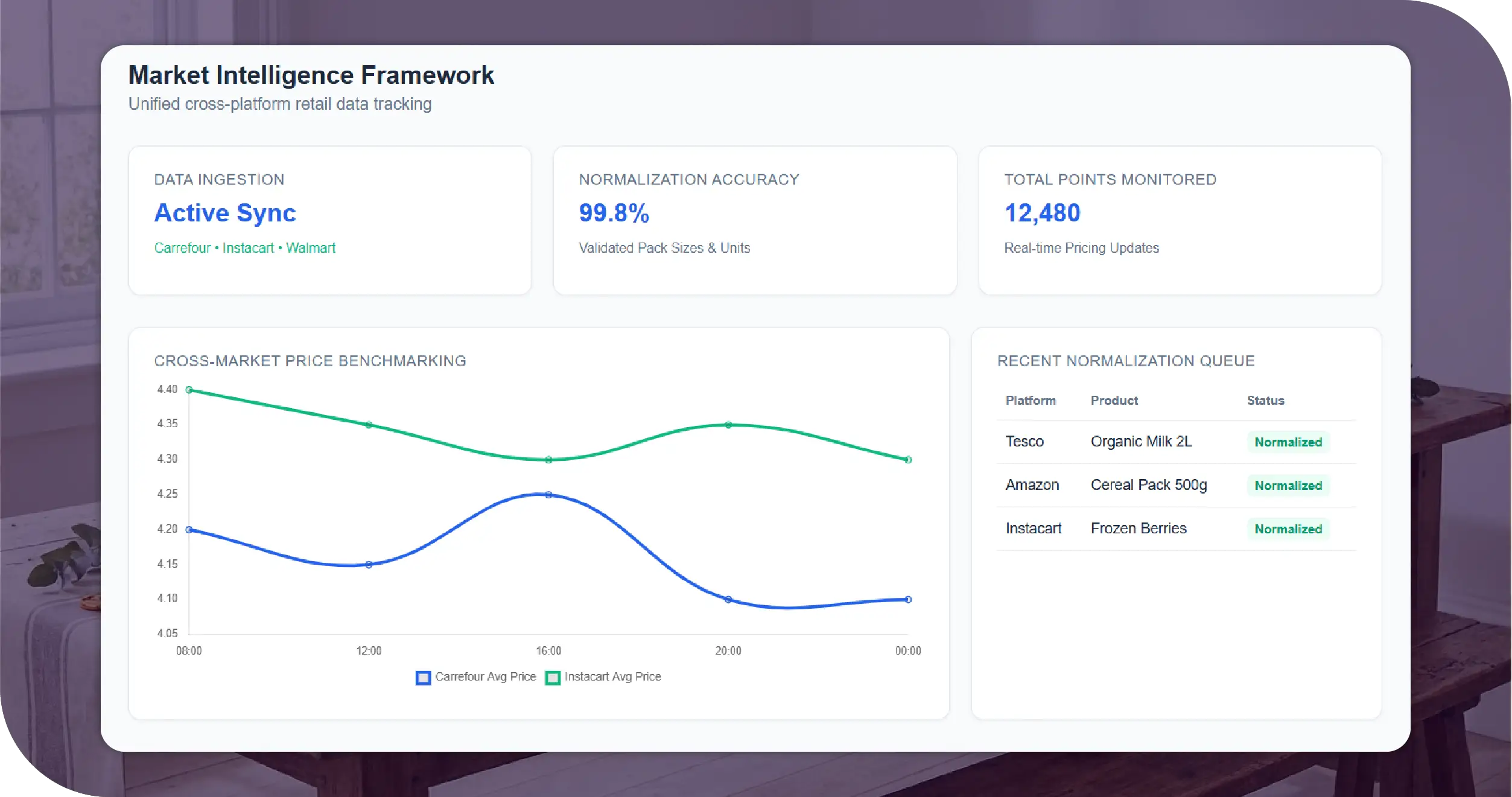
We implemented a centralized scraping architecture to collect real-time grocery delivery data across regions. By integrating Carrefour Grocery Delivery Scraping API, the client achieved consistent access to prices, availability, bundles, and promotions with automated updates and minimal manual intervention. - Advanced Normalization and Validation Layer
Our solution standardized product names, categories, pack sizes, and promotional formats across platforms. Using Instacart Grocery Delivery Scraping API, we ensured clean, comparable datasets through validation rules, duplicate removal, and location-based mapping for accurate cross-market analysis. - Scalable Analytics-Ready Delivery
We delivered structured datasets optimized for dashboards, forecasting, and reporting. With Grocery App Data Scraping services, the client gained scalable pipelines, scheduled refreshes, and export-ready formats, enabling faster decision-making for pricing strategy, inventory planning, and competitive benchmarking.
Sample Delivered Data Table
| Platform | Region | Products Tracked | Price Updates | Availability Accuracy |
|---|---|---|---|---|
| Carrefour | Europe | 18,500 | Hourly | 98% |
| Instacart | USA & Canada | 22,000 | Real-time | 97% |
| Grocery Apps | Multi-country | 30,000+ | Scheduled | 96% |
Methodologies Used
- API-Driven Data Acquisition
We deployed scalable pipelines using Grocery Delivery Scraping API Services to collect real-time prices, availability, discounts, and bundles. Automated scheduling, proxy rotation, and error handling ensured uninterrupted data flow across regions, platforms, and peak shopping periods. - Structured Data Engineering Workflow
Raw feeds were cleaned, deduplicated, and standardized into unified schemas. Product matching, category normalization, and pack-size alignment enabled the creation of reliable Grocery Store Datasets suitable for cross-platform comparison, long-term storage, and advanced analytics. - Real-Time Price Monitoring Framework
Dynamic pricing signals were continuously monitored and visualized through a centralized Grocery Price Dashboard. This methodology allowed stakeholders to detect sudden price drops, festive promotions, and regional pricing anomalies without manual tracking or delayed reporting. - Advanced Competitive Intelligence Modeling
We applied rule-based and trend-based analytics to transform raw prices into actionable Grocery Pricing Data Intelligence. This included competitor benchmarking, demand elasticity insights, promotion impact assessment, and historical trend analysis for strategic decision-making. - Interactive Reporting and Visualization Layer
Processed data was integrated into an interactive Grocery Price Tracking Dashboard, enabling drill-downs by region, retailer, category, and time. This methodology supported faster insights, executive reporting, and data-driven pricing and inventory optimization.
Advantages of Collecting Data Using Food Data Scrape
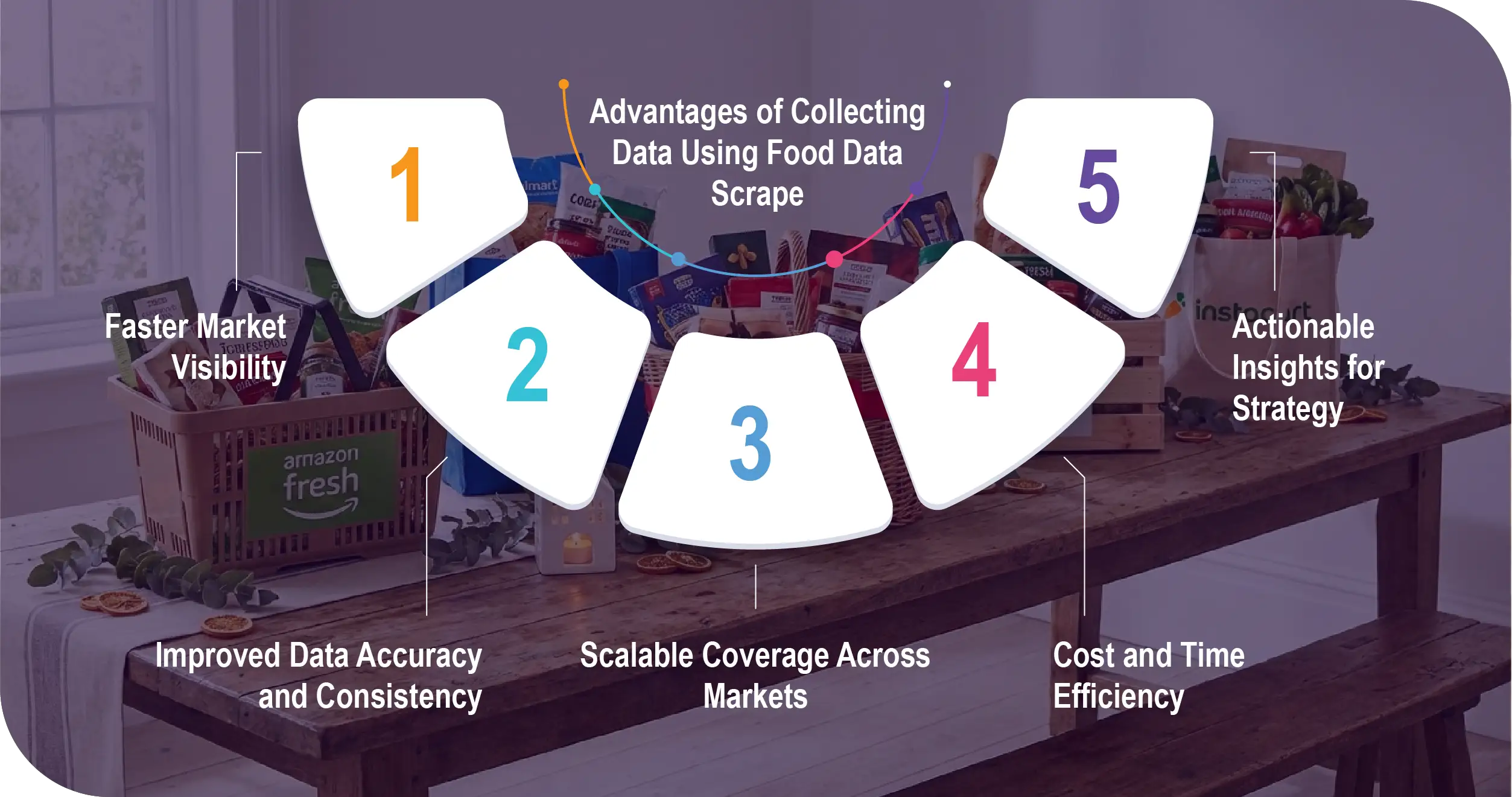
- Faster Market Visibility
Our services deliver near real-time access to pricing, availability, and promotional data across multiple grocery platforms. This rapid visibility helps businesses respond quickly to market changes, seasonal demand shifts, and competitor moves without relying on delayed manual research. - Improved Data Accuracy and Consistency
Automated extraction and validation processes reduce human error and ensure consistent datasets. Clean, structured data enables reliable comparisons across regions, categories, and time periods, supporting confident decision-making and reducing the risk of flawed strategic conclusions. - Scalable Coverage Across Markets
The solution scales effortlessly as business needs grow. New regions, retailers, or product categories can be added without disrupting existing workflows, allowing organizations to expand market coverage while maintaining uniform data quality and reporting standards. - Cost and Time Efficiency
By replacing manual tracking with automated pipelines, teams save significant time and operational costs. Analysts can focus on insights and strategy rather than data collection, improving productivity and accelerating reporting cycles across departments. - Actionable Insights for Strategy
Beyond raw data, our services enable deeper analysis of pricing trends, promotions, and demand patterns. These insights support smarter pricing strategies, better inventory planning, and stronger competitive positioning in fast-moving grocery markets.
Client’s Testimonial
“Working with this data scraping team transformed how we understand grocery market dynamics. The accuracy, speed, and consistency of the datasets helped us optimize pricing, promotions, and inventory planning during critical seasonal periods. Their structured delivery and responsive support made complex multi-market analysis simple and actionable. We were able to replace manual tracking with reliable insights and make faster, more confident decisions across regions. The partnership has delivered measurable value and strengthened our competitive position in a highly dynamic retail environment.”
Global Retail Analytics Firm
Final Outcome
The final outcome delivered measurable improvements across the client’s grocery analytics operations. Automated data pipelines replaced manual collection, reducing effort while improving accuracy and timeliness. The client gained a unified view of pricing, availability, and promotions across multiple markets, enabling faster responses to competitive changes. Insights from standardized datasets supported smarter pricing decisions, optimized festive bundles, and better inventory forecasting. Decision-makers could identify trends early, adjust strategies proactively, and reduce revenue leakage during peak demand periods. Overall, the solution strengthened market intelligence capabilities, improved operational efficiency, and enhanced the client’s ability to compete effectively in dynamic grocery delivery and retail environments.