The Brief: Certification Certainty Before Market Entry
The client — an established halal food group with operations in the Gulf region — had identified Malaysia as a strategic expansion market. Malaysia sits at the center of the global halal economy, with a Muslim-majority population, a respected national halal certification system administered by JAKIM, and deep consumer trust in certified establishments.
The group's challenge was specificity. General Malaysian restaurant data was widely available, but the group needed to understand the certified halal segment as a distinct market. How many GrabFood merchants actually carried recognized halal certification, as opposed to merely self-describing as halal? How did certified-halal pricing compare to the broader market? Which cuisines were saturated within the halal segment and which had headroom? Without certification-aware data, the group risked entering with mistaken assumptions about the size and structure of the opportunity.
The group needed a GrabFood Malaysia Halal Restaurant Report built specifically around certification status — and engaged a specialist data partner to deliver it.
Methodology: How the Halal Restaurant Report Was Built
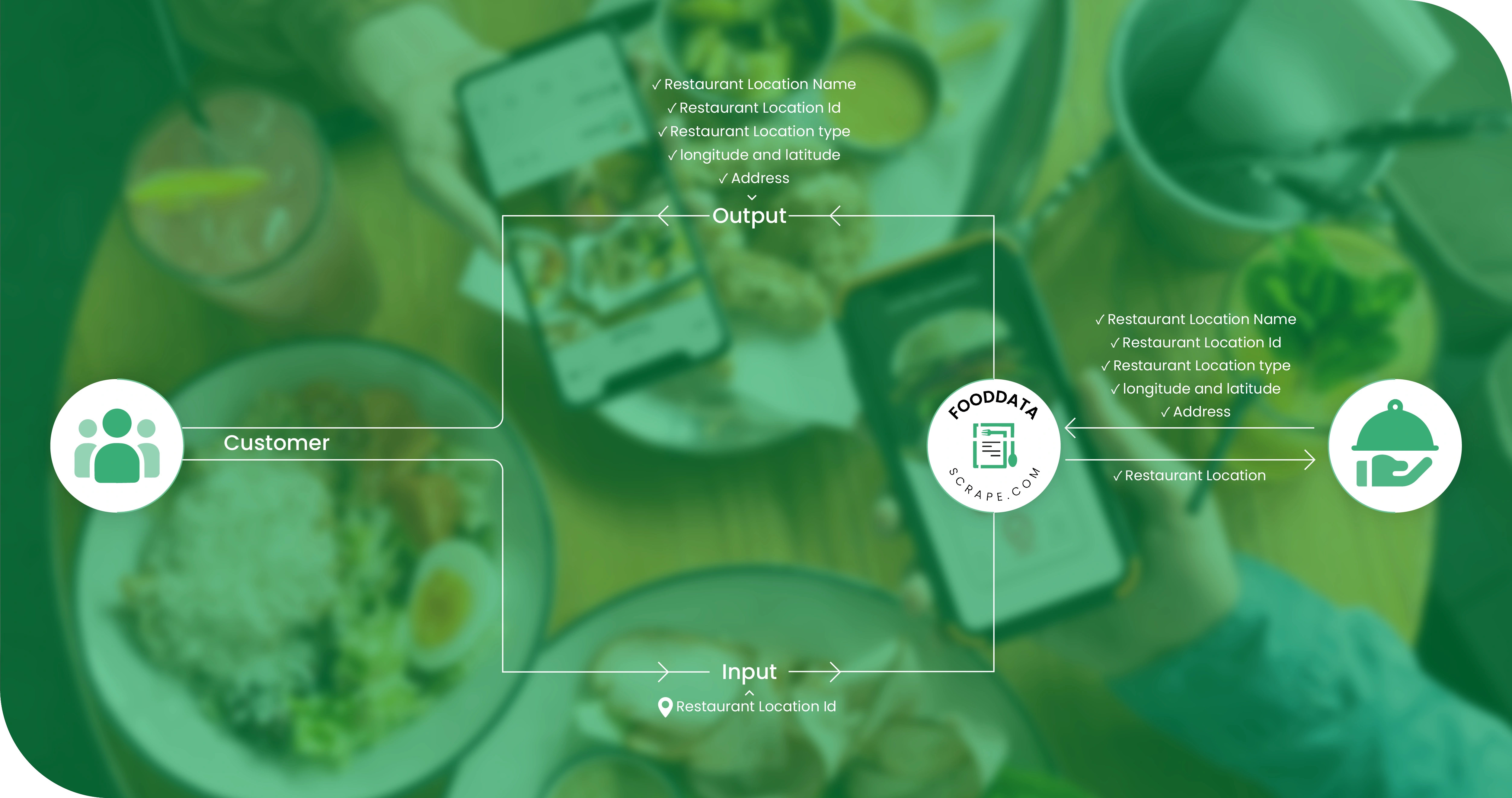
The study rested on a certification-aware data collection methodology designed to isolate and analyze the halal segment specifically.
City anchoring: Delivery anchors were established across Kuala Lumpur, Petaling Jaya, Shah Alam, Penang, Johor Bahru, and Ipoh, capturing the country's main urban food delivery markets.
Halal certification flagging: The defining feature of the study was certification classification. Each merchant listing was examined for halal status and classified into three tiers — JAKIM-recognized certification, self-declared halal without recognized certification, and merchants without any explicit halal indicator. This taxonomy was the foundation of the entire report.
Cuisine taxonomy: Each merchant and dish was mapped into a harmonized cuisine taxonomy covering Malay traditional, Mamak and Indian-Muslim, Chinese-Muslim, Western halal, Middle Eastern, Korean halal, Japanese halal, and halal cafe and dessert.
Currency handling: All prices were stored in MYR with explicit tax-inclusive flags.
Refresh and capture window: Capture ran over a four-week window, with top-velocity merchants refreshed daily and long-tail merchants refreshed weekly to ensure a stable, representative snapshot.
Quality assurance: Every record passed schema validation, merchant disambiguation, certification reclassification audits, cuisine reclassification, and outlier detection before entering the dataset
Certification verification logic: Because the entire report hinged on certification accuracy, the study applied a dedicated verification layer. Halal status displayed on each listing was cross-checked against merchant-level signals — brand identity, displayed certification marks, and chain-level halal policy where publicly available — to reduce the risk of misclassifying a self-declared merchant as JAKIM-certified or vice versa. This verification step was the single most labor-intensive part of the methodology, and the most important to the report's credibility.
Sample Data: What the Study Captured
The following sample tables illustrate the structure and depth of the GrabFood Malaysia Halal Restaurant Report. All prices in MYR.
Sample 1: Halal Certification Distribution by City
| City | JAKIM-Certified | Self-Declared Halal | No Halal Indicator |
|---|---|---|---|
| Kuala Lumpur | 4,180 | 1,920 | 1,640 |
| Petaling Jaya | 2,640 | 1,180 | 980 |
| Shah Alam | 1,890 | 720 | 540 |
| Penang | 2,210 | 1,340 | 1,580 |
| Johor Bahru | 1,760 | 880 | 720 |
| Ipoh | 1,120 | 540 | 480 |
Sample 2: Halal Cuisine Distribution (JAKIM-Certified Merchants)
| Cuisine | KL | Penang | Johor Bahru |
|---|---|---|---|
| Malay Traditional | 1,890 | 980 | 720 |
| Mamak / Indian-Muslim | 720 | 850 | 380 |
| Western Halal | 540 | 180 | 250 |
| Middle Eastern | 180 | 60 | 80 |
| Korean Halal | 220 | 70 | 95 |
| Japanese Halal | 260 | 85 | 120 |
| Halal Cafe / Dessert | 680 | 280 | 310 |
Sample 3: Pricing — Certified vs Non-Certified (Equivalent Dishes)
| Dish | JAKIM-Certified Avg (MYR) | No Indicator Avg (MYR) |
|---|---|---|
| Nasi Lemak Set | 13.80 | 12.50 |
| Mamak Mee Goreng | 8.60 | 7.90 |
| Western Halal Main | 25.40 | 23.10 |
| Korean Halal Set | 31.20 | 28.50 |
| Halal Cafe Dessert | 17.90 | 16.20 |
Sample 4: Halal Segment Opportunity Signal (JAKIM-Certified, by Cuisine)
| Cuisine | Certified Merchants | Avg Rating | Opportunity Signal |
|---|---|---|---|
| Malay Traditional | 3,590 | 4.4 | Saturated |
| Mamak / Indian-Muslim | 1,950 | 4.3 | Competitive |
| Halal Cafe / Dessert | 1,270 | 4.2 | Competitive |
| Western Halal | 970 | 4.3 | Emerging |
| Japanese Halal | 465 | 4.4 | Opportunity |
| Korean Halal | 385 | 4.5 | Opportunity |
| Middle Eastern | 320 | 4.4 | Opportunity |
Sample 5: Promotional Intensity by Certification Tier
| Certification Tier | Share with Active Promo | Avg Discount |
|---|---|---|
| JAKIM-Certified | 37% | 18% |
| Self-Declared Halal | 33% | 17% |
| No Halal Indicator | 41% | 20% |
Key Findings
The study surfaced several findings that directly shaped the client's market entry strategy.
Certified halal merchants form the clear majority in most cities: Across Kuala Lumpur, Petaling Jaya, and Shah Alam, JAKIM-certified merchants substantially outnumbered both self-declared and unmarked merchants — confirming that recognized certification is the market norm in Malaysia's major urban centers.
Penang shows a different certification mix: Penang had a notably higher share of merchants with no explicit halal indicator, reflecting its larger non-Muslim population and more mixed culinary landscape. For a halal-focused brand, this told the client that Penang's certified-halal competitive set was proportionally smaller than KL's.
Certified halal carries a modest price premium: Across every dish in the sample, JAKIM-certified merchants priced slightly above unmarked merchants — typically 8 to 12 percent higher. This premium reflects the value consumers place on recognized certification and the operational cost of maintaining it.
Malay traditional dominates but is saturated: The Malay traditional category had by far the highest certified-merchant count, but with thousands of competitors and strong ratings, the study flagged it as saturated for a new entrant.
Korean, Japanese, and Middle Eastern halal show genuine opportunity: Within the certified halal segment, these three cuisines had low merchant counts paired with high average ratings — a clear signal that consumer demand was strong while supply remained limited. For the client's premium halal concept, these categories represented the most attractive entry points.
Promotional intensity is lowest among certified merchants: The study found that JAKIM-certified merchants ran promotions less aggressively than unmarked merchants. Certified halal status itself functioned as a trust signal that reduced reliance on discounting — a useful insight for the client, suggesting its certified concept could compete on credibility rather than price erosion.
Self-declared halal is a meaningful but ambiguous middle tier: Across all six cities, a substantial band of merchants described themselves as halal without carrying recognized JAKIM certification. The study flagged this tier as both a competitive consideration and a consumer-trust risk: certified brands can differentiate clearly against it, but only if their certification is communicated prominently.
Klang Valley concentration is decisive: Kuala Lumpur, Petaling Jaya, and Shah Alam together — the Klang Valley conurbation — accounted for the clear majority of certified halal merchants nationwide. For an entrant, this concentration meant the Klang Valley was not merely one option among several but the unambiguous strategic core of the Malaysian halal delivery market.
How the Client Used the Findings
Armed with the GrabFood Malaysia Halal Restaurant Report, the client made three concrete decisions.
First, they refined their concept positioning. Rather than launching a Malay traditional concept into a saturated category, the client focused its premium halal brand on the Korean and Middle Eastern halal categories, where the study identified strong ratings and limited supply.
Second, they prioritized Kuala Lumpur and Petaling Jaya for launch. The study's certification distribution showed these cities had the deepest certified-halal consumer base and the strongest infrastructure of certified suppliers, making them the natural beachhead.
Third, they built pricing around the certified premium. Knowing that JAKIM-certified merchants sustained an 8 to 12 percent price premium, the client priced its certified halal concept confidently within that band, rather than underpricing out of caution.
The result was a market entry plan anchored to the certified halal segment specifically — precisely the certainty the engagement was designed to deliver.
Why the Data Approach Mattered
The alternative to a certification-aware study would have been to rely on general Malaysian restaurant data and the broad assumption that "most Malaysian food is halal." That assumption, while loosely true, would have obscured the distinctions that mattered: the difference between recognized certification and self-declaration, the cuisine-level saturation within the certified segment, and the price premium certification commands.
The GrabFood Malaysia Halal Restaurant Report gave the client certainty where assumption would have left risk. By isolating the certified halal segment and analyzing it specifically, the study revealed an opportunity structure that general data simply cannot show. This is the core value of certification-aware data: it lets a halal-focused brand make decisions on the segment it actually competes in.
Lessons for Other Markets
While this study focused on Malaysia, the methodology and its lessons apply to halal market entry across Southeast Asia and the Gulf.
Certification status is a distinct data dimension: Treating "halal" as a single binary flag obscures the commercially critical difference between recognized certification and self-declaration. Any serious halal market study must classify certification explicitly.
Certification carries a measurable price premium: In Malaysia the premium was 8 to 12 percent. The premium will differ by market, but the principle holds: recognized certification is a value signal consumers pay for, and brands should price accordingly rather than underprice from caution.
Saturation hides inside the headline category: The most visible halal cuisine — Malay traditional in Malaysia — was also the most saturated. Genuine opportunity sat in less obvious certified categories. This pattern repeats in most halal markets.
City-level certification mix varies with demographics: Penang's different certification profile showed that within a single country, the certified-halal competitive set varies city by city. Halal brands must analyze at city resolution, not national.
These lessons illustrate why a structured, certification-aware study repays its cost many times over. The client did not just receive a Malaysian halal dataset; they received a repeatable framework for evaluating halal market entry anywhere.
Engagement Outcomes at a Glance
The table below summarizes the measurable outcomes the client attributed to the study as it finalized its Malaysian entry plan.
| Outcome Area | Before the Study | After Acting on the Study |
|---|---|---|
| Concept positioning | Malay traditional (assumed) | Korean / Middle Eastern halal (data-led) |
| Launch city choice | Undecided | Klang Valley beachhead confirmed |
| Pricing approach | Cautious underpricing | Confident certified-premium band |
| Certification strategy | Unclear | Prominent JAKIM differentiation |
| Competitive set understanding | "Most food is halal" assumption | Certified-segment-specific clarity |
The study converted an assumption-led market entry into a certification-aware, evidence-led plan — and gave the client a repeatable framework for evaluating halal market entry in other countries.
Why Choose Food Data Scrape
Building a certification-aware halal restaurant report is a specialized undertaking. It requires accurate halal certification classification, JAKIM-aware taxonomy, careful cuisine mapping, tax-aware price handling, sustained capture over a multi-week window, and analyst expertise to translate raw data into commercial recommendations. Most internal teams lack both the infrastructure and the halal-market domain knowledge to deliver this reliably.
We bring managed infrastructure, ethical and compliant data collection practices, and deep domain expertise in Malaysian, Southeast Asian, and halal food and beverage markets. Through GrabFood intelligence and GrabFood API Data scraping extraction, our advantages include compliance-first architecture, scalable extraction across millions of public pages daily, certification-aware halal taxonomies, harmonized cuisine taxonomies, near-real-time refresh on priority merchants, tax and currency-normalized output, dedicated analyst support familiar with Malaysian halal market dynamics, and out-of-the-box dashboards highlighting certification-tier and cuisine-level patterns. The team has supported halal food groups, restaurant chains, cloud kitchen operators, FMCG suppliers, investors, and research consultancies — bringing the practical experience of how scraped data drives real commercial outcomes.
Conclusion: Certainty Over Assumption
The GrabFood Malaysia Halal Restaurant Report demonstrates how certification-aware data transforms a halal market entry decision. By isolating the JAKIM-certified halal segment and analyzing it across cities and cuisines, the study revealed where competition concentrated, which certified categories offered genuine headroom, what price premium certification commanded, and which cities offered the strongest beachhead. The client entered the Malaysian market with a plan grounded in segment-specific evidence, not broad assumption.
For any halal food group, restaurant brand, or investor evaluating Malaysia — or any halal-significant market — the lesson is consistent: structured, certification-aware data turns market entry from an assumption-led gamble into a disciplined commercial decision.
If you are ready to base your halal market decision on real data instead of assumption, get in touch with our team today.