The B2B Grocery Market Challenge in India
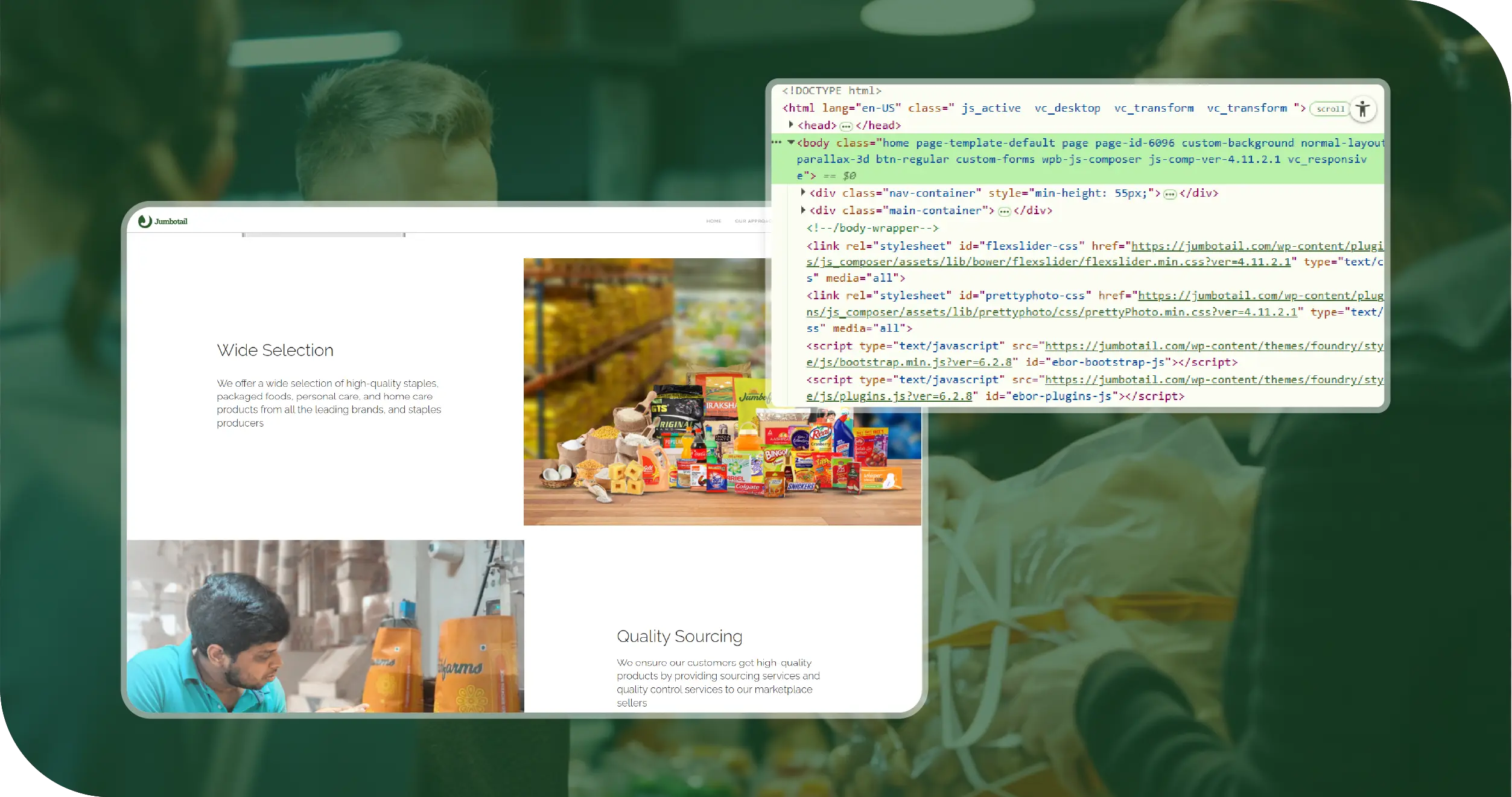
Why Jumbotail Data Matters Jumbotail operates at the intersection of technology, logistics, and wholesale trade. Its pricing often reflects:
- Real wholesale market movements
- Region-specific demand and supply dynamics
- Brand-led promotions and distributor incentives
- Bulk and pack-size based price efficiencies
For companies tracking India’s grocery ecosystem, missing this data means making decisions based on incomplete or outdated information.
Key Business Pain Points Before adopting Food Data Scrape’s solution, stakeholders faced several issues:
- No programmatic access to Jumbotail pricing data
- Manual price checks that did not scale beyond a few SKUs
- Inability to track city-wise or warehouse-wise price differences
- No historical pricing dataset for trend analysis
- Difficulty integrating raw app data into internal BI systems
These challenges made it difficult for brands and distributors to react quickly to price movements or optimize their B2B strategies.
Solution Overview: Jumbotail B2B Grocery Price Scraping API
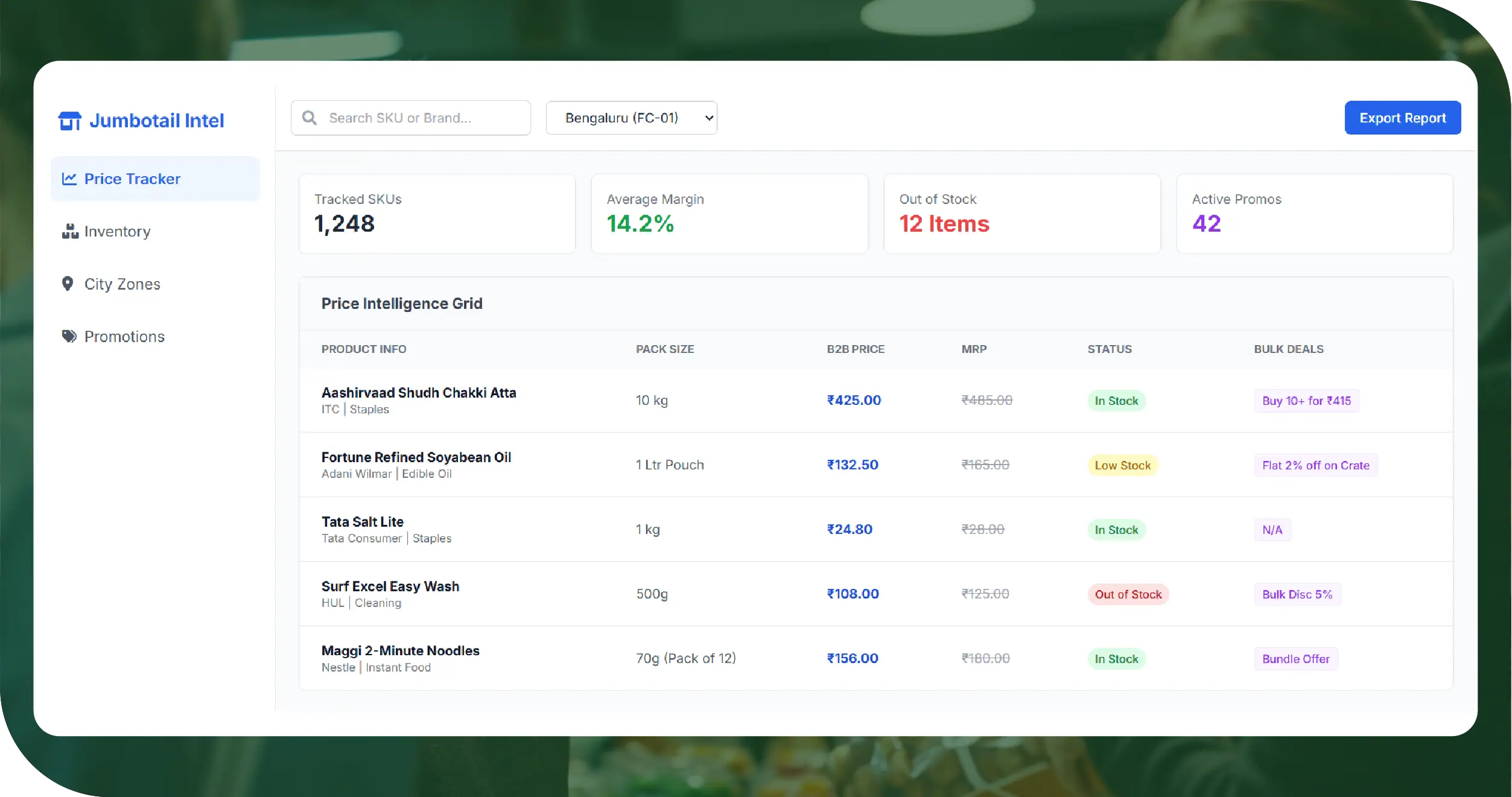
Food Data Scrape built a dedicated scraping API designed specifically for Jumbotail’s B2B grocery environment.
Core Objective To deliver clean, structured, and reliable wholesale grocery data from Jumbotail at scale, without manual intervention.
What the API Extracts
- Product-level pricing and MRP
- Pack sizes and units of measurement
- Brand and category information
- Stock and availability status
- City and fulfillment center variations
- Promotional pricing and bulk discounts
All data is normalized and delivered in analytics-ready formats.
Geographic & Market Coverage
City-Level Coverage The API supports multi-city tracking, including but not limited to:
- Bengaluru
- Chennai
- Hyderabad
- Mumbai
- Pune
- Delhi NCR
Each city is treated as a distinct market, reflecting real-world wholesale pricing behavior.
Category Coverage
- Staples (rice, atta, pulses, sugar)
- Edible oils
- Packaged foods
- Beverages
- Dairy and frozen products
- Personal care and household essentials
Data Schema and Key Fields
Food Data Scrape structured Jumbotail data into consistent schemas that align with B2B analytics needs.
Product-Level Fields
| Field Name | Description |
|---|---|
| Product ID | Unique SKU identifier |
| Product Name | Item name |
| Brand | Manufacturer / brand |
| Category | Product category |
| Subcategory | Detailed classification |
| Pack Size | Weight / volume |
| Unit | Kg, L, pcs |
| MRP | Listed MRP |
| Selling Price | Current wholesale price |
| Discount % | Calculated discount |
| Availability | In stock / out of stock |
| City | Market location |
| Last Updated | Timestamp |
Sample Data Output (Illustrative)
Sample Jumbotail Wholesale Pricing Dataset
| Product Name | Brand | Pack Size | MRP (₹) | Price (₹) | Discount | City |
|---|---|---|---|---|---|---|
| Sona Masoori Rice | India Gate | 25 Kg | 1450 | 1320 | 8.97% | Bengaluru |
| Sunflower Oil | Fortune | 15 L | 2250 | 2145 | 4.67% | Hyderabad |
| Toor Dal | Tata Sampann | 5 Kg | 890 | 845 | 5.05% | Chennai |
| Detergent Powder | Surf Excel | 10 Kg | 1180 | 1100 | 6.78% | Mumbai |
This dataset can be delivered via API or scheduled exports.
Technical Architecture
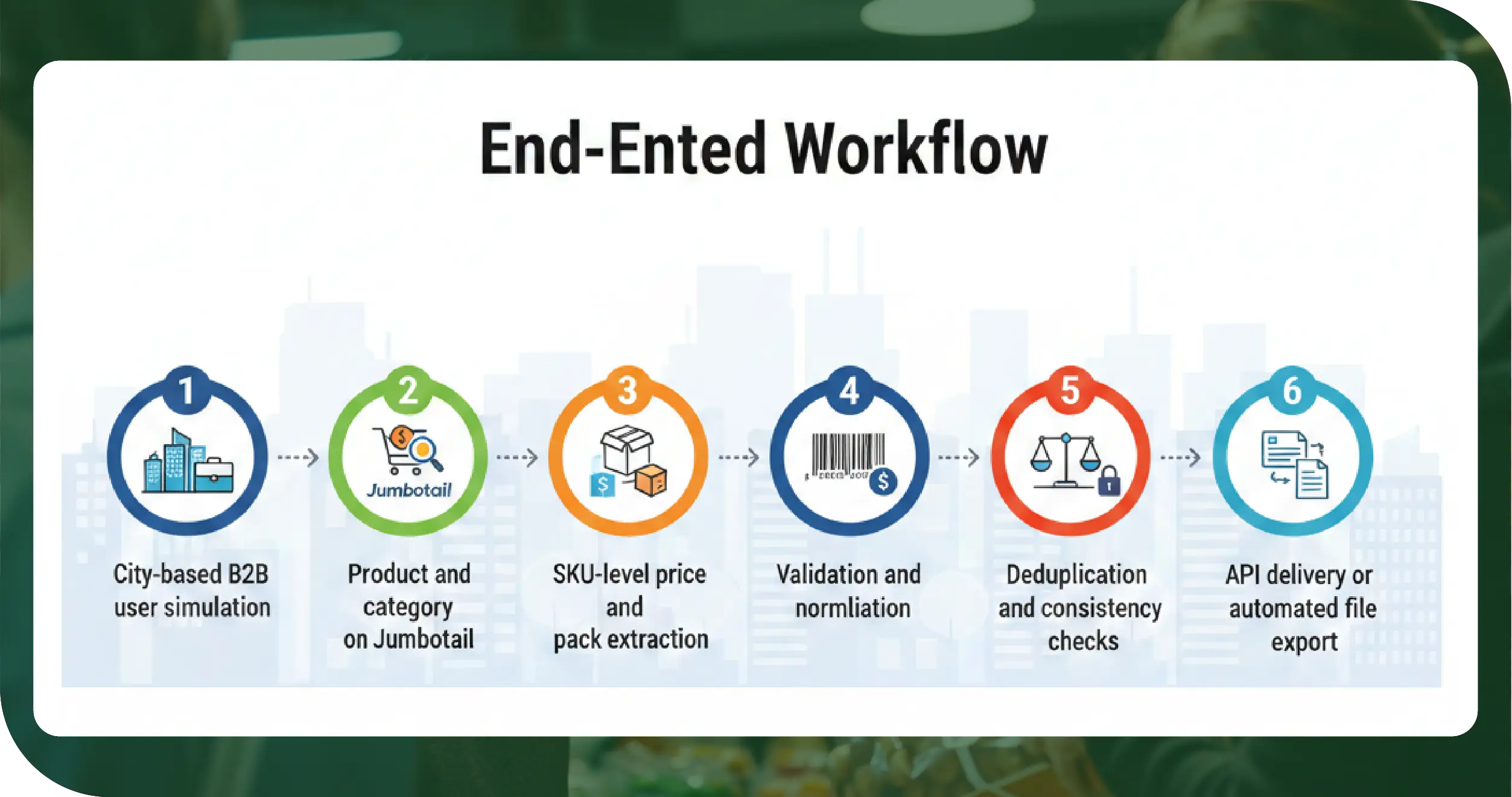
End-to-End Workflow
- City-based B2B user simulation
- Product and category discovery on Jumbotail
- SKU-level price and pack extraction
- Validation and normalization
- Deduplication and consistency checks
- API delivery or automated file export
Supported Delivery Formats
- JSON
- CSV
- Excel
- Direct database ingestion (Snowflake, BigQuery, Redshift)
Update Frequency Options Clients can choose refresh intervals based on business needs:
- Hourly price refresh for fast-moving SKUs
- Daily full catalog snapshots
- Weekly historical archives
- Event-based scraping during price revisions
Historical data is preserved to support long-term analysis.
Key Use Cases
Wholesale Price Benchmarking FMCG brands compare their distributor prices with Jumbotail’s wholesale rates across cities.
Distributor & Channel Strategy Companies analyze:
- City-wise price gaps
- Bulk pricing efficiencies
- Competitive discounting patterns
3. Demand Forecasting Historical pricing data supports:
- Margin forecasting
- Inventory planning
- Regional demand prediction
4. Private Label Strategy Retailers evaluate opportunities to introduce private labels based on price gaps in existing categories.
Business Impact
Tangible Results Observed
- Significant reduction in manual price audits
- Faster response to wholesale price changes
- Improved negotiation leverage with distributors
- Better pricing discipline across regions
- Data-backed B2B strategy planning
Clients reported improved visibility into wholesale dynamics that were previously opaque.
Data Quality & Reliability
Food Data Scrape ensures high-quality output through:
- Continuous monitoring of extraction logic
- Automated error detection
- Normalized naming conventions
- City-level validation checks
- Consistent schema enforcement
This ensures data remains reliable even as platform layouts evolve.
Compliance & Ethical Scraping
Food Data Scrape follows responsible data extraction practices:
- Controlled request rates
- Location-aware access simulation
- Platform-respectful crawling behavior
- Secure data handling and storage
The solution is built for long-term sustainability, not short-term extraction.
Why Food Data Scrape
Food Data Scrape focuses exclusively on food, grocery, and FMCG intelligence.
Key Strengths
- Deep expertise in B2B grocery platforms
- India-specific market understanding
- Custom schemas aligned with wholesale analytics
- Scalable infrastructure for large SKU volumes
- Dedicated support and monitoring
Future Enhancements
Planned extensions for Jumbotail data include:
- Brand-wise share-of-wallet analysis
- Dynamic pricing alerts
- Pack-size optimization insights
- Cross-platform B2B price comparison
These enhancements aim to convert raw data into actionable intelligence.
Conclusion
Jumbotail plays a pivotal role in India’s B2B grocery ecosystem, but its pricing and assortment data remains difficult to access at scale. With the Jumbotail B2B Grocery Price Scraping API, Food Data Scrape bridges this gap by delivering accurate, structured, and city-level wholesale data. For FMCG brands, distributors, analytics firms, and procurement teams, this solution enables smarter pricing decisions, better inventory planning, and stronger competitive positioning in India’s fast-evolving B2B grocery market. Food Data Scrape continues to empower businesses with reliable food and grocery intelligence, turning complex platforms into clear, data-driven opportunities.