The Client
The client is an international market intelligence organization specializing in pricing analytics, competitive benchmarking, and consumer goods insights for retailers and brands operating across multiple regions. Their core objective is to deliver accurate, city-level pricing intelligence that reflects real-world market conditions. To strengthen their global coverage, the client required a scalable solution for Web Scraping Global Hyperlocal Grocery Price Data across diverse retail ecosystems. Existing methods lacked consistency and failed to capture frequent pricing updates at the local level. By implementing 50,000 SKU Grocery Price Data Extraction, the client established a standardized framework to analyze pricing movements, promotional strategies, and regional variations across thousands of products. This enabled consistent comparisons across markets without manual intervention. The resulting Real-Time Grocery Price Comparison Dataset empowered the client to support advanced analytics, improve forecasting accuracy, and deliver timely insights to enterprise customers, enhancing strategic decision-making and global market visibility.
Key Challenges
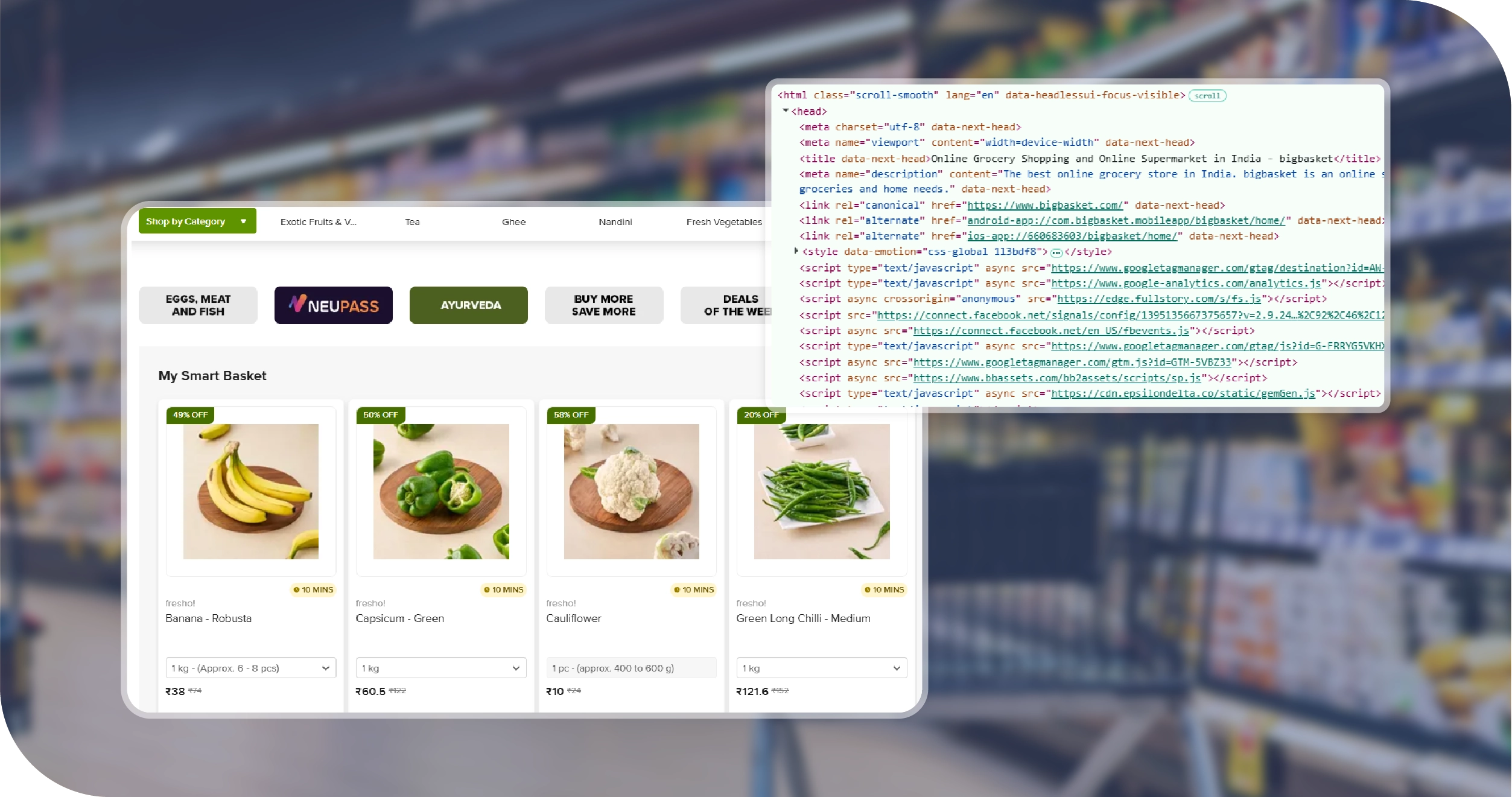
- Lack of Granular Market Visibility: The client struggled to capture accurate, city-level pricing variations across global grocery markets. Without a reliable Hyperlocal Grocery Market Data Scraper, regional price differences, local promotions, and neighborhood-specific trends remained largely invisible and difficult to analyze.
- Difficulty Tracking Rapid Price Changes: Grocery prices changed frequently across cities and platforms, making consistent monitoring challenging. The absence of a scalable Hyperlocal Grocery Price Tracker Worldwide limited the client’s ability to compare prices in real time and maintain reliable historical records.
- Fragmented Data Across Platforms: Pricing data was scattered across multiple grocery apps and retail channels. Without unified Grocery App Data Scraping services, the client faced data silos, inconsistent formats, and delays that slowed analysis, forecasting, and global price benchmarking initiatives.
Key Solutions
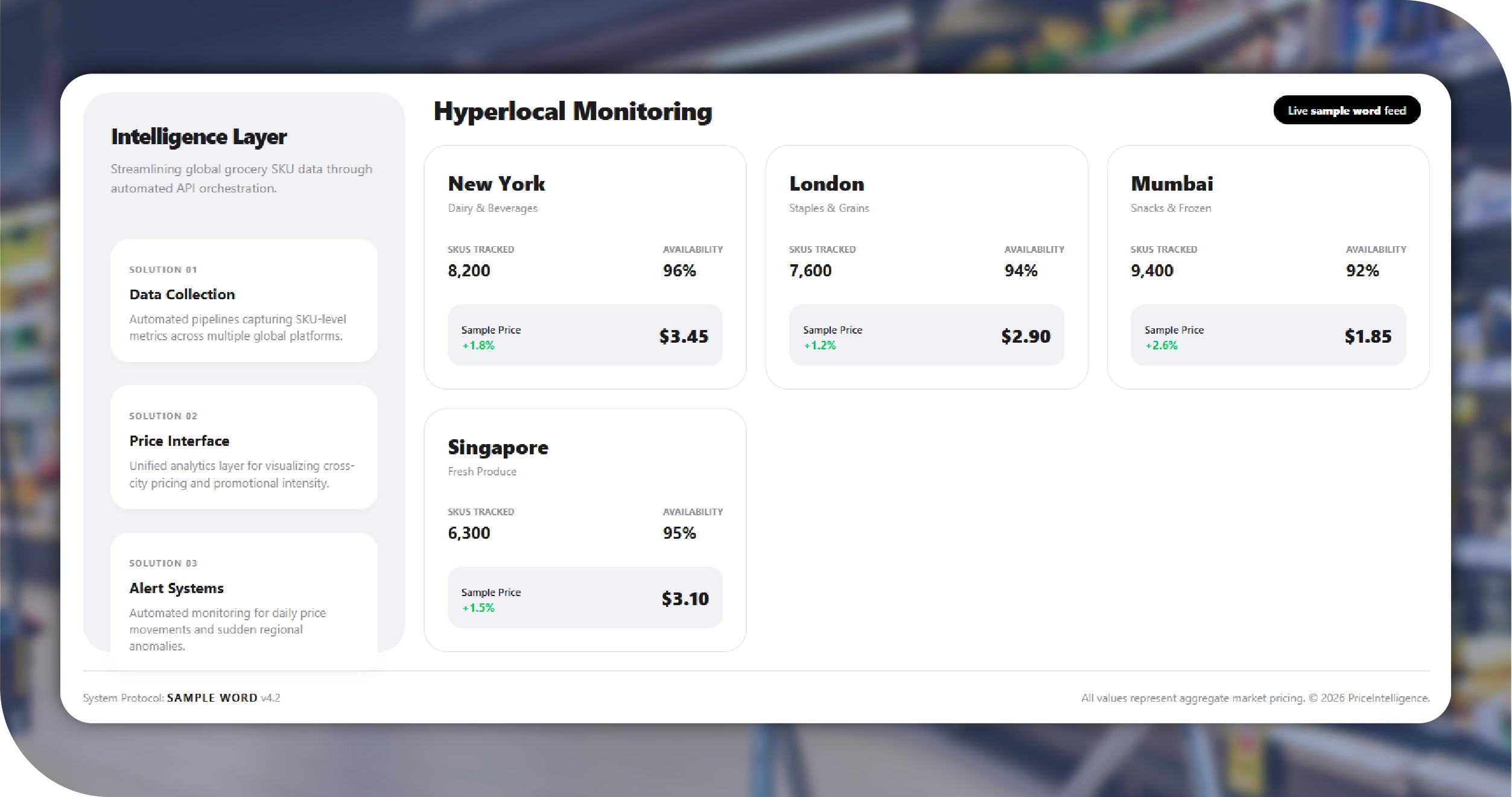
- Scalable Data Collection Framework: We deployed automated pipelines using Grocery Delivery Scraping API Services to capture SKU-level prices, discounts, and availability across multiple grocery apps. This ensured consistent, real-time data flow across cities while eliminating manual errors and improving global market coverage.
- Centralized Price Intelligence Interface: A unified analytics layer was built around a Grocery Price Dashboard, enabling the client to visualize pricing differences, compare SKUs across cities, and track promotional intensity. This interface simplified decision-making through intuitive charts and structured reporting views.
- Continuous Monitoring and Alerts System: We implemented a Grocery Price Tracking Dashboard with automated alerts to monitor daily price movements, sudden spikes, and regional anomalies. This allowed proactive responses to market shifts and strengthened competitive pricing strategies worldwide.
Sample Data Overview: Hyperlocal Grocery Pricing Comparison
| City | SKU Category | Total SKUs Tracked | Avg Price (USD) | Daily Price Change (%) | Availability Rate |
|---|---|---|---|---|---|
| New York | Dairy & Beverages | 8,200 | 3.45 | +1.8% | 96% |
| London | Staples & Grains | 7,600 | 2.90 | +1.2% | 94% |
| Mumbai | Snacks & Frozen | 9,400 | 1.85 | +2.6% | 92% |
| Singapore | Fresh Produce | 6,300 | 3.10 | +1.5% | 95% |
| Dubai | Packaged Foods | 8,500 | 2.70 | +1.9% | 93% |
Methodologies Used
- Requirement Analysis and Scope Definition: We began by defining objectives, coverage areas, and output formats. Understanding client goals allowed us to focus on relevant data, avoid redundancy, and design a process tailored for precise, actionable, and high-impact insights.
- Multi-Channel Data Capture: Data was collected simultaneously from multiple sources to ensure completeness and consistency. This approach captured variations across regions, platforms, and timeframes, minimizing gaps caused by isolated or delayed data streams.
- Automated Change Detection: Mechanisms were implemented to detect updates, additions, or removals automatically. This ensured timely identification of meaningful changes, reduced unnecessary processing, and maintained an up-to-date dataset without manual intervention.
- Standardization and Normalization: Raw information was cleaned and standardized across categories, formats, and nomenclature. Consistent data structures improved usability, enabled accurate comparisons, and allowed seamless integration with analytics platforms and reporting dashboards.
- Continuous Quality Monitoring: Ongoing validation checks were applied to detect inconsistencies, duplicates, and anomalies. This ensured reliable, high-quality data over time and strengthened confidence in analysis, forecasting, and strategic decision-making.
Advantages of Collecting Data Using Food Data Scrape
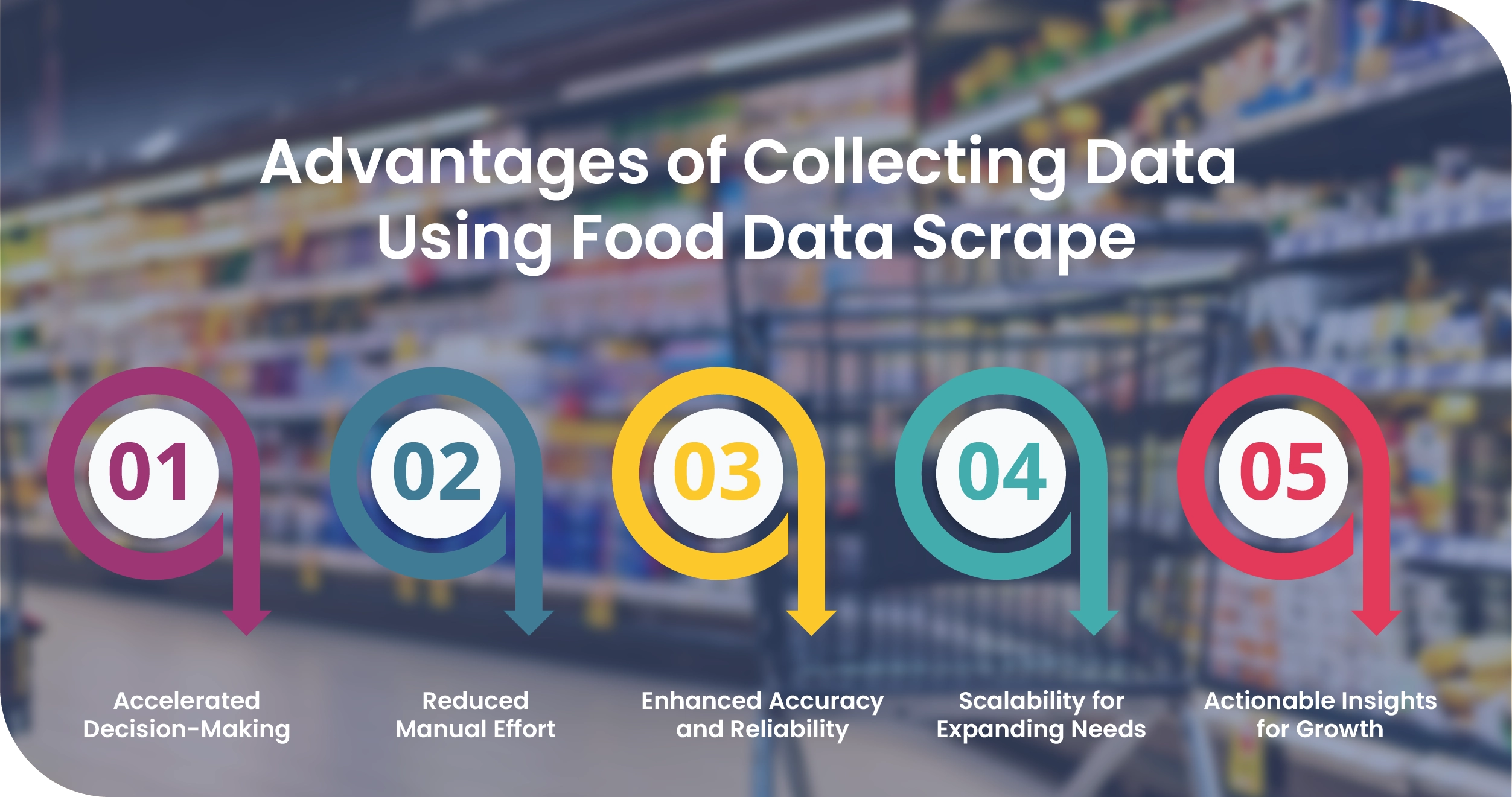
- Accelerated Decision-Making: Our services provide timely, accurate insights that allow businesses to respond quickly to market changes. Faster access to structured information ensures teams can act proactively, optimize strategies, and maintain a competitive edge in dynamic environments.
- Reduced Manual Effort: Automation eliminates repetitive, time-consuming data collection tasks. Teams no longer need to track multiple platforms manually, freeing resources for strategic analysis, planning, and innovation, while ensuring consistent and reliable information for operational and business decisions.
- Enhanced Accuracy and Reliability: Structured processes and validation checks minimize errors, inconsistencies, and duplicates. Businesses receive high-quality datasets that can be trusted for reporting, forecasting, and analytics, reducing risks associated with human error or fragmented information.
- Scalability for Expanding Needs: Our solutions are designed to grow with business requirements. Whether expanding to new cities, adding more SKUs, or increasing platforms, the system scales seamlessly without compromising speed, accuracy, or operational efficiency.
- Actionable Insights for Growth: Organized, clean data enables businesses to identify trends, track performance, optimize pricing and inventory, and make informed decisions. These insights support better planning, improved market positioning, and measurable business growth.
Client’s Testimonial
“Working with this data scraping team has completely transformed how we monitor grocery pricing and product availability across multiple cities and platforms. Their automated solutions replaced manual tracking, delivering accurate, real-time insights consistently. The structured datasets allowed our team to analyze trends, compare SKUs across regions, and make faster, data-driven decisions. We were particularly impressed by their responsiveness, scalability, and attention to detail, which ensured seamless integration into our existing workflows. Their services have strengthened our operational efficiency, enhanced forecasting accuracy, and significantly improved our market intelligence capabilities, providing a strong competitive advantage.”
Head of Market Analytics
Final Outcomes:
The implementation of our solutions delivered measurable improvements in market visibility, operational efficiency, and decision-making accuracy for the client. By automating data collection and monitoring, the client gained real-time insights into pricing trends, product availability, and regional variations, replacing manual tracking and fragmented datasets. Leveraging Grocery Pricing Data Intelligence enabled the client to identify trends, optimize pricing strategies, and benchmark performance against competitors effectively. Additionally, access to comprehensive Grocery Store Datasets provided a detailed view of SKU-level performance across multiple cities, supporting forecasting, inventory planning, and promotional strategy. As a result, the client enhanced competitive analysis capabilities, reduced operational delays, and achieved more informed, data-driven decisions, strengthening their market positioning and enabling faster response to evolving consumer and market trends.