Client Background and Market Context
The client was a regional food distributor supplying hotels, restaurants, caterers, and institutional buyers across Europe and the Middle East. Their procurement team relied heavily on METRO as a price reference point.
Key business challenges
- Manual price checks across multiple METRO locations
- No centralized view of pack sizes, VAT-inclusive pricing, or offers
- Delayed reactions to price changes and promotions
- Difficulty benchmarking supplier quotes against wholesale market rates
They needed a real-time, structured, and automated data source.
Why METRO Cash & Carry Data Matters for B2B Intelligence
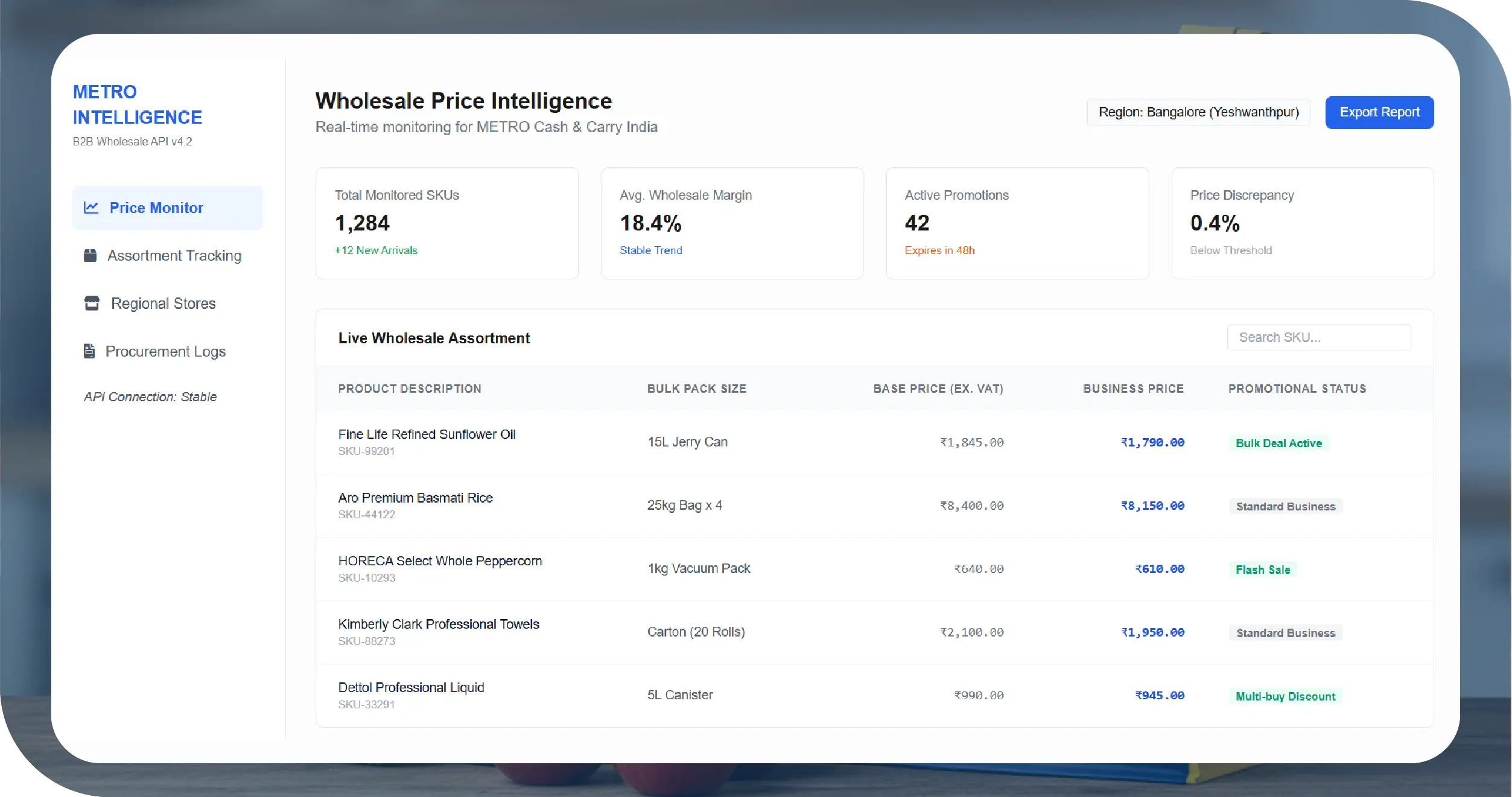
Unlike standard ecommerce platforms, METRO operates with:
- Region-specific pricing
- Professional-only product assortments
- Bulk pack sizes and business SKUs
- Time-bound wholesale promotions
- VAT and business pricing variations
Tracking this data manually is slow and error-prone. A reliable scraping API becomes a strategic asset.
Core use cases
- B2B price benchmarking
- Procurement cost optimization
- Supplier negotiation support
- Wholesale trend analysis
- Menu and cost engineering for HoReCa
Project Objectives
Food Data Scrape worked with the client to define clear technical and business goals.
Primary objectives
- Scrape METRO product prices across selected countries and cities
- Capture product metadata, including pack size and brand
- Track availability and out-of-stock signals
- Monitor promotions and business offers
- Deliver data via a stable API in near real time
Secondary objectives
- Support scalable category expansion
- Ensure compliance-aware scraping practices
- Maintain high data accuracy and uptime
Scope of Data Collected
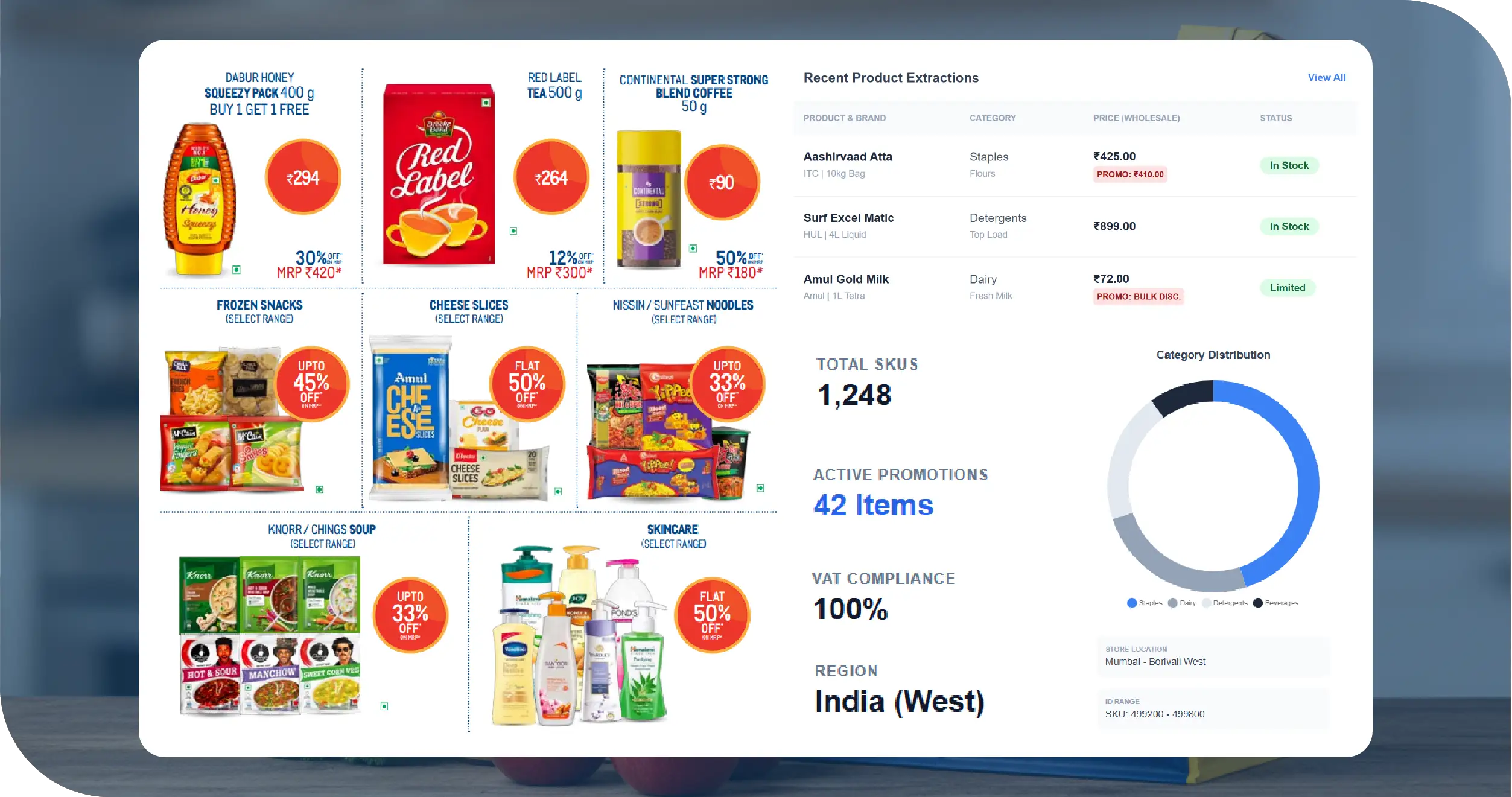
The METRO Cash & Carry Product Data Scraping API was designed to capture both pricing and product context.
Data attributes covered
- Product name
- Brand
- Category and subcategory
- SKU or internal product ID
- Pack size and unit of measure
- Wholesale price
- VAT information (where visible)
- Promotional price and discount flags
- Stock availability status
- Store location and country
- Last updated timestamp
Technical Challenges in Scraping METRO Cash & Carry
Scraping a B2B wholesale platform brings unique hurdles.
Major challenges
- Location-based access control
- Session handling for professional users
- Dynamic price rendering
- Frequent UI and structure updates
- Anti-bot protection layers
Food Data Scrape’s approach
- Smart request rotation and throttling
- Adaptive parsing logic
- Location-aware crawling
- Automated structure change detection
- Robust QA pipelines
This ensured data stability without overloading the platform.
Architecture of the METRO Data Scraping API
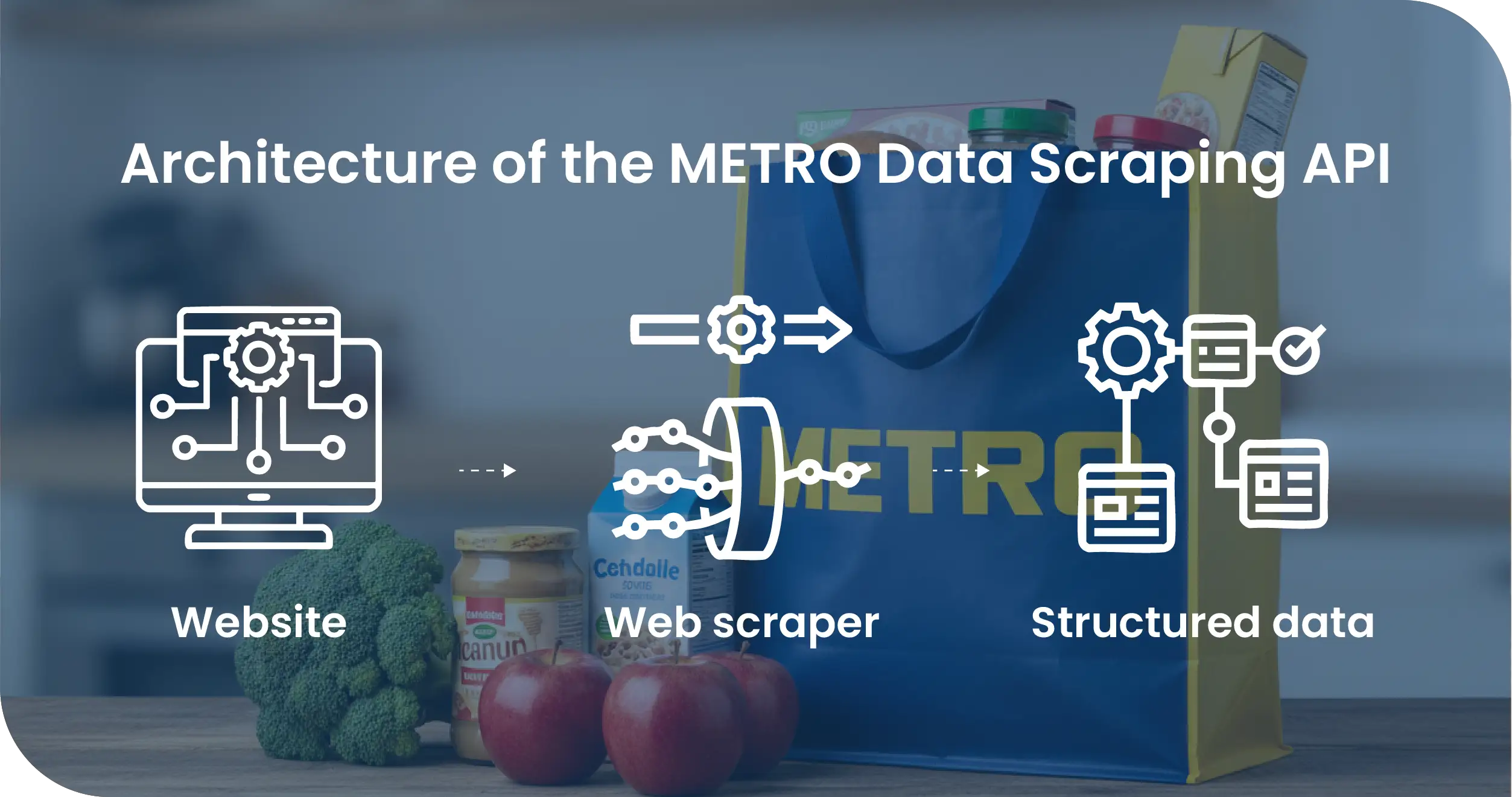
The solution followed a modular and scalable design.
High-level architecture
- Targeted category and product URL discovery
- Distributed scraping workers by region
- Real-time data extraction and validation
- Normalization and enrichment layer
- API delivery in structured formats
Output formats
- JSON (API-first)
- CSV (batch exports)
- Custom database-ready feeds
Sample API Data Output
Below is a simplified example of METRO Cash & Carry product data delivered by Food Data Scrape.
Sample Product Data Table
| Product Name | Brand | Category | Pack Size | Price | VAT | Availability | Location |
|---|---|---|---|---|---|---|---|
| Sunflower Oil | Metro Chef | Edible Oils | 10 L | €18.40 | Incl. | In Stock | Berlin |
| Basmati Rice | Royal Umbrella | Rice | 5 kg | €9.90 | Incl. | In Stock | Hamburg |
| Mozzarella Cheese | Galbani | Dairy | 2 kg | €11.75 | Incl. | Limited | Munich |
| Chicken Breast | Local Supplier | Meat | 5 kg | €24.30 | Incl. | Out of Stock | Cologne |
Real-Time Price Monitoring Capabilities
The API supported both scheduled and on-demand updates.
Update frequencies
- Hourly for high-volatility categories
- Daily for stable dry goods
- Event-based triggers during promotions
Price change alerts
Clients received automated alerts when:
- Price crossed defined thresholds
- Promotions started or ended
- Stock status changed
Business Impact for the Client
Within the first 90 days, the client saw measurable results.
Quantifiable outcomes
- 18% improvement in procurement cost planning
- Faster supplier negotiations using market benchmarks
- Reduced manual monitoring workload by over 70%
- Improved pricing consistency across regions
Strategic benefits
- Better contract renegotiation leverage
- Early detection of wholesale inflation trends
- Smarter inventory planning
Compliance and Ethical Scraping Approach
Food Data Scrape follows a compliance-first mindset.
Key principles
- Respect for platform load limits
- Non-intrusive crawling schedules
- No personal or sensitive data collection
- Client-side usage responsibility
This ensures long-term data availability and reliability.
Scalability and Future Enhancements
The METRO scraping infrastructure was built for growth.
Planned expansions
- Additional countries and regions
- Historical price trend storage
- Brand-level and category-level analytics
- Integration with ERP and procurement systems
Why Food Data Scrape
Food Data Scrape specializes in grocery, foodservice, and wholesale data extraction.
Key differentiators
- Deep domain expertise in food and B2B retail
- Custom-built scraping frameworks
- High data accuracy benchmarks
- Flexible delivery models
- Enterprise-grade support
Conclusion
B2B buyers can no longer rely on manual price checks or delayed market intelligence. Wholesale platforms like METRO Cash & Carry set the benchmark for pricing, availability, and assortment strategies. By deploying the METRO Cash & Carry Product Data Scraping API, Food Data Scrape enabled the client to move from reactive procurement to data-driven decision-making. For distributors, HoReCa suppliers, and food manufacturers, real-time wholesale intelligence is no longer optional. It is a competitive advantage.