Introduction
Colombia’s restaurant industry is evolving rapidly, fueled by digital transformation, food delivery platforms, and changing consumer preferences. From Bogotá’s fine-dining establishments to Medellín’s trendy cafés and Cartagena’s tourist-driven eateries, new menu launches and seasonal updates are shaping competition across the market. Businesses looking to stay ahead must actively Monitor Restaurant Menu Items & New Launches – Colombia to capture emerging trends and respond quickly.
At the same time, brands and aggregators require structured data to analyze pricing shifts, product innovation, and customer favorites. This is where Restaurant Menu Monitoring & New Menu Tracking Colombia becomes essential for restaurants, cloud kitchens, food-tech startups, and market research firms.
By leveraging advanced analytics and automation, companies can Track New Restaurant Menu Launches Across Colombia across major cities like Cali, Barranquilla, and Bucaramanga. Monitoring menus in real time ensures businesses never miss new product introductions, promotional campaigns, or limited-time offers.
Why Menu Monitoring Matters in Colombia’s Growing Food Market?
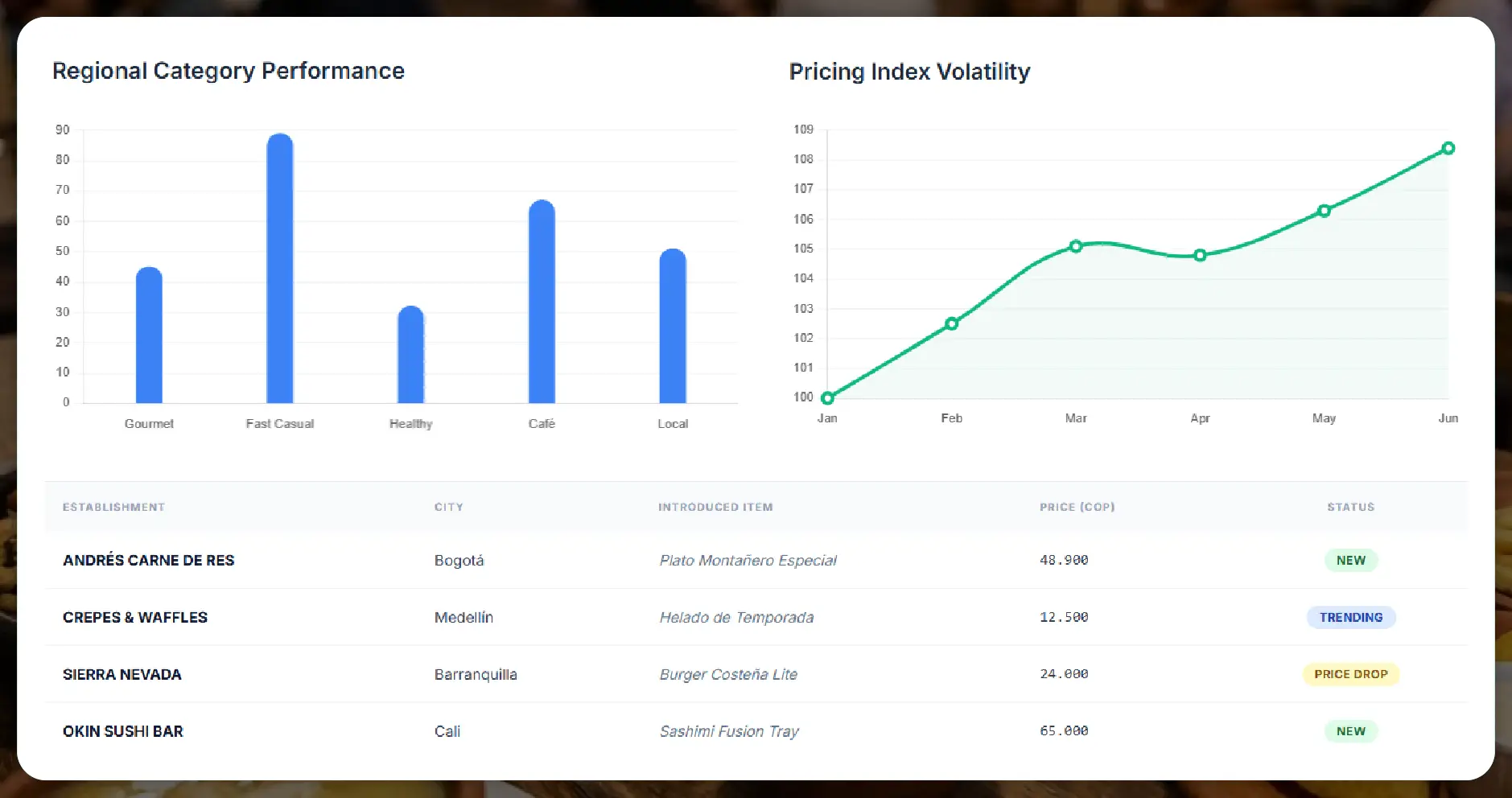
Colombia’s food service industry has experienced significant growth due to rising urbanization, digital ordering platforms, and consumer demand for convenience. Food delivery apps such as Rappi, Uber Eats, and local aggregators constantly feature updated menus, combo deals, and exclusive items.
Monitoring restaurant menus helps businesses:
- Identify trending cuisines such as Peruvian fusion, vegan dishes, or gourmet burgers
- Track seasonal menu introductions and festive specials
- Analyze pricing fluctuations across cities
- Understand how competitors bundle meals and create value meals
- Detect new product innovations before they gain mass popularity
In a competitive landscape, relying on manual observation is inefficient. Automated solutions allow organizations to collect accurate, structured data at scale.
The Role of Web Scraping in Restaurant Menu Tracking
One of the most effective ways to collect large volumes of restaurant data is through Web Scraping Menu Items from Colombian Restaurants. Web scraping enables businesses to extract detailed information directly from restaurant websites, food delivery platforms, and aggregator listings.
Through automated systems, companies can gather:
- Item names
- Descriptions and ingredients
- Pricing details
- Category structures
- Add-ons and customization options
- Availability status
- Images and ratings
This data provides a complete view of the competitive environment and helps businesses react quickly to market shifts.
Key Data Points to Extract from Colombian Restaurant Menus
When organizations Extract Restaurant Menu Items & New Launches – Colombia, they gain access to valuable insights that drive smarter decisions.
-
Product Innovation Trends
Tracking new menu additions reveals innovation patterns. For instance, are restaurants launching more plant-based alternatives? Are premium desserts or artisanal beverages gaining traction? -
Pricing Strategies
Monitoring menu prices helps brands compare regional pricing variations. A burger in Bogotá may differ significantly in cost from one in Medellín due to demand and operational expenses. -
Limited-Time Offers
Restaurants often introduce short-term promotions to boost sales. Identifying these early allows competitors to adjust marketing tactics accordingly. -
Menu Categorization
Understanding how restaurants organize their menus—appetizers, combos, beverages, family packs—provides insights into customer behavior and cross-selling strategies.
Applications Across Stakeholders
Menu monitoring in Colombia is not limited to restaurant owners. Multiple stakeholders benefit from structured data collection.
-
Restaurant Chains
National and international brands use menu tracking to maintain consistency across branches and benchmark performance. -
Cloud Kitchens
Delivery-only kitchens rely heavily on data insights to optimize offerings and adjust pricing quickly. -
Investors & Market Researchers
Accurate datasets help investors evaluate growth potential and competitive positioning in Colombia’s food service market. -
Food Delivery Platforms
Platforms can enhance recommendation engines by analyzing updated menu data regularly.
To effectively collect and analyze this information, businesses increasingly rely on solutions that Scrape Food Service Menu Data Colombia in real time.
Integration with Food Delivery Platforms
Food delivery platforms have become a central distribution channel in Colombia. The integration of Web Scraping Food Delivery Data allows companies to monitor performance metrics such as:
- Most listed dishes
- Customer ratings
- Delivery charges
- Discount patterns
- Promotional campaigns
This data is crucial for understanding customer preferences and optimizing digital presence.
Automating Data Extraction for Competitive Advantage
Manual monitoring of hundreds or thousands of restaurant listings is time-consuming and error-prone. Automation allows businesses to Extract Restaurant Menu Data and transform it into actionable intelligence.
Benefits of automation include:
- Real-time updates
- Scalable data collection
- Structured and standardized output
- Reduced operational costs
- Faster strategic decision-making
With automation, businesses can respond quickly to menu innovations, price changes, or regional food trends.
Leveraging APIs for Seamless Data Collection
Advanced systems such as a Food Delivery Scraping API enable seamless integration of restaurant menu data into internal dashboards, CRM systems, or analytics tools.
APIs provide:
- Consistent data feeds
- Structured JSON or CSV outputs
- Customizable extraction parameters
- Scalable monitoring across multiple cities
- Historical data tracking
This empowers businesses to maintain ongoing visibility into Colombia’s dynamic food ecosystem.
Real-World Use Cases in Colombia
-
Competitive Benchmarking
A burger chain in Bogotá can compare its pricing and menu innovation against top competitors across Colombia. -
Expansion Planning
Companies planning to enter Medellín or Cali can analyze existing menu offerings and identify market gaps. -
Product Development
Data insights reveal which cuisines or dishes are trending, helping brands design relevant new launches. -
Dynamic Pricing Optimization
By monitoring competitors’ price changes, restaurants can adjust pricing strategies to remain competitive without sacrificing margins.
Through structured analytics and Restaurant Data Intelligence, businesses can turn raw menu information into measurable growth strategies.
Challenges in Menu Monitoring and How to Overcome Them
While menu tracking offers immense value, it also comes with challenges:
-
Frequent Updates
Menus change frequently, especially during holidays or promotional campaigns. Automated real-time scraping ensures updates are captured instantly. -
Platform Variability
Different food delivery platforms display data differently. Custom extraction systems ensure consistency across multiple sources. -
Data Accuracy
Ensuring clean, validated data is essential. Advanced tools apply filters and validation checks to remove inconsistencies.
By implementing scalable monitoring systems, organizations can overcome these obstacles and build reliable datasets.
The Future of Menu Monitoring in Colombia
The Colombian restaurant industry will continue evolving as digital adoption increases. Consumer demand for transparency, dietary information, and price comparison will push businesses toward data-driven strategies.
Artificial intelligence and predictive analytics will soon enable:
- Forecasting future menu trends
- Identifying underperforming dishes
- Predicting seasonal demand spikes
- Personalizing menu recommendations
Restaurants that adopt proactive monitoring strategies will maintain a competitive edge in an increasingly crowded market.
How Food Data Scrape Can Help You?
- Automated Daily Data Collection
We automate menu, pricing, and availability tracking from Keeta across multiple Saudi cities with high accuracy. - Structured and Ready-to-Use Datasets
Receive clean, organized data in CSV, JSON, or API-ready formats for seamless analysis and integration. - Real-Time Competitor Monitoring
Track price changes, discounts, promotions, and new menu launches as they happen. - Historical Data Archiving
Build long-term datasets to analyze trends, seasonal patterns, and pricing strategies. - Seamless Dashboard Integration
Integrate scraped data directly into BI tools, internal systems, or custom analytics dashboards for actionable insights.
Conclusion
Daily menu data scraping from Keeta Saudi Arabia transforms dynamic restaurant listings into structured, actionable insights. By implementing automated systems and integrating advanced analytics, businesses can build comprehensive Food delivery Intelligence capabilities that strengthen strategic decision-making.
When daily menu insights are visualized within a centralized Food Price Dashboard, companies gain real-time clarity on competitor pricing, discount cycles, and availability shifts. Over time, structured historical Food Datasets empower predictive analytics, seasonal planning, and long-term growth strategies.
In today’s rapidly evolving Saudi food delivery ecosystem, daily menu data intelligence is not just a technical solution—it is a competitive necessity for businesses aiming to lead the market.
If you are seeking for a reliable data scraping services, Food Data Scrape is at your service. We hold prominence in Food Data Aggregator and Mobile Restaurant App Scraping with impeccable data analysis for strategic decision-making.