The Client
The client is a global food service analytics firm focused on monitoring pricing strategies across major food delivery platforms. Their objective was to gain deeper insights into delivery fee fluctuations and surge pricing patterns to support restaurants, aggregators, and market analysts with reliable competitive intelligence. The client required a scalable data solution capable of collecting accurate pricing data across multiple cities and time periods to evaluate how delivery costs influence consumer ordering behavior and restaurant visibility on delivery platforms.
To achieve this, the client partnered with our team to Extract Delivery Fee & Surge Pricing : DoorDash vs Uber Eats from multiple regions and time intervals. The collected data enabled them to identify peak pricing hours, delivery cost variations, and demand-driven pricing changes across platforms.
Our advanced scraping infrastructure was deployed to Scrape Delivery Fee & Surge Pricing : DoorDash vs Uber Eats efficiently while maintaining data accuracy and consistency.
The solution was powered through a robust DoorDash Food Delivery Scraping API, ensuring automated, real-time, and structured data collection for strategic market analysis.
Key Challenges
- Dynamic Pricing Changes
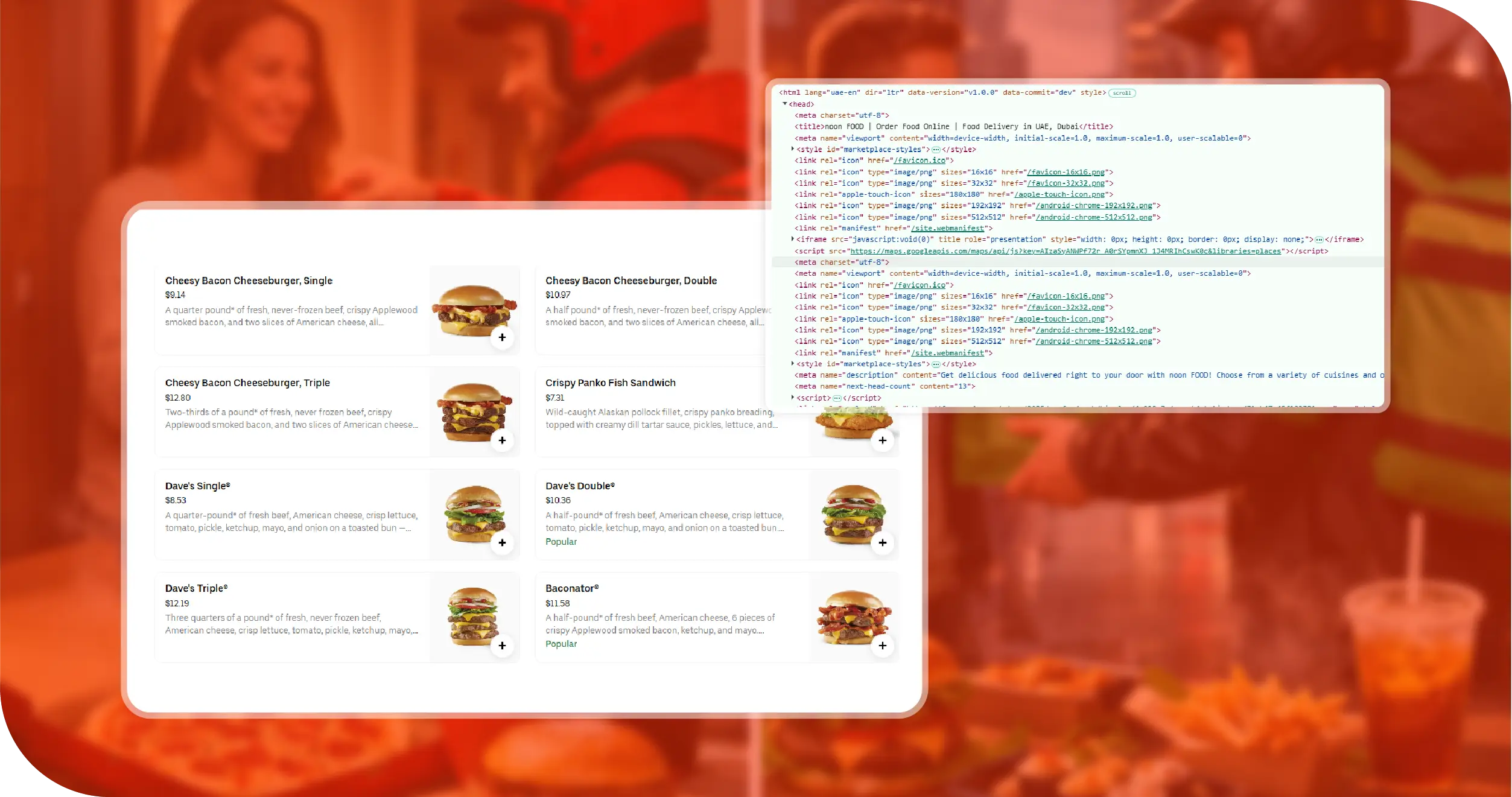
The client struggled to monitor constantly changing delivery fees and surge pricing across regions. Without automated systems, capturing accurate DoorDash Food Dataset insights became difficult, limiting the ability to analyze real-time pricing fluctuations and demand-driven delivery fee variations. - Fragmented Data Sources
Collecting consistent and structured data across multiple food delivery platforms was challenging. The absence of a reliable Uber Eats Food Delivery Scraping API made it difficult to capture delivery charges, service fees, and surge pricing details at scale. - Cross-Platform Comparison Issues
The client faced difficulties comparing pricing patterns between platforms due to inconsistent formats and incomplete data. Building a unified and structured Uber Eats Food Dataset for benchmarking delivery fees and surge trends across locations required advanced data extraction capabilities.
Key Solutions
- Real-Time Pricing Intelligence
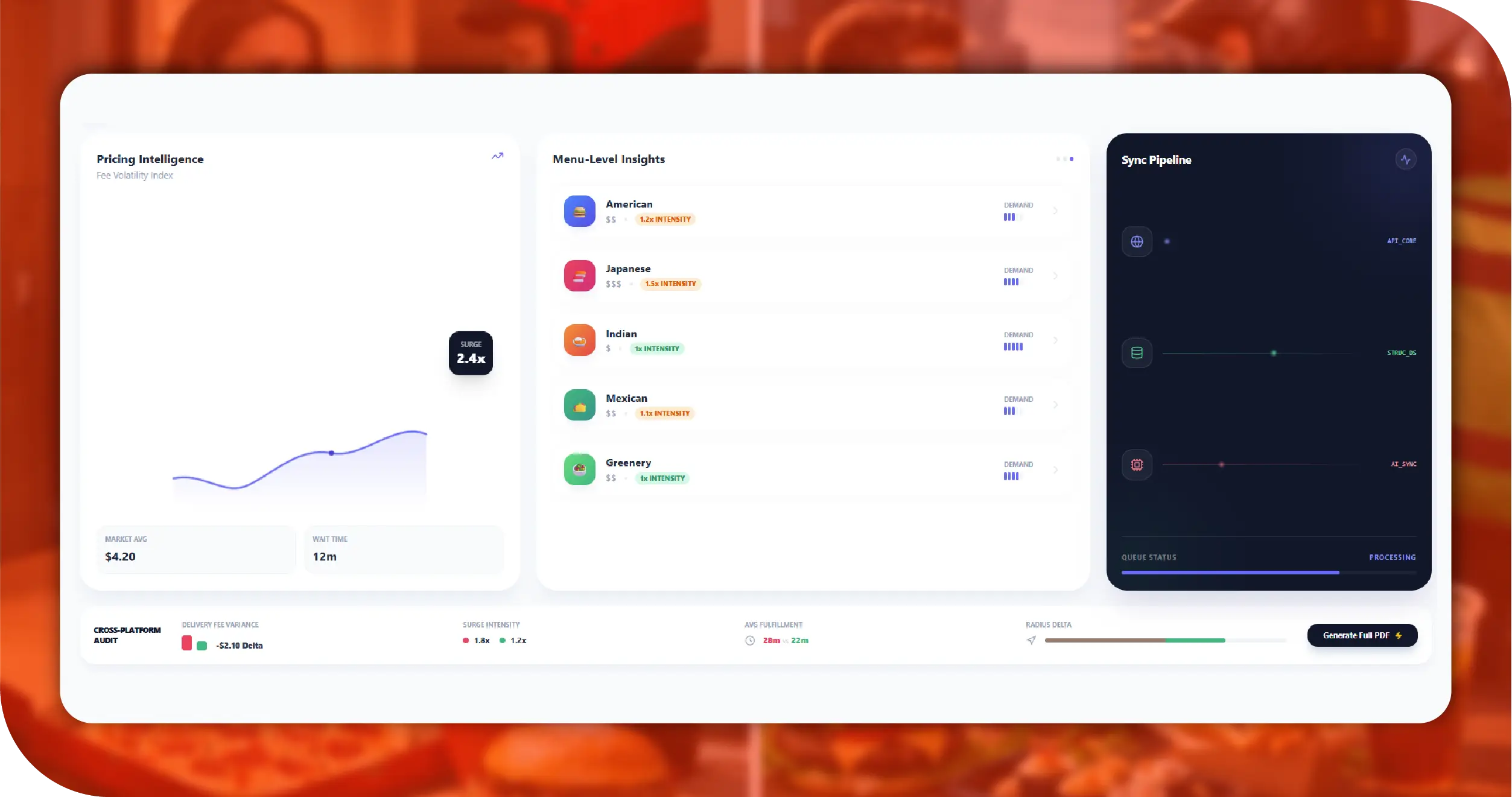
We designed an advanced monitoring system that continuously captured delivery fees, distance charges, and surge pricing variations. Through Web Scraping Food Delivery Data, the client gained real-time insights into pricing movements across cities, helping identify demand spikes and delivery fee trends affecting customer ordering patterns. - Menu-Level Contextual Data
To improve pricing analysis, we integrated solutions to Extract Restaurant Menu Data from multiple restaurants across both platforms. This enabled the client to correlate menu pricing, discounts, and food categories with delivery fee changes, providing deeper insights into pricing strategies and consumer behavior. - Scalable Data Automation
Our team implemented a high-performance Food Delivery Scraping API that delivered structured datasets in near real time. This automated system allowed seamless integration with analytics tools, enabling continuous benchmarking of delivery fees, surge patterns, and restaurant availability across platforms.
Sample Data
| Platform | Country | City | Restaurant | Cuisine Type | Base Delivery Fee | Surge Multiplier | Service Fee | Estimated Delivery Time | Distance (km) | Menu Price Range |
|---|---|---|---|---|---|---|---|---|---|---|
| DoorDash | USA | Seattle | Grill Station | American | $2.89 | 1.3x | $1.15 | 32 mins | 3.1 | $10–$25 |
| Uber Eats | USA | Seattle | Grill Station | American | $3.19 | 1.2x | $1.30 | 30 mins | 3.1 | $10–$25 |
| DoorDash | USA | Boston | Curry Bowl | Indian | $2.59 | 1.4x | $1.10 | 35 mins | 2.9 | $12–$28 |
| Uber Eats | USA | Boston | Curry Bowl | Indian | $2.99 | 1.5x | $1.20 | 33 mins | 2.9 | $12–$28 |
| DoorDash | USA | Miami | Ocean Sushi | Japanese | $3.09 | 1.6x | $1.35 | 40 mins | 4.3 | $15–$35 |
| Uber Eats | USA | Miami | Ocean Sushi | Japanese | $3.39 | 1.7x | $1.40 | 38 mins | 4.3 | $15–$35 |
| DoorDash | USA | Denver | Taco Express | Mexican | $2.49 | 1.2x | $1.05 | 28 mins | 2.5 | $8–$18 |
| Uber Eats | USA | Denver | Taco Express | Mexican | $2.79 | 1.3x | $1.10 | 27 mins | 2.5 | $8–$18 |
| DoorDash | USA | Austin | Veggie Delight | Vegetarian | $2.69 | 1.3x | $1.10 | 29 mins | 3.0 | $9–$20 |
| Uber Eats | USA | Austin | Veggie Delight | Vegetarian | $2.99 | 1.4x | $1.20 | 27 mins | 3.0 | $9–$20 |
Methodologies Used
- Platform Data Mapping
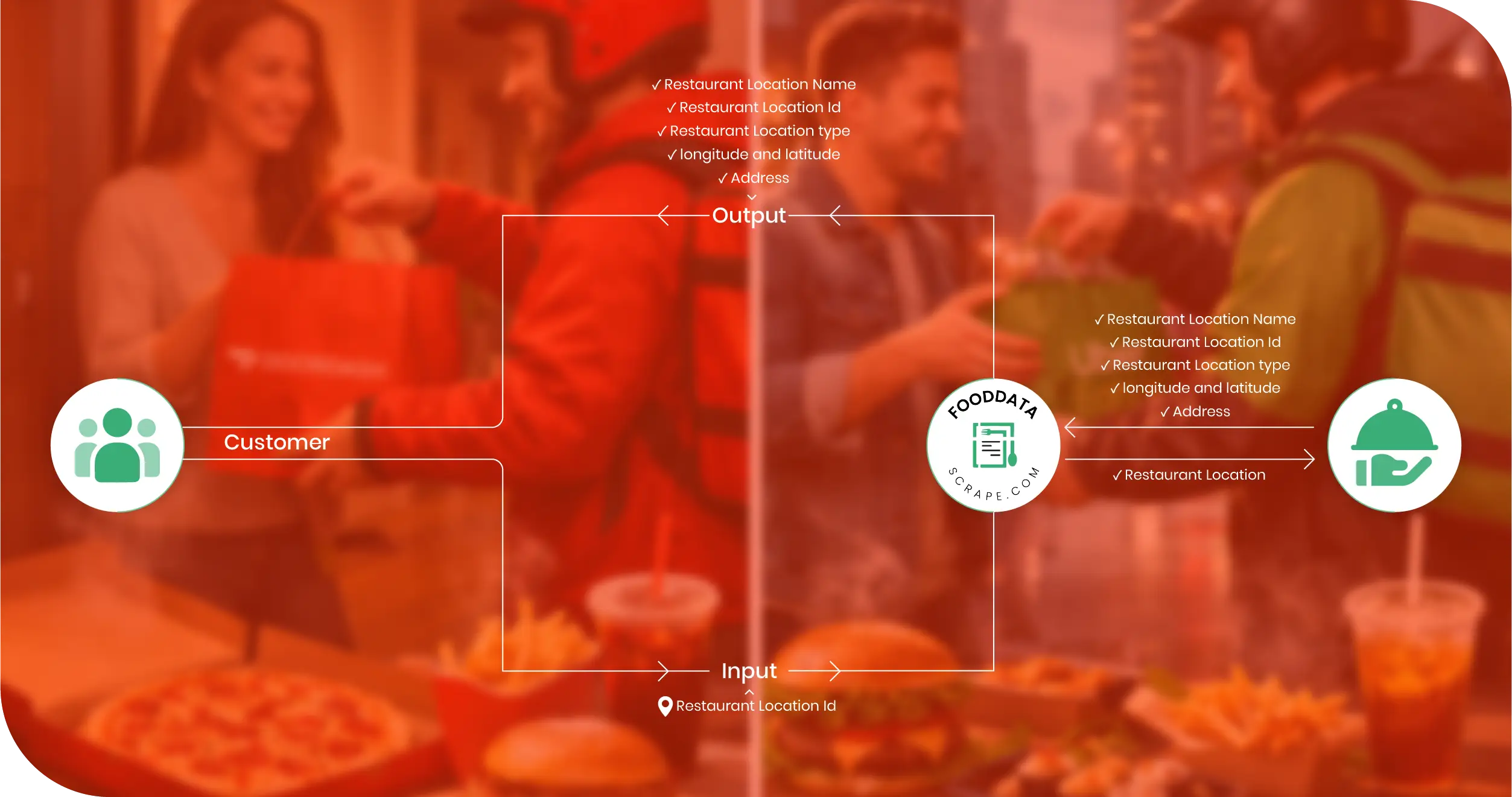
Our team first mapped delivery platforms to identify essential data fields such as delivery fees, surge pricing, restaurant availability, distance, and service charges. This structured mapping ensured consistent data collection across multiple cities, restaurants, and time intervals for accurate comparative analysis. - Automated Data Crawling
We deployed automated crawlers designed to capture delivery fee variations, surge multipliers, and order conditions at different times. The system continuously monitored pricing updates, ensuring fresh datasets that reflected real-time market conditions and dynamic demand fluctuations. - Multi-City Sampling
To provide broader insights, data was collected from diverse geographic locations and neighborhoods. Sampling multiple cities allowed the client to understand regional pricing patterns, platform competition, and how demand levels influenced delivery charges across different urban markets. - Data Standardization
Raw data gathered from different platforms was cleaned, normalized, and structured into consistent formats. This process removed duplicates, corrected anomalies, and ensured that pricing, time slots, and location-based variables could be compared accurately within unified analytical dashboards. - Analytical Modeling
Advanced analytics models were applied to identify delivery fee trends, surge pricing triggers, and peak ordering hours. These models helped the client generate actionable insights, forecast pricing patterns, and make strategic decisions based on reliable market intelligence.
Advantages of Collecting Data Using Food Data Scrape
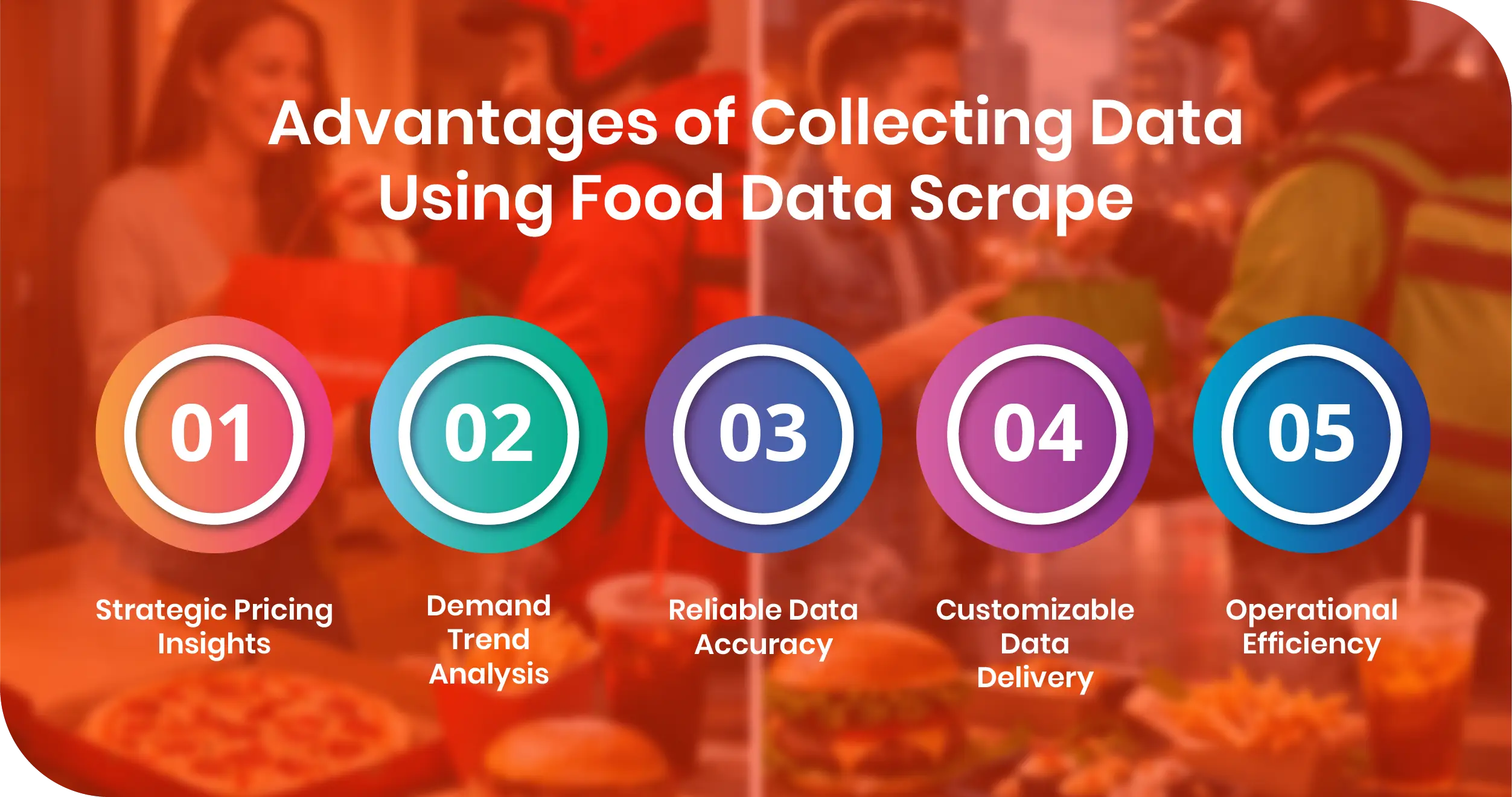
- Strategic Pricing Insights
Our data extraction services help businesses uncover hidden pricing patterns across delivery platforms. By analyzing large volumes of structured data, clients can identify surge triggers, optimize pricing strategies, and make informed operational decisions that strengthen their competitive position. - Demand Trend Analysis
We enable businesses to study ordering behavior across different times, locations, and restaurant categories. This insight helps organizations understand demand cycles, identify peak ordering periods, and align marketing campaigns or delivery strategies with real customer demand patterns. - Reliable Data Accuracy
Our advanced validation and quality checks ensure that collected datasets remain clean, consistent, and highly reliable. Accurate data allows clients to build trustworthy reports, perform meaningful comparisons, and confidently use insights for strategic planning and business growth. - Customizable Data Delivery
We provide flexible data formats and integration options tailored to client needs. Whether used for dashboards, internal analytics platforms, or business intelligence tools, our structured datasets seamlessly fit into existing workflows without requiring complex adjustments. - Operational Efficiency
Automated data collection eliminates manual monitoring of delivery platforms. This saves significant time and resources while providing continuous access to updated market intelligence, allowing teams to focus more on analysis, innovation, and improving customer experience.
Client’s Testimonial
"Working with this team has significantly improved our ability to monitor delivery pricing trends across major food delivery platforms. Their data solutions provided highly structured, reliable datasets that helped us analyze delivery fees, surge patterns, and regional demand fluctuations more efficiently. The automation and accuracy of the data enabled our analytics team to build powerful pricing intelligence dashboards and generate actionable insights for our partners. Their technical expertise, responsiveness, and ability to deliver scalable data pipelines made the entire collaboration seamless. We now have stronger visibility into competitive delivery pricing strategies and market dynamics."
—Director of Market Intelligence
Final Outcome
The project delivered measurable business value by transforming complex delivery platform data into structured insights. Through advanced analytics and Restaurant Data Intelligence, the client gained visibility into delivery fee patterns, restaurant availability, and pricing variations across different cities and time periods.
By leveraging Food delivery Intelligence, the client was able to monitor real-time surge pricing behavior and identify peak demand periods that directly influence consumer ordering activity and delivery costs.
The collected insights were integrated into an interactive Food Price Dashboard, allowing stakeholders to visualize delivery charges, service fees, and surge multipliers through easy-to-understand analytics reports.
Additionally, the project delivered comprehensive Food Datasets that supported long-term trend analysis, competitive benchmarking, and strategic decision-making for restaurants and food delivery market analysts.