Introduction
The retail and FMCG ecosystem has entered an era where visibility of product availability is as important as pricing and branding. With rapidly changing consumer demand patterns and the rise of instant delivery platforms, companies need continuous intelligence on whether their products are in stock or not. Real-Time Out-of-Stock Detection Using Web Scraping has emerged as a powerful method to address this challenge by enabling automated monitoring of product listings across multiple digital storefronts.
Alongside this transformation, enterprises are adopting Real-Time Out-of-Stock Monitoring Data Scraper systems that continuously scan ecommerce and quick commerce platforms to detect missing SKUs and sudden availability drops. These tools eliminate dependency on manual audits and provide continuous feedback loops for inventory planning.
To further enhance supply chain responsiveness, businesses rely on FMCG Stock Availability Data Extraction methods that convert raw web product data into structured insights, helping brands understand how their products are performing across different platforms and regions in real time.
The Need for SKU-Level Visibility in Modern Retail
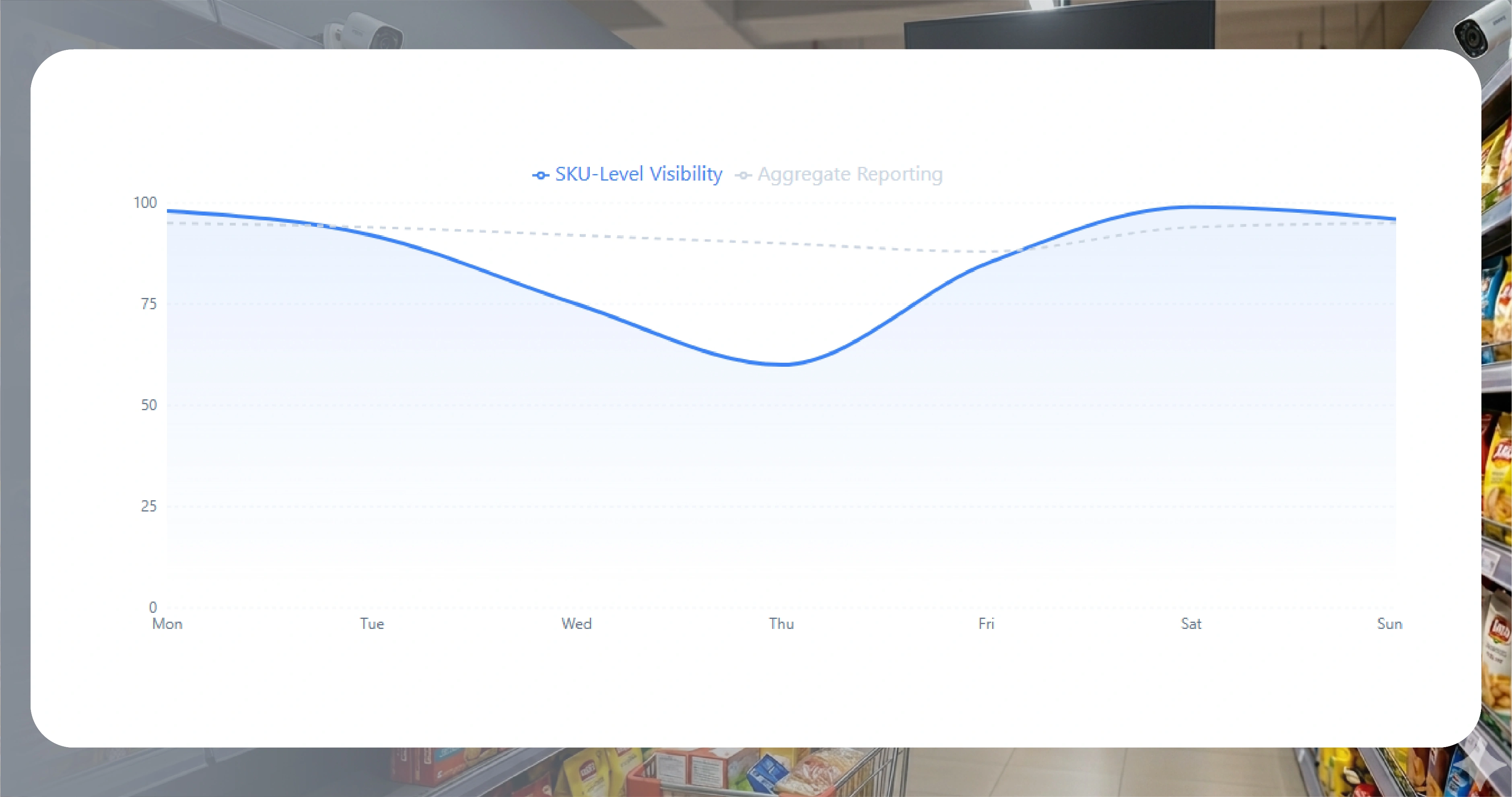
In today’s fragmented retail landscape, each SKU behaves differently based on demand cycles, geography, and platform-specific promotions. This makes granular monitoring essential for accurate forecasting and replenishment planning.
Real-Time SKU Availability Data Scraping enables businesses to track each product variant individually, ensuring that even minor stock fluctuations are captured and analyzed. This level of detail is critical for FMCG companies managing thousands of SKUs across multiple distribution channels.
By observing SKU-level availability changes, companies can detect early warning signs of stock depletion, optimize warehouse distribution, and reduce missed sales opportunities caused by delayed restocking.
Grocery Ecosystem Monitoring at Scale
The grocery sector is one of the most volatile segments in retail due to frequent demand spikes, seasonal variations, and perishable inventory. Real-time monitoring helps businesses maintain a competitive edge in this fast-moving environment.
Real-Time Grocery Stock Tracking allows organizations to continuously observe stock levels across platforms, ensuring that they maintain visibility into product availability across cities, stores, and delivery apps. This is particularly useful for identifying gaps between expected inventory and actual listing status.
As businesses scale, they also implement systems like Real-Time FMCG Brands Inventory Tracking, which provide brand-level visibility across retail ecosystems. This helps manufacturers and distributors align production schedules with real-time demand signals rather than relying solely on historical sales reports.
From Inventory Data to Sales Intelligence
Modern FMCG analytics is not just about tracking availability—it is about interpreting the relationship between stock, demand, and consumer behavior. Web scraping systems now play a crucial role in building predictive intelligence models.
With FMCG Brands Track Sales Metrics with Web Scraping, companies can infer sales velocity based on how quickly products move from in-stock to out-of-stock states. This indirect measurement helps brands estimate demand even in the absence of direct sales data from retailers.
This approach enables a more dynamic understanding of product performance, especially in highly competitive categories where small changes in availability can significantly affect market share.
Get real-time FMCG insights and eliminate stockouts with our advanced data scraping services today.
Quick Commerce as a Real-Time Data Source
Quick commerce platforms have transformed consumer expectations by offering ultra-fast delivery windows. However, they also present a highly dynamic inventory environment that changes minute by minute.
Scrape Real-Time Stock Data from Quick Commerce to continuously extract live product availability from these platforms. This helps FMCG companies understand hyperlocal demand patterns and optimize their distribution strategies accordingly.
By analyzing this real-time data, brands can reduce stockouts in high-demand zones, improve last-mile efficiency, and ensure better product availability during peak hours.
Tracking Sales Signals Through Web Data
Beyond availability, modern retail intelligence systems focus on identifying hidden sales signals embedded within stock and pricing fluctuations.
FMCG Sales Signal Tracking involves analyzing patterns such as rapid stock depletion, repeated restocking cycles, and price changes to understand underlying consumer demand behavior. These signals are often more reliable than traditional surveys or periodic sales reports.
By interpreting these signals, companies can make proactive decisions such as adjusting promotions, increasing production, or reallocating inventory across regions.
Real-Time Out-of-Stock Detection Using Web Scraping — Measurable ROI Data Model (FMCG)
| Business Area | Baseline (Without Scraping) | With Real-Time Web Scraping | Assumed Improvement | Revenue / Cost Impact (Example for ₹100 Cr FMCG Brand) | Annual Financial Impact |
|---|---|---|---|---|---|
| Stockout Losses | 8%–12% revenue lost due to undetected stockouts | 3%–5% revenue loss after real-time detection | 50%–65% reduction in stockout losses | ₹8 Cr → ₹3.5 Cr loss reduced | ₹4.5 Cr saved |
| Demand Forecast Accuracy | 65%–75% accuracy | 85%–92% accuracy | +20% improvement | Reduced overstock + stockout correction | ₹2.0–₹3.5 Cr efficiency gain |
| Inventory Holding Cost | 18%–22% of inventory value | 12%–15% due to better replenishment | 25%–35% reduction | Reduced excess stock (~₹100 Cr base) | ₹3–₹5 Cr saved |
| Lost Sales Recovery | 6%–10% missed conversions | 2%–4% missed conversions | 40%–60% recovery | Additional recovered sales | ₹3–₹6 Cr revenue gain |
| Supply Chain Efficiency | Reorder delay: 5–7 days | Reorder delay: 1–2 days | 60% faster response | Faster replenishment reduces shortages | ₹1.5–₹2.5 Cr gain |
| Pricing Optimization | Static monthly pricing cycles | Real-time competitor pricing updates | 10%–18% margin improvement | Better pricing decisions across SKUs | ₹2–₹4 Cr margin uplift |
| Promotion Effectiveness | 18%–25% promo ROI | 30%–40% promo ROI | +60% effectiveness | Better campaign targeting | ₹1–₹2.5 Cr uplift |
| SKU Performance Visibility | 40% SKUs under-analyzed | 90%+ SKU-level visibility | +125% data visibility | Better SKU rationalization | ₹1–₹3 Cr optimization gain |
| Quick Commerce Efficiency | 70% fulfillment accuracy | 90%–95% accuracy | +25% improvement | Reduced cancellation + delay costs | ₹2–₹4 Cr operational gain |
| Competitive Intelligence | Monthly updates | Real-time daily tracking | 30x faster insights | Better pricing + positioning | ₹1–₹3 Cr strategic gain |
Building Large-Scale Grocery Data Systems
As organizations expand their data capabilities, they begin to construct large-scale datasets that provide historical insights into market behavior. These datasets become foundational assets for machine learning and forecasting systems.
Real Time Grocery Stock data scraping enables continuous collection of timestamped inventory snapshots across multiple platforms. Over time, this builds a comprehensive dataset that reflects real-world demand fluctuations and supply chain performance.
One of the key outcomes of this process is the creation of a FMCG Grocery Dataset, which serves as a structured repository of product availability, pricing, and category-level performance trends across markets.
Business Applications of Real-Time FMCG Intelligence
The applications of real-time inventory intelligence extend across multiple business functions including supply chain management, marketing optimization, and competitive analysis.
Retailers can identify high-demand products and adjust procurement cycles accordingly, while FMCG brands can optimize promotional strategies based on real-time availability trends. Additionally, category managers can detect substitution patterns where customers switch between brands due to stockouts.
This data-driven approach improves operational efficiency and reduces revenue leakage caused by unavailability or delayed replenishment.
Transforming Retail Operations with Automation
Automation is at the core of modern FMCG analytics systems. By replacing manual tracking with automated data pipelines, companies can achieve higher accuracy and scalability.
These systems continuously collect, clean, and analyze data without human intervention, enabling near real-time decision-making. As a result, organizations can respond faster to market changes and improve overall supply chain resilience.
How Food Data Scrape Can Help You?
- Continuous Market Visibility for Faster Decisions
Our data scraping services provide always-on monitoring of ecommerce and grocery platforms, enabling businesses to react quickly to stock changes, demand spikes, and availability gaps with real-time operational intelligence. - Improved Product Availability Management
We help organizations track product presence across multiple digital shelves, ensuring better availability planning, minimizing out-of-stock situations, and supporting consistent customer experience across online and quick commerce ecosystems. - Enhanced Pricing Intelligence and Optimization
Our systems extract pricing and promotional data at scale, allowing brands to analyze competitor movements, identify pricing opportunities, and optimize their own pricing strategies based on real-time market behavior. - Deep Category-Level Performance Analysis
We deliver structured datasets that break down performance by category, brand, and SKU, helping businesses understand consumer demand patterns, seasonal shifts, and product-level contribution to overall sales performance. - Smarter Operational Planning with Predictive Signals
By transforming raw scraped data into actionable insights, we enable predictive planning for inventory, logistics, and procurement, helping businesses reduce inefficiencies and improve overall supply chain responsiveness.
Conclusion: The Future of FMCG Data Ecosystems
The future of retail intelligence lies in fully integrated systems that combine inventory, pricing, and demand signals into unified dashboards. These tools allow businesses to operate with real-time awareness of market conditions.
Grocery Price Tracking & Availability Dashboard solutions provide a centralized view of product pricing trends and stock availability, helping decision-makers optimize pricing strategies and inventory allocation.
Advanced systems also rely on a Grocery Stock-Out Data Scraping API, which enables seamless integration of real-time availability data into enterprise systems such as ERP, analytics platforms, and forecasting engines.
Ultimately, the evolution of FMCG Data Intelligence will redefine how companies manage supply chains, predict demand, and deliver products efficiently in an increasingly competitive and data-driven retail landscape.
Are you in need of high-class scraping services? Food Data Scrape should be your first point of call. We are undoubtedly the best in Food Data Aggregator and Mobile Grocery App Scraping service and we render impeccable data insights and analytics for strategic decision-making. With a legacy of excellence as our backbone, we help companies become data-driven, fueling their development. Please take advantage of our tailored solutions that will add value to your business. Contact us today to unlock the value of your data.