Our Client Profile
The client is a U.S.-based retail intelligence organization specializing in pricing benchmarks, competitor analytics, and grocery market insights. They needed a unified data pipeline to monitor nationwide pricing fluctuations across Walmart’s extensive product catalog. By integrating the Walmart Grocery Details Data Extraction API in USA, they successfully eliminated fragmentation and inaccuracies caused by manual tracking processes. With the support of the Walmart Grocery Inventory Data Scraping API in USA, the client developed dynamic live data models that mapped stock levels, product updates, and regional availability patterns. This empowered analysts to detect supply trends and react to changes faster. Leveraging the ability to Extract Walmart Grocery Product Details and Prices in USA, the client improved forecasting accuracy, gained stronger negotiation leverage with suppliers, and enhanced internal analytics dashboards—ultimately creating a more competitive and data-driven operational framework.
Key Challenges
- Inconsistent Data Across Regions
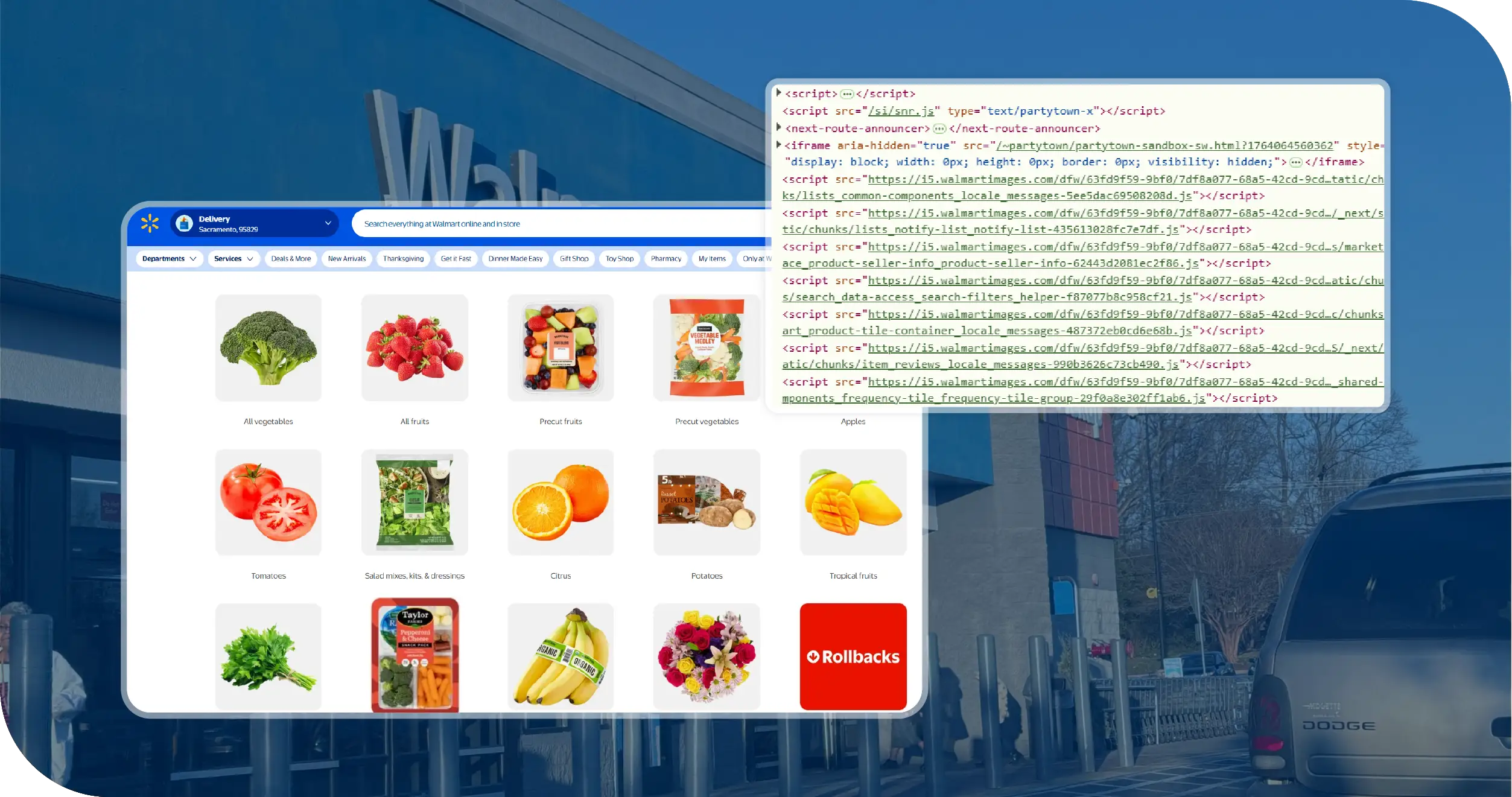
The team struggled to Extract Walmart Grocery Product Listings in USA consistently due to dynamic store-level variations, live updates, and missing structured fields. - Slow Manual Monitoring
Traditional tracking relied on spreadsheets and manual price checks, making robust Walmart Grocery Data Scraping difficult without automation. - Lack of Structured Historical Records
No centralized model existed to maintain a Walmart Grocery Delivery Dataset, resulting in gaps in trend analysis and benchmarking accuracy.
Key Solutions
- Automated Extraction
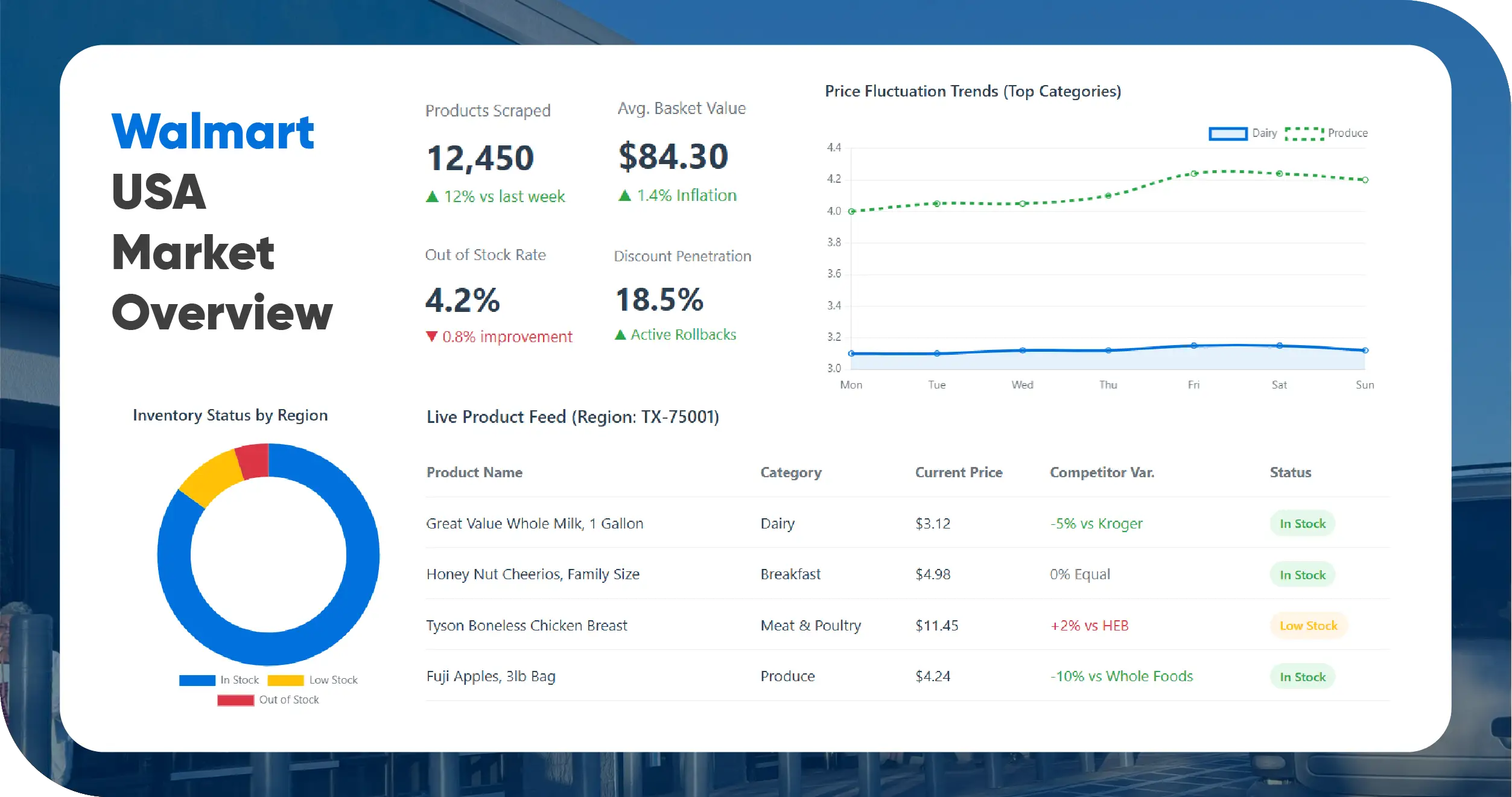
We deployed automated workflows through Grocery App Data Scraping services to capture items, variants, categories, prices, and stock signals at defined intervals. - Real-time Data Pipeline
The client integrated our feeds using Grocery Delivery Scraping API Services, ensuring structured ingestion, alerts, and optimized monitoring. - Visualization and Analytics
We implemented a Grocery Price Tracking Dashboard to visualize changes, compare stores, and trigger instant price movement notifications.
Dataset Example Table
| Field Name | Sample Scraped Value |
|---|---|
| Product Name | Great Value Organic Strawberries |
| Category | Fresh Produce |
| Store Location | New York – Brooklyn |
| Current Price | $4.98 |
| Previous Price | $5.24 |
| Price Change Indicator | -$0.26 (Promotion Applied) |
| Stock Status | In Stock |
| Inventory Trend | Stable |
| Promotion Type | Rollback |
| SKU / Product ID | 813742009871 |
| Unit Size / Variant | 16 oz Pack |
| Delivery Availability | Available |
| Pickup Availability | Available |
| Rating | 4.4 / 5 |
| Number of Reviews | 1,428 |
| Update Frequency | Hourly (Automated Feed) |
| Last Synced Timestamp | 2025-11-24 11:36 AM |
Methodologies Used
- Schema Planning
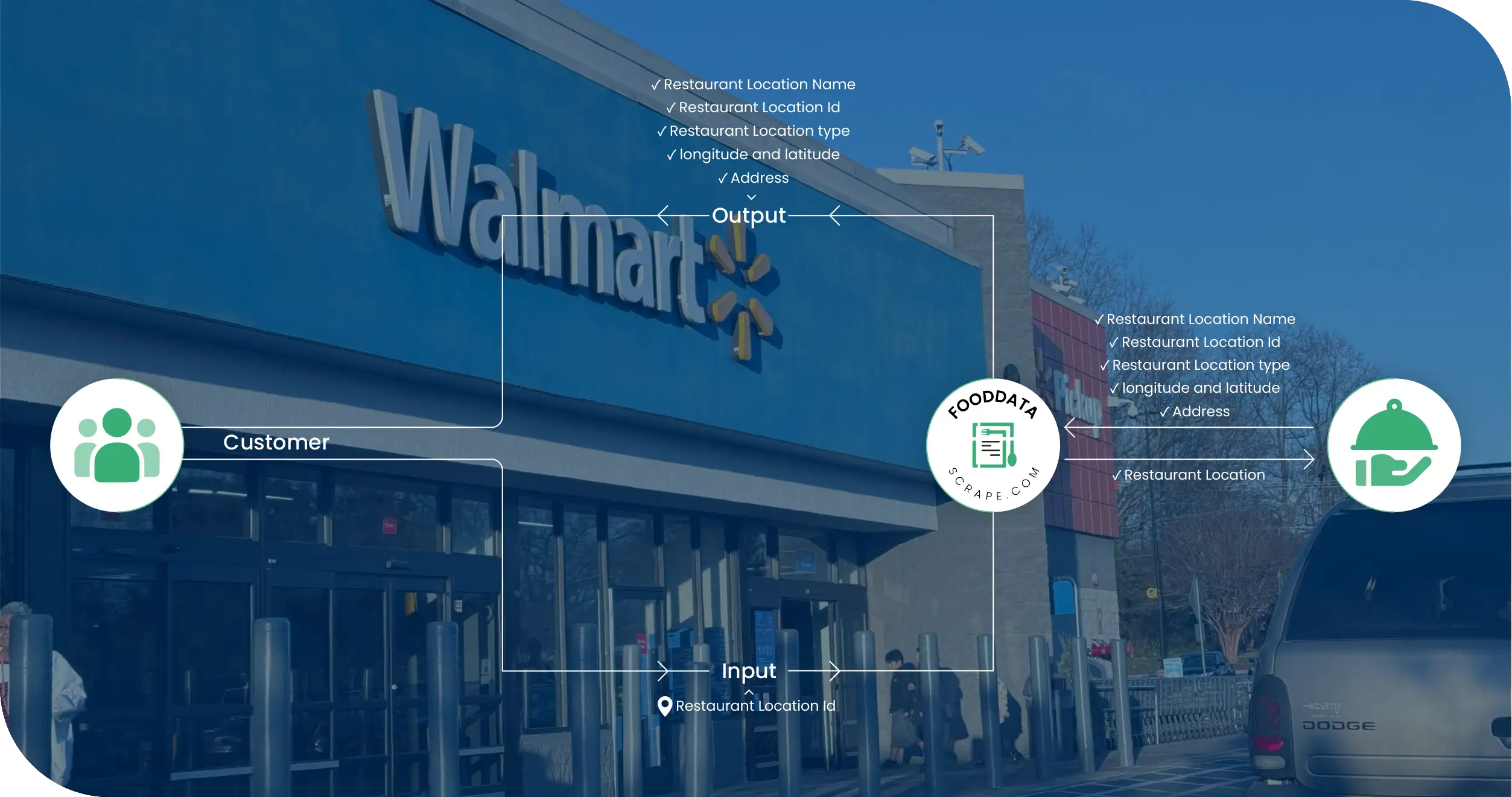
A structured schema was created to ensure consistent format across extraction cycles and long-term scalability. - Automated Scheduling
Scheduled runs enabled recurring scans with reliable synchronization across regions. - Data Validation
Every dataset underwent validation to detect errors, duplicates, and inconsistencies. - API Integration
Cleaned data was delivered via secure API endpoints for seamless integration into dashboards and analytics systems. - Historical Storage
Scalable storage retained historical data for trend discovery and improved forecasting models.
Advantages of Collecting Data Using Food Data Scrape
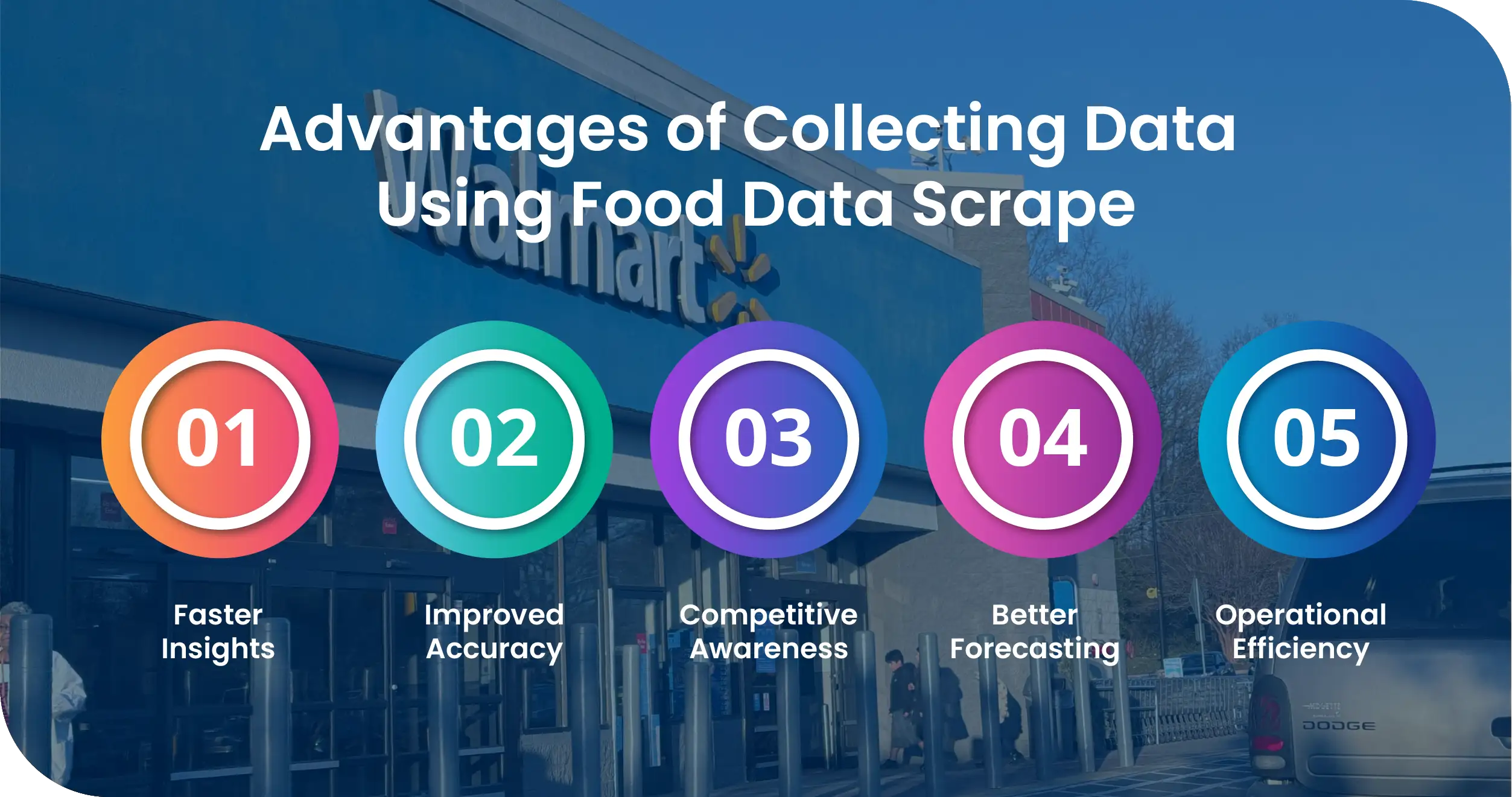
- Faster Insights
Automated dashboards reduce dependency on manual collection and accelerate decision cycles. - Improved Accuracy
Structured extraction minimizes human error in price, stock, and metadata. - Competitive Awareness
Real-time visibility into promotions and emerging trends. - Better Forecasting
Historical records improve predictions around pricing and demand patterns. - Operational Efficiency
Teams focus on strategy instead of repetitive data gathering.
Client’s Testimonial
"Working with this solution transformed our entire grocery intelligence workflow. Before implementation, our team spent countless hours manually tracking data, often missing key pricing changes and regional variations. The automation provided gave us accurate, structured insights we never had access to before. Our analytics, forecasting, and reporting accuracy improved dramatically, and internal workflows became significantly more efficient. This partnership helped us move from reactive reporting to proactive strategy."
Senior Pricing Analyst
Final Outcome
The project empowered the client to consolidate fragmented competitive data into one reliable system, eliminating manual monitoring processes and significantly reducing operational workload. With Grocery Pricing Data Intelligence, they were able to track pricing shifts, promotional cycles, and SKU-level fluctuations across multiple Walmart store regions with higher accuracy and speed. This enhanced transparency helped their teams make faster and more data-driven pricing decisions. By leveraging structured Grocery Store Datasets, the client improved internal reporting efficiency and strengthened forecasting capabilities. These datasets supported predictive modeling for supply chain planning, merchandising alignment, and category-level strategy development. As a result, the client gained a stronger competitive position, improved planning accuracy, and accelerated insight-driven decision-making across departments.