Introduction
The online food ordering ecosystem is evolving rapidly, and platforms like District by Zomato are playing a crucial role in reshaping restaurant discovery, offers, and table bookings. Businesses seeking deeper visibility into dynamic pricing, seasonal deals, and reservation trends increasingly rely on data-driven strategies. One of the most effective approaches is to Scrape Offers & Bookings Data from District by Zomato to uncover insights related to customer behavior, restaurant promotions, and booking patterns.
With advanced District by Zomato Offers Data Scraping Services, companies can track limited-time discounts, coupon structures, combo deals, and loyalty rewards across cities. Additionally, Web Scraping District by Zomato Reservations and Offers enables real-time access to reservation slots, special event bookings, and festive pricing strategies, helping businesses benchmark their performance against competitors.
Why Is Scraping District by Zomato Offers and Bookings Important?
District by Zomato aggregates restaurant deals, curated dining experiences, and booking discounts under one ecosystem. This centralized model makes it a goldmine for competitive intelligence.
By implementing solutions to Extract District by Zomato Reservations and Deals Data, businesses can monitor:
- Table availability patterns
- Weekend vs weekday pricing variations
- Early-bird discounts
- Event-based promotional pricing
- Location-specific offer customization
Restaurants can analyze competitor discount frequencies, while aggregators can evaluate market penetration strategies. The extracted datasets reveal how demand fluctuates during peak dining hours and festive seasons.
Understanding the Role of Booking and Discount Data
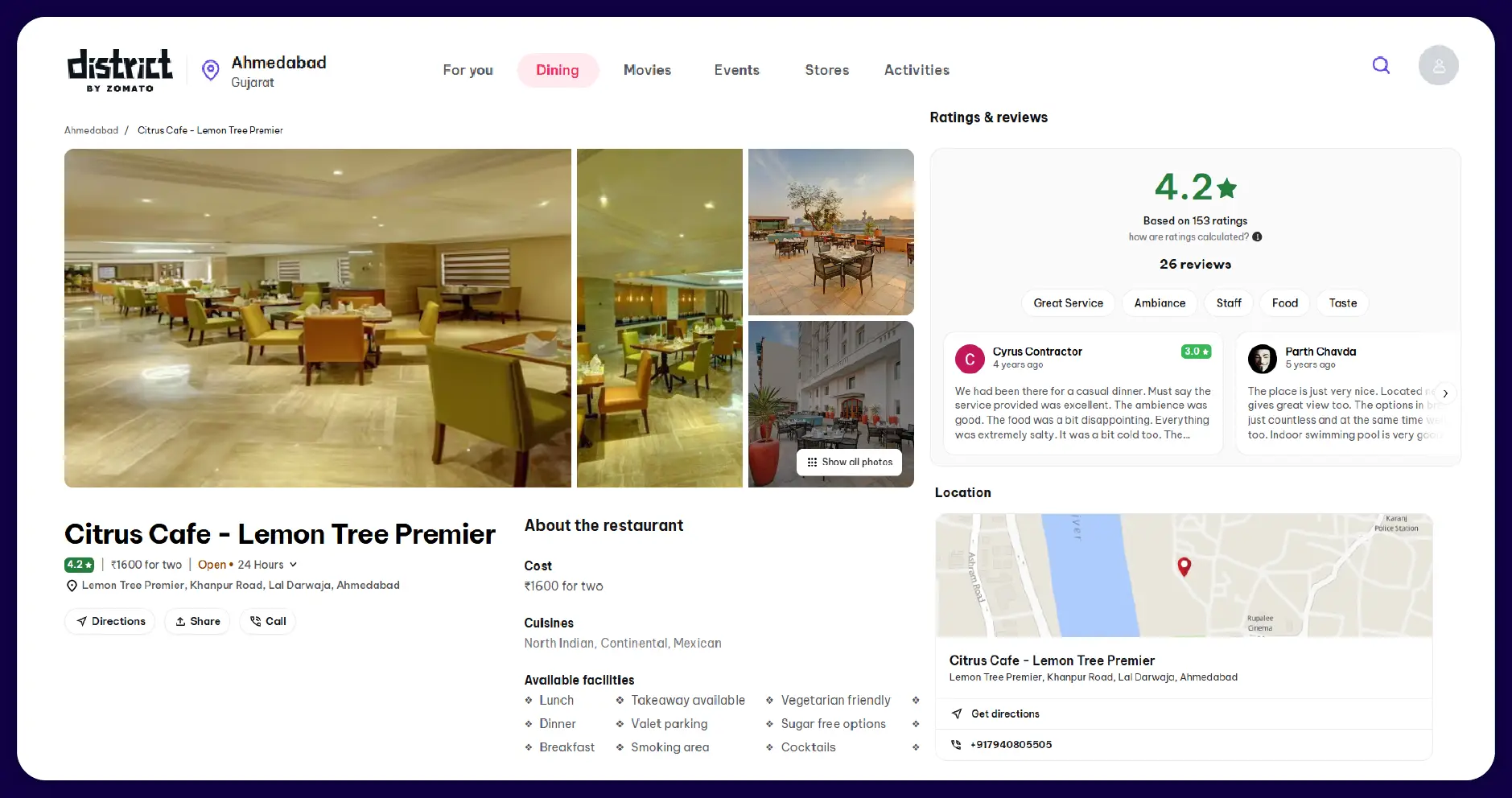
A robust District by Zomato Booking and Discount Data Scraper captures structured data such as:
- Restaurant name and location
- Available booking slots
- Discount percentages
- Minimum spend requirements
- Validity periods
- Cuisine categories
- User ratings and reviews
This information empowers hospitality businesses to adjust pricing strategies dynamically. For example, if multiple restaurants in a locality are offering 20% weekday lunch discounts, competitors can respond strategically to maintain demand.
Leveraging Food Delivery and Offers Data Together
Dining reservations and food delivery trends are often interconnected. A comprehensive Food Delivery Dataset from District by Zomato provides insights into menu pricing, packaging offers, and delivery-exclusive discounts.
By integrating a District by Zomato Food Delivery Scraping API, organizations can automatically collect structured and scalable data streams. This ensures:
- Real-time synchronization of offers
- Automated tracking of price updates
- Historical pricing analysis
- Seasonal discount monitoring
Such automation is critical for businesses managing large-scale restaurant intelligence platforms.
How Does District by Zomato App Data Scraping Work?
Modern District by Zomato Food Delivery App Data Scraping techniques involve structured extraction of publicly available data points from web and app interfaces. The process includes:
- Identifying relevant endpoints
- Parsing offer and booking metadata
- Cleaning and structuring extracted information
- Storing data in centralized databases
- Integrating data into analytics dashboards
Through Web Scraping Food Delivery Data, analysts can compare offer durations, pricing structures, and promotional intensity across regions. This structured approach reduces manual effort while improving decision-making speed.
Extracting Restaurant Menu and Reservation Insights
Beyond discounts, booking data often connects with menu engineering strategies. When businesses Extract Restaurant Menu Data, they can correlate:
- Popular dishes with high booking rates
- Premium menu items linked to reservation-only dining
- Dynamic pricing of special chef menus
- Festive combo pricing models
Combining menu intelligence with booking analytics offers a holistic view of revenue optimization opportunities.
The Role of APIs in Automated Data Collection
A scalable Food Delivery Scraping API allows enterprises to automate continuous monitoring without manual intervention. APIs ensure:
- High-frequency data updates
- Reduced infrastructure strain
- Secure data pipelines
- Custom filtering by location, cuisine, or rating
When integrated with dashboards and analytics platforms, scraped booking and offer data becomes a strategic asset rather than just raw information.
Strategic Benefits of Restaurant Data Intelligence
Comprehensive Restaurant Data Intelligence enables businesses to:
- Benchmark competitors’ promotional frequency
- Identify high-demand dining slots
- Monitor cancellation trends
- Analyze geographic pricing differences
- Forecast offer performance
For example, if a restaurant cluster in Mumbai shows increased 30% booking discounts during weekdays, competitors in similar urban zones can adjust pricing to remain competitive.
Such intelligence also supports investors evaluating restaurant chains or food-tech startups by providing quantifiable performance indicators.
Use Cases Across Stakeholders
-
Restaurants
Restaurants can refine promotional strategies based on competitor discount cycles and demand patterns. -
Aggregators
Food aggregators can monitor how regional players design booking incentives and exclusive dining packages. -
Market Researchers
Analysts can track macro trends in dining behavior, seasonal campaigns, and loyalty adoption. -
Investors
Data-backed evaluation of booking growth rates and discount impact improves investment decisions. -
SaaS Platforms
Restaurant SaaS providers can integrate scraped insights into pricing optimization tools and analytics dashboards.
Turn restaurant data into your competitive edge with our real-time scraping solutions.
Overcoming Challenges in Data Extraction
While scraping provides immense value, businesses must ensure compliance with applicable regulations and platform policies. Ethical data collection, rate limiting, and structured extraction frameworks are essential.
Additionally, data normalization is critical. Offers might vary in formatting, discount logic, and validity conditions. Standardizing this data ensures accurate analytics.
Future of Offers and Booking Data Analytics
The dining industry is increasingly adopting AI-driven personalization. Booking and offer data, when combined with predictive analytics, can forecast:
- Customer churn probabilities
- Optimal discount percentages
- Best-performing cuisines by locality
- Time-slot-based promotional efficiency
Advanced analytics models can identify correlations between reservation lead time and discount depth, helping businesses fine-tune marketing strategies.
How Food Data Scrape Can Help You?
-
Real-Time Offer Monitoring
We track live restaurant discounts, seasonal campaigns, and limited-time deals, enabling you to respond instantly to competitor pricing shifts and optimize promotional strategies effectively. -
Accurate Booking Trend Analysis
Our scraping solutions capture reservation availability, peak dining hours, and demand fluctuations, helping you forecast occupancy trends and plan pricing models with confidence. -
Structured and Clean Data Delivery
We provide well-formatted, structured datasets ready for dashboards, analytics tools, and business intelligence platforms, eliminating manual cleaning efforts and saving operational time. -
Competitive Intelligence Insights
Our services benchmark competitor offers, discount frequency, and customer engagement patterns, empowering smarter marketing decisions and improved positioning in highly competitive markets. -
Scalable and Automated Data Collection
We deploy automated scraping infrastructure with customizable frequency, ensuring continuous data flow, historical tracking, and seamless integration into your analytics ecosystem.
Conclusion
The ability to systematically collect and analyze booking and promotional information from District by Zomato transforms raw data into strategic advantage. Businesses leveraging structured scraping tools gain real-time visibility into dynamic pricing and competitive positioning.
When integrated with advanced Food delivery Intelligence, organizations can uncover actionable insights about consumer demand, offer effectiveness, and market saturation levels. By combining these insights with a real-time Food Price Dashboard, decision-makers can monitor booking discounts and menu price movements in one unified interface.
Furthermore, integrating structured booking information into large-scale Food Datasets enables predictive modeling, competitive benchmarking, and revenue optimization across the food-tech ecosystem.
In an increasingly competitive dining landscape, scraping offers and bookings data is no longer optional—it is a strategic necessity for businesses aiming to lead with data-driven precision.
If you are seeking for a reliable data scraping services, Food Data Scrape is at your service. We hold prominence in Food Data Aggregator and Mobile Restaurant App Scraping with impeccable data analysis for strategic decision-making.