Introduction
The United States food and beverage industry is undergoing a rapid digital transformation. Restaurants, bars, lounges, wineries, and liquor retailers increasingly rely on online menus, delivery platforms, and digital listings to reach customers. This digital footprint creates a vast pool of publicly available data that, when collected and structured correctly, can unlock valuable market insights.
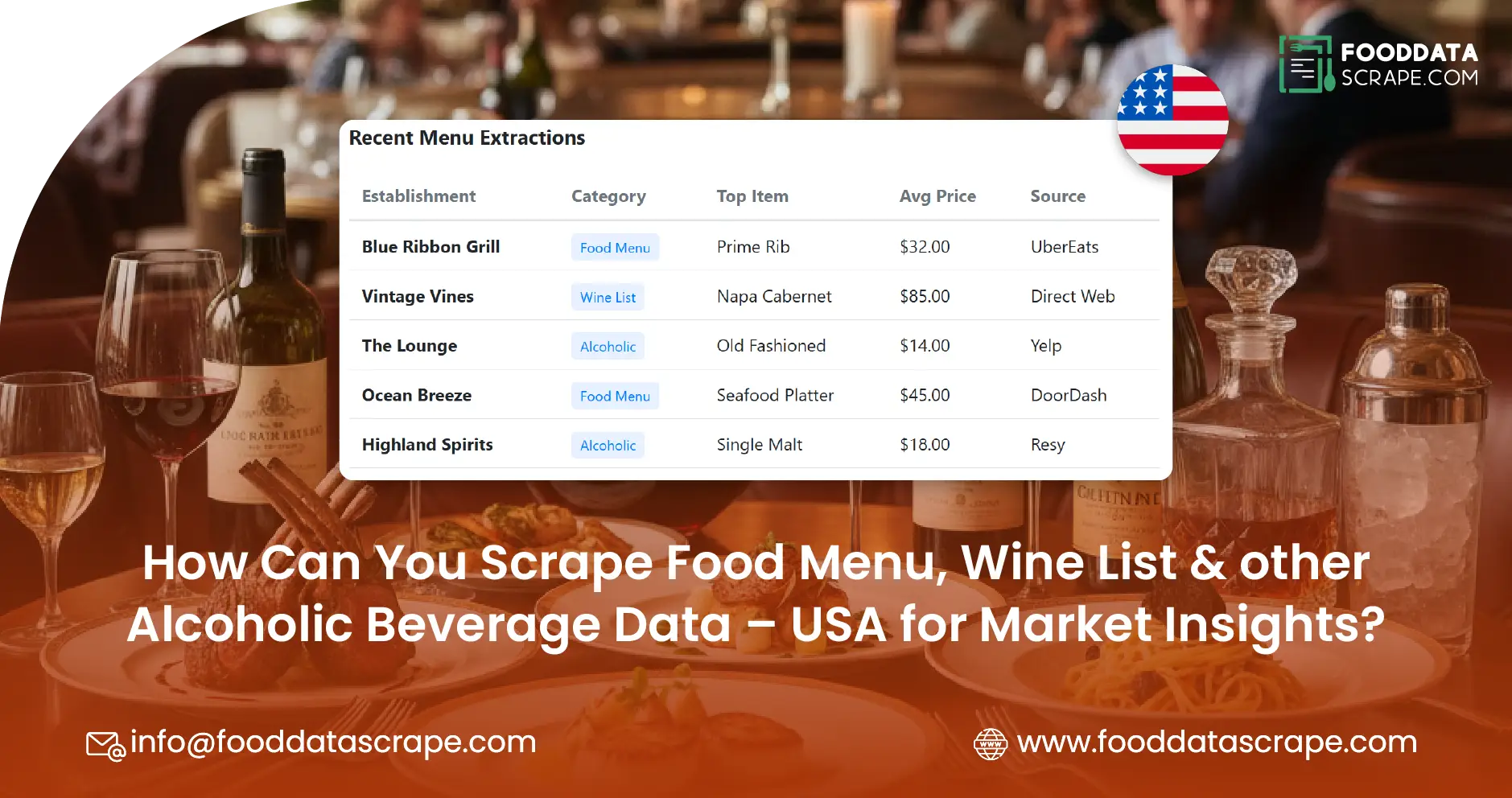
In this data-driven landscape, the method to Scrape Food Menu, Wine List & other Alcoholic Beverage Data – USA has become a strategic approach for businesses aiming to understand pricing trends, menu composition, and consumer demand across regions. By analyzing what food and alcoholic beverages are offered, how they are priced, and how frequently they change, organizations can make informed decisions rather than relying on assumptions.
At the heart of this approach is access to a dependable USA Licensed Restaurant Menu & Drinks Dataset, which aggregates menu and beverage information from legally operating establishments across the country. These datasets provide structured visibility into food items, wines, beers, spirits, cocktails, and their corresponding prices, forming a reliable foundation for analysis.
To keep this data accurate and up to date, businesses continuously Extract Food Menu, Wine List & other Alcoholic Beverage Data – USA from restaurant websites, digital menus, food delivery apps, reservation platforms, and hospitality directories. This ongoing extraction ensures real-time relevance in a market where menus and prices change frequently.
The Complexity of the US Food and Alcohol Market
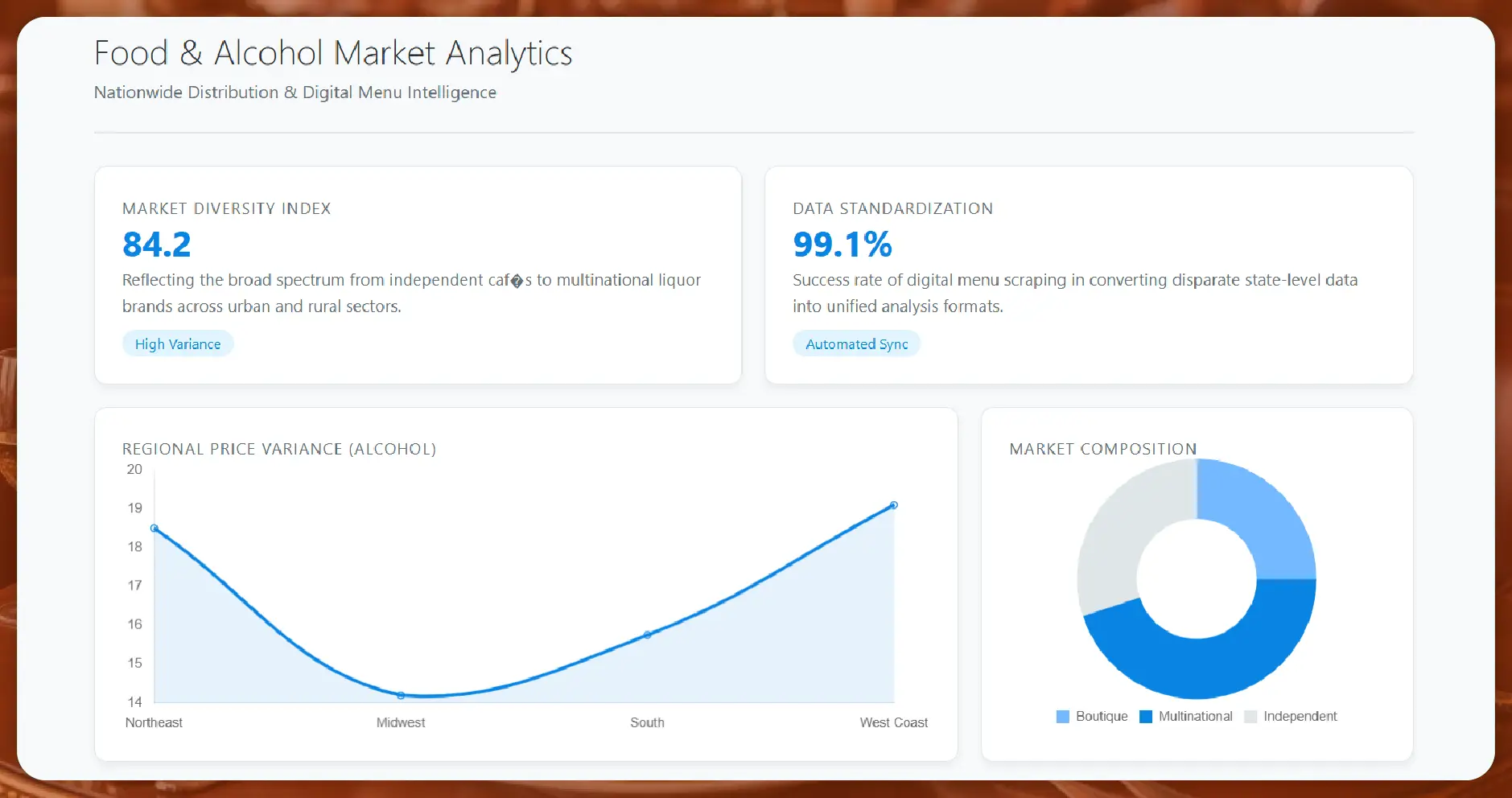
The US food and alcohol market is uniquely complex due to its sheer scale and diversity. From independent neighborhood cafés to nationwide restaurant chains, and from boutique wineries to multinational liquor brands, the range of offerings is enormous. Each segment operates with different pricing strategies, menu structures, and customer expectations.
Additionally, alcohol distribution and pricing are heavily influenced by state-level regulations. Taxes, licensing laws, and distribution models vary widely, leading to significant differences in availability and price between regions. This makes centralized data collection essential for businesses that want a clear, nationwide view of the market.
Digital menu scraping addresses this challenge by standardizing disparate data sources into a unified format that can be analyzed consistently across states and cities.
Wine and Beverage List Data Insights
Wine and beverage menus often reflect a restaurant’s identity and target audience. Unlike food menus, beverage lists—especially wine and spirits—are updated frequently based on availability, seasonality, and pricing agreements. Through USA Restaurant Wine & Beverage List Data Scraping, businesses gain deep insights into how alcoholic beverages are curated and presented across different dining formats.
This data reveals patterns such as the growing popularity of specific wine regions, the rise of craft and local beverages, and the increasing presence of premium and reserve labels on menus. It also helps identify how beverage offerings differ between fine dining establishments, casual restaurants, bars, and hotels, providing valuable intelligence for brands and distributors seeking optimal placement.
Unlock actionable food and beverage insights today—get your custom data scraping solution now!
Food and Alcohol Pricing Data Extraction
Pricing is one of the most critical factors influencing consumer behavior and business profitability. With USA Food & Alcoholic Drinks Pricing Data Extraction, organizations can systematically monitor how menu prices vary across platforms, locations, and time periods.
This pricing intelligence helps restaurants understand where they stand relative to competitors, while beverage brands and distributors can assess how their products are positioned in different markets. Over time, pricing data also highlights the impact of inflation, supply chain disruptions, and changing consumer spending habits, enabling proactive strategy adjustments.
Converting Raw Data into Market Intelligence
Collecting data is only the first step. The real value lies in transforming raw menu and pricing information into actionable insights. When cleaned, normalized, and enriched, this data becomes powerful USA Food & Wine Menu Market Intelligence that supports strategic decision-making.
Market intelligence derived from menu data helps businesses identify emerging food and beverage trends, understand regional preferences, and anticipate shifts in consumer demand. It also enables companies to evaluate menu innovation, test new pricing strategies, and plan expansions with greater confidence.
Rather than reacting to market changes after they occur, businesses can use this intelligence to stay ahead of trends.
Liquor Pricing and Competitive Analysis
Liquor pricing in the United States is influenced by a combination of taxes, distributor agreements, retailer strategies, and local competition. These factors make it essential to monitor prices continuously. Liquor Price Data Scraping Services collect alcohol pricing information from restaurant menus, online liquor stores, and alcohol delivery platforms to provide a comprehensive view of the market.
This data supports competitive analysis by revealing pricing gaps, promotional strategies, and regional inconsistencies. For liquor brands and distributors, it also plays a key role in ensuring pricing compliance and evaluating the effectiveness of market strategies.
Alcohol and Liquor Datasets as Strategic Assets
Alcohol and Liquor Datasets serve as long-term assets for organizations operating in or analyzing the beverage industry. These datasets typically include detailed attributes such as product names, alcohol categories, ABV, serving sizes, prices, and geographic availability.
When integrated with analytics tools, these datasets support forecasting, reporting, and advanced trend analysis. They are widely used by beverage manufacturers, hospitality groups, consulting firms, and investors seeking data-backed insights into market performance and growth opportunities.
Business Applications Across Industries
Scraped food menu, wine list, and alcoholic beverage data supports a wide range of business and analytical use cases across the US food and beverage ecosystem. Different stakeholders leverage this data in distinct ways to improve decision-making, competitiveness, and operational efficiency.
- Restaurants and hospitality groups use menu and pricing intelligence to optimize menu design, adjust pricing strategies, benchmark competitors, and identify gaps in their food and beverage offerings.
- Liquor brands and beverage manufacturers rely on menu placement and pricing data to track brand visibility, assess regional performance, and evaluate how their products are positioned against competing brands.
- Distributors and wholesalers use alcohol pricing and availability insights to plan inventory, negotiate supplier agreements, and align distribution strategies with local market demand.
- Market research and consulting firms analyze aggregated menu and alcohol datasets to identify consumer trends, produce industry reports, and support strategic advisory services for clients.
- Retailers and e-commerce alcohol platforms leverage pricing and assortment data to remain competitive, monitor promotional effectiveness, and refine product catalogs.
- Investors and business strategists use food and alcohol market data to assess market maturity, evaluate expansion opportunities, and understand revenue-driving trends across regions.
Data Accuracy, Compliance, and Ethical Scraping
High-quality data scraping solutions prioritize accuracy, freshness, and responsible data collection. Advanced technologies are used to handle dynamic websites, frequent updates, and varying data formats while maintaining consistency.
Ethical scraping practices focus on publicly available data and compliance-aware methods, ensuring that insights are both reliable and sustainable for long-term use.
How Food Data Scrape Can Help You?
- Accurate & Real-Time Data Collection
We deliver accurate, real-time food, wine, and alcohol data at scale, ensuring reliable insights for informed, data-driven business decisions. - Competitive & Pricing Intelligence
Our scraping solutions help you track competitor menus, monitor pricing changes, and evaluate market positioning to improve profitability and competitiveness. - Market Trends & Consumer Insights
Structured menu and beverage data reveals emerging trends, regional preferences, and shifting consumer demand across restaurants, bars, and retailers. - Automation & Operational Efficiency
Automated data scraping removes manual effort, reduces errors, and saves valuable time, enabling teams to focus on analysis and strategic growth. - Customized Analytics-Ready Datasets
We provide clean, customized, analytics-ready datasets that integrate easily with dashboards, BI tools, and enterprise decision-making systems.
Conclusion
In a highly competitive and regulated market like the US food and beverage industry, data is a powerful differentiator. Organizations that leverage structured menu and alcohol intelligence gain deeper visibility into pricing behavior, menu evolution, and consumer preferences.
By choosing to Scrape Alcohol Price Data, businesses can proactively monitor market movements and competitive shifts. When these insights are visualized through a Liquor Price Tracking Dashboard, decision-makers gain real-time clarity that supports faster and more confident actions.
Ultimately, advanced Liquor Data Intelligence Services transform fragmented menu and beverage data into strategic intelligence, enabling restaurants, liquor brands, distributors, and analysts to navigate the US market with precision and confidence.
If you are seeking for a reliable data scraping services, Food Data Scrape is at your service. We hold prominence in Food Data Aggregator and Mobile Restaurant App Scraping with impeccable data analysis for strategic decision-making.