

















Introduction: Two Giants of Southeast Asian Food Delivery
The food delivery landscape across Southeast Asia is shaped by two regional heavyweights, and understanding their behavior is essential for any restaurant brand, cloud kitchen operator, FMCG company, investor, or research firm working in the region. GrabFood, the food delivery arm of the Singapore-headquartered Grab super-app, operates across Singapore, Malaysia, Thailand, Indonesia, the Philippines, Vietnam, Cambodia, and Myanmar. GoFood, run by Indonesia's Gojek (now part of GoTo Group), dominates the Indonesian market and ranks among the largest food delivery services in the country by listed merchants and monthly orders.
Together these two platforms determine what tens of millions of Southeast Asian consumers see, choose, and pay every day. Yet for brands and analysts attempting to track them, the public data layer remains fragmented, locale-specific, and difficult to harvest at scale. Manual sampling is slow and biased; ad hoc tools break the moment an app update changes a layout.
That gap is exactly where Food Data Scrape delivers. Our infrastructure extracts, harmonizes, and refreshes restaurant, menu, and pricing data from both GrabFood and GoFood at scale, giving stakeholders a clean, comparable dataset ready for direct analysis. The ability to Extract Data from GrabFood alongside parallel GoFood capture is what enables truly comparable cross-platform analysis. This guide walks through why scraping these platforms matters, what the data captures, and how to translate the resulting intelligence into commercial outcomes.
Why Scrape GrabFood and GoFood
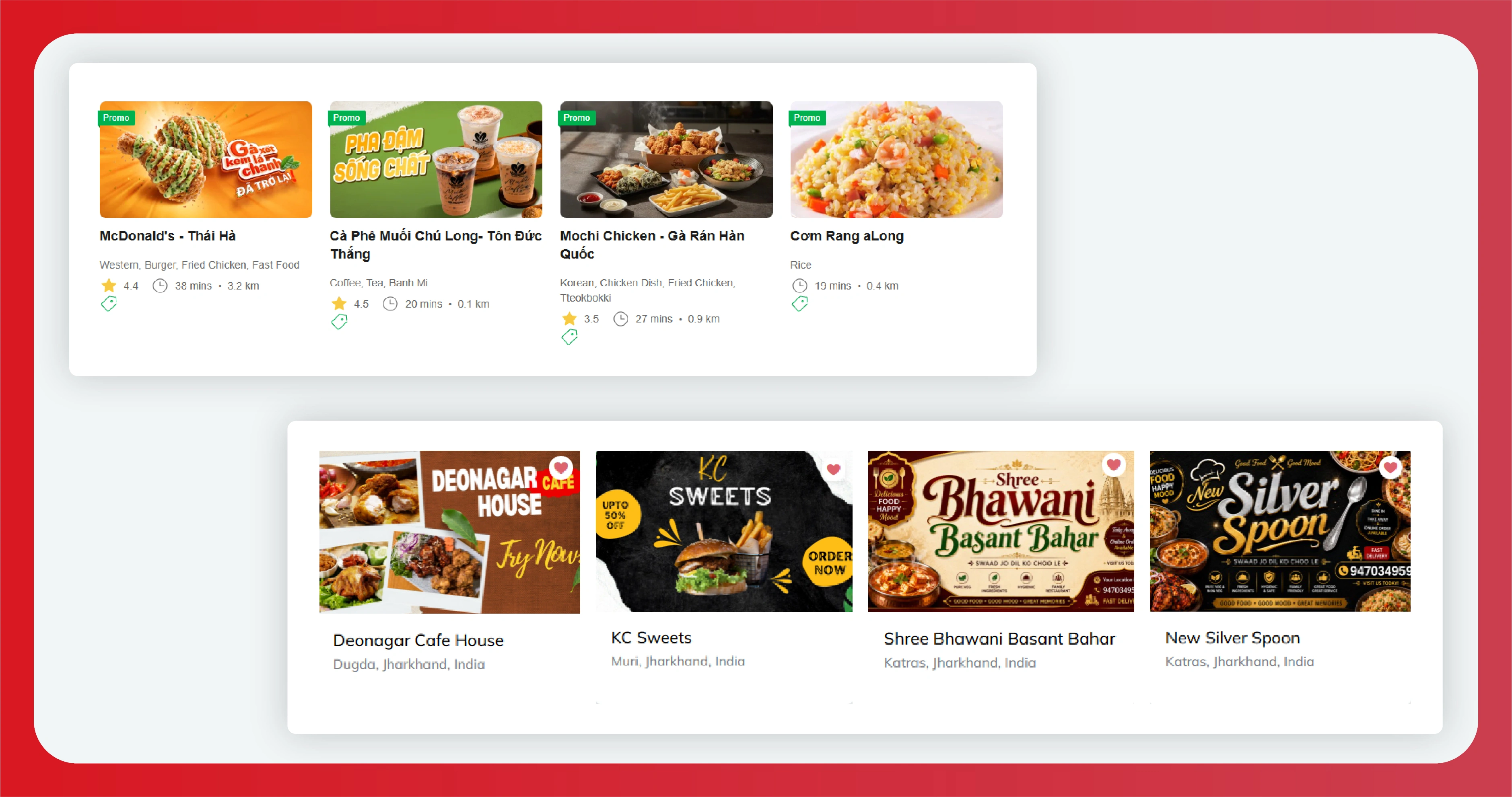
A reliable feed of Southeast Asia food delivery data unlocks insights that no other source provides at the same granularity or refresh cadence. Restaurant brands use it to track competitor menus and prices in real time. Cloud kitchen groups use it to spot under-served cuisines and pricing gaps across neighborhoods. FMCG ingredient suppliers use it to monitor adoption of new dish concepts. Investment teams use it to validate merchant counts, transaction proxies, and category growth signals during due diligence. Media and research consultancies use it to produce defensible market reports.
The strategic value comes from four characteristics that are uniquely captured by app-level scraping. First, the data is hyperlocal: each user sees a different list of merchants based on their delivery address, so pricing and assortment must be captured at the postcode or neighborhood level. Second, it is dynamic: prices, promotions, and menu items shift several times per week on busy merchants. Third, it is structured: every dish is presented with a name, description, price, and image, making it ideal for systematic extraction. Fourth, it is competitive: brands appearing in the same delivery radius are directly competing for the same consumer, so price and menu comparisons are immediately actionable.
Without this data, regional decision-making relies on anecdote and lagging sales reports. With it, brands can act in days rather than quarters.
What Makes GrabFood and GoFood Different
Although both platforms serve overlapping consumer needs, GrabFood restaurant scraping and GoFood data scraping capture meaningfully different commercial realities, and a thoughtful data strategy treats them distinctly.
GrabFood operates across multiple countries, each with its own currency, language conventions, payment integrations, and regulatory environment. A regional view of GrabFood naturally generates cross-country comparisons — how a typical bowl of pho is priced in Ho Chi Minh City versus how chicken rice is priced in Kuala Lumpur. GrabFood also leans heavily on its super-app context, with rewards programs, GrabPay wallets, and bundled offers that reward cross-category engagement.
GoFood, by contrast, is concentrated in Indonesia, the region's largest food delivery market by population and order volume. This concentration gives GoFood unmatched depth within Indonesia, with a long tail of small warungs (neighborhood eateries) and home-based merchants that rarely surface on other platforms. GoFood's pricing dynamics are also shaped by Indonesia's distinct regional cuisines, from Padang to Manado to Bali, each with its own price expectations.
For brands operating across the region, capturing both platforms reveals where they overlap and where they diverge — both insights are commercially valuable.
How the Data Is Captured
Our infrastructure is purpose-built for Indonesia food delivery scraping and broader regional capture from GrabFood and other Southeast Asian platforms. The methodology rests on six pillars designed to deliver clean, comparable, and continuously refreshed data.
Multi-locale coverage:We capture each app's public listings across multiple delivery anchors per city. In Jakarta alone we anchor across dozens of neighborhoods because pricing, promotions, and availability differ meaningfully between Sudirman, Kelapa Gading, and Bekasi. Similar anchor strategies apply in Manila, Bangkok, Kuala Lumpur, Singapore, and other priority metros.
Schema harmonization:GrabFood and GoFood use different category taxonomies, different menu organizations, and different price-display conventions. Our harmonization layer maps everything into a single comparable schema, so the same nasi goreng appears as one identifiable dish regardless of which app surfaces it.
Currency normalization:Every record is stored in local currency with a parallel USD equivalent for cross-country comparisons. Tax-inclusive and tax-exclusive presentation is captured as an explicit field.
Language handling:Listings appear in English, Bahasa Indonesia, Thai, Vietnamese, Malay, and Tagalog depending on the country. Our parsing layer handles each language and normalizes brand and dish names so the same restaurant chain is recognizable across markets.
Refresh cadence:Top-velocity merchants and trending dishes refresh daily; long-tail merchants refresh weekly. Promotional changes and new menu launches trigger near-real-time recapture during peak meal windows.
Quality assurance:Every record passes schema validation, brand disambiguation, price sanity checks, image-URL validation, and outlier detection before reaching client systems.
Clients access the harmonized output through a documented REST API, scheduled CSV or JSON exports, direct integration into Snowflake or BigQuery, and custom dashboards. Grab restaurant data API scraping capabilities support filtering by city, neighborhood, merchant, cuisine, dish category, and date range, making it easy to plug live Southeast Asian food delivery intelligence directly into business intelligence pipelines, pricing engines, or consumer-facing applications.
Sample Data: What the Output Looks Like
Below are representative samples drawn from a typical Southeast Asia restaurant dataset. Prices are shown in local currency.
Sample 1: Menu Snapshot Across Platforms (Jakarta)
| Merchant | Platform | Dish | Category | Price (IDR) | Date |
|---|---|---|---|---|---|
| Sate Khas Senayan | GoFood | Sate Ayam Madura | Indonesian | 65,000 | 2026-04-30 |
| Sate Khas Senayan | GrabFood | Sate Ayam Madura | Indonesian | 67,000 | 2026-04-30 |
| Bakmi GM | GoFood | Bakmi Spesial | Chinese-Indo | 49,000 | 2026-04-30 |
| Bakmi GM | GrabFood | Bakmi Spesial | Chinese-Indo | 51,000 | 2026-04-30 |
| Kopi Kenangan | GoFood | Kopi Kenangan Mantan | Beverage | 22,000 | 2026-04-30 |
| Kopi Kenangan | GrabFood | Kopi Kenangan Mantan | Beverage | 23,000 | 2026-04-30 |
| McDonald's | GoFood | Big Mac Set | QSR | 65,000 | 2026-04-30 |
| McDonald's | GrabFood | Big Mac Set | QSR | 67,000 | 2026-04-30 |
Sample 2: Cross-Country GrabFood Pricing (Standardized Item)
| City | Country | Dish | Local Price | USD Equivalent |
|---|---|---|---|---|
| Singapore | SG | Chicken Rice (single) | SGD 6.50 | $4.85 |
| Kuala Lumpur | MY | Chicken Rice (single) | MYR 14.00 | $3.10 |
| Bangkok | TH | Khao Man Gai (single) | THB 95 | $2.75 |
| Ho Chi Minh City | VN | Com Ga (single) | VND 65,000 | $2.55 |
| Manila | PH | Chicken Rice (single) | PHP 180 | $3.15 |
| Jakarta | ID | Nasi Ayam (single) | IDR 38,000 | $2.30 |
Sample 3: Promotional Activity (GoFood, Surabaya)
| Merchant | Dish | Original | Promo | Discount | Promo Type | Date |
|---|---|---|---|---|---|---|
| Pizza Hut | Meat Lovers Reg | 119,000 | 89,000 | 25% | Flash Sale | 2026-04-29 |
| KFC | Bucket of 5 | 110,000 | 99,000 | 10% | Member | 2026-04-29 |
| Solaria | Nasi Goreng Spesial | 45,000 | 35,000 | 22% | Weekday | 2026-04-29 |
| HokBen | Bento Set A | 50,000 | 42,000 | 16% | Combo Deal | 2026-04-29 |
Sample 4: Neighborhood Density Analysis (Jakarta)
| Neighborhood | Active GoFood Merchants | Active GrabFood Merchants | Overlap |
|---|---|---|---|
| Kelapa Gading | 1,380 | 1,290 | 980 |
| Sudirman / SCBD | 1,610 | 1,540 | 1,210 |
| Bekasi Selatan | 920 | 870 | 640 |
| Tangerang Kota | 1,050 | 980 | 720 |
| Depok | 880 | 820 | 590 |
These tables represent a small slice of the millions of records captured monthly across GrabFood and GoFood.
Reading the Data: What Insights Emerge
When GrabFood and GoFood data sit in a harmonized schema, several recurring patterns become visible.
GrabFood prices slightly above GoFood for the same merchant: Across many Indonesian merchants present on both platforms, GrabFood typically lists 2 to 5 percent higher prices, reflecting platform-specific commission and pricing strategies. Brands negotiating with each platform can use this systematic gap as a benchmark.
Promotional intensity is markedly higher in Indonesia:Across the GoFood and GrabFood Indonesia datasets, the share of merchants running active promotions in any given week is significantly higher than in Singapore or Malaysia, reflecting a more price-sensitive consumer base and intense platform competition.
Cross-country pricing arbitrage reveals positioning opportunities:A regional restaurant brand pricing a signature dish at SGD 8 in Singapore but only IDR 45,000 (roughly $2.75) in Jakarta is operating with very different margin assumptions. Visualizing this in one harmonized table exposes where positioning is intentional and where it has drifted.
Neighborhood density is highly uneven:Active merchant counts in central Jakarta and Sudirman often run 50 to 80 percent higher than in outer suburbs, with corresponding differences in cuisine breadth and average price. For new entrants, density and price together determine which neighborhoods to launch in first.
Trend dishes appear first on long-tail GoFood merchants:Indonesia's enormous tail of small operators on GoFood often serves as a leading indicator of category innovation — new dessert formats, beverage trends, and fusion concepts surface there before they reach larger chains.
Schema and Coverage
A typical harmonized record in our GoFood market analysis dataset includes the merchant name, brand affiliation, address and geocoordinates, neighborhood and city identifiers, country, platform (GoFood or GrabFood), opening hours, average consumer rating and review count, dish name in original language and English where useful, dish category and sub-category, ingredient and allergen flags where present, ABV or alcohol indicators where relevant, list price and promotional price in local currency plus USD equivalent, applicable tax flags, image URLs, and the capture timestamp. Optional add-ons include estimated delivery fee, minimum basket, and surge multipliers where publicly displayed.
Coverage spans Indonesia (Jakarta, Surabaya, Bandung, Medan, Bali, and dozens of secondary cities for GoFood and GrabFood), plus GrabFood coverage in Singapore, Malaysia, Thailand, Vietnam, the Philippines, Cambodia, and Myanmar. Custom anchor sets can be configured for clients with specific geographic priorities.
Use Cases for the Data
The applications of structured GrabFood pricing intelligence and GoFood data span the food and beverage value chain. Restaurant brands use it to monitor competitor menu and price changes in priority neighborhoods, to verify that franchise partners are following pricing guidelines, and to time new menu launches against the competitive calendar. Cloud kitchen operators use it to identify under-served cuisines and pricing gaps before launching a new virtual brand. FMCG and ingredient suppliers use it to track dish-level adoption of new product categories — for example, the rise of plant-based proteins on regional menus. Investors use it during due diligence on restaurant groups, cloud kitchen operators, and food delivery platforms to validate merchant counts and growth claims. Market research firms use it to produce defensible category reports backed by hard data. And consumer-facing comparison apps use it to power price-comparison and trending-dish features for Southeast Asian users.
Implementation: From First Sample to Production
Brands and analysts adopting GrabFood and GoFood scraping for the first time typically follow a four-phase rollout. Phase one captures a focused two-to-four-week baseline across priority cities and merchants, establishing how the data behaves and what compliance issues or pricing gaps are already present. Phase two defines the rules that matter — competitive sets, promotional windows worth monitoring, price-band expectations, and neighborhood priorities. Phase three configures dashboards and alerts so the right stakeholders see the right view: brand teams see competitor moves, finance sees promotional ROI, country managers see neighborhood-level trends. Phase four operationalizes the data into decision rhythms — weekly business reviews, monthly trade plans, quarterly strategy refreshes — so the data is consumed rather than archived.
Across all four phases, the most successful programs treat data as the foundation rather than the output. The data exists to drive specific decisions; designing for those decisions upfront is what separates programs that generate impact from those that generate dashboards no one opens.
Why Choose Food Data Scrape
Building GrabFood and GoFood scrapers in-house is harder than it appears. Both platforms personalize listings by delivery address, refresh prices and promotions multiple times per day, present content in multiple languages, and update their layouts frequently. Capturing data ethically and at scale across multiple Southeast Asian countries requires investment in regional language handling, locale-specific anchoring, and ongoing engineering maintenance that most internal teams underestimate.
We bring managed infrastructure, ethical and compliant data collection practices, and deep domain expertise in Southeast Asian food and beverage. Advantages include compliance-first architecture, scalable extraction across millions of public pages daily, fully customizable harmonized schemas, near-real-time refresh on priority merchants, dedicated analyst support familiar with regional markets, and out-of-the-box dashboards that surface cross-platform and cross-country patterns. Our team has supported global restaurant chains, regional cloud kitchen operators, FMCG companies, investment firms, and research consultancies — bringing practical experience of how scraped data drives real commercial outcomes in this fast-moving region.
Conclusion: Turning App Data Into Regional Advantage
GrabFood and GoFood together shape how tens of millions of Southeast Asian consumers eat every day. The pricing, promotional, and assortment decisions made by merchants on these platforms ripple through restaurant categories, FMCG demand, and consumer expectations within weeks. For any organization serious about Southeast Asian food and beverage, structured data from both platforms is no longer optional — it is the foundation of competitive intelligence.
Our mission is to deliver that data in clean, comparable, decision-ready form. Across both platforms, every priority city in the region, and millions of weekly records, we transform fragmented public app content into structured intelligence ready to power strategy. Whether you need a one-time benchmarking study, a recurring competitive dashboard, or an always-on food delivery API SEA feeding your business intelligence stack, we configure a delivery model that fits your workflow.
If you are ready to move beyond anecdote and start acting on real Southeast Asian food delivery data, get in touch with our team today.