The Client
The client is a fast-growing retail analytics and grocery intelligence company focused on monitoring supermarket pricing, stock movements, and consumer demand trends across multiple regions. Their primary objective was to improve pricing transparency, optimize inventory planning, and deliver real-time market insights for FMCG brands and retail chains.
To achieve this, they partnered with our team to Extract real-time Shoprite prices and stock at scale Shoprite Data Extraction API for automated product monitoring and daily pricing intelligence. The extracted datasets enabled accurate comparison of product availability, promotional pricing, and category-level performance metrics.
Additionally, Shoprite Product Availability Data Tracking helped the client identify stock fluctuations and reduce inventory blind spots across high-demand grocery categories.
With Shoprite Competitive Pricing Intelligence, the client enhanced competitor benchmarking strategies, improved retail forecasting accuracy, and supported data-driven pricing decisions in a highly competitive grocery market.
Key Challenges
- Inconsistent Product Availability Tracking
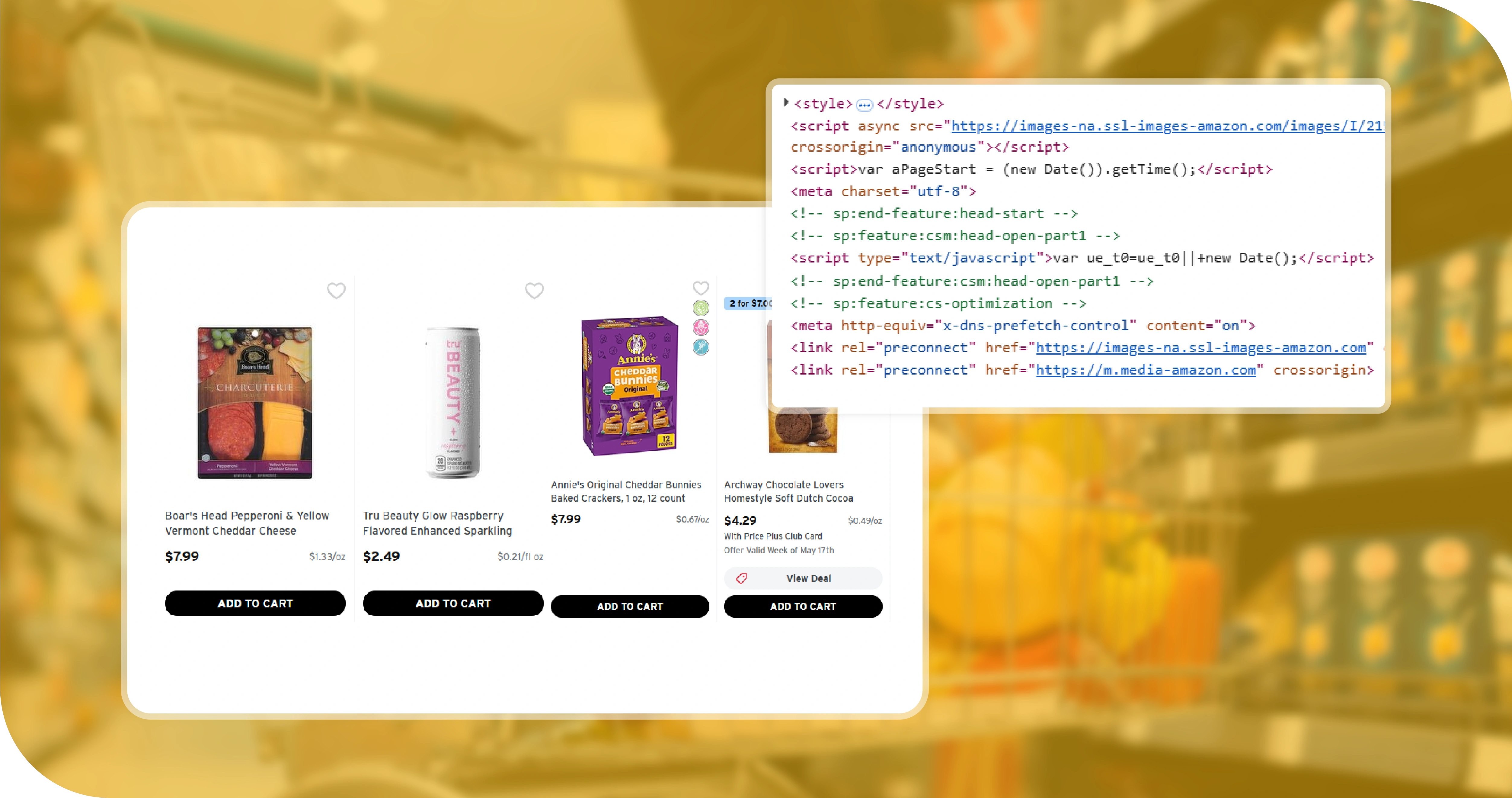
The client struggled to maintain accurate inventory visibility across multiple grocery categories and regional stores. Frequent stock fluctuations created gaps in the Shoprite Grocery Delivery Dataset, making it difficult to monitor real-time availability, detect shortages quickly, and support reliable demand forecasting strategies. - Difficulty Managing Dynamic Price Changes
Rapid promotional updates and varying product prices across locations created operational challenges for the client. Without an automated ShopRite Grocery Delivery Scraping API, tracking thousands of SKU-level price changes manually became time-consuming, inefficient, and prone to inconsistencies in competitive retail analysis reports. - Limited Access to Structured Market Intelligence
The client faced difficulties gathering organized grocery insights from multiple online sources. Traditional Web Scraping Grocery Data methods failed to deliver scalable, real-time datasets, limiting their ability to analyze competitor trends, optimize pricing strategies, and identify emerging consumer purchasing patterns efficiently.
Key Solutions
- AI-Powered Multi-Store Data Automation
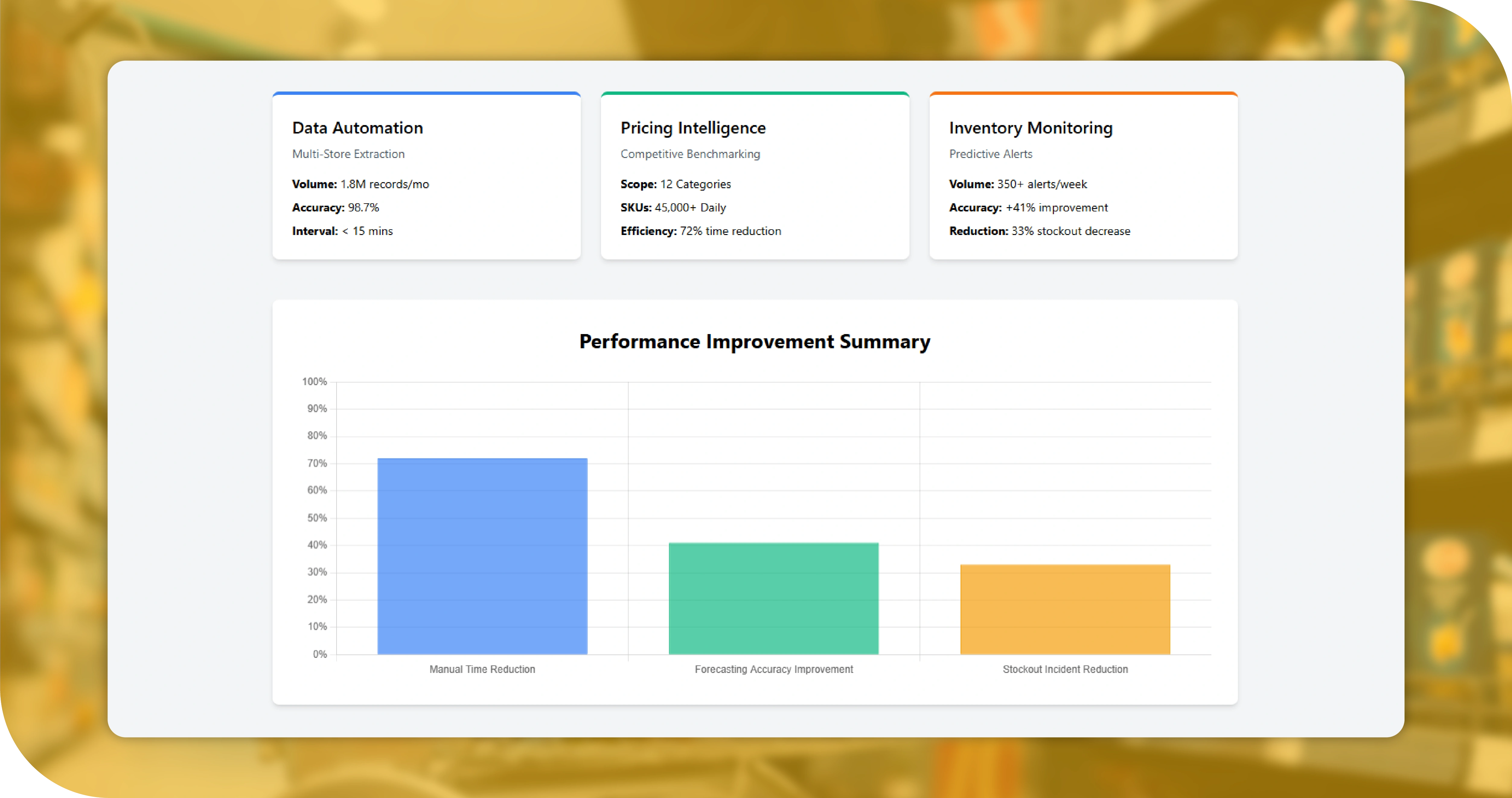
We designed an enterprise-grade extraction pipeline that automatically collected over 1.8 million grocery records monthly from multiple ShopRite locations. The system captured pricing, discounts, delivery fees, and stock availability with 98.7% extraction accuracy and less than 15-minute refresh intervals. - Real-Time Competitive Pricing Intelligence
Our analytics framework enabled continuous competitor benchmarking across 12 grocery categories and 45,000+ SKUs daily. The client gained instant visibility into regional price fluctuations, promotional campaigns, and bundle offers, reducing manual monitoring time by 72% while improving pricing response efficiency significantly. - Predictive Inventory & Demand Monitoring
We integrated advanced reporting tools to monitor low-stock patterns, fast-selling products, and seasonal demand spikes. The automated system generated 350+ real-time alerts weekly, helping the client improve inventory forecasting accuracy by 41% and reduce product stockout incidents by nearly 33%.
Sample Data
| Product Category | SKUs Tracked | Avg. Daily Price Updates | Monthly Records Collected | Stock Accuracy | Avg. Discount Detected | Regional Stores Covered | Demand Growth (%) | Alert Frequency |
|---|---|---|---|---|---|---|---|---|
| Fresh Produce | 6,500 | 14,200 | 426,000 | 98.4% | 18% | 120 | 22% | 65 Alerts |
| Dairy & Eggs | 4,200 | 9,800 | 294,000 | 99.1% | 15% | 95 | 17% | 42 Alerts |
| Frozen Foods | 3,850 | 8,300 | 249,000 | 97.8% | 21% | 88 | 19% | 37 Alerts |
| Snacks & Beverages | 8,100 | 17,500 | 525,000 | 98.9% | 26% | 140 | 31% | 81 Alerts |
| Household Essentials | 5,400 | 11,600 | 348,000 | 98.2% | 13% | 102 | 16% | 49 Alerts |
| Personal Care | 4,750 | 10,900 | 327,000 | 97.9% | 19% | 91 | 24% | 44 Alerts |
| Organic Products | 2,950 | 6,200 | 186,000 | 98.6% | 11% | 73 | 28% | 21 Alerts |
| Baby Care Products | 1,850 | 4,400 | 132,000 | 99.3% | 16% | 58 | 14% | 18 Alerts |
| Pet Supplies | 2,300 | 5,700 | 171,000 | 98.1% | 20% | 61 | 26% | 23 Alerts |
| Bakery Items | 3,100 | 7,100 | 213,000 | 97.5% | 12% | 84 | 18% |
Methodologies Used
- Multi-Location Data Collection Framework
We implemented a scalable collection framework capable of monitoring thousands of grocery products across multiple regional store locations simultaneously. This methodology ensured continuous tracking of pricing changes, stock fluctuations, delivery availability, and promotional campaigns with high-frequency automated updates and minimal downtime. - Intelligent Data Structuring Process
Our team standardized raw grocery information into structured datasets using advanced categorization and normalization techniques. This approach improved data consistency, eliminated duplicate entries, enhanced SKU matching accuracy, and enabled seamless integration into analytics platforms, reporting systems, and business intelligence workflows efficiently. - Automated Change Detection System
We deployed automated monitoring algorithms designed to identify pricing modifications, stock variations, and promotional adjustments in near real time. The system generated instant notifications for major changes, enabling faster retail decision-making, proactive inventory planning, and more accurate competitive benchmarking across grocery categories. - Regional Market Comparison Analysis
Our methodology included region-specific comparative analysis to evaluate pricing behavior, demand patterns, and product availability across multiple store locations. This process helped identify geographic market differences, seasonal demand shifts, and localized promotional strategies, supporting more targeted pricing and merchandising decisions for the client. - Quality Validation and Reporting Workflow
We established a multi-layer validation process to verify dataset completeness, extraction accuracy, and reporting reliability before delivery. Automated quality checks, anomaly detection mechanisms, and performance monitoring tools ensured consistent data accuracy, reliable forecasting outputs, and actionable business intelligence for long-term operational success.
Advantages of Collecting Data Using Food Data Scrape
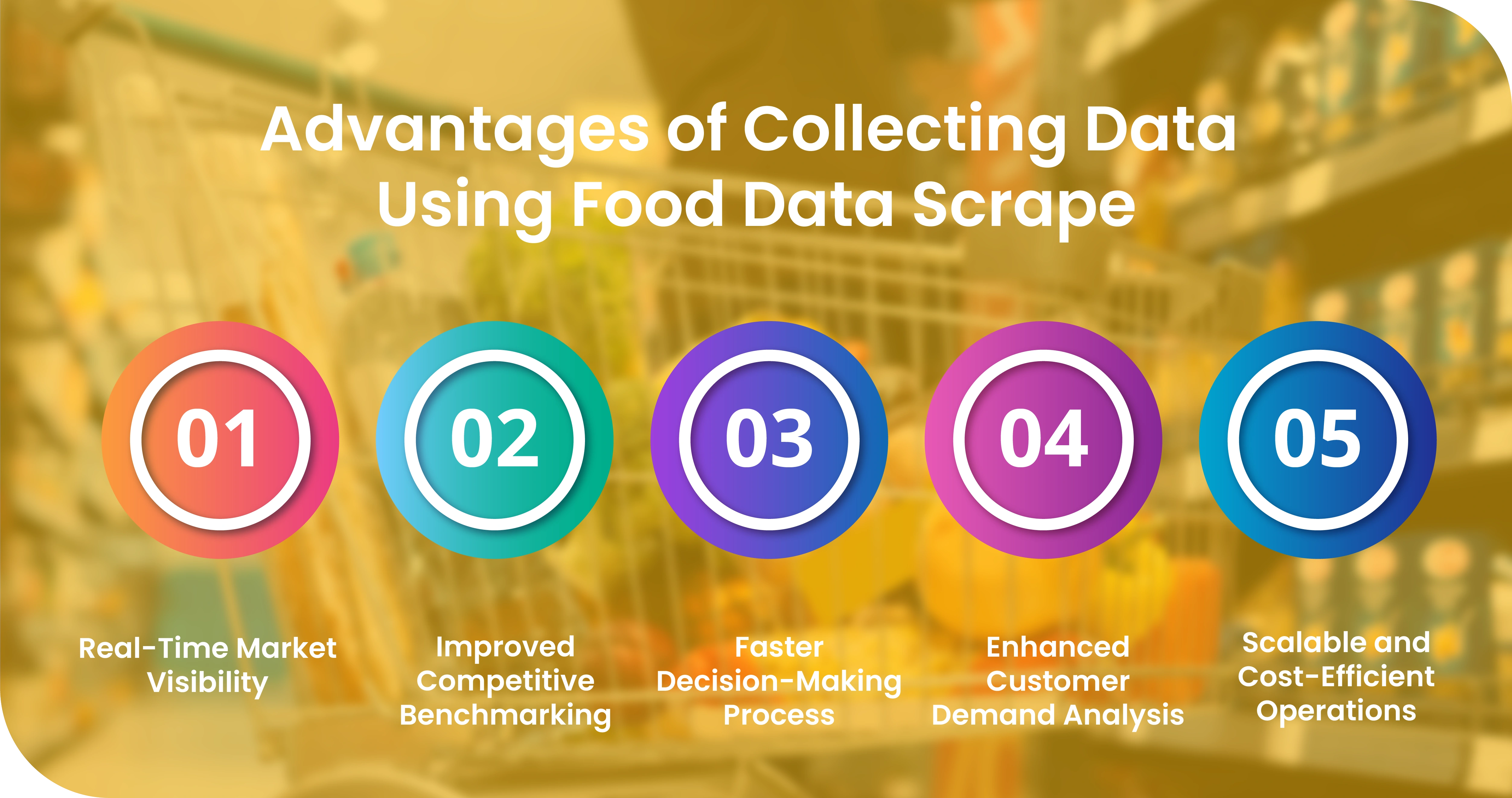
- Real-Time Market Visibility
Data scraping services provide businesses with continuous access to updated pricing, stock availability, promotions, and product trends. This real-time visibility helps companies respond quickly to market changes, improve operational agility, and make faster strategic decisions based on accurate and current retail intelligence. - Improved Competitive Benchmarking
Businesses can efficiently monitor competitor pricing strategies, discount campaigns, and inventory movements across multiple platforms. This advantage enables organizations to optimize pricing models, identify market gaps, evaluate competitor performance, and maintain stronger positioning within highly competitive retail and grocery industries. - Faster Decision-Making Process
Automated data extraction eliminates manual research delays and delivers structured datasets for immediate analysis. With faster access to organized information, businesses can improve forecasting accuracy, optimize inventory planning, streamline reporting workflows, and support data-driven decision-making across operational and strategic departments effectively. - Enhanced Customer Demand Analysis
Data scraping services help companies analyze purchasing behavior, seasonal demand fluctuations, and emerging product preferences. These insights enable businesses to align inventory with customer expectations, improve merchandising strategies, personalize promotional campaigns, and identify high-demand product categories across different geographic markets more accurately. - Scalable and Cost-Efficient Operations
Automated extraction solutions reduce manual workload, minimize operational costs, and support large-scale data collection across thousands of products and store locations. This scalability improves productivity, enhances reporting efficiency, and allows businesses to focus resources on growth strategies, analytics, and competitive market expansion initiatives.
Client’s Testimonial
“Working with this team transformed the way we monitor grocery pricing and inventory trends across multiple locations. Their automated data extraction system delivered highly accurate, real-time insights that significantly improved our pricing strategies, stock forecasting, and competitor benchmarking processes. The structured datasets and custom dashboards helped our analysts reduce manual tracking efforts while improving reporting efficiency and decision-making speed. We were especially impressed by the scalability, data accuracy, and responsiveness of their solutions throughout the project lifecycle. Their expertise in large-scale retail intelligence and grocery analytics provided measurable business value and long-term operational benefits for our organization.”
—Director of Retail Analytics
Final Outcome
The final outcome of the project delivered a highly scalable and automated grocery intelligence ecosystem that significantly improved the client’s operational efficiency and market visibility. By implementing real-time product, pricing, and stock monitoring systems, the client gained access to structured datasets covering thousands of SKUs across multiple regional store locations. The solution strengthened Grocery Data Intelligence capabilities by enabling faster pricing analysis, competitor benchmarking, and inventory forecasting across multiple grocery categories. Automated alerts and reporting dashboards reduced manual tracking efforts while improving decision-making speed and promotional planning accuracy. Additionally, the structured Grocery Datasets provided deeper visibility into consumer demand trends, seasonal purchasing behavior, and regional price fluctuations. Overall, the project optimized retail analytics workflows, enhanced business intelligence operations, and delivered long-term strategic value through reliable, high-frequency grocery market insights and data-driven operational support systems.