
The supermarket landscape of 2026 is being redefined by a more discerning and outcome-focused consumer. Shoppers are increasingly driven by convenience, functional benefits, and clear value rather than brand loyalty or price alone. Functional foods that deliver energy, protein, or gut-health benefits are seeing higher engagement, while private label products gain trust as smart choices rather than compromises. Sustainability remains important but functions more as a baseline expectation than a purchase driver. Consumers are also shifting indulgence from restaurants to grocery aisles, creating opportunities for products positioned as affordable luxuries. The modern shopper often trades down on everyday staples while trading up for premium or functional items, emphasizing the need-state approach over traditional demographic segmentation. Brands that respond with clear packaging, occasion-based positioning, and repeatable evidence of performance are best positioned to defend shelf space and succeed in a highly competitive and dynamic retail environment.
Functional Focus – Shoppers increasingly choose products that deliver measurable benefits such as energy, protein, or gut-health support, prioritizing outcomes over avoidance.
Private Growth – Store brands are now trusted as high-value, convenient alternatives, especially by younger shoppers who view them as smart and reliable choices.
Sustainability Baseline – Consumers expect sustainability as a standard practice, but only when claims align with price, convenience, and functional product benefits consistently.
Indulgence Shift – Grocery stores now serve as destinations for small luxuries, with premium products replacing restaurant experiences for indulgent, cost-conscious consumers.
Hybrid Behavior – Modern shoppers trade down on everyday staples while trading up on functional or indulgent items, emphasizing need-state over demographic targeting.

The supermarket landscape of 2026 is being shaped by a sophisticated consumer mindset. Shoppers are no longer guided solely by novelty, price, or brand reputation. Instead, decisions are increasingly filtered through functional benefit, convenience, and value clarity. Inflationary pressures, combined with evolving health and lifestyle priorities, are pushing consumers to evaluate products based on immediate payoff and long-term repeatability.
Scrape Supermarket Food Trends 2026 to identify emerging opportunities across categories, while Supermarket Consumer Behavior Analytics 2026 provides insights into why consumers make particular choices, allowing for more strategic SKU placement and assortment decisions. Real-time intelligence helps brands understand which products are likely to succeed, which to optimize, and which risk shelf rationalization.
Functional benefits are now the primary drivers of consumer purchase decisions. Energy support, protein content, and digestive health are consistently prioritized over avoidance-led claims like sugar-free, low-fat, or gluten-free. The focus has shifted from “what the product lacks” to “what it delivers,” reflecting an era of nutrient density and satiety-focused consumer expectations.
| Functional Category | Mass Retailer Demand (%) | Club Retailer Demand (%) | Specialty Retailer Demand (%) | Shoppers Seeking Health Claims (%) | Average Basket Spend ($) |
|---|---|---|---|---|---|
| Energy Support | 32% | 28% | 25% | 34% | 16.5 |
| High Protein | 29% | 25% | 24% | 31% | 18.2 |
| Gut Health | 26% | 24% | 22% | 28% | 15.7 |
| Fiber-Rich | 22% | 20% | 19% | 25% | 14.3 |
| Low Sugar / Avoidance-Led | 18% | 15% | 12% | 19% | 12.6 |
| Functional Beverages | 15% | 12% | 11% | 17% | 17.0 |
This data suggests that consumers increasingly prioritize products with measurable functional outcomes. The strategy to Extract Supermarket Food Trends 2026 helps brands identify which functional claims resonate across retailer types and which can drive repeat purchase behavior. Packaging, claims, and marketing narratives must clearly communicate these benefits.
Private label products are no longer seen as secondary or inferior. Across mass, club, and specialty channels, store brands are gaining trust as convenient, affordable, and sometimes even superior alternatives to national brands. This shift is particularly pronounced among younger shoppers, who exhibit value loyalty rather than brand loyalty.
| Retailer Type | Convenience (%) | Affordability (%) | Premium Quality (%) | Private Label Trust (%) | Repeat Purchase Rate (%) | Average SKU Penetration (%) |
|---|---|---|---|---|---|---|
| Mass Retailers | 40% | 35% | 9% | 42% | 38% | 28% |
| Club Retailers | 42% | 33% | 8% | 45% | 41% | 31% |
| Specialty Retailers | 38% | 28% | 12% | 37% | 33% | 25% |
| Online Grocery Retailers | 45% | 32% | 10% | 48% | 43% | 34% |
For national brands, competing in this landscape requires clearly articulating what a product replaces, what occasion it serves, and why it justifies its price point. Web Scraping Grocery Data provides real-time intelligence for identifying emerging trends and consumer preferences. Supermarket Inventory Data Tracking allows brands to monitor SKU performance and optimize assortment decisions efficiently.
Sustainability is a baseline expectation in 2026 rather than a premium differentiator. Roughly 30–50% of shoppers express interest in locally sourced or environmentally sustainable products. However, functional and price considerations often outweigh ethical claims, especially in center-store categories.
Brands must integrate sustainability into operations rather than use it as a separate selling point. Supply chain efficiency, waste reduction, and ingredient sourcing become critical touchpoints for communicating value. Validating sustainability claims before scaling ensures consumers understand and trust the messaging.
In an inflation-aware economy, consumers are relocating indulgence from restaurants to grocery stores. Premium sauces, desserts, and beverages perform well when framed as restaurant replacements.
| Category | Performance Index | Consumer Perception (1–5) | Purchase Frequency per Month | Average Price ($) | Promotion Sensitivity (%) |
|---|---|---|---|---|---|
| Premium Sauces | 92 | 4.6 | 2.5 | 8.5 | 25% |
| Indulgent Desserts | 87 | 4.4 | 1.8 | 7.2 | 22% |
| Premium Beverages | 85 | 4.5 | 1.5 | 9.0 | 28% |
| Gourmet Snacks | 78 | 4.2 | 2.0 | 6.5 | 30% |
| Specialty Coffee/Tea | 75 | 4.3 | 1.6 | 10.0 | 18% |
The opportunity for brands lies in selling occasions rather than ingredients. Products designed to replace dining-out experiences are easier to defend on the shelf, easier to sell to retailers, and resonate with consumers’ desire for affordable indulgence.
Shoppers now simultaneously trade down on everyday staples while trading up for indulgent or functional moments. Premium or artisan products succeed when tied to clear need states or occasions.
Supermarket Food Trends Scraper 2026 captures this nuance, revealing which occasions drive premium or functional purchases. Brands must move away from demographic-based segmentation and instead focus on occasion-driven assortment planning, ensuring SKUs align with functional, indulgent, or nutritional needs.
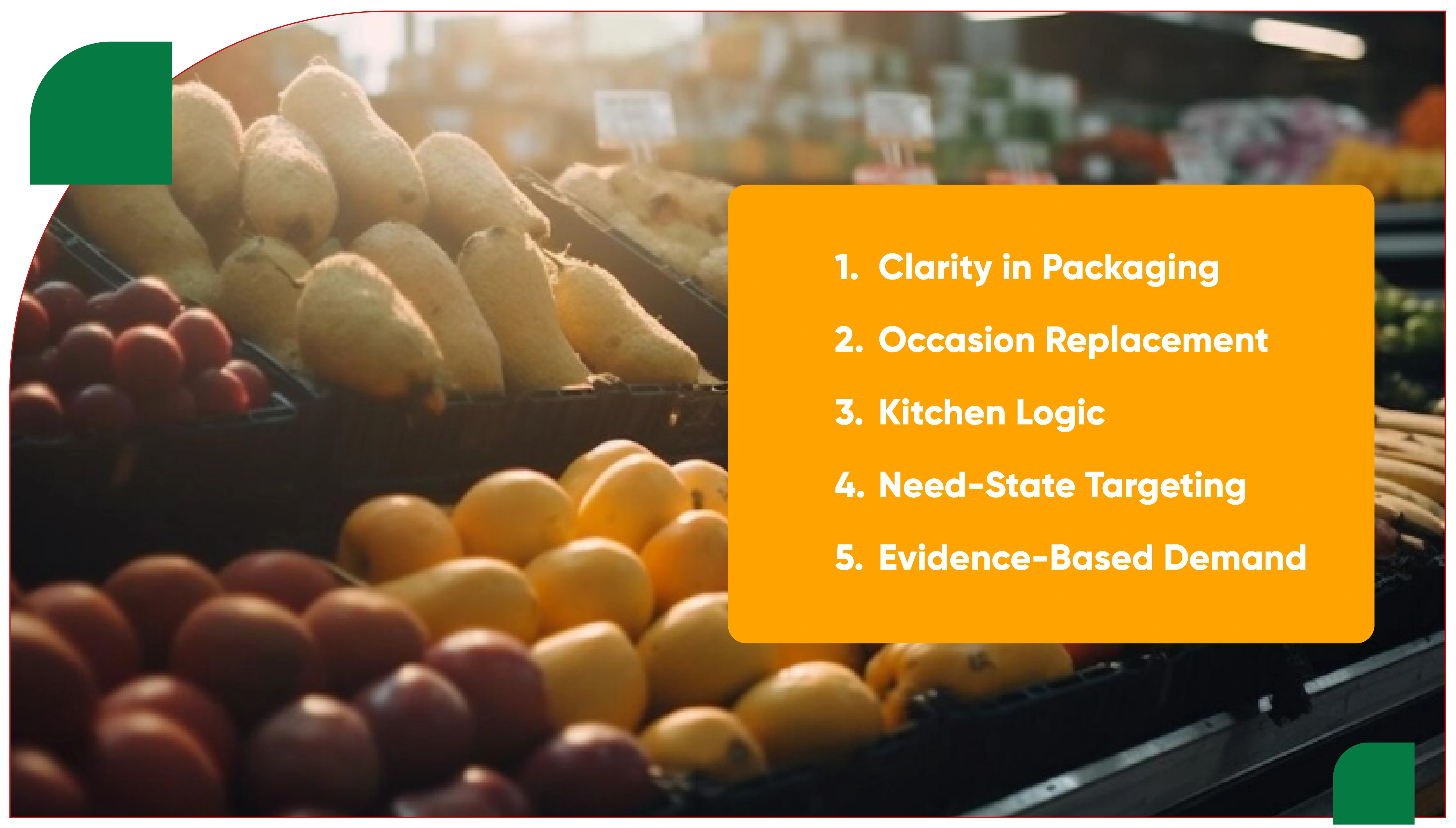
Merchandising success in 2026 relies on clarity, defensibility, and repeatable evidence. Convenience drives store choice, functional benefits drive selection, and value logic drives the final purchase. Brands must anticipate SKU rationalization pressures and defend each SKU’s role with data-driven evidence.
Key strategic considerations for CPG brands include:
Data intelligence tools are central to winning in 2026 supermarkets. Real-time insights enable brands to anticipate demand, identify emerging functional benefits, and monitor competitor activity.
| Data Metric | Purpose | Application for Brands | Frequency of Update |
|---|---|---|---|
| SKU Sales Velocity | Track units sold per day/week | Optimize inventory, identify high-performing SKUs | Daily |
| Basket Role Analysis | Understand SKU contribution to shopping trips | Improve cross-sell, plan promotions, define assortment strategies | Weekly |
| Functional Claim Resonance | Monitor effectiveness of claims like “High Protein” | Adjust packaging, claims, and marketing based on impact | Monthly |
| Private Label Penetration | Track private vs national brand share | Develop competitive response, assess pricing strategy | Weekly |
| Sustainability Claim Performance | Measure consumer response to ethical positioning | Validate messaging, integrate with supply chain improvements | Monthly |
| Price Sensitivity and Promotions | Track SKU performance across promotions | Inform dynamic pricing and promotional strategy | Daily |
Supermarket Chains Data Intelligence ensures brands make informed decisions, minimizing risk while maximizing shelf performance.
Supermarkets in 2026 reward brands that combine clarity, functionality, and value. Shoppers’ hybrid behavior requires CPG brands to focus on need states, functional benefits, and occasion-based positioning rather than relying solely on brand heritage.
Real-time tracking, predictive data insights, and intelligent SKU management are critical for defending shelf space. Tools such as Grocery Price Tracking Dashboard allow brands to stay ahead of consumer shifts, optimize assortment, and maintain repeatable evidence for retail success.
Brands that fail to integrate Grocery Data Intelligence or ignore the hybrid shopper risk losing shelf space to more agile competitors. Conversely, those that leverage Grocery Datasets and other web-based intelligence can anticipate shifts, optimize category performance, and capture growth in a dynamic, value-conscious marketplace.
Are you in need of high-class scraping services? Food Data Scrape should be your first point of call. We are undoubtedly the best in Food Data Aggregator and Mobile Grocery App Scraping service and we render impeccable data insights and analytics for strategic decision-making. With a legacy of excellence as our backbone, we help companies become data-driven, fueling their development. Please take advantage of our tailored solutions that will add value to your business. Contact us today to unlock the value of your data.