Client Background
The client is a multinational FMCG company focused on packaged foods and beverages. With a strong presence across India, the US, and Europe, the company needed to:
- Monitor ingredient transparency across competitors
- Ensure compliance with clean label standards
- Analyze nutritional trends across markets
Business Challenges
1. Lack of Centralized Nutrition Data
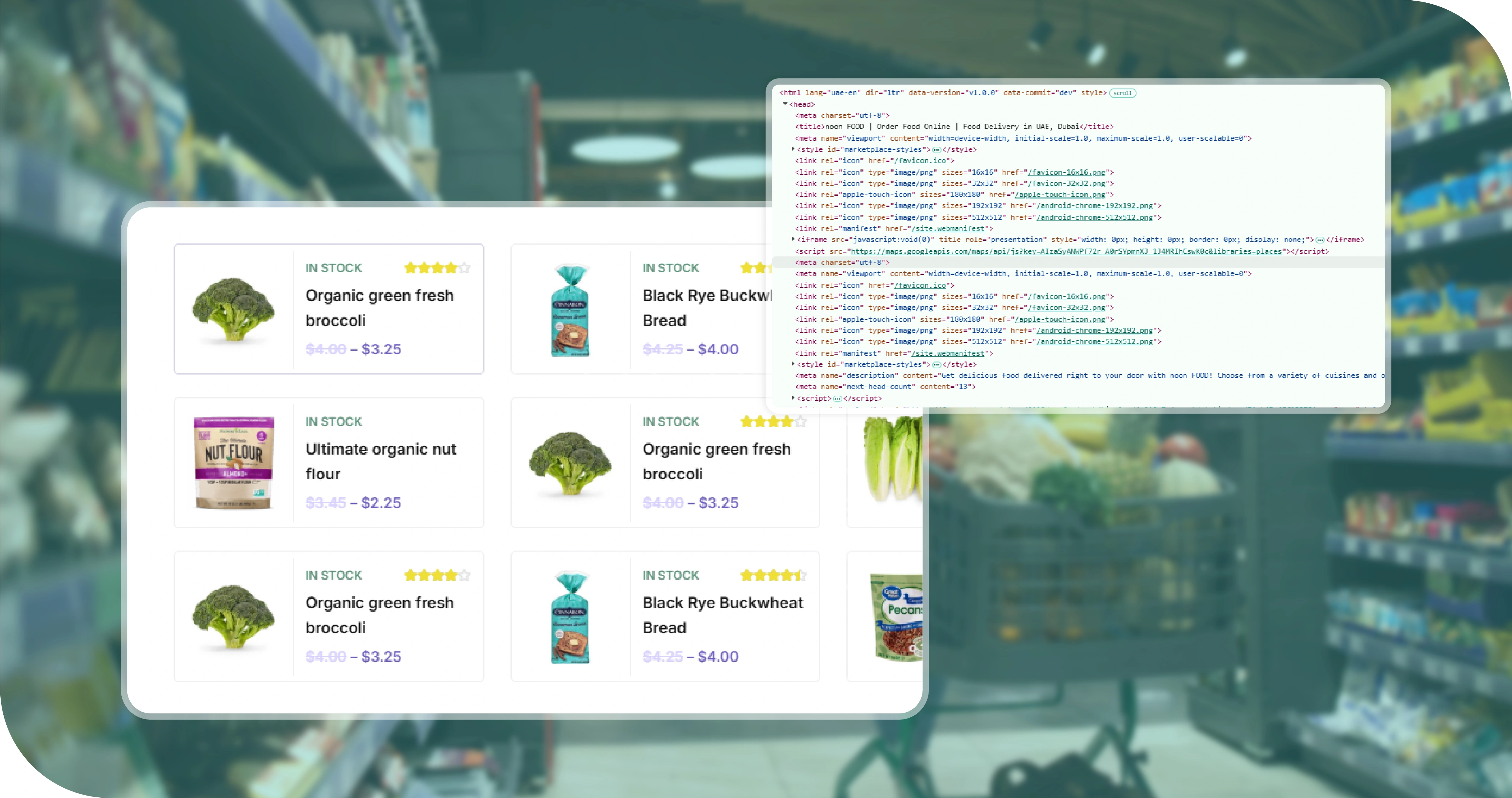
The client struggled to collect consistent nutrition data across platforms like:
- Walmart
- Target
- Instacart
- BigBasket
Each platform presented data differently, making standardization difficult.
2. Manual Data Collection Limitations
Manual extraction led to:
- Inconsistent data formats
- Missing attributes
- Delayed updates
3. Regulatory Compliance Pressure
Strict regulations required:
- Accurate allergen labeling
- Transparent ingredient lists
- Nutritional accuracy
4. Competitive Benchmarking Gaps
The client lacked insights into:
- Competitor ingredient changes
- Reformulation trends
- Clean label claims (organic, gluten-free, etc.)
Solution by Food Data Scrape
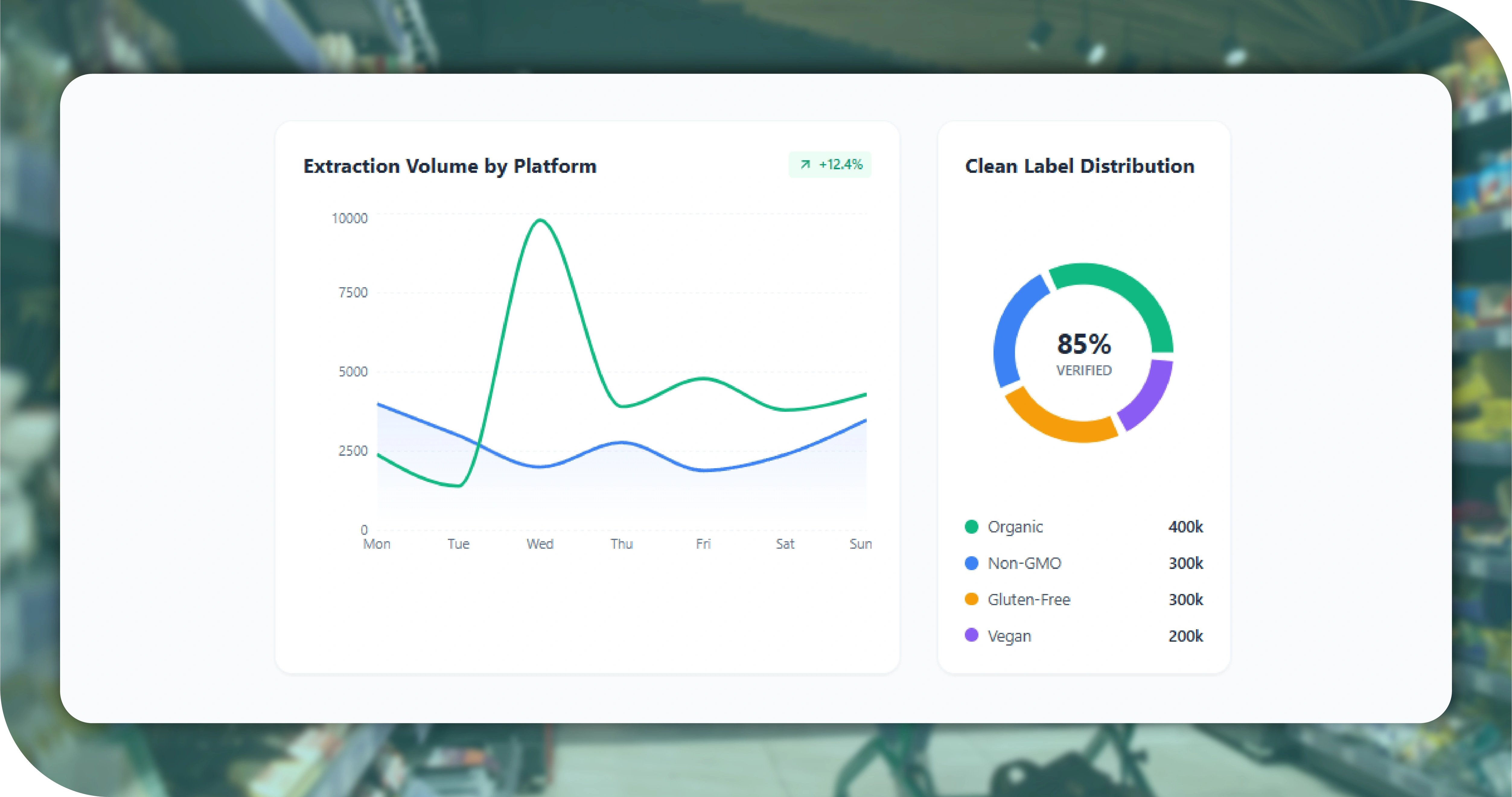
Food Data Scrape deployed a custom grocery data scraping solution to extract and structure nutrition and ingredient data at scale.
Key Features of the Solution
1. Multi-Platform Data Extraction
2. Real-Time Data Updates
- Automated daily data extraction
- Ensured up-to-date compliance datasets
3. Data Standardization Engine
- Normalized nutrition formats
- Structured ingredient lists
4. Clean Label Tagging
Identified claims like:
- Organic
- Non-GMO
- Gluten-Free
- Vegan
Sample Dataset Preview
Below is an example of structured nutrition and ingredient data collected using Food Data Scrape:
| Platform | Product Name | Brand | Calories | Protein (g) | Sugar (g) | Ingredients | Allergen Info | Clean Label Tags | Country | Date |
|---|---|---|---|---|---|---|---|---|---|---|
| Walmart | Organic Almond Milk | Silk | 60 | 1 | 7 | Almonds, Water, Cane Sugar, Vitamins | Contains Nuts | Organic, Vegan | USA | 2026-04-10 |
| Instacart | Whole Wheat Bread | Nature’s | 120 | 4 | 3 | Whole Wheat Flour, Yeast, Salt | Contains Gluten | Non-GMO | USA | 2026-04-10 |
| BigBasket | Low Fat Yogurt | Amul | 80 | 5 | 6 | Milk, Cultures | Contains Dairy | No Preservatives | India | 2026-04-10 |
| Target | Gluten-Free Oats | Quaker | 150 | 5 | 1 | Whole Grain Oats | Gluten-Free | Gluten-Free, Vegan | USA | 2026-04-10 |
Implementation Process
Step 1: Requirement Analysis
Food Data Scrape collaborated with the client to define:
- Target platforms
- Required data fields
- Compliance standards
Step 2: Data Extraction Setup
- Built custom crawlers
- Configured geo-targeting
- Enabled real-time scraping
Step 3: Data Cleaning & Structuring
- Removed duplicates
- Standardized units (grams, calories)
- Cleaned ingredient lists
Step 4: Dataset Delivery
- Delivered via API and CSV
- Integrated into client dashboards
Business Impact
1. Improved Compliance Accuracy
- 95% reduction in labeling errors
- Automated compliance checks
2. Faster Decision-Making
- Real-time access to product data
- Quick identification of reformulation trends
3. Enhanced Competitive Intelligence
- Tracked competitor ingredient changes
- Identified emerging clean label trends
4. Cost & Time Savings
- Eliminated manual data collection
- Reduced operational overhead by 60%
Use Cases Across Industries
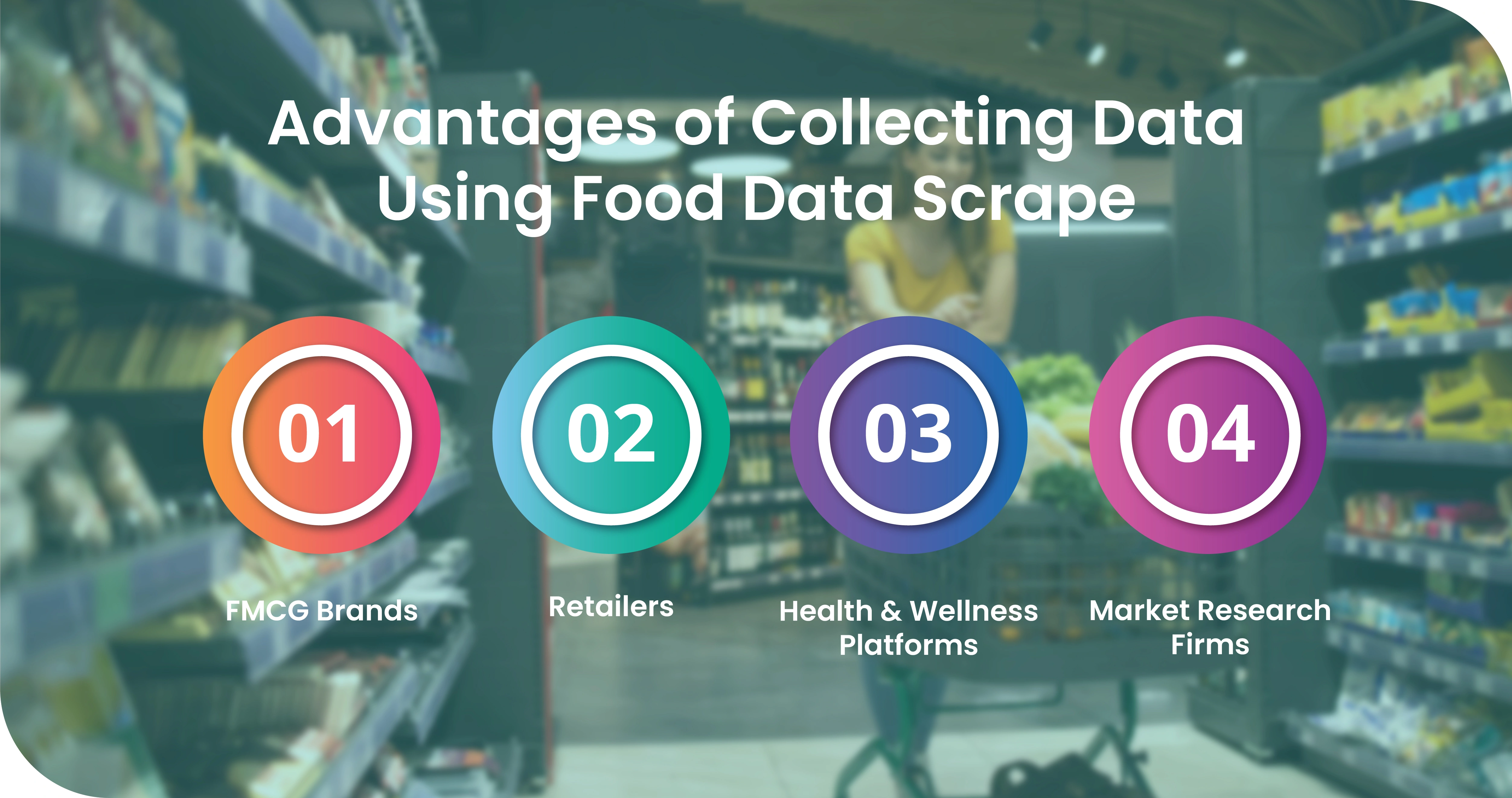
FMCG Brands
- Monitor ingredient transparency
- Ensure regulatory compliance
Retailers
- Improve product labeling accuracy
- Enhance customer trust
Health & Wellness Platforms
- Build nutrition comparison tools
- Offer personalized diet recommendations
Market Research Firms
- Analyze clean label trends
- Generate consumer insights
Challenges & How Food Data Scrape Solved Them
| Challenge | Solution |
|---|---|
| Inconsistent data formats | Data normalization engine |
| Missing nutrition fields | Intelligent extraction logic |
| Frequent product updates | Real-time scraping pipelines |
| Large-scale data processing | Cloud-based infrastructure |
Future Scope
The demand for clean label data will continue to grow, driven by:
- Health-conscious consumers
- Regulatory requirements
- Transparency expectations
Future enhancements include:
- AI-based ingredient classification
- Predictive nutrition analytics
- Integration with health apps
Why Choose Food Data Scrape
- Expertise in nutrition and grocery data scraping
- Real-time, accurate datasets
- Customizable solutions
- Global data coverage
- Scalable infrastructure
Conclusion
Clean label compliance is no longer optional — it is a necessity in today’s food industry. Businesses that leverage nutrition data scraping and ingredient intelligence gain a competitive edge in transparency, compliance, and consumer trust.
With Food Data Scrape, organizations can:
- Extract accurate nutrition data
- Build clean label datasets
- Monitor industry trends
- Make data-driven decisions