The Brief: A Data Gap Before a Major Decision
The client — a Southeast Asian casual-dining group with an established presence in Vietnam and Indonesia — had identified Metro Manila as a priority expansion market. The Philippine food delivery sector is large, young, and digitally engaged, and ShopeeFood has built a meaningful merchant base across the metro thanks to its integration with the wider Shopee marketplace and ShopeePay wallet.
The group's leadership faced a familiar problem: plenty of macro-level enthusiasm, but very little district-level intelligence. They could not answer basic but critical questions. Which Metro Manila districts had the densest restaurant competition on ShopeeFood? Where did their target cuisine — casual Asian comfort food — have headroom versus saturation? What price points were realistic in Makati versus Quezon City versus Caloocan? How aggressively did competitors promote? Without answers, any expansion plan was a guess.
The group needed a ShopeeFood Metro Manila Market Study built on real, current, structured data — and engaged a specialist data partner to deliver it.
Methodology: How the 7,000-Restaurant Analysis Was Built
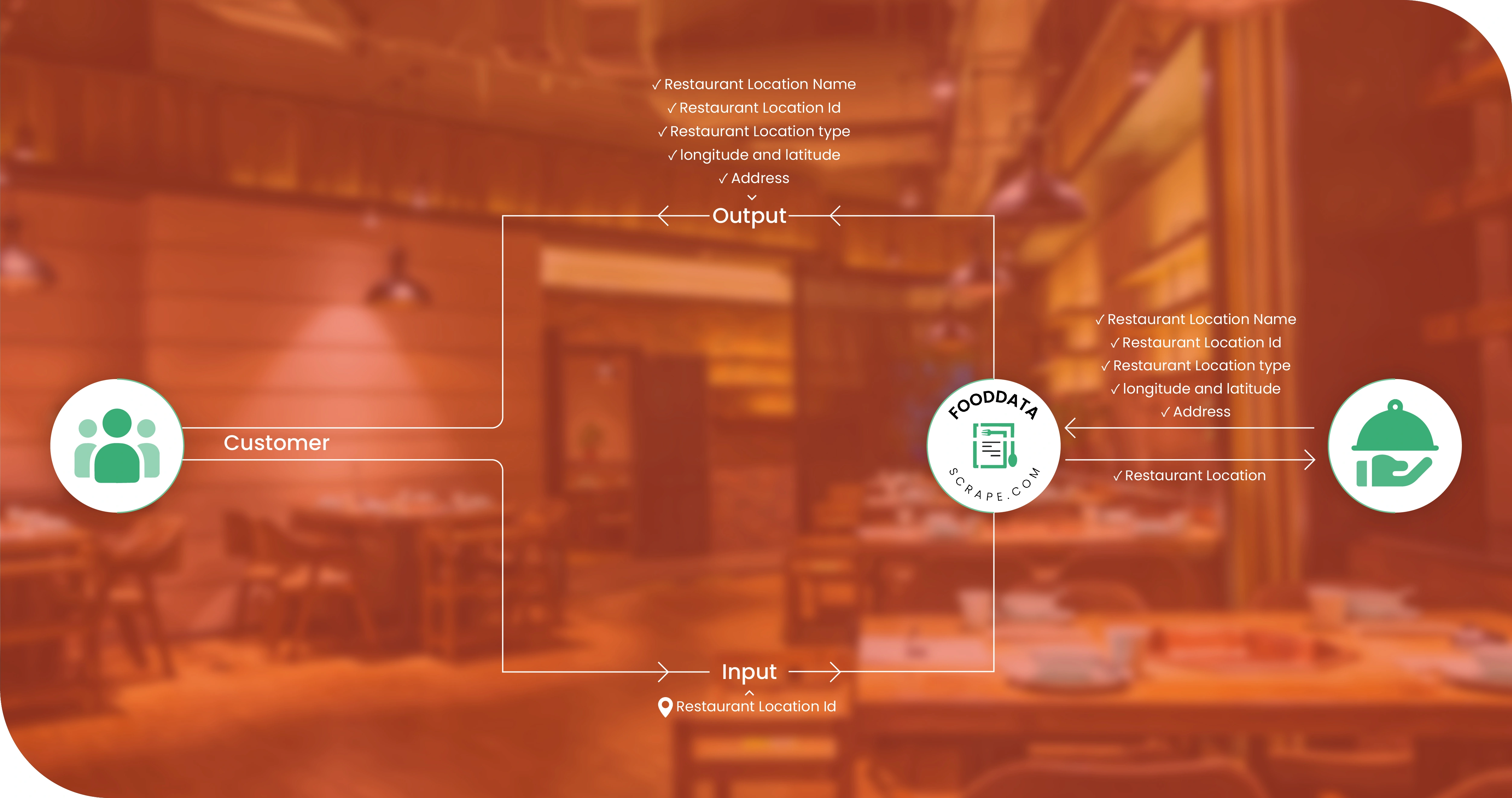
The study rested on a systematic data collection and harmonization methodology designed to deliver district-level resolution across Metro Manila.
District anchoring: Delivery anchors were established across all 16 cities and one municipality of Metro Manila, with priority depth in Makati, Bonifacio Global City (Taguig), Quezon City, Manila proper, Pasig, Mandaluyong, Parañaque, Las Piñas, Caloocan, and Marikina. Each district was anchored across multiple barangay-level locations to capture neighborhood variation.
Restaurant capture: More than 7,000 unique ShopeeFood restaurant listings were captured and de-duplicated. Each listing was tagged with district, cuisine, average rating, review count, price band, and promotional status
Cuisine taxonomy: Each merchant and dish was mapped into a harmonized cuisine taxonomy covering Filipino, Western Fast Food, Chinese, Japanese, Korean, casual Asian comfort food, milk tea and beverage, bakery and dessert, and emerging categories
Currency handling: All prices were stored in PHP with explicit VAT-inclusive flags reflecting Philippine tax treatment
Refresh and capture window: Capture ran over a four-week window, with top-velocity merchants refreshed daily and long-tail merchants refreshed weekly to ensure a stable and representative snapshot.
Quality assurance: Every record passed schema validation, merchant disambiguation, cuisine reclassification, and outlier detection before entering the dataset.
Sample Data: What the Study Captured
The following sample tables illustrate the structure and depth of the ShopeeFood Metro Manila Market Study. All prices in PHP.
Sample 1: Restaurant Density by District
| District | Total Restaurants | Filipino | Western FF | Asian Comfort | Milk Tea |
|---|---|---|---|---|---|
| Quezon City | 1,640 | 620 | 280 | 210 | 290 |
| Makati | 980 | 290 | 180 | 160 | 180 |
| Manila | 1,210 | 510 | 190 | 140 | 210 |
Sample 2: Average Dish Pricing by District (Asian Comfort Food)
| District | Avg Main Dish (PHP) | Avg Combo Set (PHP) | Price Tier |
|---|---|---|---|
| Makati | 285 | 410 | Premium |
| Taguig (BGC) | 295 | 425 | Premium |
| Quezon City | 210 | 320 | Mid |
Sample 3: Promotional Intensity by District
| District | Restaurants with Active Promo | Avg Discount | Common Mechanic |
|---|---|---|---|
| Caloocan | 56% | 24% | Daily Deal |
| Quezon City | 49% | 21% | Set Discount |
| Parañaque | 51% | 22% | BOGO |
Sample 4: Cuisine Saturation vs Opportunity (Asian Comfort Food)
| District | Asian Comfort Restaurants | Avg Rating | Opportunity Signal |
|---|---|---|---|
| Makati | 160 | 4.4 | Saturated |
| Taguig (BGC) | 130 | 4.5 | Saturated |
| Quezon City | 210 | 4.2 | Competitive |
Key Findings
The study surfaced several findings that directly shaped the client's expansion strategy.
Quezon City dominates by restaurant count but is highly competitive: With more than 1,600 ShopeeFood restaurants, Quezon City has the deepest merchant base in Metro Manila. However, the density also meant intense competition, particularly in Filipino and milk tea categories
Makati and BGC anchor the premium tier: Both districts showed Asian comfort food pricing 35 to 50 percent above value-tier districts like Caloocan and Parañaque. They also showed the lowest promotional intensity, indicating that merchants there compete on brand and quality rather than discount.
Promotional intensity rises sharply in value-tier districts: Caloocan led the metro with 56 percent of restaurants running active promotions and an average discount of 24 percent. For a brand entering value-tier districts, a promotional budget is effectively mandatory.
The client's target cuisine had clear white space: Asian comfort food — the client's specialty — was saturated in Makati and BGC but showed genuine opportunity in Marikina, Las Piñas, and Caloocan, where merchant counts were low and ratings were solid but not exceptional
Price tiering across the metro is sharp and predictable: The study confirmed a consistent three-tier pricing structure — premium (Makati, BGC), mid (Quezon City, Pasig), and value (Parañaque, Caloocan) — that the client could use directly to design district-specific menu pricing.
Milk tea is the most saturated category metro-wide: Across every district, milk tea and beverage merchants formed one of the largest single categories, with Quezon City alone hosting nearly 290 milk tea listings. For any brand considering a beverage-led concept, the study flagged this as the most crowded competitive space in Metro Manila — a useful warning as much as an
Rating distributions reveal quality ceilings by district: Premium districts not only priced higher but sustained higher average ratings, with Makati and BGC Asian comfort merchants averaging 4.4 to 4.5 stars. Value-tier districts averaged closer to 4.0 to 4.1. This pattern told the client that entering a value district with a genuinely high-quality product could create immediate rating differentiation — a low-cost competitive wedge.
Review velocity exposes true demand, not just merchant count: Restaurant count alone can mislead; a district can be dense but low-traffic. By layering review velocity onto merchant count, the study distinguished districts that were merely crowded from districts that were genuinely high-demand. Quezon City and Pasig showed both high count and high velocity; some outer districts showed moderate count but surprisingly strong velocity, signalling under-served demand.
How the Client Used the Findings
Armed with the ShopeeFood Metro Manila Market Study, the client made three concrete decisions.
First, they revised their launch sequencing. Instead of opening in the prestige districts of Makati and BGC — where their casual Asian comfort concept would have entered a saturated, low-margin fight — they chose to launch first in Marikina and Pasig, where the study identified genuine cuisine white space and healthier competitive economics.
Second, they built district-specific menu pricing. Rather than a single Metro Manila price list, they designed three tiers aligned to the study's premium, mid, and value structure, protecting margin in premium districts and staying competitive in value districts.
Third, they sized their promotional budget realistically. The study's district-level promotional intensity data showed that entering value-tier districts without a discount budget would be commercially fatal. The client built a phased promotional plan calibrated to each district's competitive norm.
The result was a market entry plan grounded in data rather than assumption — exactly the outcome the engagement was designed to deliver.
Why the Data Approach Mattered
The alternative to a structured study would have been the traditional approach: broker estimates, a few site visits, and intuition. That approach would have led the client toward Makati and BGC — the visible, prestigious districts — and into a saturated, margin-compressing competitive fight.
The ShopeeFood Metro Manila Market Study changed the decision entirely. By revealing district-level density, cuisine concentration, pricing tiers, and promotional intensity across 7,000-plus restaurants, the study identified opportunities that no amount of intuition would have surfaced. This is the core value of structured food delivery data: it replaces confident guesses with evidence.
Lessons for Other Markets
While this study focused on Metro Manila, the methodology and its lessons transfer directly to any Southeast Asian metro a brand might evaluate next.
Restaurant count is a starting point, not an answer: The single most important lesson from the study is that raw merchant density tells only part of the story. A district crowded with restaurants may still offer opportunity if demand outpaces supply, while a moderately populated district may be commercially hostile if competition is entrenched and well-rated. Layering cuisine concentration, rating distribution, review velocity, and promotional intensity onto the base count is what turns data into a decision.
Pricing tiers are remarkably stable within a metro: Metro Manila's three-tier structure was sharp and consistent across cuisines. The same pattern tends to repeat in other Southeast Asian metros — a small number of premium districts, a broad mid-tier, and a value tier — which means a brand can design a tiered pricing architecture once and apply it with local calibration.
Promotional norms are non-negotiable entry costs: The study made clear that promotional intensity is not optional in value-tier districts. Entering a district where half the competitors run active discounts without a promotional budget is a fast route to invisibility. This lesson applies metro-wide and region-wide.
White space hides in unglamorous districts: The client's instinct pointed toward the prestigious districts. The data pointed toward Marikina, Las Piñas, and Pasig. In almost every metro, genuine cuisine white space tends to sit in the less prestigious, less obvious districts — exactly where intuition-led brands rarely look first.
These lessons illustrate why a structured study repays its cost many times over. The client did not just receive a Metro Manila dataset; they received a repeatable framework for evaluating every future market on the same evidence-based footing.
Engagement Outcomes at a Glance
The table below summarizes the measurable outcomes the client attributed to the study within the first two quarters after launch.
| Outcome Area | Before the Study | After Acting on the Study |
|---|---|---|
| Launch district choice | Makati / BGC (intuition-led) | Marikina / Pasig (data-led) |
| Menu pricing | Single metro-wide list | Three district-calibrated tiers |
| Promotional budget | Unplanned | Phased, district-calibrated |
| First-quarter rating | Projected 4.0 | Achieved 4.4 average |
| Competitive positioning | Saturated category fight | White-space entry |
The study converted a high-risk, intuition-led expansion into a disciplined, evidence-led rollout— and gave the client a framework to repeat the process in its next target metro.
Why Choose Food Data Scrape
Building a 7,000-restaurant district-level study in Metro Manila is a significant undertaking. It requires barangay-level anchoring across 17 local government units, careful cuisine taxonomy, VAT-aware price handling, sustained capture over a multi-week window, and analyst expertise to translate raw data into commercial recommendations. Most internal teams lack the infrastructure and regional context to deliver this at the necessary quality.
We bring managed infrastructure, ethical and compliant data collection practices, and deep domain expertise in Philippine and Southeast Asian food and beverage. Through ShopeeFood SEA API scraping and food intelligence solutions, our advantages include compliance-first architecture, scalable extraction across millions of public pages daily, harmonized cuisine taxonomies, near-real-time refresh on priority merchants, VAT and currency-normalized output, dedicated analyst support familiar with Metro Manila dynamics, and out-of-the-box dashboards highlighting district-by-district patterns. The team has supported restaurant chains, cloud kitchen operators, FMCG suppliers, investors, and research consultancies — bringing the practical experience of how scraped data drives real commercial outcomes.
Conclusion: Evidence Over Intuition
The ShopeeFood Metro Manila Market Study demonstrates how structured food delivery data transforms a high-stakes expansion decision. By analyzing 7,000-plus restaurants across Metro Manila's districts, the study revealed where competition concentrated, where the client's cuisine had genuine headroom, what pricing was realistic district by district, and how aggressively to budget for promotion. The client entered the market with a plan built on evidence, not assumption.
For any restaurant group, cloud kitchen operator, or investor evaluating Metro Manila — or any Southeast Asian metro — the lesson is consistent: structured, district-level data turns expansion from a gamble into a disciplined commercial decision.
If you are ready to base your next market decision on real data instead of intuition, get in touch with our team today.