
The competitive coffee retail landscape increasingly depends on real-time digital shelf monitoring to understand pricing dynamics, menu positioning, and promotional strategies across online ordering channels. This report examines Starbucks vs Dunkin Coffee Data Scraping Insights to analyze how two leading coffee chains structure their menu pricing, product availability, and promotional offers across digital platforms and delivery marketplaces. By systematically collecting menu data, beverage pricing, combo offers, and seasonal product launches, analysts can identify meaningful trends that influence customer purchasing decisions.
The study evaluates variations in beverage pricing, breakfast bundle strategies, delivery platform markups, and regional menu differences. Data-driven intelligence helps businesses understand how premium positioning, value offerings, and product innovation shape competitive strategies in the café industry. The findings highlight how digital shelf analytics enables market researchers, restaurant chains, and data analysts to benchmark competitors, track promotional campaigns, and detect shifts in consumer demand patterns while supporting strategic decision-making in the rapidly expanding digital food ordering ecosystem.

Price Dynamics – Menu pricing comparisons reveal premium beverage positioning by Starbucks and value-driven coffee offerings from Dunkin.
Menu Breadth – Starbucks maintains broader beverage customization options, while Dunkin focuses on simplified menu categories.
Promotion Patterns – Dunkin frequently uses combo deals and breakfast bundles to attract price-sensitive customers.
Seasonal Innovation – Starbucks leads seasonal beverage launches that drive digital engagement and higher average order values.
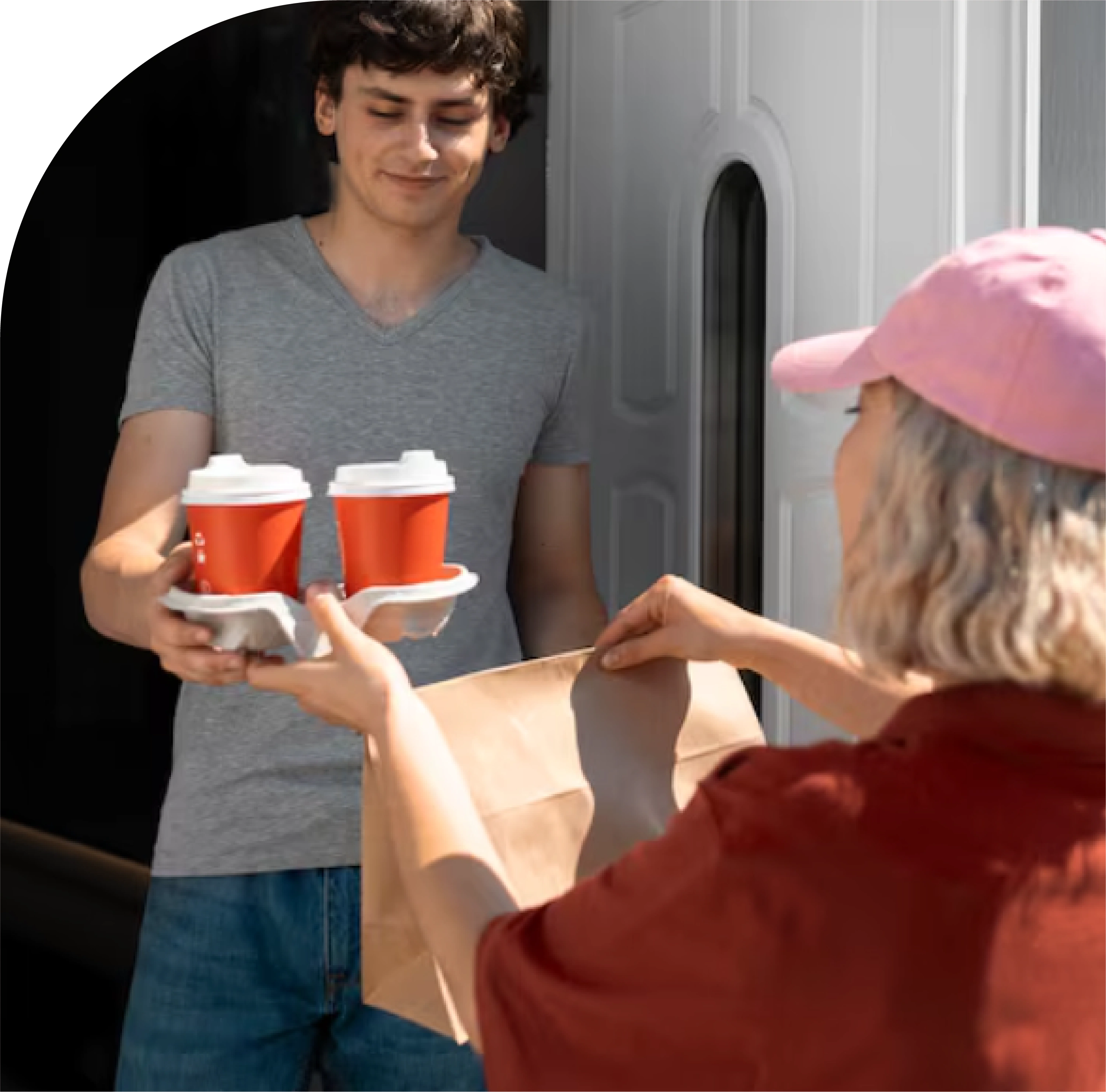
Delivery Impact – Food delivery platforms introduce price markups and regional menu variations across both brands.

In today’s competitive café industry, digital shelf visibility and menu price monitoring have become essential for brands aiming to maintain price competitiveness, optimize promotions, and understand evolving consumer demand. Global coffee chains such as Starbucks and Dunkin' operate across thousands of locations while also expanding their digital presence on food delivery platforms, mobile apps, and aggregator websites. These digital shelves display real-time menu pricing, seasonal beverages, combo deals, and regional promotions that influence purchasing behavior.
Businesses today leverage Starbucks vs Dunkin Coffee Data Scraping Insights to analyze pricing trends across locations and delivery platforms. Advanced data collection systems powered by Starbucks Vs Dunkin Coffee Pricing Data Scraper tools allow companies to gather structured datasets from websites, apps, and delivery platforms in near real time. In addition, modern analytics frameworks rely on Digital Shelf Analytics For Starbucks And Dunkin to evaluate menu positioning, promotional patterns, and product availability. These insights help analysts understand how each brand structures its pricing strategy and promotional offers across different markets.
Digital shelf monitoring enables retailers, investors, and restaurant analytics teams to track thousands of menu items across cities and delivery platforms. By comparing coffee beverages, bakery items, breakfast sandwiches, and seasonal drinks, analysts can detect price changes, regional variations, and competitive gaps between leading coffee chains.
Coffee chains operate in a highly competitive environment where price sensitivity, seasonal products, and localized offerings influence customer choices. Monitoring digital menus provides businesses with real-time insights into pricing structures and menu availability.
Through Competitor Price Tracking For Coffee Shops, companies can benchmark prices between major brands and independent cafés. This allows analysts to understand whether one brand is pricing premium beverages higher or offering bundled deals to attract customers.
Digital shelf monitoring also helps organizations:
Such monitoring provides strategic insight into how coffee chains compete across both physical and digital channels.
To generate comprehensive market insights, analysts collect a wide range of structured attributes from digital menus and delivery platforms.
Using advanced scraping frameworks, businesses Extract Starbucks vs Dunkin Coffee Data Insights from multiple sources such as official apps, delivery marketplaces, and aggregator platforms. The collected datasets typically include product categories, beverage sizes, price points, promotional offers, ratings, and availability.
Similarly, analysts Scrape Starbucks vs Dunkin Coffee Data Insights to identify price fluctuations, menu expansion patterns, and product popularity. These insights support pricing intelligence models used by restaurant operators and market research firms.
| Brand | Category | Product Name | Size | Average Price (USD) | Delivery Platform Price | Rating | Availability |
|---|---|---|---|---|---|---|---|
| Starbucks | Hot Coffee | Caffè Latte | Grande | 4.95 | 5.25 | 4.7 | High |
| Starbucks | Cold Coffee | Iced Caramel Macchiato | Grande | 5.45 | 5.85 | 4.8 | High |
| Starbucks | Frappuccino | Mocha Frappuccino | Grande | 5.75 | 6.10 | 4.7 | Medium |
| Starbucks | Bakery | Butter Croissant | Standard | 3.25 | 3.50 | 4.6 | High |
| Starbucks | Breakfast | Bacon & Gouda Sandwich | Standard | 4.95 | 5.40 | 4.6 | High |
| Dunkin | Hot Coffee | Original Blend Coffee | Medium | 2.79 | 3.05 | 4.5 | High |
| Dunkin | Cold Coffee | Iced Coffee | Medium | 3.19 | 3.45 | 4.6 | High |
| Dunkin | Specialty Drink | Caramel Swirl Latte | Medium | 4.29 | 4.65 | 4.5 | Medium |
| Dunkin | Bakery | Glazed Donut | Standard | 1.39 | 1.60 | 4.7 | High |
| Dunkin | Breakfast | Bacon Egg & Cheese Sandwich | Standard | 3.79 | 4.10 | 4.5 | High |
This type of structured Dunkin Coffee Dataset helps analysts evaluate how premium beverages from Starbucks often carry higher price points, while Dunkin positions itself as a value-oriented coffee chain.
These datasets are typically stored and analyzed as part of large-scale analytics repositories such as Starbucks Coffee Dataset collections repositories used by data science teams.
Food delivery platforms have become a major sales channel for coffee chains. Many consumers now order beverages, breakfast items, and desserts through delivery apps instead of visiting stores.
Modern data pipelines collect menu and pricing information directly from delivery marketplaces using automated APIs. For example, platforms leverage Starbucks Food Delivery Scraping API systems to gather Starbucks menu data across delivery marketplaces.
Similarly, analysts gather Dunkin delivery menu data using Dunkin Food Delivery Scraping API pipelines that capture real-time menu updates.
These scraping frameworks perform several functions:
Such systems rely heavily on Web Scraping Food Delivery Data methods that continuously collect structured information from restaurant menus.
Restaurant menu scraping generates large datasets containing multiple attributes related to beverages and food items. Analysts use automated pipelines to Extract Restaurant Menu Data from online ordering platforms and restaurant apps.
These datasets typically include:
Such information supports market intelligence systems that generate actionable insights for restaurant operators.
| Metric Category | Starbucks Average | Dunkin Average | Insight |
|---|---|---|---|
| Average Beverage Price | $5.15 | $3.20 | Starbucks positioned as premium brand |
| Menu Item Count | 95 items | 70 items | Starbucks offers wider beverage customization |
| Seasonal Drinks Per Year | 12 | 8 | Starbucks leads seasonal innovation |
| Delivery Price Markup | 8–12% | 6–10% | Delivery platforms increase menu price |
| Combo Meal Offers | Limited | Frequent | Dunkin focuses on value combos |
| Customer Ratings | 4.7 | 4.5 | Both brands maintain strong ratings |
| Breakfast Menu Share | 22% | 35% | Dunkin stronger in breakfast category |
| Beverage Customization Options | 30+ | 15+ | Starbucks provides more customization |
| Promotional Campaigns | Premium seasonal | Value deals | Different marketing positioning |
| Average Delivery Time | 20 minutes | 18 minutes | Dunkin slightly faster on delivery |
These insights form the foundation of advanced Food Delivery Scraping API frameworks used to collect and analyze restaurant menu intelligence.
The datasets generated through these systems enable analysts to build sophisticated Restaurant Data Intelligence models that support competitive benchmarking and pricing strategy development.
Comparing Starbucks and Dunkin pricing strategies reveals distinct brand positioning.
Starbucks Strategy
Dunkin Strategy
Digital shelf monitoring highlights how these strategies translate into menu pricing differences across regions and delivery platforms.
For example, Starbucks tends to maintain consistent premium pricing across locations, while Dunkin frequently uses discounts, combo deals, and bundle offers to attract price-sensitive customers.
These insights help analysts understand competitive dynamics within the global coffee market.
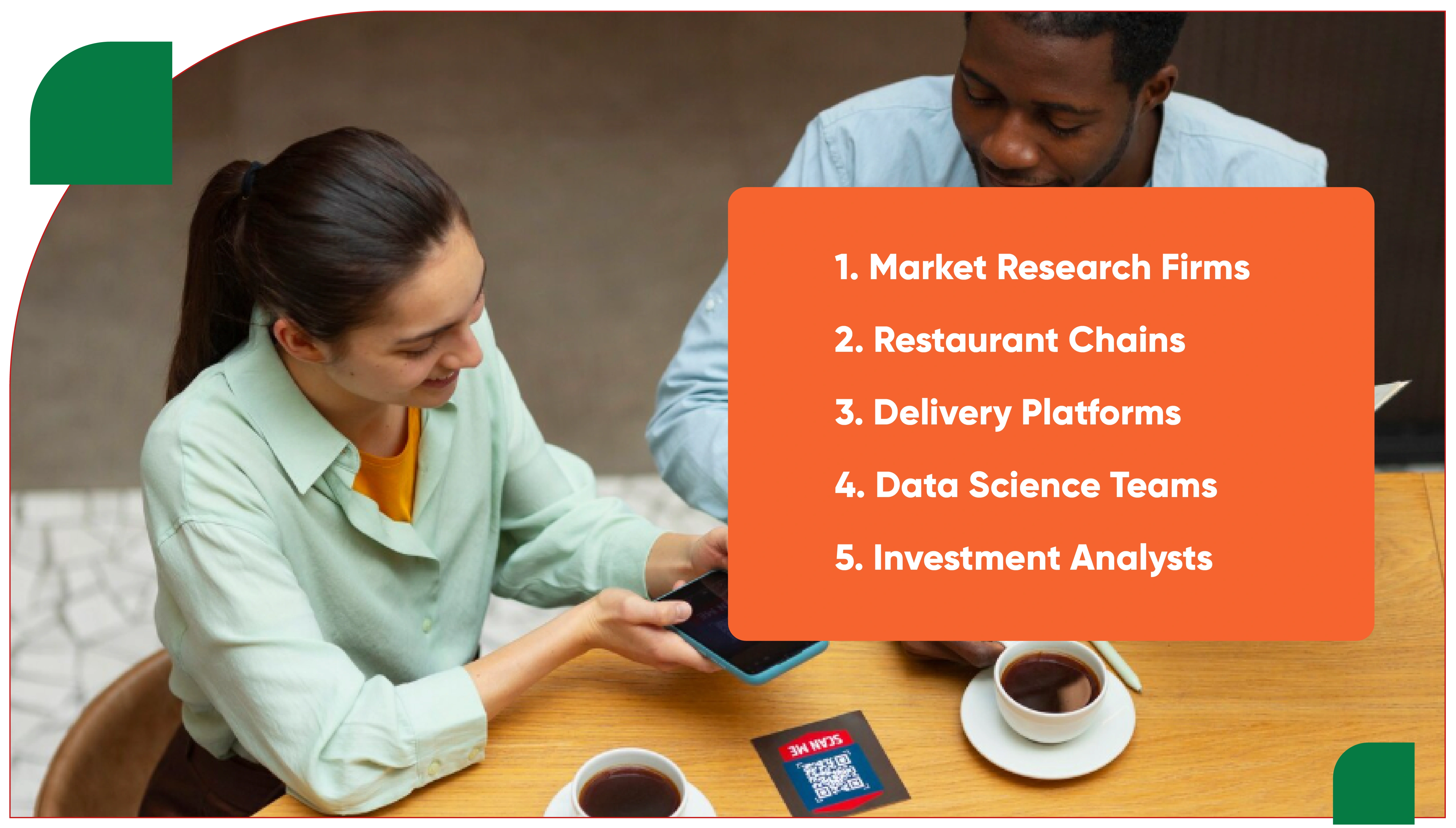
Businesses across multiple sectors use restaurant menu datasets to generate strategic insights.
These insights are often integrated into automated dashboards that track menu changes, promotions, and product launches across markets.
Digital shelf monitoring has become a powerful tool for understanding the evolving restaurant industry. By analyzing menu pricing, promotional strategies, and product availability, businesses gain valuable insight into competitive positioning and consumer behavior.
Advanced data pipelines built on restaurant scraping technologies allow analysts to continuously track pricing and menu updates across multiple platforms. These insights enable companies to optimize pricing strategies, launch targeted promotions, and identify emerging consumer trends.
Modern restaurant analytics systems combine menu data with delivery platform intelligence to generate comprehensive market insights. Such systems are increasingly powered by large-scale data pipelines, predictive analytics, and machine learning models.
Ultimately, organizations leveraging Food delivery Intelligence can gain a competitive advantage by understanding market dynamics at scale. Integrating real-time data into dashboards such as a Food Price Dashboard enables businesses to monitor price changes, track promotions, and detect competitive shifts instantly. As the restaurant industry becomes increasingly data-driven, comprehensive Food Datasets will play a central role in shaping strategic decision-making and market forecasting.
If you are seeking for a reliable data scraping services, Food Data Scrape is at your service. We hold prominence in Food Data Aggregator and Mobile Restaurant App Scraping with impeccable data analysis for strategic decision-making.