About the Client
The client is a mid-sized U.S.–based food delivery brand focused on competitive pricing, menu benchmarking, and rapid market response. Their business heavily depends on real-time visibility into restaurant listings, menu updates, and dynamic pricing trends across leading delivery platforms. With the Web Scraping API for Grubhub Restaurants Menu Data USA, they sought to replace slow manual processes with automated, scalable insight collection. Previously, the team worked with outdated spreadsheets, irregularly updated snapshots, and time-consuming research, which led to delayed decisions and limited visibility. After adopting the Grubhub Food Listings Data Extraction API USA, they gained structured, accurate datasets refreshed automatically. With the Grubhub Menu and Price Data Scraping API in USA, their organization shifted into a fully data-driven environment—supporting pricing strategy, product expansion, competitor tracking, and ongoing operational intelligence.
Key Challenges
- Market Volatility
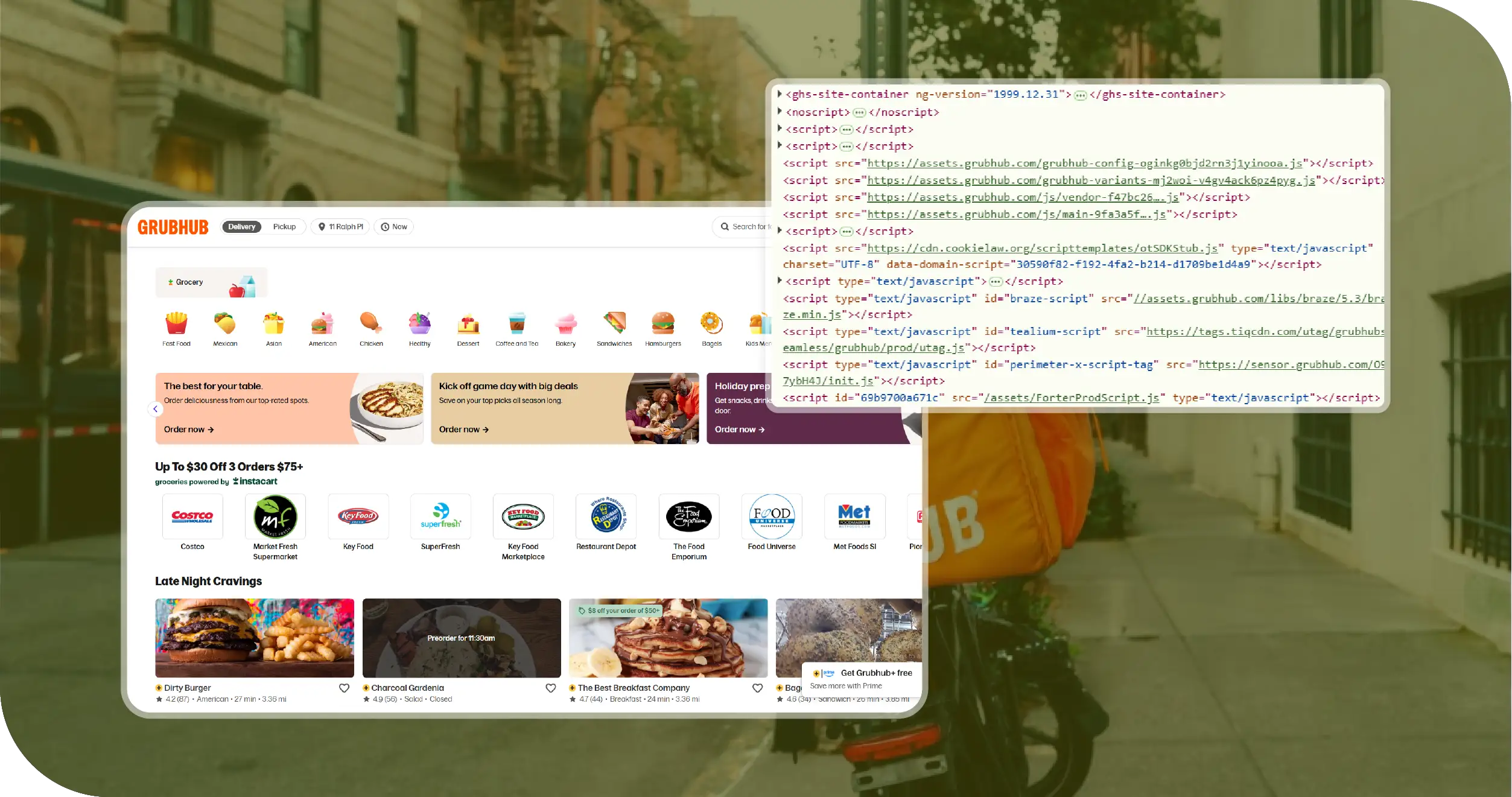
Tracking ongoing menu updates, fees, and hourly price fluctuations required scalable solutions. With the Food Delivery Dataset from Grubhub, the data frequently changed, making consistency and refresh cycles operationally complex. - Data Collection Volume
The team struggled to scale Web Scraping Grubhub Delivery Data across cities, cuisines, and restaurant categories while maintaining unified schema and metadata alignment. - Data Cleaning Complexity
With multiple formats, upsell add-ons, bundle pricing, and hidden charges, using Food Delivery Data Scraping Services required accuracy to generate usable output.
Key Solutions
- End-to-End Automation
Using Restaurant Menu Data Scraping, we implemented a fully automated extraction and delivery workflow, including dynamic schema mapping, scheduling frequency rules, modifier tracking, and structured dataset formatting. - Real-Time Data Feeds
With the Food Delivery Scraping API Services, the system collected menu updates, price fluctuations, new listings, and promotional changes hourly. - Competitive Intelligence Layer
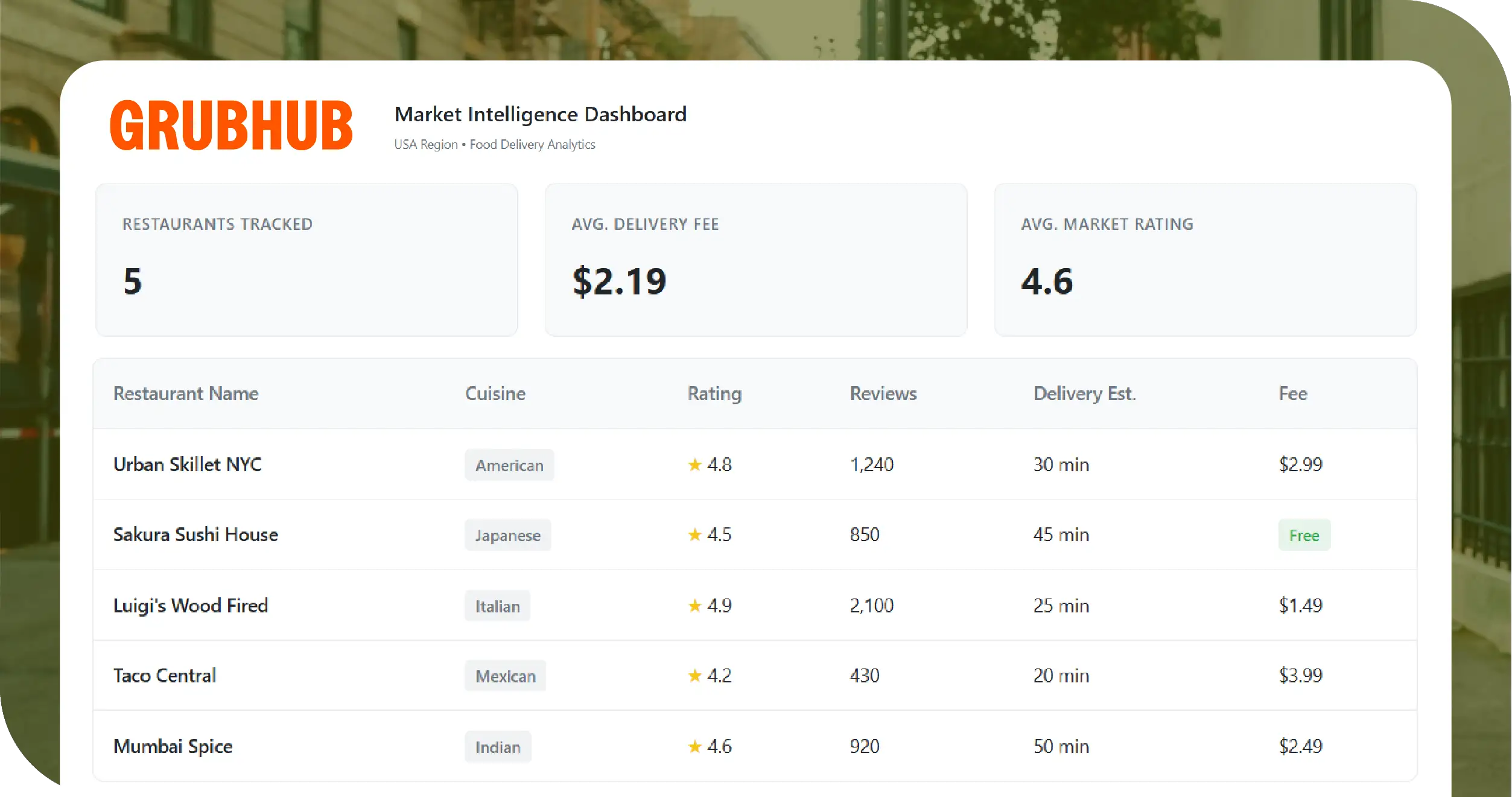
Our Restaurant Data Intelligence Services integrated cleaned datasets into BI dashboards and internal systems, enabling stakeholders to visualize trends and monitor market positioning.
Sample Extracted Dataset Table
| Restaurant Name | Cuisine | City | Item Count | Avg Basket Price | Delivery Fee | Last Updated |
|---|---|---|---|---|---|---|
| Shake Shack | Fast Food | Austin | 41 | $28.50 | $4.99 | 2025-11-21 |
| Olive Garden | Italian | Chicago | 63 | $38.20 | $2.99 | 2025-11-21 |
| Chipotle | Mexican | Miami | 27 | $24.10 | $1.99 | 2025-11-21 |
| Pizza Hut | Pizza | Seattle | 52 | $31.90 | $3.49 | 2025-11-21 |
| PF Chang’s | Asian | NYC | 89 | $44.00 | $5.49 | 2025-11-21 |
Methodologies Used
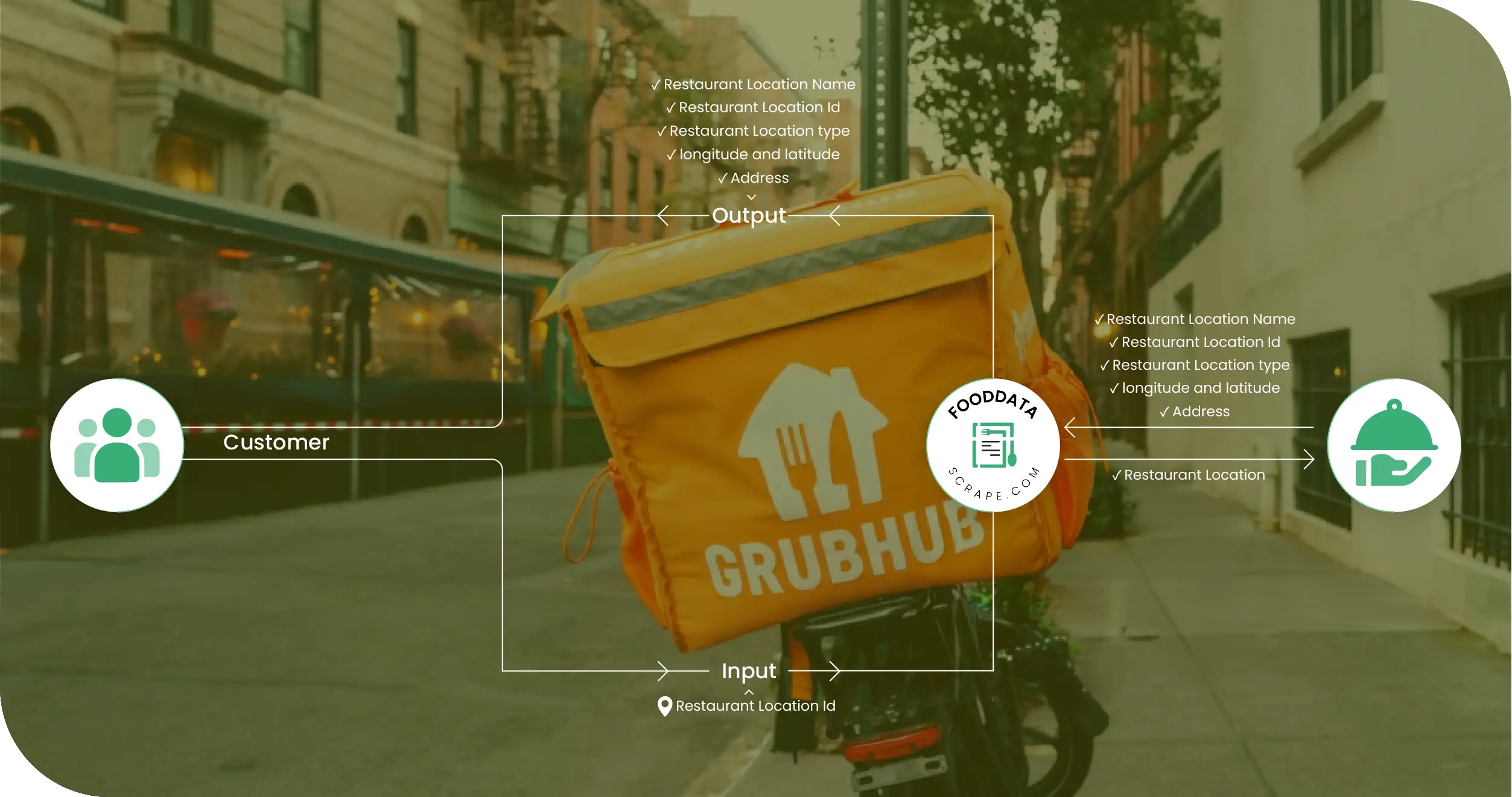
- Data Structuring
A structured schema was designed to normalize data across categories, restaurant variations, and serving formats. - Frequency-Based Extraction
Multiple crawl intervals were defined with incremental delta extraction to ensure update accuracy and reduce load. - Cleaning & Normalization
Advanced rules handled discrepancies, abbreviations, and bundle pricing logic for uniform understanding. - Quality Validation
Automated validation layers checked duplication, outdated entries, and formatting inconsistencies. - Delivery Integration
Datasets were delivered via APIs, cloud sync, and downloadable files for real-time analytics and ML workflows.
Advantages of Collecting Data Using Food Data Scrape
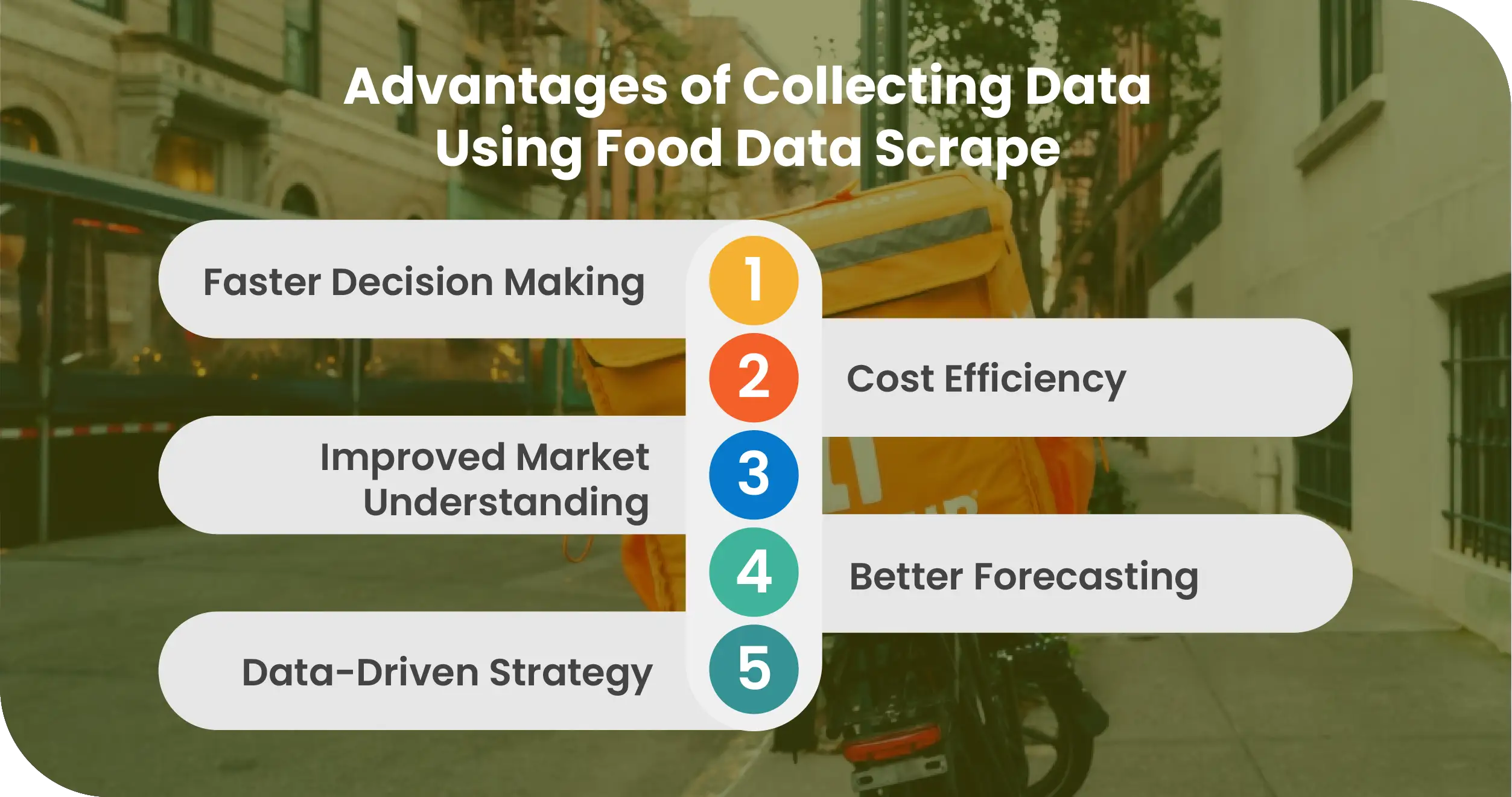
- Faster Decision Making
The automated process enabled daily and weekly insights, helping teams react instantly to competitor moves. - Cost Efficiency
The platform eliminated labor costs and expensive third-party subscriptions. - Improved Market Understanding
Granular coverage improved competitive benchmarking and pricing trend forecasting. - Better Forecasting
Historical datapoints supported tracking inflation, seasonal changes, and discount cycles. - Data-Driven Strategy
Marketing, procurement, and pricing teams adopted analytics-driven frameworks.
Client’s Testimonial
“As a pricing operations lead, I was constantly under pressure to justify competitive changes. We previously relied on inconsistent manual research and outdated marketplace screenshots. After implementation, everything changed. Our teams now access reliable, structured, and current menu and pricing intelligence on demand. The insights helped us react faster and price more intelligently. This system became a core part of our competitive strategy, and our reporting accuracy improved significantly.”
Senior Pricing Strategy Manager
Final Outcome
With the deployment of Food delivery Intelligence services, the client automated competitive tracking and reduced manual workload by 90%. Using structured Food Delivery Datasets, menu intelligence, fees, and price changes were delivered through centralized dashboards. The system improved pricing accuracy, empowered data-driven planning, and delivered weekly insights supporting strategic decision-making across departments.