Introduction
The rise of online food delivery platforms has completely transformed how consumers discover restaurants, compare prices, and choose meals. Among these platforms, Zomato stands out as one of the richest sources of restaurant, menu, pricing, and customer review data.
Every restaurant listing on Zomato generates thousands of data points—menu items, prices, discounts, cuisines, ratings, reviews, and delivery availability. When analyzed correctly, this Zomato dataset becomes a powerful engine for understanding consumer preferences, pricing strategies, and restaurant performance.
At Food Data Scrape, we help businesses unlock the true value of Zomato data scraping and analytics, transforming raw platform data into structured intelligence that supports smarter decisions for restaurants, cloud kitchens, FMCG brands, and market researchers.
What Is a Zomato Dataset?
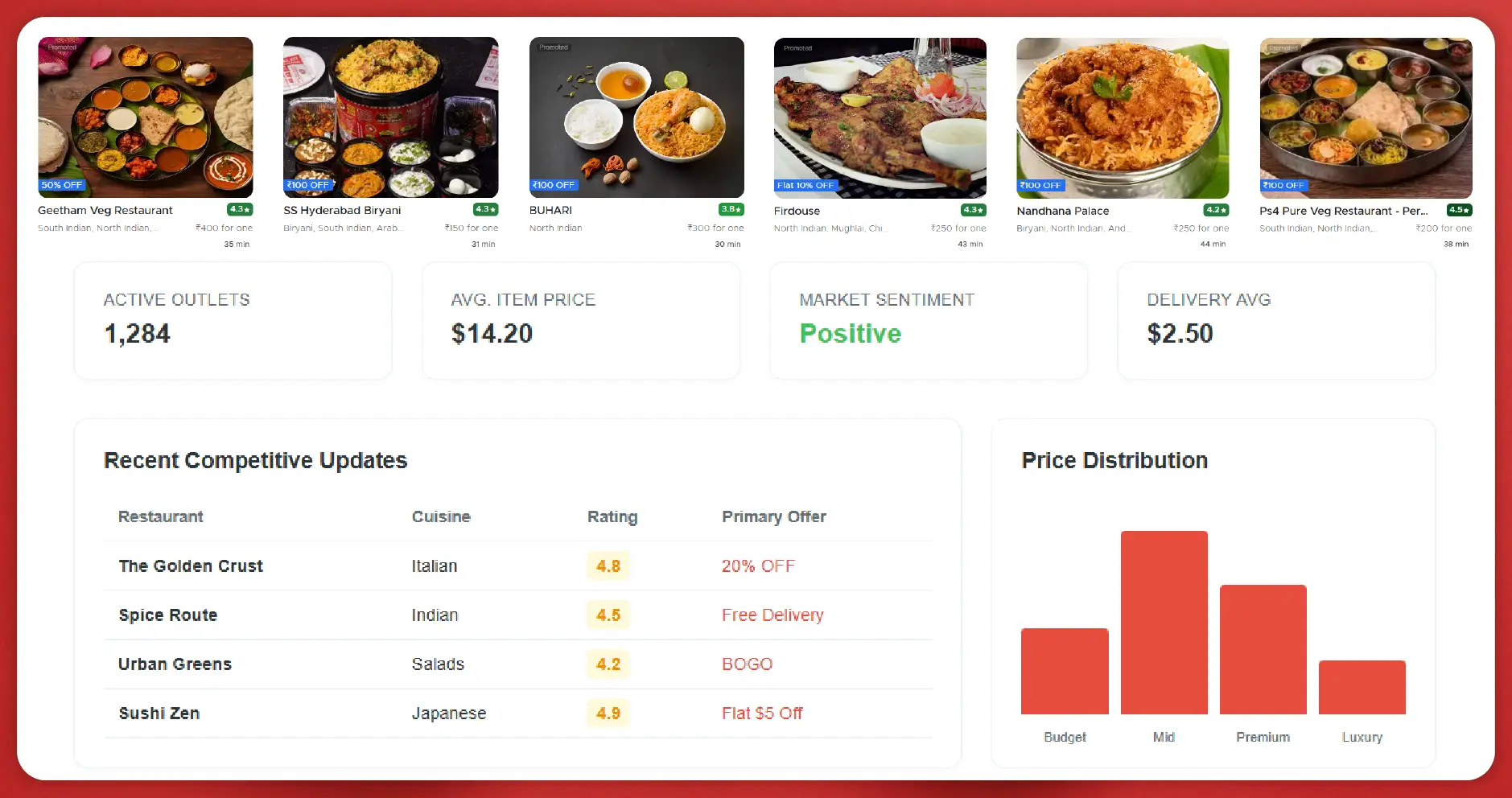
A Zomato dataset is a structured collection of data extracted from Zomato’s platform, covering restaurant-level and menu-level information across cities and regions.
Using Zomato data scraping services, Food Data Scrape captures:
- Restaurant profiles and locations
- Complete menu listings
- Item-wise pricing and pack variants
- Cuisine and category mapping
- Ratings and review sentiment
- Discounts, offers, and delivery fees
This data allows deep analysis of food delivery market trends and consumer behavior.
Why Zomato Menu, Pricing & Review Data Matters
Unlike traditional restaurant data, Zomato datasets reflect real-time consumer interaction. Pricing updates, menu changes, and reviews happen daily, offering live signals of market demand.
Key Business Questions Answered by Zomato Data:
- Which menu items drive maximum orders?
- How price-sensitive are consumers in each cuisine?
- What reviews influence repeat orders?
- How do discounts impact restaurant visibility?
- Which cuisines perform best by location?
Food Data Scrape enables businesses to answer these questions using structured Zomato intelligence datasets.
Zomato Menu Data: Understanding What Consumers Actually Order
Menu-Level Intelligence from Zomato Data
Zomato menu data goes far beyond dish names. Each menu item carries insights into:
- Popularity ranking
- Cuisine association
- Veg / Non-veg preference
- Portion and price positioning
Using Zomato menu data analysis, Food Data Scrape helps brands identify:
- Best-selling dishes by cuisine
- Underperforming menu items
- Pricing gaps within menus
- Consumer preference shifts over time
Example Insight:In metro cities, “combo meals” and “value bowls” outperform single-item dishes due to perceived affordability.
Zomato Pricing Data: Decoding Price Sensitivity
Pricing is one of the most powerful consumer decision drivers on food delivery platforms.
Through Zomato review data scraping, Food Data Scrape tracks:
- Item-wise menu prices
- Price changes over time
- Platform-driven discounts
- Restaurant-funded offers
- Surge pricing patterns
Consumer Pricing Behavior Insights
- Price differences of ₹20–₹30 can significantly affect item ranking
- Consumers prefer rounded price points (₹199, ₹249, ₹299)
- Discounts improve visibility more than absolute price drops
Zomato price intelligence helps restaurants optimize menus without eroding margins.
Sample Zomato Dataset
Below is an example of a structured Zomato dataset used for analytics:
| City | Restaurant | Cuisine | Item Name | Price (₹) | Rating | Discount | Review Count |
|---|---|---|---|---|---|---|---|
| Mumbai | Burger Hub | Fast Food | Classic Burger | 199 | 4.2 | 20% | 1,240 |
| Bengaluru | Spice Villa | North Indian | Paneer Butter Masala | 269 | 4.3 | 15% | 860 |
| Delhi | Wok Express | Chinese | Hakka Noodles | 189 | 4.1 | 10% | 670 |
| Pune | Pizza Town | Italian | Margherita Pizza | 299 | 4.4 | 25% | 1,520 |
This dataset enables menu performance analysis, pricing benchmarking, and consumer preference mapping.
Zomato Review Data: Understanding Consumer Sentiment
Customer reviews are the most direct expression of consumer experience.
Using Zomato review data scraping, Food Data Scrape extracts:
- Star ratings
- Written reviews
- Review frequency
- Keyword sentiment (taste, delivery, packaging)
Review Intelligence Insights
- Taste and portion size dominate positive reviews
- Late delivery impacts ratings more than food quality
- Packaging complaints directly affect reorder rates
By combining review sentiment analysis with pricing data, businesses understand what truly drives consumer satisfaction.
Cuisine-Level Consumer Behavior Insights
Zomato datasets reveal how consumers behave differently across cuisines.
Observed Patterns:
- Fast food and biryani are highly price-sensitive
- Premium cuisines rely more on reviews than discounts
- North Indian cuisine has higher repeat order rates
Food Data Scrape helps brands analyze cuisine-wise Zomato performance data to refine offerings.
City-Wise Zomato Market Intelligence
Using city-level Zomato data analysis, Food Data Scrape identifies:
- Average order value by city
- Price tolerance across regions
- Popular cuisines by location
- Discount dependency trends
Example Insight:Metro cities favor premium pricing with strong reviews, while Tier-2 cities respond better to aggressive discounts.
Restaurant Visibility & Ranking Intelligence
Zomato ranking is influenced by multiple factors:
- Price competitiveness
- Ratings and reviews
- Discount activity
- Menu completeness
Through Zomato ranking data analysis, Food Data Scrape helps restaurants improve discoverability and conversion rates.
Competitive Intelligence Using Zomato Datasets
Zomato data enables restaurant-to-restaurant benchmarking.
Competitive Insights Include:
- Menu price comparison
- Discount overlap analysis
- Rating and review gap analysis
- Cuisine saturation mapping
Competitor intelligence datasets that support strategic expansion and repositioning.
Zomato Data for Cloud Kitchens & QSR Brands
Cloud kitchens heavily rely on platform data.
Using Zomato data extraction and analytics services, Food Data Scrape helps cloud kitchens:
- Identify high-demand cuisines
- Optimize menu pricing
- Launch data-backed virtual brands
- Reduce menu clutter
Real-World Use Case
Challenge
A QSR brand struggled with low order volumes despite high ratings.
Food Data Scrape Solution
- Analyzed Zomato pricing and discount data
- Identified price gaps vs competitors
- Optimized menu pricing and offers
Result
- 19% increase in orders
- Higher visibility
- Improved conversion rate
Future of Zomato Data Analytics
As food delivery platforms evolve, real-time Zomato data intelligence will drive:
- Dynamic menu pricing
- Personalized offers
- AI-driven demand forecasting
- Hyperlocal cuisine strategies
Food Data Scrape continues to deliver scalable, compliant, and actionable Zomato datasets to support data-driven growth.
Conclusion
Zomato data is far more than restaurant listings—it is a real-time reflection of consumer behavior, pricing psychology, and food trends. Businesses that leverage Zomato menu, pricing, and review intelligence gain a competitive edge in the fast-moving food delivery market.
With Food Data Scrape, raw Zomato data transforms into actionable insights, empowering smarter pricing, better menus, and higher consumer satisfaction.
If you are seeking for a reliable data scraping services, Food Data Scrape is at your service. We hold prominence in Food Data Aggregator and Mobile Restaurant App Scraping with impeccable data analysis for strategic decision-making.