The Client
The client is a rapidly expanding cloud kitchen brand operating across multiple metropolitan cities in India. The company specializes in delivering affordable meals, healthy bowls, biryani, and fast-moving snack categories through leading food delivery platforms. Their primary challenge was identifying profitable locations, optimizing delivery operations, and understanding competitor pricing trends in real time.
By leveraging Zomato & Swiggy Competitive Benchmarking, the client compared menu pricing, ratings, and promotional strategies against top-performing rival brands.
Using Food Delivery Data Scraping For Cloud Kitchens, they monitored customer preferences, order frequency, and cuisine demand across different urban markets.
With Zomato & Swiggy Outlet Performance Tracking, the company improved operational efficiency, enhanced customer satisfaction, and optimized outlet-level decision-making. These insights enabled faster market expansion, stronger brand positioning, and significant improvements in repeat customer orders and overall revenue growth across competitive delivery zones.
Key Challenges
- Lack of Real-Time Market Visibility
The client struggled to monitor changing customer preferences, competitor discounts, and regional demand fluctuations. Without accurate insights from the Food Delivery Dataset from Zomato, identifying profitable cuisines, trending meal categories, and pricing opportunities across different delivery zones became difficult for their expanding cloud kitchen operations. - Inefficient Competitive Tracking
The business faced challenges comparing outlet performance, menu pricing, and promotional campaigns against competitors. Limited access to structured insights through Zomato Food Delivery Scraping API Services prevented the client from making quick data-driven decisions, reducing operational efficiency and slowing their expansion into competitive urban food markets. - Difficulty in Demand Forecasting
The client lacked accurate forecasting for peak ordering hours, customer retention trends, and high-performing cuisines. Incomplete analysis from the Swiggy Food Dataset created inventory planning issues, inconsistent delivery experiences, and increased operational costs, affecting customer satisfaction and overall revenue growth across multiple delivery locations.
Key Solutions
- Real-Time Competitive Intelligence
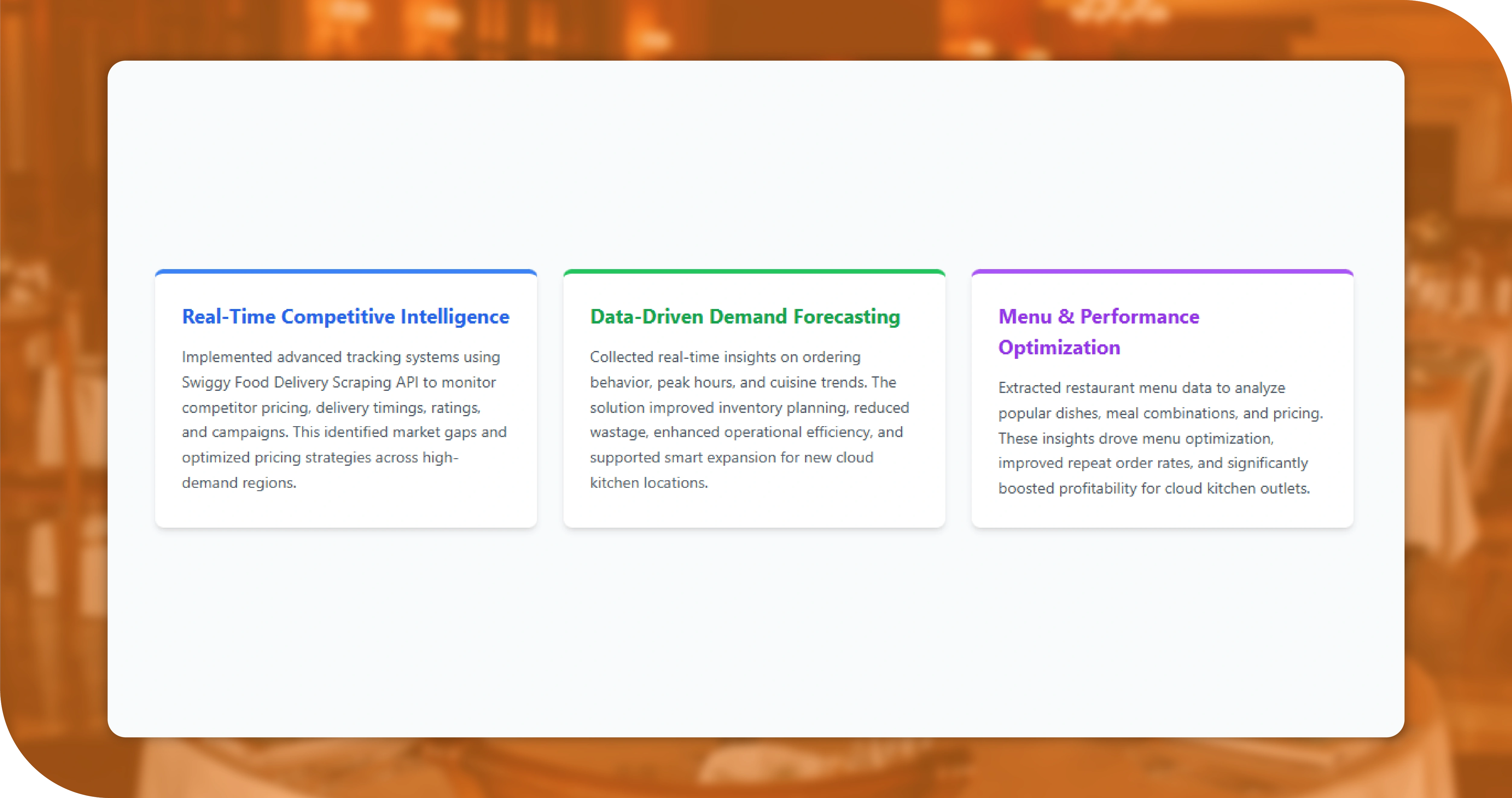
We implemented advanced tracking systems powered by Swiggy Food Delivery Scraping API to monitor competitor pricing, delivery timings, customer ratings, and promotional campaigns. This enabled the client to identify market gaps, optimize pricing strategies, and improve customer engagement across multiple high-demand food delivery regions. - Data-Driven Demand Forecasting
Using Web Scraping Food Delivery Data, we collected real-time insights on customer ordering behavior, peak delivery hours, cuisine trends, and regional preferences. The solution improved inventory planning, reduced food wastage, enhanced operational efficiency, and supported smarter expansion decisions for new cloud kitchen locations. - Menu and Performance Optimization
Our team helped the client Extract Restaurant Menu Data to analyze popular dishes, meal combinations, pricing structures, and customer feedback. These insights enabled menu optimization, improved repeat order rates, enhanced customer satisfaction, and increased profitability across all cloud kitchen outlets operating on delivery platforms.
Sample Data
| City | Cuisine Category | Avg. Daily Orders | Avg. Delivery Time | Customer Rating | Discount Usage % | Peak Ordering Hours | Repeat Customer Rate | Revenue Growth % |
|---|---|---|---|---|---|---|---|---|
| Mumbai | Biryani | 2,450 | 28 mins | 4.5 | 38% | 7 PM – 10 PM | 44% | 36% |
| Bengaluru | Healthy Bowls | 1,980 | 24 mins | 4.6 | 31% | 12 PM – 3 PM | 48% | 33% |
| Delhi | Rolls & Wraps | 2,220 | 30 mins | 4.4 | 35% | 6 PM – 11 PM | 41% | 29% |
| Hyderabad | Pizza & Combos | 1,870 | 27 mins | 4.3 | 40% | 7 PM – 9 PM | 39% | 27% |
| Pune | Fast Food Meals | 1,540 | 23 mins | 4.5 | 29% | 1 PM – 4 PM | 46% | 31% |
| Chennai | South Indian Meals | 1,760 | 25 mins | 4.6 | 26% | 8 AM – 11 AM | 49% | 34% |
| Kolkata | Chinese Cuisine | 1,430 | 29 mins | 4.2 | 33% | 6 PM – 10 PM | 37% | 25% |
| Ahmedabad | Snacks & Combos | 1,250 | 22 mins | 4.4 | 28% | 5 PM – 9 PM | 43% | 24% |
Methodologies Used
- Real-Time Data Collection Methodology
We deployed automated extraction systems using Food Delivery Scraping API to gather live restaurant listings, pricing updates, customer reviews, delivery timelines, and promotional offers. This ensured continuous access to structured and accurate market intelligence for better operational and strategic cloud kitchen decision-making processes. - Competitor Benchmarking Framework
Our team implemented advanced Restaurant Data Intelligence techniques to compare cuisine performance, customer engagement, outlet ratings, and pricing strategies across competing food delivery brands. These comparative insights helped identify high-performing market segments, optimize promotions, and improve customer acquisition strategies across multiple cities. - Consumer Demand Analysis
Using predictive models powered by Food delivery Intelligence, we analyzed peak ordering hours, seasonal demand patterns, preferred cuisines, and repeat customer behavior. This methodology enabled accurate forecasting, reduced inventory wastage, enhanced operational efficiency, and supported smarter expansion planning for cloud kitchen businesses. - Dynamic Pricing and Monitoring
We designed an interactive Food Price Dashboard to track menu pricing, discount campaigns, combo offers, and competitor pricing fluctuations in real time. The dashboard enabled faster business decisions, improved pricing optimization, and helped the client maintain competitiveness across highly dynamic food delivery marketplaces. - Structured Dataset Engineering
Our specialists developed scalable Food Datasets containing restaurant menus, ratings, delivery performance metrics, customer sentiment, cuisine popularity, and regional demand insights. These datasets supported advanced analytics, performance reporting, market trend analysis, and long-term strategic planning for sustainable cloud kitchen business growth.
Advantages of Collecting Data Using Food Data Scrape
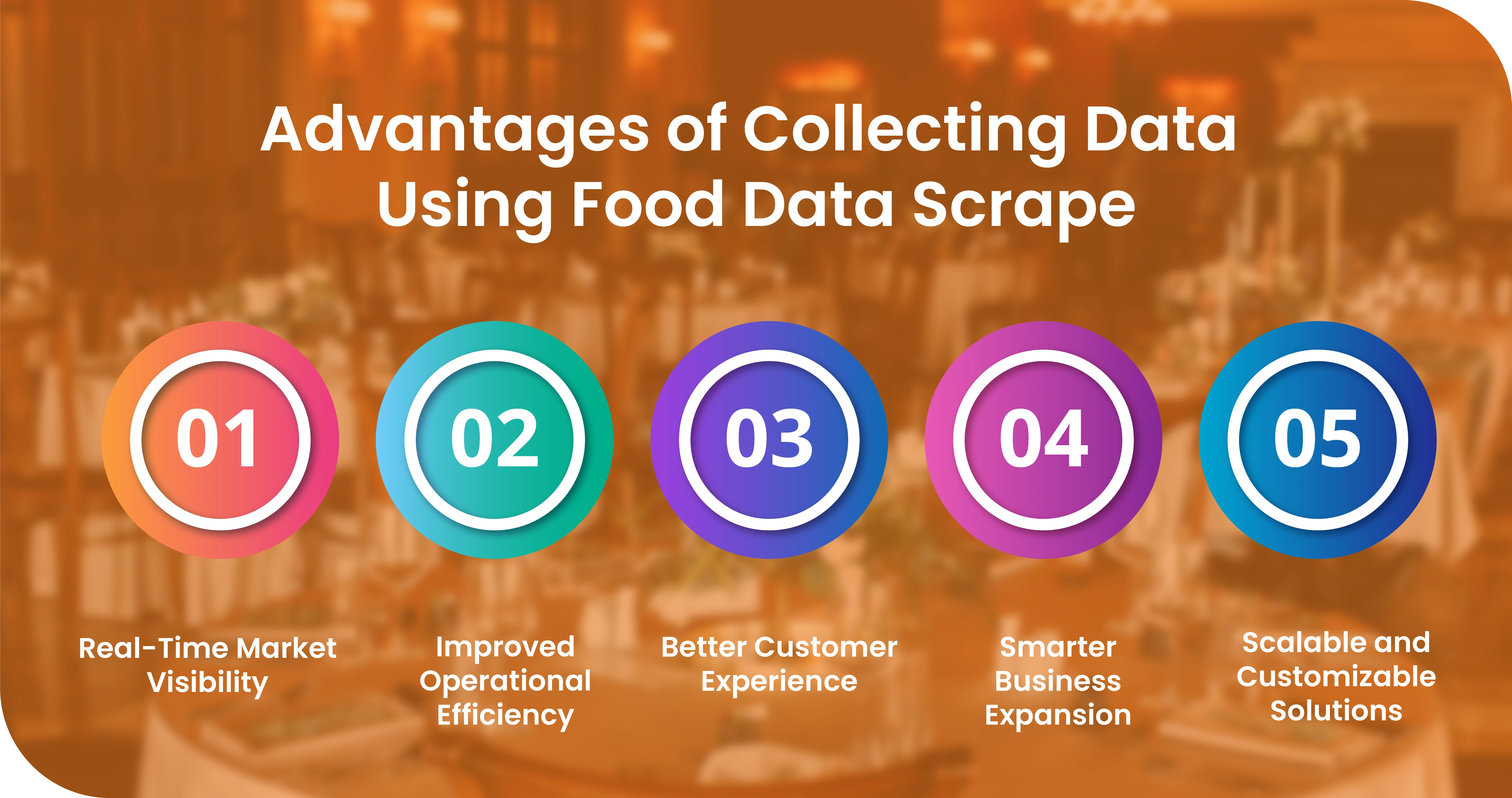
- Real-Time Market Visibility
Our solutions provide continuous monitoring of pricing changes, customer preferences, delivery performance, and promotional campaigns. Businesses gain accurate and timely insights that support faster decision-making, stronger competitive positioning, and improved responsiveness to rapidly changing customer expectations across food delivery marketplaces. - Improved Operational Efficiency
We help businesses streamline inventory planning, menu management, and delivery operations by providing structured, organized, and actionable data insights. This reduces operational bottlenecks, minimizes food wastage, enhances workflow efficiency, and improves overall service quality across multiple delivery locations and customer segments. - Better Customer Experience
Our analytics-driven approach helps businesses understand customer behavior, preferred cuisines, ordering patterns, and satisfaction levels. These insights support personalized offers, optimized menus, faster deliveries, and improved service strategies, ultimately increasing customer loyalty, retention rates, and repeat order frequency in competitive markets. - Smarter Business Expansion
We provide valuable regional demand insights, cuisine performance trends, and location-based analytics that help businesses identify profitable expansion opportunities. This enables strategic planning for new outlets, targeted marketing campaigns, and optimized investment decisions while reducing the risks associated with entering new markets. - Scalable and Customizable Solutions
Our services are designed to scale according to business requirements, supporting startups, cloud kitchens, restaurant chains, and enterprise-level operations. We deliver customized data solutions, flexible reporting formats, and seamless integration capabilities that align with evolving business goals, operational priorities, and analytical requirements.
Client’s Testimonial
“Working with this team completely transformed our cloud kitchen operations and market strategy. Their data-driven insights helped us monitor competitor pricing, optimize delivery performance, and identify the most profitable cuisine categories across multiple cities. The accuracy of their analytics improved our customer retention, streamlined inventory planning, and enhanced operational efficiency significantly. We were able to expand into new markets confidently while improving profitability and customer satisfaction at the same time. Their professional support, scalable solutions, and real-time intelligence gave us a major competitive advantage in the rapidly evolving food delivery industry. We highly recommend their services to businesses looking for reliable and actionable market intelligence solutions.”
— Director of Operations
Final Outcome
The final outcome delivered significant business growth and operational improvements for the client’s cloud kitchen network. By leveraging real-time market intelligence, competitor tracking, customer behavior analysis, and delivery performance monitoring, the client achieved faster and more accurate decision-making across all operational levels. The optimized pricing strategies, improved menu planning, and demand forecasting helped reduce operational costs while increasing customer satisfaction and repeat order rates. The client successfully expanded into multiple high-demand urban markets with reduced business risks and stronger competitive positioning. Enhanced analytics also improved inventory management, promotional planning, and outlet-level performance tracking. Overall, the project increased revenue growth, strengthened customer retention, improved delivery efficiency, and enabled the client to establish a scalable and data-driven business model for long-term success in the competitive food delivery ecosystem.