
















Introduction
In today’s highly competitive retail environment, brands and marketplaces rely heavily on structured product identifiers like UPCs to unify pricing across multiple platforms. The ability to Scrape UPC-Based Deal Matching & Price Comparison Data has become a core capability for retailers and analytics providers aiming to understand real-time market fluctuations and promotional strategies.
Modern systems built on UPC Competitive Pricing Intelligence allow businesses to decode competitor pricing behavior across grocery chains, delivery apps, and e-commerce platforms. By mapping identical products through UPCs, companies eliminate ambiguity caused by naming differences and packaging variations.
At the same time, UPC Promotion & Discount Data Tracking helps organizations capture time-sensitive offers, flash sales, and seasonal discounts. This ensures that pricing models remain updated and reflective of real-world consumer offers rather than static catalog values.
Together, these capabilities form the foundation of data-driven retail decision-making, enabling businesses to align pricing strategies, optimize promotions, and maintain competitive positioning in a fast-moving grocery ecosystem.
How UPC-Based Deal Matching Works in Data Systems?
UPC-based matching is fundamentally about normalization and alignment of identical products across multiple sources. Since grocery platforms often list the same product differently, UPC acts as a universal identifier.
Key operational steps include:
- UPC extraction from product listings across grocery websites and apps to standardize product identity
- Cross-platform matching to align identical products even when names or descriptions differ
- Price normalization to convert different units, pack sizes, or bundle offers into comparable metrics
- Deal identification by analyzing promotional tags, discounts, and seasonal pricing changes
- Duplicate filtering to ensure each product is represented once per UPC in the dataset
- Time-based tracking to monitor price fluctuations over hours, days, or weeks
- Data enrichment by combining UPC data with brand, category, and retailer metadata
- Continuous updates through crawling or APIs to maintain real-time accuracy
These processes allow systems to create a unified product view that is essential for pricing intelligence and retail benchmarking.
Core Technologies Behind UPC-Based Pricing Intelligence
Modern grocery intelligence platforms rely on layered data pipelines that integrate scraping, APIs, and analytics engines.
One of the most critical capabilities is Real-Time UPC Pricing Data Monitoring, which ensures that price changes are captured instantly as they happen across multiple retailers. This is especially important for dynamic pricing environments where discounts may change multiple times per day.
Another essential component is UPC Product Matching Data Scraping, which ensures accurate mapping between identical products listed under different naming conventions. Without this, pricing comparisons would be inconsistent and unreliable.
Retail intelligence systems also benefit from UPC-Driven Grocery Market Intelligence, which transforms raw UPC-level data into actionable insights such as competitor pricing strategies, category-level trends, and regional demand variations.
To support product-level extraction, companies often rely on method to Scrape UPC Data for Grocery Products, which enables structured collection of product identifiers, pricing, availability, and promotional metadata across grocery platforms.
Alongside this, Web Scraping Grocery Data plays a crucial role in gathering large-scale datasets from multiple online grocery stores, delivery platforms, and marketplaces, ensuring comprehensive coverage of the retail landscape.
For businesses building scalable solutions, Grocery Delivery Extraction API provides a more structured and automated way to access UPC-level data without continuously building and maintaining scraping infrastructure.
Benefits and Architecture of UPC-Based Price Comparison Systems
A robust UPC-based price comparison system is not just about data collection; it is about transforming raw information into strategic intelligence.
Key benefits include:
- Improved pricing accuracy by eliminating duplicate or mismatched product entries across platforms
- Faster decision-making for retailers adjusting prices in response to competitors
- Better promotional planning using historical discount trends and UPC-level insights
- Enhanced category-level analysis for identifying high-margin or high-volatility products
- Stronger competitive positioning through continuous monitoring of rival pricing strategies
- Increased operational efficiency by automating manual price checks and comparisons
- Better customer experience by ensuring consistent pricing across channels
From an architectural perspective, these systems typically include ingestion layers for scraping or API calls, processing layers for UPC normalization, and analytics dashboards for visualization. One common output of such systems is a Grocery Price Dashboard, which helps businesses visualize pricing trends, discounts, and competitive gaps in a single interface.
In more advanced implementations, businesses evolve toward a Grocery Data Intelligence framework that integrates UPC data with demand forecasting, inventory planning, and promotional effectiveness analysis.
Ready to transform your retail strategy with real-time insights—connect with us today and unlock smarter pricing, better decisions, and stronger market advantage.
Strategic Importance of UPC-Based Grocery Analytics
The grocery industry operates on thin margins and high volume, making pricing accuracy a critical factor in profitability. UPC-based analytics ensures that businesses are not comparing mismatched items but instead analyzing identical products across retailers.
This is particularly important in omnichannel retail environments where physical stores, quick commerce apps, and online marketplaces coexist. With structured UPC intelligence, companies can detect pricing anomalies, identify arbitrage opportunities, and optimize supply chain decisions.
Retailers also use UPC-based insights to understand consumer behavior patterns, such as which products are frequently discounted, which categories experience rapid price fluctuations, and how competitors structure bundle deals or promotional campaigns.
Advanced Use Cases in Grocery Data Ecosystems
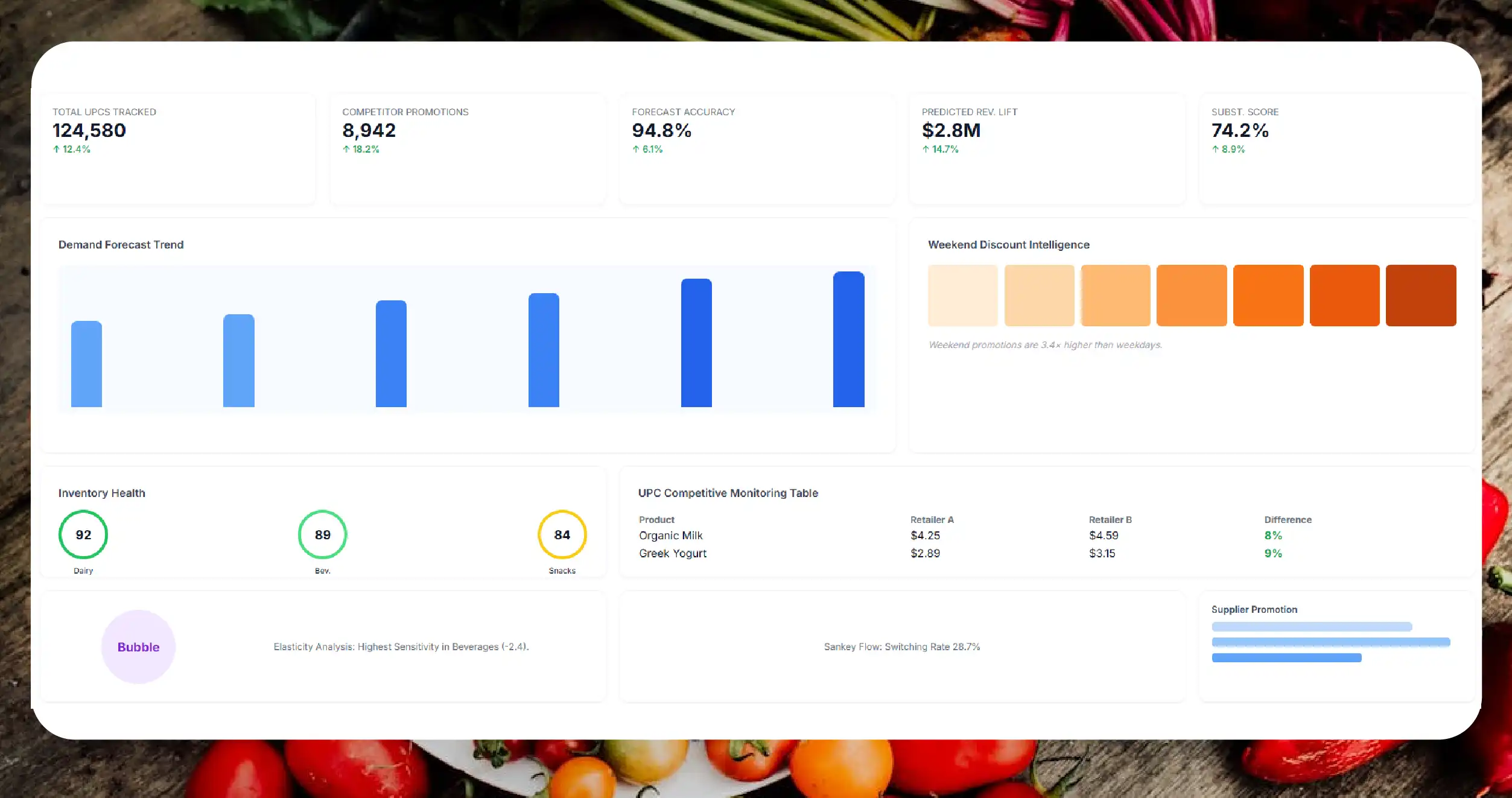
Beyond pricing, UPC-based systems support a wide range of advanced applications. Retailers can integrate UPC intelligence into recommendation engines, demand forecasting models, and inventory optimization tools.
For example, a retailer might detect that a competitor frequently discounts a specific UPC during weekends and adjust its own promotional calendar accordingly. Similarly, suppliers can use UPC-level insights to negotiate better shelf placement or promotional visibility with retailers.
In large-scale ecosystems, UPC data becomes a foundational layer for machine learning models that predict price elasticity, consumer switching behavior, and product substitution trends.
Operational Challenges and Solutions
Despite its advantages, UPC-based data scraping comes with challenges. Websites may block scraping attempts, UPC data may be inconsistently formatted, and product listings may not always include standardized identifiers.
To address these issues, businesses often combine scraping with API-based ingestion and advanced data cleansing techniques. Machine learning models can also be used to infer missing UPCs based on product attributes, descriptions, and historical matches.
Another challenge is maintaining real-time accuracy, especially in fast-changing grocery environments where prices and promotions update frequently. This is where streaming pipelines and incremental crawling strategies become essential.
How Food Data Scrape Can Help You?
Improved Product Identification Accuracy
Our data scraping services help businesses accurately match identical products across multiple
platforms. This removes confusion caused by inconsistent naming and ensures clean, structured
datasets for reliable pricing comparison and analysis.
Faster Competitive Pricing Insights
We provide continuously updated pricing data from various sources, enabling businesses to
monitor competitor price changes in near real time. This supports quicker reactions and more
effective pricing strategies in dynamic markets.
Better Promotion Visibility Tracking
Our solutions capture ongoing discounts, offers, and promotional campaigns across retailers.
This allows businesses to understand market discount patterns and plan their own promotional
strategies more effectively and at the right time.
Large-Scale Data Collection Capability
We enable high-volume data extraction across multiple grocery platforms simultaneously. This
ensures complete market coverage, giving businesses access to structured, consistent, and
scalable datasets for deeper retail analytics and reporting.
Stronger Decision-Making Support
Our scraping services transform raw retail data into actionable insights. Businesses can use
this information to analyze trends, improve forecasting accuracy, optimize pricing models, and
make more informed strategic decisions.
Conclusion
The evolution of retail analytics has made UPC-based systems a cornerstone of modern pricing intelligence. By leveraging structured identifiers, businesses can eliminate ambiguity and gain a unified view of market pricing behavior.
When implemented effectively, tools like Grocery Price Tracking Dashboard empower retailers to move beyond static reporting and into predictive, real-time decision-making environments.
Advanced platforms built on Grocery Data Intelligence help organizations uncover deeper insights into pricing trends, competitor strategies, and customer behavior across multiple retail channels.
Ultimately, structured Grocery Datasets are transforming how grocery businesses operate, compete, and scale in digital-first markets, enabling smarter pricing strategies and more efficient market response systems.
Are you in need of high-class scraping services? Food Data Scrape should be your first point of call. We are undoubtedly the best in Food Data Aggregator and Mobile Grocery App Scraping service and we render impeccable data insights and analytics for strategic decision-making. With a legacy of excellence as our backbone, we help companies become data-driven, fueling their development. Please take advantage of our tailored solutions that will add value to your business. Contact us today to unlock the value of your data.