News
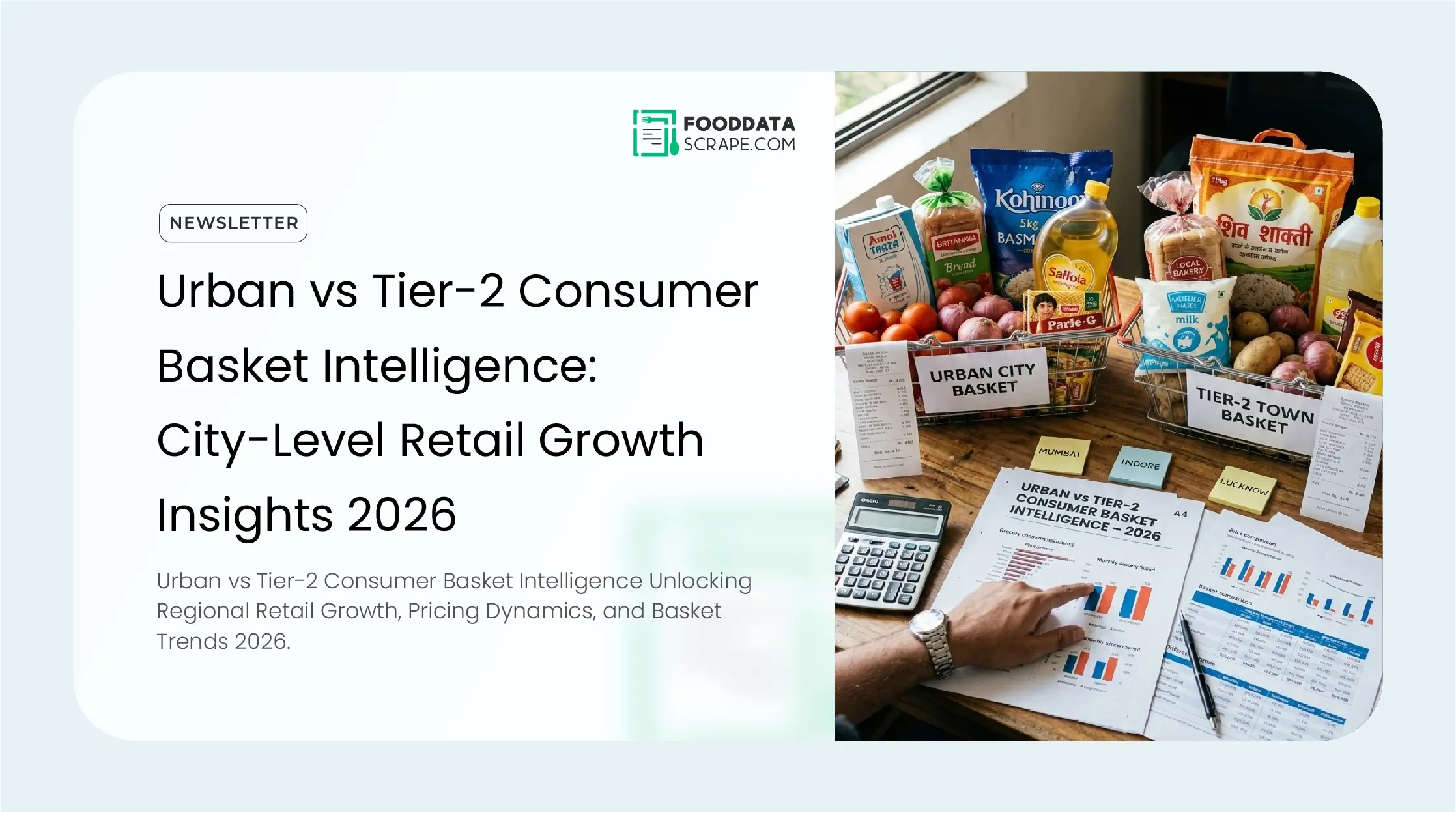
In 2026, India’s consumption divide is no longer just geographic—it is behavioral, digital, and economic. Urban vs Tier-2 Consumer Basket Intelligence is becoming central to how FMCG brands, grocery platforms, and retailers optimize growth. Urban consumers typically prioritize convenience, premium SKUs, health-focused items, and fast delivery. Meanwhile, Tier-2 shoppers balance aspiration with value, leaning toward essential-heavy baskets, larger pack sizes, and promotional sensitivity. These structural differences make localized basket intelligence a competitive advantage rather than a luxury.
To systematically capture these variations, businesses are adopting Urban Vs Tier-2 Consumer Basket Data Scraping mechanisms. Automated scraping collects real-time SKU-level information from grocery apps and marketplaces, including prices, discounts, ratings, stock levels, and pack-size shifts. Urban carts often show higher per-unit value and niche brand experimentation, while Tier-2 carts reveal stronger traction for mass brands and bundled offers. Continuous extraction ensures businesses monitor these differences dynamically rather than periodically.
A dedicated Tier-2 City Consumer Basket Data Scraper enables deeper visibility into emerging consumption clusters. Tier-2 markets are experiencing rapid digital retail expansion, yet their purchase logic differs from metros. Festive spikes, regional brand loyalty, and higher elasticity to discounting patterns define these markets. With structured scraping, companies can identify assortment gaps, detect new brand entries, and measure price competitiveness at a hyperlocal level.
However, data collection alone is not sufficient. Through Urban Vs Tier-2 Consumer Basket Data Analytics, companies transform raw datasets into meaningful insights. Analytics frameworks compare basket value, frequency of purchase, premium penetration, and substitution trends between city tiers. Urban consumers may show higher affinity for organic or imported products, while Tier-2 buyers may prioritize staple affordability and private labels. These analytics support pricing optimization, distribution planning, and city-specific campaign design.
Food Data Scrape for Basket Monitoring
Food Data Scrape strengthens Web Scraping Grocery Data capabilities by enabling structured, automated, and location-specific extraction across platforms. Its approach ensures scalable intelligence with minimal manual effort.
Key benefits include:
- Real-time tracking via a centralized Grocery Price Tracking Dashboard
- City-wise SKU comparison and discount monitoring
- Basket value benchmarking across urban and Tier-2 markets
- Structured Grocery Data Intelligence for demand forecasting
- Historical trend analysis for promotional planning
This streamlined framework allows businesses to quickly compare pricing intensity, availability gaps, and basket composition differences between metros and emerging cities.
As competition intensifies in both urban and Tier-2 India, granular basket intelligence will determine market leadership. Urban regions continue to drive premium experimentation and rapid commerce adoption, while Tier-2 cities represent scalable volume growth fueled by rising incomes and expanding digital access. Companies that integrate scraping, dashboards, and analytics into a unified intelligence ecosystem will be best positioned to respond to demand shifts in real time.
In a fragmented retail environment, success depends on understanding not just what consumers buy—but where, how often, and at what price they buy it.