Introduction
The global grocery industry in 2026 is navigating one of its most volatile pricing environments in recent years. Rising tariffs on imported goods, supply chain disruptions, and fluctuating currency values are collectively driving price instability across essential food categories. In response, retailers are no longer relying solely on traditional pricing strategies. Instead, they are turning to advanced technologies like artificial intelligence and web scraping to stay competitive, protect margins, and maintain customer trust.
Grocery Retailers Are Using AI + Web Scraping to build dynamic pricing systems that respond instantly to market changes. These technologies allow retailers to monitor competitors, track supplier costs, and adjust pricing in near real time. This shift is not just about efficiency—it is about survival in an environment where even minor pricing delays can result in lost revenue or customer churn.
FMCG price data scraping for inflation monitoring has become a critical tool for understanding how tariffs impact everyday consumer goods. By continuously collecting data from online marketplaces, retailer websites, and delivery platforms, businesses gain a granular view of how prices fluctuate across regions and product categories. This enables them to identify inflation trends early and respond proactively. The grocery price tracking to analyze tariff impact 2026 is now a strategic necessity rather than a luxury. Retailers are using automated systems to compare historical pricing data with current market conditions, allowing them to isolate the exact influence of tariffs on specific products. This level of insight helps decision-makers fine-tune pricing strategies and avoid blanket price increases that could alienate customers.
The Role of AI in Modern Grocery Pricing
Artificial intelligence is at the heart of this transformation. Unlike traditional analytics, AI systems can process massive datasets in seconds, identify patterns, and generate actionable insights. These systems are trained to recognize correlations between tariffs, supplier costs, logistics expenses, and consumer demand.
AI-based grocery price intelligence enables retailers to predict price movements before they occur. For example, if tariffs on imported dairy products increase, AI models can forecast how this will affect retail prices across different regions. Retailers can then adjust their sourcing strategies or introduce alternative products to mitigate the impact.
AI also plays a crucial role in demand forecasting. By analyzing customer behavior, seasonal trends, and macroeconomic indicators, retailers can anticipate shifts in demand and adjust inventory accordingly. This reduces waste, prevents stockouts, and ensures optimal pricing at all times.
Web Scraping: The Backbone of Data Collection
While AI provides the intelligence, web scraping supplies the data that fuels it. Web scraping involves extracting information from websites, including product prices, discounts, availability, and customer reviews. In the grocery sector, this data is invaluable.
Real-time grocery data extraction allows retailers to monitor thousands of products across multiple competitors simultaneously. This ensures they are always aware of market pricing and can respond quickly to changes. For instance, if a competitor lowers the price of a staple item, retailers can immediately adjust their own pricing to remain competitive.
Retail analytics using scraped grocery data provides deep insights into market dynamics. Retailers can analyze pricing trends, identify high-performing products, and understand consumer preferences. This data-driven approach replaces guesswork with precision, enabling smarter business decisions.
APIs and Automation: Scaling Data Intelligence
To manage the vast amount of data involved, retailers are increasingly relying on APIs and automated systems. These tools streamline data collection and integration, making it easier to analyze and act on insights. The grocery price scraping API solutions allow businesses to automate the extraction of pricing data from multiple sources. These APIs can be customized to focus on specific products, regions, or competitors, ensuring relevant and actionable data.
Web Scraping Grocery Data at scale requires robust infrastructure. Modern scraping tools are designed to handle large volumes of data while maintaining accuracy and compliance. They also incorporate features like IP rotation and CAPTCHA handling to ensure uninterrupted data collection.
Grocery Delivery Extraction API solutions extend this capability to online delivery platforms. With the rapid growth of quick commerce, tracking prices on delivery apps has become essential. These APIs provide real-time insights into pricing, delivery charges, and promotional offers across platforms.
Turn market volatility into opportunity—partner with us to unlock real-time grocery insights and stay ahead of price fluctuations.
Visualization and Decision-Making
Collecting data is only part of the equation. To derive value, retailers must be able to interpret and act on it effectively. This is where dashboards and visualization tools come into play.
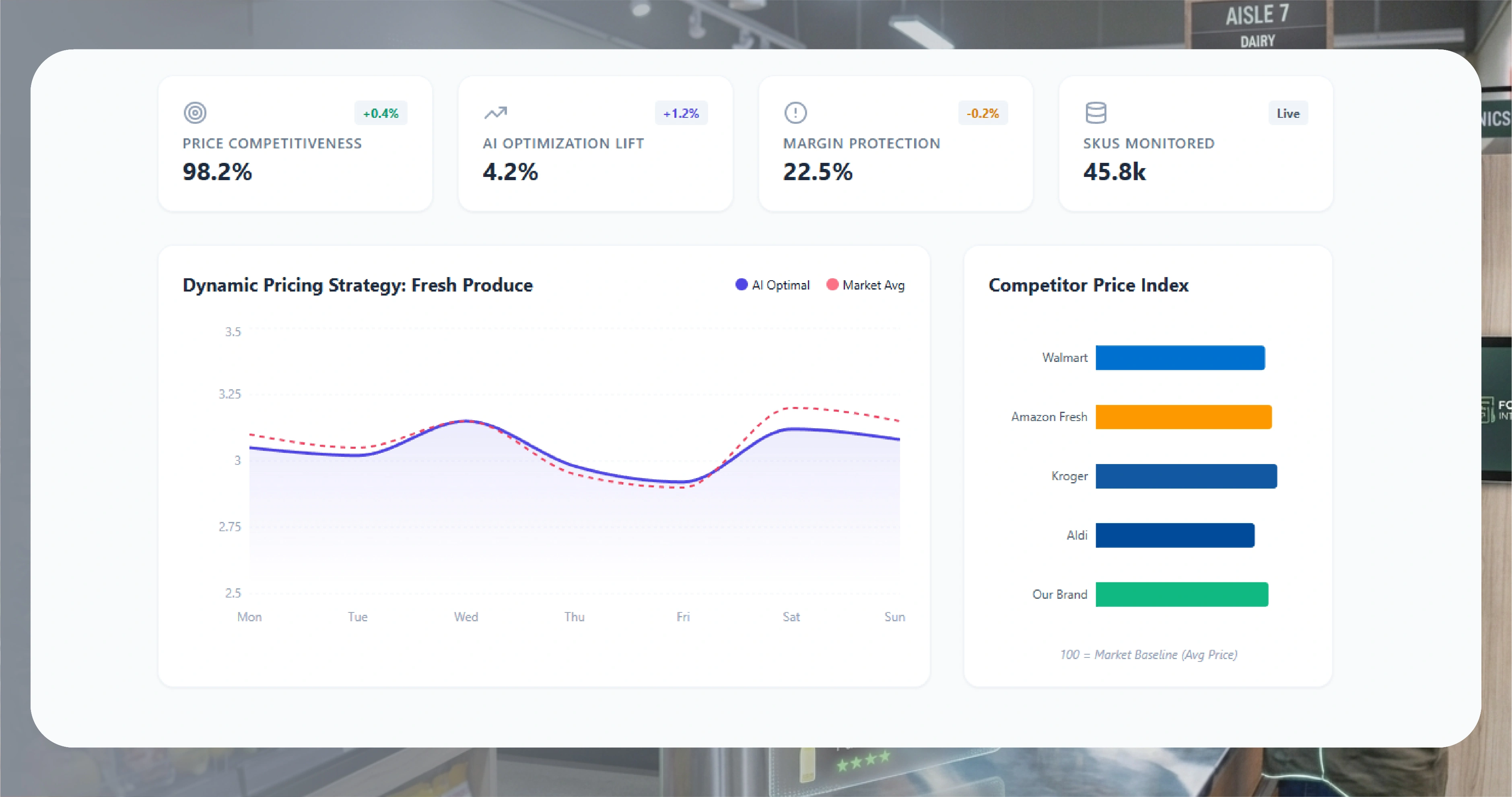
Grocery Price Dashboard tools provide a centralized view of pricing data, enabling retailers to monitor trends and make informed decisions. These dashboards often include features like price comparisons, trend analysis, and alert systems for significant changes.
With intuitive visualizations, decision-makers can quickly identify anomalies, track performance, and implement pricing strategies. This reduces the time between insight and action, which is critical in a fast-moving market.
Competitive Advantage in a Tariff-Driven Market
In 2026, the ability to adapt quickly to tariff-induced price changes is a key competitive differentiator. Retailers that leverage AI and web scraping are better equipped to navigate this complexity.
By continuously monitoring the market, these retailers can:
- Adjust prices dynamically to reflect real-time conditions
- Identify cost-saving opportunities in sourcing and logistics
- Optimize product assortments based on profitability and demand
- Enhance customer satisfaction through fair and transparent pricing
Moreover, these technologies enable retailers to move from reactive to proactive strategies. Instead of responding to price changes after they occur, they can anticipate and prepare for them in advance.
Challenges and Considerations
Despite its benefits, implementing AI and web scraping is not without challenges. Data accuracy, compliance with website terms, and infrastructure costs are key considerations. Retailers must ensure that their data collection practices are ethical and adhere to legal guidelines.
Additionally, integrating data from multiple sources can be complex. It requires robust data management systems and skilled professionals who can interpret the insights effectively.
However, the long-term benefits far outweigh these challenges. As technology continues to evolve, the barriers to adoption are decreasing, making these tools more accessible to retailers of all sizes.
The Future of Grocery Pricing
Looking ahead, the role of AI and web scraping in grocery retail will only continue to grow. As tariffs and global trade policies remain unpredictable, the need for real-time data and intelligent analysis will become even more critical.
Retailers are expected to invest further in automation, machine learning, and predictive analytics. These technologies will not only enhance pricing strategies but also improve overall operational efficiency.
In the coming years, we may also see increased collaboration between retailers and technology providers, leading to more advanced and integrated solutions.
How Food Data Scrape Can Help You?
- Demand & Trend Forecasting
Our data scraping services capture historical and real-time grocery data to identify demand patterns, helping you forecast trends accurately and align inventory, pricing, and promotions with evolving consumer behavior. - Inflation Impact Analysis
We help you isolate tariff-driven cost increases by tracking price movements across regions and categories, enabling precise analysis of inflation impact and supporting smarter financial and sourcing decisions. - Product-Level Insights
Our solutions extract detailed SKU-level data including pricing, availability, and variants, allowing you to optimize assortments, eliminate underperforming products, and focus on high-margin, high-demand grocery items. - Multi-Platform Data Integration
We aggregate data from websites, marketplaces, and delivery apps into a unified system, giving you a comprehensive view of the grocery ecosystem for better cross-channel strategy and performance tracking. - Faster Strategic Execution
By delivering clean, structured, and ready-to-use datasets, our services reduce analysis time, enabling your teams to act quickly on insights and implement data-driven strategies without delays.
Conclusion
The grocery industry is undergoing a significant transformation, driven by the challenges of tariff-induced price inflation. Retailers that embrace AI and web scraping are better positioned to navigate this complex landscape and maintain a competitive edge.
Grocery Price Tracking Dashboard solutions will play a crucial role in enabling real-time decision-making and ensuring pricing transparency. AI-Powered Grocery Data Intelligence will continue to evolve, offering deeper insights and more accurate predictions.
Grocery Pricing Datasets will become increasingly valuable, serving as the foundation for advanced analytics and strategic planning. Ultimately, the integration of AI and web scraping is not just a technological upgrade—it is a strategic imperative for grocery retailers in 2026 and beyond.
Are you in need of high-class scraping services? Food Data Scrape should be your first point of call. We are undoubtedly the best in Food Data Aggregator and Mobile Grocery App Scraping service and we render impeccable data insights and analytics for strategic decision-making. With a legacy of excellence as our backbone, we help companies become data-driven, fueling their development. Please take advantage of our tailored solutions that will add value to your business. Contact us today to unlock the value of your data.