Demand & Pricing
Sales & Demand Trends
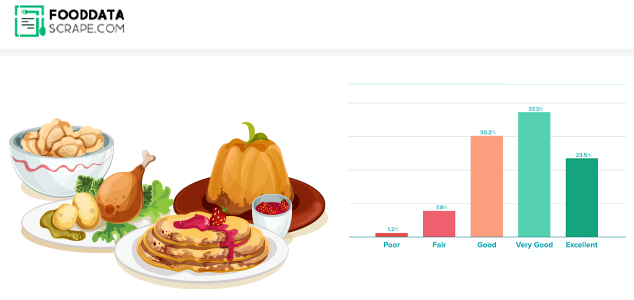
Reviews & AI Sentiment analyzes millions of food and restaurant reviews by location using AI-powered sentiment and aspect-level insights.
// history plus forward signals in one feed
| category | mkt | yoy | trend | signal |
|---|---|---|---|---|
| Cold Brew | IN | +34% | ↑ | rising |
| Frozen Snacks | IN | +11% | ↗ | steady |
| Diet Soda | IN | -6% | ↓ | fading |
Overview
What is sales & demand trend analysis?
Sales and demand trend analysis is the study of how interest in food and grocery categories rises and falls over time, combining multi-year history with forward-looking signals. It tells you not just where a category has been, but where the data suggests it is heading.
Single-quarter snapshots can mislead: a category may look flat this month yet be on a strong multi-year climb, or spike seasonally before fading. Strategy, research and investment teams need to separate genuine growth from seasonality and noise. By pairing historical demand curves with leading indicators across 15 markets, trend analysis surfaces which categories are accelerating, which are plateauing, and which are quietly declining. That long arc is what turns a hunch into an evidence-backed plan — whether you are deciding where to invest, what to range, or which segment to write about with confidence.
Capabilities
The long arc of demand
Where a category has been, and where the signals say it's heading.
Historical trend lines
Multi-year category and item demand history across markets.

Category benchmarks
Compare a category against its peers and the wider market.
Predictive signals
Forward indicators that flag rising and fading demand.
Seasonality view
Recurring annual patterns separated from real growth.
Cross-market view
See how a trend differs across the 15 markets we cover.
Momentum scoring
A single score for how fast a category is rising or falling.
What's included
Every trends feed ships with
Standard fields and outputs. Anything here can be extended, trimmed or customized to your scope.
Methodology
How does sales & demand trend analysis work?
From raw history to a forward signal, in four steps.
1 · Assemble history
Multi-year demand data is compiled per category and market.
2 · Decompose seasonality
Recurring patterns are separated from underlying growth.
3 · Score momentum
Each category gets a momentum and forward-signal score.
4 · Deliver
Trends and signals arrive as CSV, JSON or API.
Who it's for
Get answers like
Real questions our trends feed answers for teams across the food economy.
"Is this category growing?"
Multi-year demand trend lines.
"Where should we invest next?"
Predictive demand signals by category.
"Which segment is heating up?"
Benchmarked category momentum.
Why FoodDataScrape
Why teams choose us for this
- Multi-year history paired with forward signals in one feed
- Seasonality cleanly separated from real growth
- Cross-market comparison across 15 markets
- Free proof-of-concept on your categories
Delivery & integration
How is the data delivered?
Formats
CSV, JSON or direct API — pick what plugs into your stack. Custom schemas on request.
Refresh cadence
One-time pull, daily, weekly or real-time feeds, scoped to how fast your decisions move.
Integration
Drop into BI tools, data warehouses or apps. Webhooks and scheduled exports supported.
Questions
Frequently asked questions
Multi-year history is available for most categories; exact depth depends on platform coverage.
Forward indicators are derived from leading demand behavior, not just past sales.
Yes — categories can be benchmarked against peers and the broader market.
Yes — trends can be compared across the 15 markets we cover.
A normalized measure of how fast a category is rising or falling.
As CSV, JSON or API, on the cadence you choose.
See where your category is heading
Name the categories and markets. We'll return a free sample trend and signal report.