Introduction
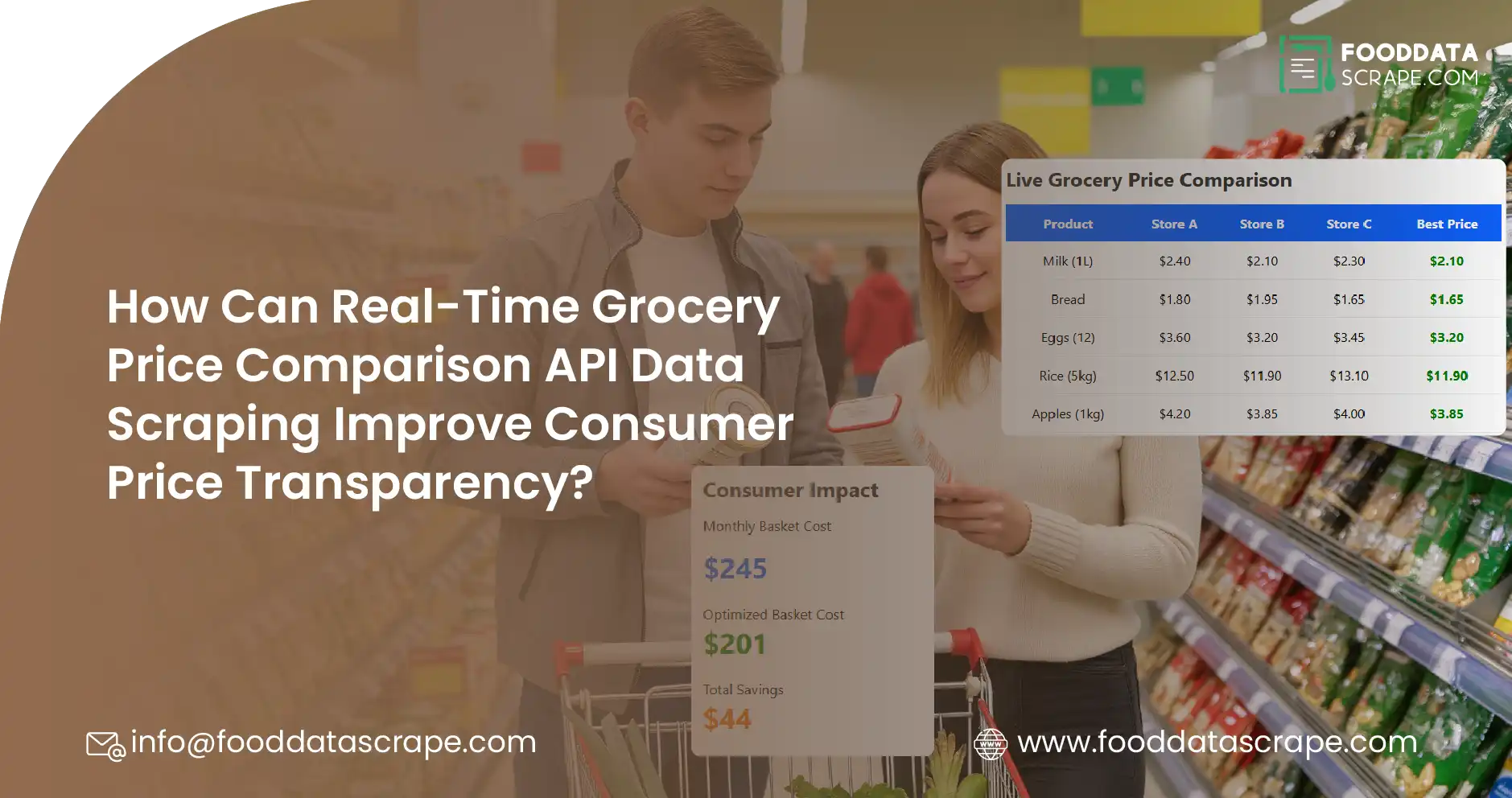
The grocery industry has undergone a major digital transformation over the past decade. Consumers now compare prices across multiple supermarkets, quick-commerce platforms, grocery delivery applications, and online marketplaces before making purchasing decisions. This shift has created a growing demand for Real-Time Grocery Price Comparison API Data Scraping, enabling businesses to collect, monitor, and analyze grocery prices from numerous retail sources simultaneously.
As competition intensifies among grocery retailers, data-driven pricing strategies have become essential for maintaining market share and profitability. Companies increasingly rely on Real-Time Grocery Price Comparison Data Scraping solutions to gather pricing insights from various supermarkets and delivery platforms. These solutions help retailers, brands, aggregators, and technology providers build powerful Grocery Price Comparison App Development platforms that empower consumers while generating valuable market intelligence.
The Growing Importance of Real-Time Grocery Price Comparison
Modern consumers expect transparency, convenience, and affordability. They often compare prices of groceries across multiple platforms before finalizing purchases. A product available at one retailer may be priced significantly differently at another due to promotions, discounts, stock availability, or regional pricing strategies.
Real-time price comparison systems bridge this gap by continuously collecting pricing information from multiple retailers. These systems provide instant visibility into product costs, helping shoppers identify the best deals and enabling businesses to understand market movements.
For retailers and grocery technology companies, price comparison data serves as a critical asset for decision-making. Access to accurate pricing information allows organizations to react quickly to competitor actions, optimize pricing strategies, and improve customer retention.
Understanding Grocery Price Comparison API Data Scraping
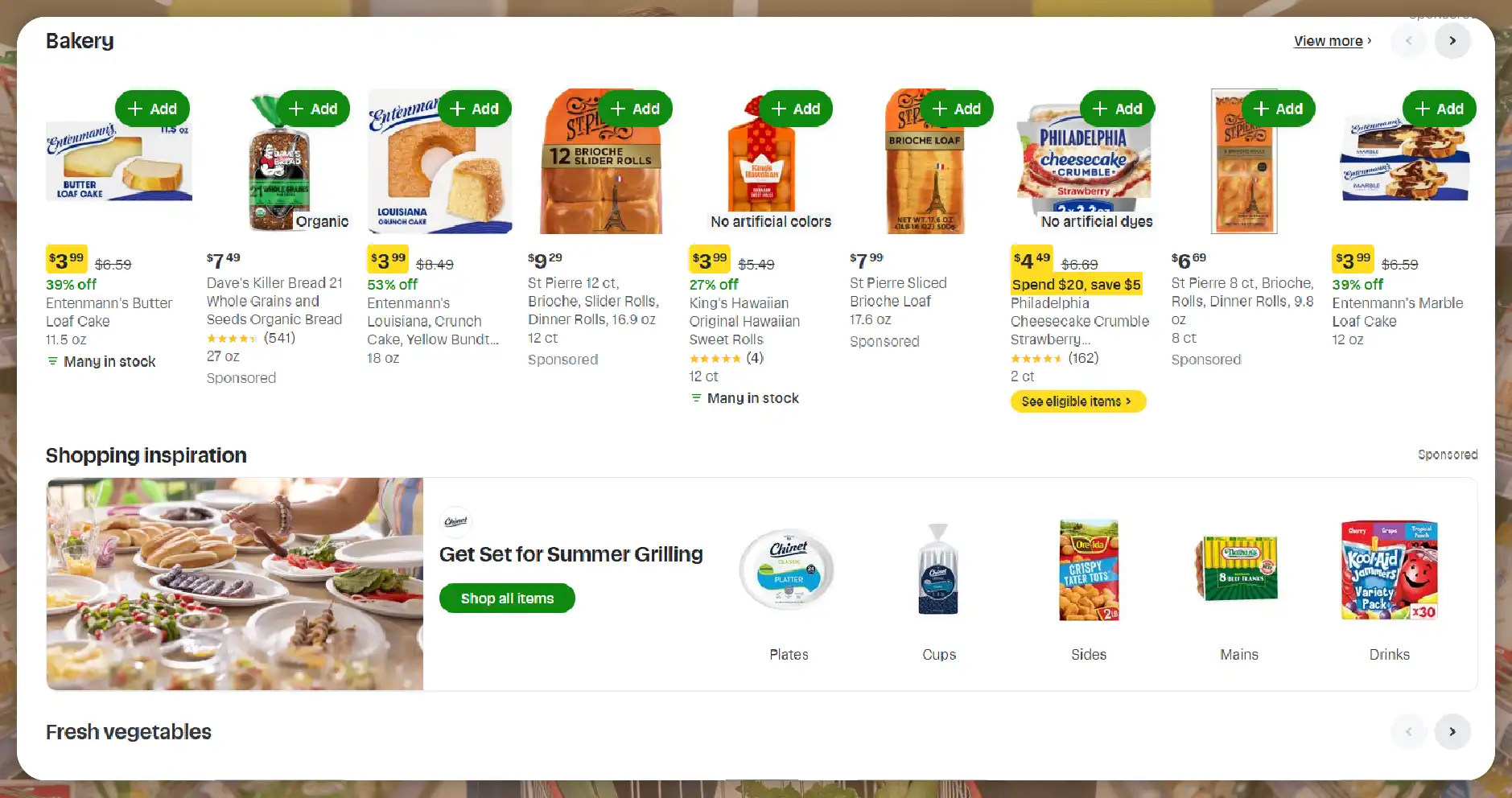
Grocery price comparison API data scraping involves collecting product information, prices, promotions, availability, and related details from multiple grocery websites, delivery platforms, and digital marketplaces.
The process typically includes:
- Product identification and matching
- Price collection across retailers
- Promotion and discount tracking
- Inventory availability monitoring
- Category-level price comparison
- Historical pricing analysis
These datasets are processed and standardized to provide actionable insights for retailers, brands, and consumers.
Unlike manual research, automated data collection ensures continuous monitoring of thousands of products across multiple platforms with minimal delay.
How Real-Time Grocery Price Comparison Systems Work?
A real-time grocery comparison solution gathers information from various retail channels at frequent intervals. The collected data is then cleaned, validated, and organized into structured databases.
The workflow generally involves collecting product listings, extracting pricing information, matching identical products across retailers, and presenting the results through APIs, dashboards, or applications.
This approach enables organizations to track market changes instantly and maintain accurate pricing intelligence across extensive product catalogs.
Building Competitive Advantage with Price Intelligence
Retailers operate in a highly competitive environment where even small pricing differences can influence consumer purchasing decisions.
Organizations use price comparison data to:
- Monitor competitor pricing strategies
- Detect promotional activities
- Identify pricing gaps
- Improve revenue optimization
- Enhance customer loyalty
Access to comprehensive pricing intelligence enables businesses to respond rapidly to changing market conditions and maintain a competitive edge.
The Role of APIs in Grocery Price Comparison
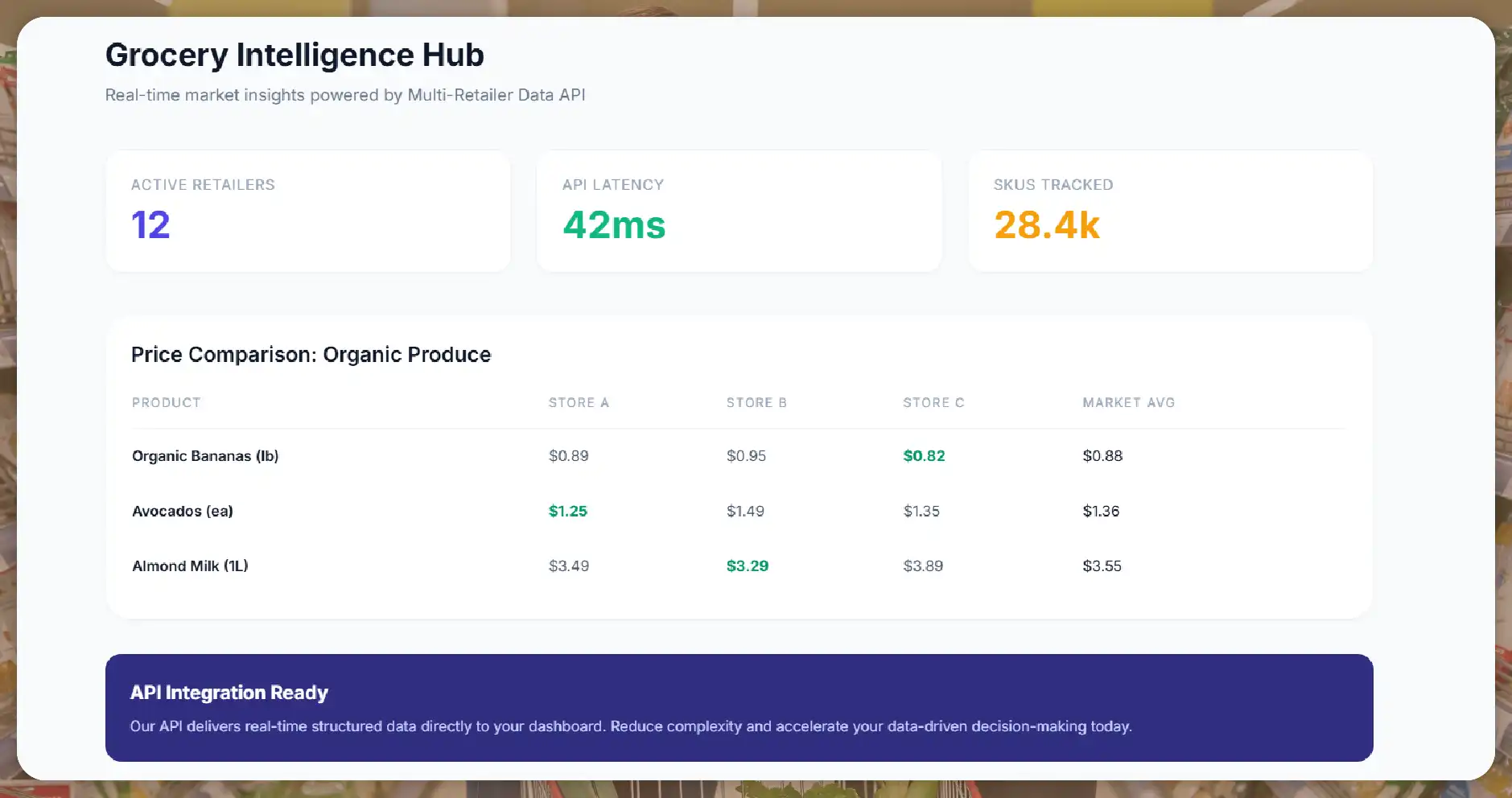
A robust Multi-Retailer Grocery Price Data Tracking API serves as the foundation for modern grocery intelligence platforms. APIs provide seamless access to structured pricing data collected from multiple sources.
These APIs allow developers, retailers, and analytics teams to integrate grocery pricing information directly into business systems, mobile applications, e-commerce platforms, and analytical dashboards.
By delivering real-time updates, APIs help organizations make faster decisions while reducing the complexity associated with large-scale data collection.
Enhancing Consumer Experiences Through Price Comparison Apps
Price comparison applications have become increasingly popular among budget-conscious consumers. These platforms provide instant access to product prices across multiple grocery stores.
A powerful Supermarket Price Comparison API supports these applications by delivering accurate pricing information in real time. Users can search for products, compare prices, review promotions, and identify the most cost-effective shopping options.
Such applications not only improve shopping experiences but also increase transparency within the grocery ecosystem.
Why Retailers Need Automated Monitoring Solutions?
The grocery market changes rapidly. Prices fluctuate due to supply chain disruptions, seasonal demand, inventory shortages, competitor actions, and promotional campaigns.
An Automated Grocery Price Monitoring System enables businesses to continuously track these changes without manual intervention.
Automated monitoring helps organizations:
- Detect sudden price fluctuations
- Track competitor promotions
- Monitor inventory trends
- Analyze category performance
- Improve pricing responsiveness
Continuous monitoring ensures businesses remain informed and prepared to act on emerging opportunities.
Supporting Strategic Decision-Making
Pricing data alone has limited value unless transformed into actionable intelligence. Retailers increasingly rely on Retail Grocery Market Intelligence to understand broader market dynamics.
Market intelligence combines pricing information with consumer behavior, availability data, promotional activities, and competitive analysis.
This integrated approach helps businesses identify market trends, forecast demand patterns, optimize product assortments, and improve strategic planning.
The Importance of Data Accuracy
Accurate product matching represents one of the most challenging aspects of grocery price comparison. Different retailers may use varying product names, package sizes, descriptions, and identifiers.
Advanced matching algorithms and validation techniques ensure comparable products are accurately aligned across retailers.
Reliable data quality directly influences the effectiveness of pricing strategies, competitive analysis, and consumer-facing applications.
Leveraging Web Scraping Technologies
Modern grocery intelligence solutions rely heavily on Web Scraping Grocery Data methodologies. These technologies automate the extraction of pricing and product information from retailer websites, delivery platforms, and online marketplaces.
Web scraping enables organizations to collect extensive datasets covering thousands of products across multiple locations and channels.
The resulting information provides valuable visibility into market trends, promotional activities, and competitive positioning.
Grocery Delivery Platforms and Data Collection
The rapid growth of grocery delivery services has expanded the need for comprehensive data collection solutions. Consumers increasingly purchase groceries through mobile apps and online delivery platforms.
A specialized Grocery Delivery Extraction API enables businesses to gather pricing, availability, delivery fees, promotions, and assortment data from these platforms.
This information supports pricing optimization, competitive benchmarking, and operational planning across digital grocery channels.
Historical Data and Predictive Analytics
Historical pricing datasets provide valuable context for understanding market behavior. By analyzing past trends, organizations can identify recurring patterns and forecast future pricing movements.
Predictive analytics models use historical data to estimate future demand, optimize promotional timing, and improve inventory planning.
When combined with real-time monitoring, historical intelligence creates a powerful framework for strategic decision-making.
Applications Across the Grocery Ecosystem
Real-time grocery price comparison data benefits multiple stakeholders throughout the industry.
Retailers use the data to optimize pricing and promotions. Brands monitor product positioning and competitive performance. Market research firms generate industry insights. Technology companies develop comparison platforms and analytics tools. Consumers gain access to transparent pricing information that helps them save money.
The versatility of grocery pricing data makes it one of the most valuable assets in modern retail analytics.
CTA: Unlock smarter retail decisions today with our advanced data scraping solutions—contact us now to transform grocery pricing intelligence into business growth.
Future Trends in Grocery Price Intelligence
The future of grocery pricing intelligence will be shaped by artificial intelligence, machine learning, predictive analytics, and advanced automation technologies.
Retailers will increasingly leverage real-time data to implement dynamic pricing strategies that respond instantly to market conditions. Personalized pricing recommendations, demand forecasting, and automated promotional optimization will become more sophisticated.
As digital grocery commerce continues to expand, organizations that invest in comprehensive data collection and intelligence platforms will gain significant competitive advantages.
How Food Data Scrape Can Help You?
1. Real-Time Pricing Intelligence
Our services deliver continuous grocery pricing updates across retailers, enabling accurate
comparisons and instant competitive decision-making for businesses.
2. Scalable Multi-Retailer Data Collection
We extract structured data from multiple grocery platforms efficiently, ensuring scalable
insights
for large catalogs and expanding retail ecosystems.
3. Automated Market Monitoring Systems
We build automated tracking solutions that monitor price fluctuations, promotions, and stock
changes across grocery stores without manual effort.
4. Advanced API Integration Support
Our scraping services power APIs that integrate seamlessly into applications, dashboards, and
analytics tools for real-time grocery intelligence access.
5. Actionable Retail Strategy Insights
We transform raw grocery data into meaningful insights, helping optimize pricing strategies,
improve positioning, and enhance overall retail performance.
Conclusion
Real-time grocery price comparison solutions have become essential tools for retailers, technology providers, brands, and consumers. By combining automated data collection, API integrations, competitive monitoring, and advanced analytics, businesses can gain unprecedented visibility into market dynamics.
Organizations leveraging a comprehensive Grocery Price Dashboard can transform raw pricing information into actionable business insights that drive profitability and improve customer experiences. As competition intensifies across online and offline grocery channels, the value of accurate pricing intelligence will continue to grow.
The future belongs to businesses that effectively utilize Grocery Price Tracking Dashboard solutions to monitor competitors, identify opportunities, and respond to market changes with speed and precision. Through advanced Grocery Data Intelligence, organizations can uncover meaningful trends, optimize pricing strategies, and enhance operational performance. Combined with structured Grocery Datasets, these capabilities provide the foundation for smarter decision-making and long-term success in the evolving grocery marketplace.
Are you in need of high-class scraping services? Food Data Scrape should be your first point of call. We are undoubtedly the best in Food Data Aggregator and Mobile Grocery App Scraping service and we render impeccable data insights and analytics for strategic decision-making. With a legacy of excellence as our backbone, we help companies become data-driven, fueling their development. Please take advantage of our tailored solutions that will add value to your business. Contact us today to unlock the value of your data.