Introduction
The food delivery industry has evolved into a highly competitive digital ecosystem where data plays a critical role in decision-making. Restaurants, aggregators, investors, and market research firms increasingly rely on platform intelligence to understand customer behavior, monitor pricing strategies, and identify emerging trends. Businesses looking to Scrape Deliveroo data in UK and Singapore can access valuable insights into restaurant operations, menu performance, customer preferences, and delivery market dynamics.
As one of the leading food delivery platforms, Deliveroo generates extensive data that can be transformed into actionable intelligence. Through comprehensive Deliveroo UK food delivery market analysis, organizations can evaluate competitive positioning, track restaurant growth, and understand regional demand patterns. Similarly, Deliveroo Singapore food delivery data scraping enables businesses to uncover consumer purchasing trends and assess market opportunities within one of Asia's most advanced food delivery environments.
The Growing Importance of Deliveroo Data
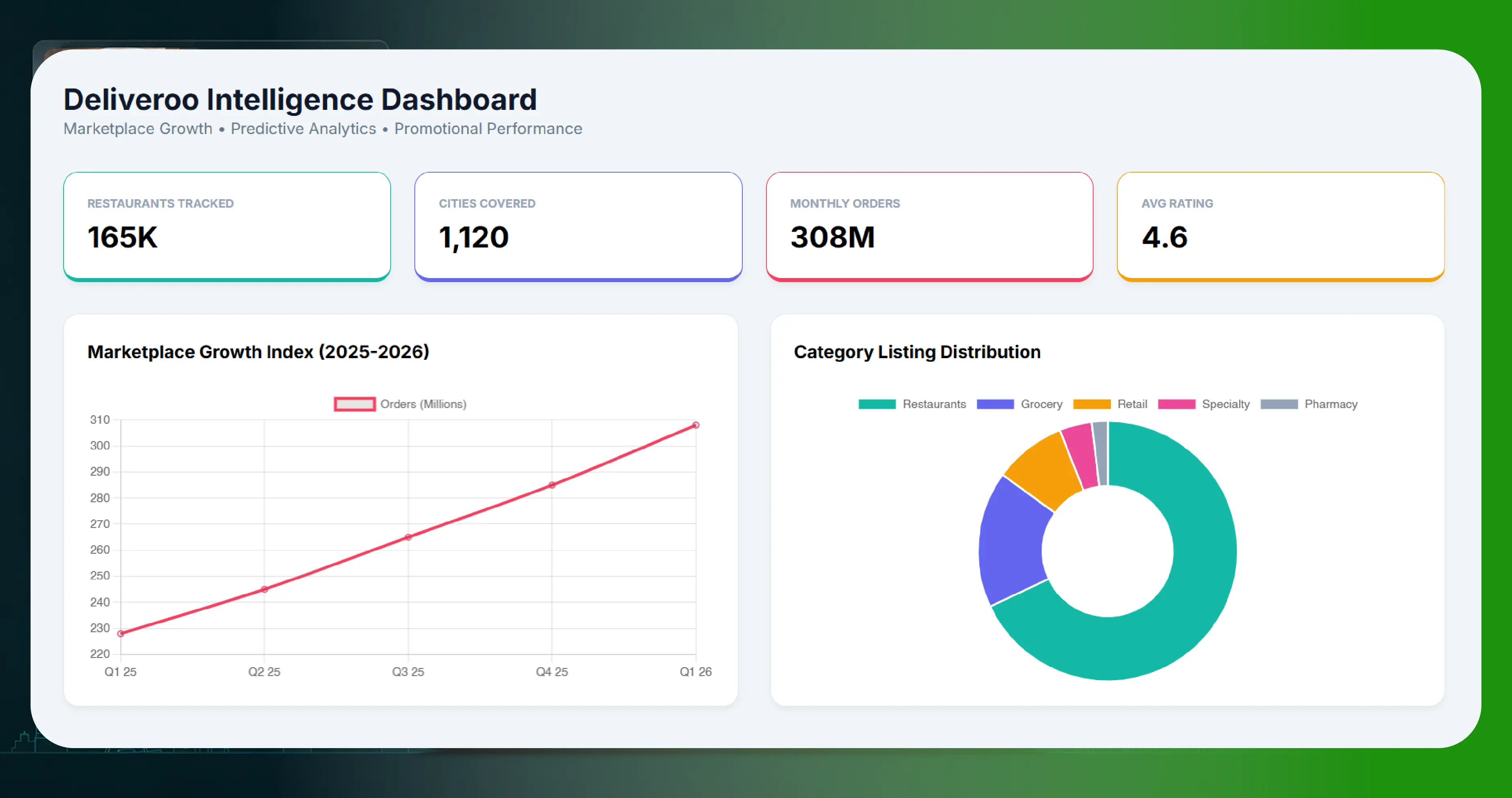
Food delivery platforms are no longer just ordering channels. They have become valuable sources of real-time market intelligence. Every restaurant listing, menu update, customer rating, and promotional campaign provides useful information that can support strategic business decisions.
Deliveroo operates across diverse urban markets, connecting consumers with restaurants, grocery stores, convenience retailers, and specialty food providers. This continuous flow of marketplace activity creates a rich dataset that can be analyzed to understand changing customer preferences and competitive behavior.
Businesses that collect and analyze Deliveroo data gain visibility into market trends that would otherwise remain hidden. This intelligence can support pricing optimization, menu planning, expansion strategies, and competitive benchmarking initiatives.
Understanding the UK and Singapore Food Delivery Markets
The United Kingdom and Singapore represent two highly developed but distinctly different food delivery ecosystems. While both markets have embraced digital ordering, customer expectations, purchasing behaviors, and operational models vary significantly.
In the UK, food delivery services cover a broad geographic area and include a mix of independent restaurants, regional chains, and national brands. Customers often compare prices across multiple delivery platforms and actively engage with promotional offers.
Singapore presents a different landscape. High urban density, shorter travel distances, and a tech-savvy population contribute to faster delivery operations and increased demand for convenience-focused services. Customers frequently prioritize speed, reliability, and premium dining experiences.
These differences make comparative market analysis extremely valuable. By conducting Deliveroo UK vs Singapore food delivery analytics, businesses can identify regional opportunities, benchmark performance, and better understand consumer expectations across international markets.
Key Data Points Available Through Deliveroo Scraping
A well-structured Deliveroo data extraction project can capture a wide range of valuable information. These datasets help businesses analyze market performance and generate actionable insights.
Some of the most commonly collected data points include restaurant names, cuisine categories, menu items, product descriptions, menu prices, delivery fees, ratings, reviews, delivery times, discount offers, promotional campaigns, and service availability.
When combined and analyzed, these data points create a comprehensive picture of marketplace activity. Organizations can use this information to evaluate customer demand, identify pricing trends, and monitor competitor strategies.
Building Competitive Intelligence Through Marketplace Data
Competition within the food delivery industry continues to intensify as restaurants compete for visibility and customer loyalty. Access to marketplace intelligence allows businesses to make more informed decisions and respond quickly to market changes.
Organizations often rely on food delivery market intelligence UK vs Singapore to compare restaurant performance, identify growing cuisine categories, and assess promotional effectiveness. This information helps operators understand which strategies are driving success and where improvements may be needed.
For restaurant chains operating across multiple markets, comparative intelligence can reveal regional differences in consumer behavior and highlight opportunities for menu localization or pricing adjustments.
Businesses can also monitor emerging brands, evaluate competitor offerings, and identify gaps in the marketplace that may support future growth initiatives.
Menu Monitoring and Pricing Analysis
Menu pricing remains one of the most influential factors affecting customer purchasing decisions. Restaurants frequently adjust prices based on ingredient costs, seasonal demand, competitive pressures, and operational expenses.
Implementing a Deliveroo menu price tracking system UK Singapore enables businesses to monitor pricing movements across thousands of menu items and locations. Continuous tracking helps organizations understand how competitors respond to market conditions and changing consumer demand.
Price intelligence can reveal valuable insights into premium pricing strategies, discount frequency, and regional cost differences. These findings support more effective pricing decisions and help businesses maintain competitiveness within rapidly evolving delivery markets.
Menu monitoring also allows organizations to track new product launches, seasonal offerings, and item removals, providing a clearer understanding of how restaurant brands adapt their menus over time.
Unlocking Cross-Market Business Opportunities
One of the greatest advantages of analyzing Deliveroo data is the ability to compare performance across international markets. Businesses seeking expansion opportunities can use marketplace intelligence to reduce uncertainty and improve strategic planning.
Access to Deliveroo cross market food delivery intelligence enables organizations to evaluate demand patterns, pricing structures, and customer preferences across different regions. This comparative approach provides valuable guidance when assessing new market entry opportunities.
For example, a restaurant concept performing well in Singapore may use UK marketplace data to determine whether similar consumer demand exists in British cities. Likewise, UK-based brands can study Singaporean market trends before launching operations in Southeast Asia.
Cross-market analysis helps businesses identify scalable concepts, improve forecasting accuracy, and allocate resources more effectively.
Deliveroo Data for Grocery and Convenience Retail
The role of Deliveroo has expanded beyond restaurant delivery. Grocery stores, convenience retailers, and specialty food providers increasingly use the platform to reach customers seeking fast and convenient shopping experiences.
This evolution has created new opportunities for retailers and manufacturers to analyze digital grocery trends. Grocery datasets can reveal pricing changes, product assortment strategies, inventory availability, and promotional activity across multiple locations.
Retailers can benchmark their offerings against competitors, while consumer goods brands can monitor product visibility and promotional performance. These insights contribute to stronger category management and more effective retail strategies.
As quick-commerce adoption continues to grow, grocery delivery data is becoming an increasingly valuable source of market intelligence.
Transform Deliveroo marketplace data into actionable business intelligence with our customized UK and Singapore data scraping solutions.
Benefits of Automated Deliveroo Data Collection
Manual collection of marketplace data is often time-consuming, inconsistent, and difficult to scale. Automated extraction solutions allow businesses to gather large volumes of information efficiently and accurately.
One of the primary advantages of Deliveroo Food Delivery App Data Scraping is the ability to monitor market changes in real time. Businesses can track competitor pricing, promotional campaigns, customer ratings, and menu updates without relying on manual research processes.
Automation also improves data consistency and enables organizations to integrate information into dashboards, analytics platforms, and business intelligence systems. This supports faster decision-making and provides continuous visibility into market performance.
Organizations that leverage automated data collection often gain a significant competitive advantage by identifying trends and opportunities before their competitors.
How Businesses Use Deliveroo Datasets?
Deliveroo datasets support a wide range of business applications across multiple industries. Restaurant groups use marketplace data to optimize pricing, evaluate menu performance, and benchmark competitors. Investors analyze platform activity to assess growth opportunities and market potential.
Market research firms utilize Deliveroo Food Dataset from Uk sources to study consumer behavior, identify emerging food trends, and produce industry reports. Retailers use grocery delivery data to monitor assortment strategies and understand changing purchasing patterns.
The flexibility of Deliveroo datasets makes them valuable for strategic planning, competitive analysis, revenue optimization, and long-term business forecasting.
How Food Data Scrape Can Help You?
1. Real-Time Menu & Pricing Intelligence
Our data scraping services collect restaurant menus, pricing updates, delivery charges, and
promotional offers from Deliveroo, helping businesses monitor market changes, identify pricing
trends, and respond quickly to competitor activities.
2. Comprehensive Competitor Monitoring
We continuously track restaurant listings, customer ratings, discounts, and menu modifications
across Deliveroo markets, enabling businesses to benchmark competitors, evaluate performance,
and uncover new opportunities for strategic growth.
3. Multi-Market Data Collection
Our solutions gather structured Deliveroo datasets from both UK and Singapore markets, providing
valuable cross-market insights that support expansion planning, customer behavior analysis, and
localized business strategies.
4. Customized Data Delivery
We provide data in customized formats including CSV, JSON, Excel, APIs, and cloud integrations,
ensuring seamless compatibility with your analytics platforms, dashboards, business intelligence
tools, and reporting systems.
5. Scalable & Automated Data Extraction
Our automated scraping infrastructure captures large-scale Deliveroo data efficiently and
accurately, delivering regularly updated datasets that help organizations make data-driven
decisions while reducing manual research efforts.
Conclusion
Deliveroo data has become an essential resource for organizations seeking deeper insights into the food delivery and grocery delivery industries. By analyzing restaurant listings, menu pricing, promotional campaigns, customer ratings, and delivery performance, businesses can make more informed decisions and strengthen their competitive positioning.
Companies utilizing a Deliveroo Grocery Dataset From Singapore can gain valuable visibility into grocery pricing trends, product availability, and consumer demand patterns within a rapidly growing quick-commerce environment. Organizations that Scrape Deliveroo Food Delivery Data can uncover actionable insights related to customer preferences, market trends, and competitive dynamics. Similarly, businesses that Scrape Deliveroo Restaurant Data can build powerful intelligence frameworks that support expansion strategies, pricing optimization, and long-term growth across both the UK and Singapore markets.
As competition continues to increase within digital food delivery ecosystems, data-driven decision-making will remain a critical factor for sustainable success.
Are you in need of high-class scraping services? Food Data Scrape should be your first point of call. We are undoubtedly the best in Food Data Aggregator and Mobile Grocery App Scraping service and we render impeccable data insights and analytics for strategic decision-making. With a legacy of excellence as our backbone, we help companies become data-driven, fueling their development. Please take advantage of our tailored solutions that will add value to your business. Contact us today to unlock the value of your data.