Introduction
The retail industry is entering a new era where consumer preferences evolve daily, digital shopping behaviors generate billions of data points, and purchasing decisions are increasingly influenced by real-time trends rather than historical sales reports. Brands that rely solely on traditional point-of-sale data often discover demand shifts after competitors have already capitalized on emerging opportunities. Modern retailers, CPG companies, and category managers now require continuous intelligence that combines consumer intent, shopping occasions, pricing dynamics, and product interactions into actionable insights.
AI Retail Customer Analytics Data Extraction enables organizations to collect and interpret behavioral signals from multiple digital sources before those signals become visible in conventional retail reports. Likewise, businesses that Scrape AI Retail Customer Analytics Data can uncover evolving customer preferences, basket patterns, and regional buying habits with remarkable speed. AI Retail Customer Analytics transforms these massive datasets into predictive intelligence, helping retailers improve merchandising strategies, optimize inventory, personalize marketing campaigns, and strengthen category leadership in increasingly competitive markets.
Why Modern Categories Need AI-Powered Analytics?
Traditional retail reporting was designed for historical performance analysis. Weekly POS reports, quarterly market research, and annual shopper studies provided valuable insights when consumer behavior changed gradually. Today's omnichannel environment moves significantly faster.
Consumers discover products through social media, online reviews, influencer recommendations, food blogs, recipe platforms, and eCommerce marketplaces long before purchases appear in syndicated retail reports. AI-powered analytics continuously analyzes these digital signals to detect demand acceleration, changing preferences, and emerging purchase motivations.
Rather than asking what customers purchased last month, AI asks why customers are changing their purchasing behavior today. This distinction allows category managers to anticipate future growth instead of merely reporting historical performance.
Understanding Consumer Motivation Beyond Sales Numbers
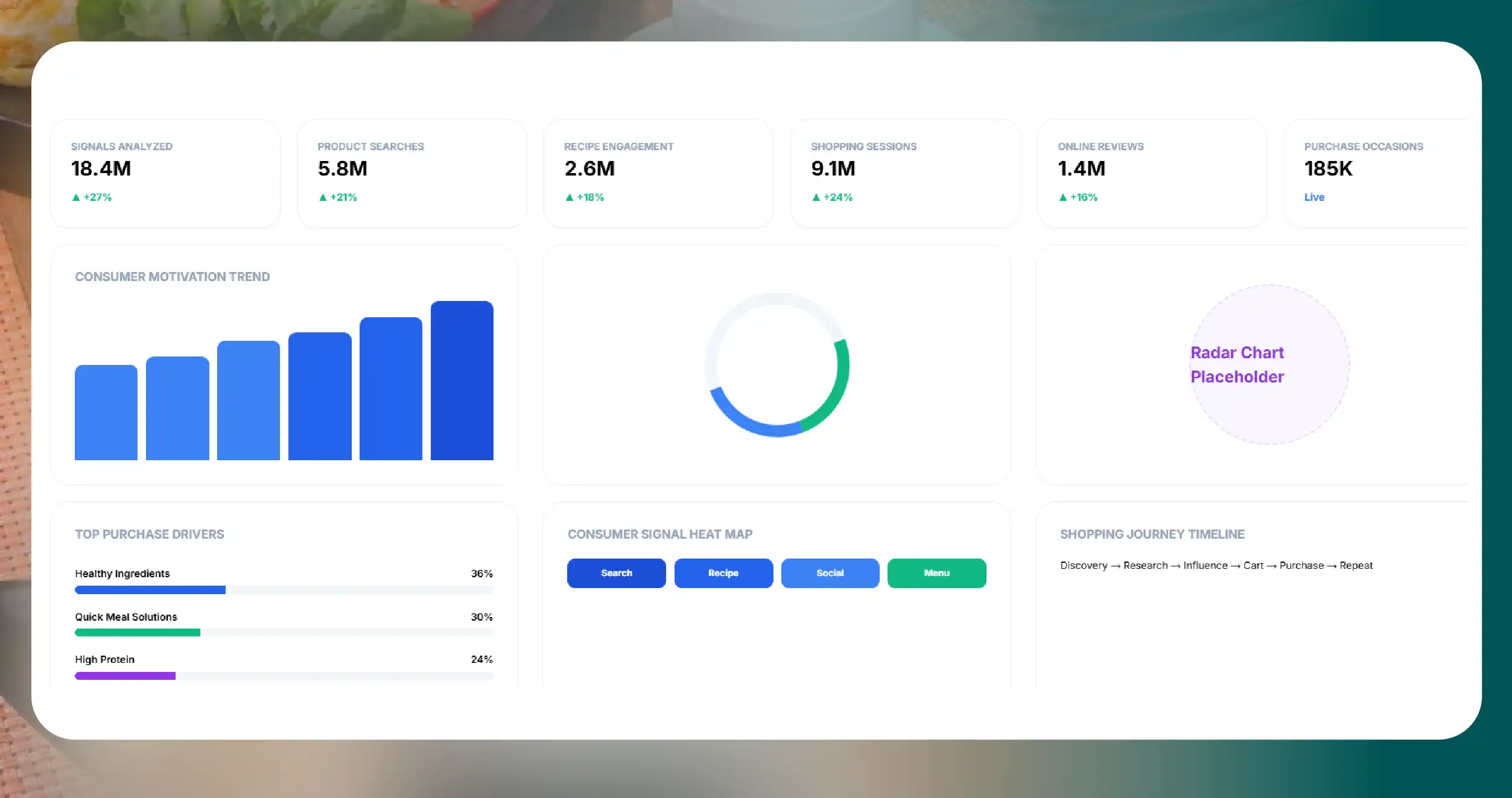
Sales data explains which products generated revenue. It rarely explains the underlying motivation behind those purchases.
Artificial intelligence connects multiple consumer signals including product searches, recipe engagement, social conversations, menu trends, shopping frequency, basket composition, online ratings, and purchase occasions. Together these indicators reveal the emotional and functional drivers influencing buying decisions.
Understanding consumer motivation enables brands to build stronger category narratives, improve product positioning, and identify underserved market opportunities before competitors respond.
1. Basket Affinity Analysis Improves Cross-Category Growth
One of the most valuable capabilities of AI retail customer analytics is identifying products that consumers frequently purchase together.
Basket affinity analysis uncovers relationships between complementary products across multiple retail channels. Rather than evaluating products individually, AI studies complete shopping journeys to understand how consumers assemble their purchases.
For example, premium pasta sauces may consistently appear alongside artisan pasta, imported cheese, fresh herbs, and specialty olive oils. These insights help retailers create effective cross-merchandising strategies while enabling brands to demonstrate incremental basket value.
Instead of competing solely for shelf space, brands become category growth partners capable of increasing average transaction values through strategic product placement.
2. Real-Time Occasion Tracking Predicts Demand Changes
Consumer purchasing decisions vary significantly depending on the occasion.
Breakfast, weekday dinners, family celebrations, holiday gatherings, fitness routines, and seasonal events all influence shopping behavior. AI continuously monitors these shifting consumption occasions across multiple data sources.
Unlike traditional seasonal reports that arrive months after trends develop, AI detects changes almost immediately. Retailers can recognize when consumers begin using products in entirely new situations, allowing faster merchandising adjustments and inventory planning.
This capability supports stronger promotional campaigns while helping retailers anticipate future demand with greater accuracy.
Retail Market Intelligence becomes significantly more valuable when occasion-based insights are integrated with purchasing behavior, allowing retailers to understand not only demand but also the context driving consumer decisions.
3. Flavor Trend Prediction Accelerates Innovation
Food and beverage categories evolve rapidly as consumer tastes continuously change.
Artificial intelligence analyzes restaurant menus, recipe platforms, digital conversations, grocery searches, culinary publications, and online engagement to identify flavor trends before they reach mainstream retail.
Rather than relying on annual consumer surveys, manufacturers can monitor flavor momentum as it develops. Emerging combinations such as spicy-sweet profiles, functional ingredients, global cuisines, or plant-based innovations often gain digital popularity months before retail sales increase.
This predictive capability allows product development teams to launch innovations earlier while giving category managers stronger evidence during buyer presentations.
Innovation becomes proactive instead of reactive.
4. AI Diagnoses Hidden Category Gaps
Poor category performance is not always caused by pricing or promotions.
Many categories underperform because they fail to satisfy evolving consumer needs. Artificial intelligence identifies unmet demand by comparing existing product offerings with changing shopper preferences.
Instead of assuming declining sales indicate price sensitivity, AI determines whether consumers seek healthier ingredients, greater convenience, sustainability, premium quality, functional benefits, or entirely new product experiences.
These insights allow retailers to redesign assortments based on genuine consumer demand rather than relying on assumptions.
Retail Customer Behavior Analytics enables businesses to understand evolving motivations, helping category managers develop assortments that better reflect changing consumer expectations across regional markets.
5. Defending Against Private Label Competition
Private-label products continue gaining market share across grocery, household, and consumer packaged goods categories.
However, private labels rarely succeed through pricing alone. They gain momentum when branded manufacturers fail to establish meaningful differentiation.
AI analyzes consumer motivations, brand loyalty indicators, sentiment trends, and purchase drivers to identify areas where branded products maintain competitive advantages.
If consumers consistently value product quality, ingredient transparency, trusted sourcing, nutritional benefits, or premium experiences, branded manufacturers can reinforce these attributes before private-label alternatives gain traction.
Retailers also benefit by understanding which product attributes generate genuine customer loyalty instead of temporary promotional purchases.
6. Discovering Emerging Ingredient Pairings
Ingredient relationships frequently reveal future product innovation opportunities.
Artificial intelligence monitors recipe databases, restaurant menus, cooking platforms, grocery searches, culinary influencers, and social conversations to identify ingredient combinations gaining popularity.
These emerging pairings often indicate broader shifts in consumer preferences.
Manufacturers can leverage these insights when developing new formulations, packaging claims, promotional campaigns, and product launches.
Rather than following established market trends, organizations gain the opportunity to participate during the earliest stages of consumer adoption.
AI Retail Trend Monitoring continuously evaluates thousands of evolving ingredient combinations, allowing innovation teams to identify commercially viable concepts before market saturation occurs.
7. Cross-Category Merchandising Creates New Revenue Opportunities
Traditional retail categories often restrict merchandising decisions.
Consumers, however, think differently.
Artificial intelligence studies shopping behavior across complete purchasing journeys rather than isolated departments. Products from entirely different categories frequently share strong consumer relationships.
For instance, healthy snacks may consistently appear alongside fitness supplements, flavored water, and protein products. Premium sauces may pair naturally with grilling accessories and specialty beverages.
These insights create new merchandising opportunities beyond conventional shelf layouts.
Retailers can introduce secondary product placements, improve impulse purchases, and maximize available shelf space while increasing overall category profitability.
Retail Demand Analytics further strengthens these merchandising decisions by quantifying consumer demand across locations, demographics, and purchasing occasions, allowing retailers to prioritize the highest-value cross-category opportunities.
Building Buyer-Ready Category Stories
Retail buyers increasingly expect evidence-supported recommendations rather than generic product presentations.
Artificial intelligence enables category teams to build comprehensive narratives supported by consumer motivations, purchase occasions, regional demand variations, flavor trends, pricing intelligence, and shopping behaviors.
Instead of presenting historical sales charts, brands can explain why consumer demand is changing, how competitors are responding, and where future category growth will emerge.
This shift transforms supplier conversations from product selling into collaborative category planning.
Retailers appreciate suppliers capable of improving total category performance rather than simply promoting individual products.
Transform your retail strategy with our advanced data scraping services—contact us today to unlock real-time market intelligence and gain a lasting competitive advantage.
Regional Intelligence Strengthens Distribution Strategies
National averages rarely reflect local market realities.
Consumer preferences vary significantly across metropolitan areas, demographics, retailer formats, income levels, and regional cultures.
Artificial intelligence segments consumer demand geographically, allowing retailers to tailor assortment decisions according to localized purchasing behavior.
Regional demand intelligence minimizes inventory inefficiencies while improving distribution planning and promotional effectiveness.
Localized analytics also help identify where premium products, value offerings, private labels, or innovative launches are most likely to succeed.
These regional insights significantly improve buyer confidence during assortment planning and shelf allocation discussions.
The Future of AI Retail Analytics
The future of retail category management will increasingly rely on continuous intelligence rather than periodic reporting.
Artificial intelligence will integrate loyalty programs, digital commerce, pricing intelligence, inventory systems, customer feedback, social engagement, and behavioral analytics into unified decision-making platforms.
Retailers will adjust merchandising strategies dynamically based on changing consumer demand rather than waiting for quarterly reviews.
Predictive analytics will support automated assortment optimization, localized promotions, personalized recommendations, and faster product innovation.
Organizations investing in AI-powered retail analytics today will establish stronger competitive positions as category management becomes increasingly data-driven.
How Food Data Scrape Can Help You?
1. Real-Time Retail Data Collection
Our data scraping services continuously collect pricing, promotions, product availability, customer reviews, and assortment changes from multiple retail platforms, providing businesses with timely intelligence for faster, data-driven category and merchandising decisions.
2. Competitive Market Monitoring
We monitor competitor catalogs, pricing strategies, discounts, new product launches, and assortment updates across leading retailers, helping businesses respond quickly to market changes and maintain a strong competitive advantage.
3. Consumer Behavior Intelligence
Our solutions gather customer ratings, reviews, search trends, and purchasing signals, enabling organizations to better understand shopper preferences, improve product positioning, and develop highly targeted marketing strategies.
4. Demand Forecasting Support
By extracting historical and real-time retail data, we help businesses identify emerging demand patterns, forecast inventory requirements, optimize product assortments, and reduce stock shortages across multiple retail channels.
5. Custom Data Delivery Solutions
We deliver clean, structured retail datasets through APIs, CSV, JSON, Excel, or cloud integrations, ensuring seamless compatibility with analytics platforms, BI dashboards, machine learning models, and enterprise reporting systems.
Conclusion
Modern retail success depends on understanding consumers before purchasing behavior fully appears in traditional reporting systems. AI-powered analytics enables retailers, manufacturers, and category managers to anticipate demand, optimize assortments, improve merchandising, and strengthen buyer relationships using real-time behavioral intelligence. By integrating AI Grocery Intelligence, businesses can uncover emerging product opportunities and make faster, data-driven merchandising decisions that align with evolving consumer preferences.
Leveraging Reviews & AI Sentiment allows brands to understand customer opinions, identify product strengths and weaknesses, and enhance marketing strategies with actionable consumer feedback. Comprehensive Grocery Datasets provide the foundation for accurate demand forecasting, assortment planning, competitive benchmarking, and long-term category growth in an increasingly dynamic retail marketplace.
Are you in need of high-class scraping services? Food Data Scrape should be your first point of call. We are undoubtedly the best in Food Data Aggregator and Mobile Grocery App Scraping service and we render impeccable data insights and analytics for strategic decision-making. With a legacy of excellence as our backbone, we help companies become data-driven, fueling their development. Please take advantage of our tailored solutions that will add value to your business. Contact us today to unlock the value of your data.