The Client
The client was an established dairy-ingredients manufacturer supplying commercial dairy products and specialized ingredients to bakeries, confectionery businesses, food manufacturers, and institutional customers. Its product portfolio included milk powders, cream, butter, cheese, and other dairy-based ingredients used in professional food preparation.
The company wanted to strengthen its distribution network by identifying bakeries operating across different Indian cities. However, its existing customer database did not provide sufficient geographical coverage or detailed information about independent bakery outlets. The management required reliable Bakery Ingredient Demand Analysis to understand where commercial bakery businesses were concentrated and which markets offered better opportunities for expansion.
The client commissioned 66000+ Bakery Listings Data Extraction from Zomato and Swiggy to develop a structured outlet database. It also required Bakery Sales Territory Mapping Data to evaluate city-wise coverage, identify underserved locations, prioritize prospective accounts, and help regional sales teams approach relevant bakery businesses with suitable dairy-ingredient solutions.
Key Challenges
-
Identifying Bakery Businesses Across Multiple Markets
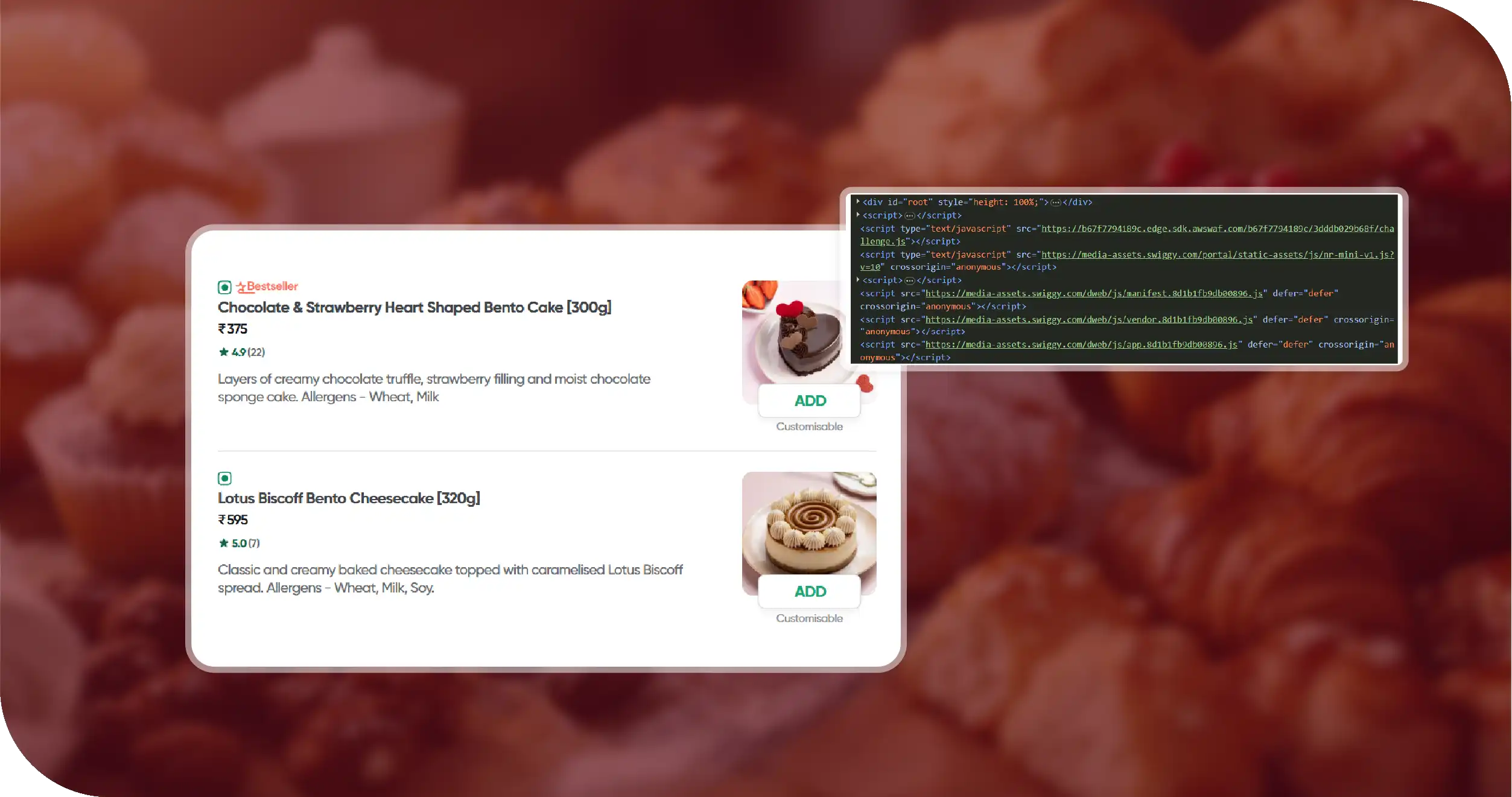
The client lacked a consolidated database of bakery outlets across different cities. Identifying relevant businesses required collecting platform listings, distinguishing dedicated bakeries from unrelated food establishments, and organizing business information to Extract Bakery Competitor Location Data for accurate geographical assessment and prospective customer identification. -
Limited Visibility into Adjacent Food Categories
Understanding bakery demand also required examining related food businesses and beverage offerings. The client had limited access to structured category-level information. Beverage Data Scraping became relevant for identifying complementary commercial opportunities, understanding menu offerings, and recognizing businesses with broader ingredient procurement requirements. -
Inconsistent Listing Information and Market Coverage
Zomato and Swiggy displayed different business names, addresses, categories, and menu details. Duplicate listings and incomplete records created additional difficulties. Building a reliable Beverage Dataset alongside bakery information required standardization, cross-platform comparison, and systematic validation before the client could use the information.
Key Solutions
-
Multi-Platform Bakery Listing Extraction
Food Data Scrape collected bakery business listings from Zomato and Swiggy across selected Indian markets. We captured business names, addresses, city information, categories, ratings, and available contact information. This consolidated dataset provided the client with structured outlet intelligence for identifying prospective commercial bakery customers. -
Geographical Classification and Territory Mapping
We organized extracted listings according to cities, localities, postal codes, and geographical clusters wherever available. The structured information helped the client identify bakery concentrations, compare market coverage, recognize underserved territories, and prioritize locations where regional sales representatives could focus their customer acquisition activities. -
Data Cleaning and Business Intelligence Delivery
Our team standardized business names, classified bakery categories, checked duplicate records, and consolidated information collected from both platforms. We delivered an organized dataset with supporting analytical fields, enabling the client to evaluate outlet distribution, identify prospective accounts, and develop targeted dairy-ingredient sales strategies.
Bakery Listing Extraction Dataset
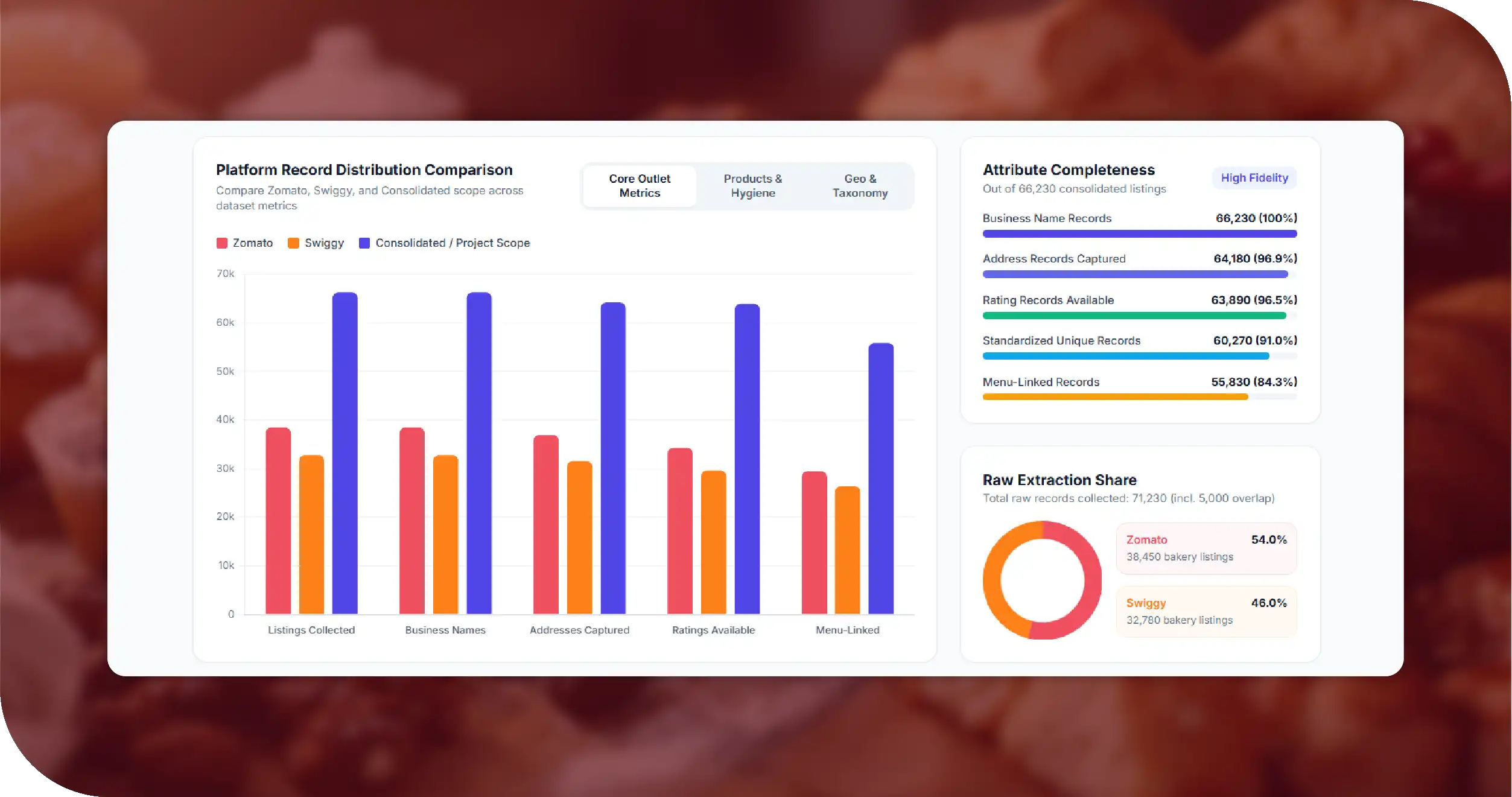
The following table represents project-level distribution of the 66,000+ bakery listings collected and categorized for market assessment. Figures demonstrate the dataset structure and should not be interpreted as independently verified platform statistics.
| Data Parameters | Zomato | Swiggy | Consolidated / Project Scope |
|---|---|---|---|
| Bakery listings collected | 38,450 | 32,780 | 66,230 |
| Major city markets covered | 42 | 39 | 50 |
| Locality records captured | 8,640 | 7,920 | 11,850 |
| Bakery categories identified | 18 | 16 | 21 |
| Business name records | 38,450 | 32,780 | 66,230 |
| Address records captured | 36,920 | 31,540 | 64,180 |
| Rating records available | 34,280 | 29,610 | 63,890 |
| Menu-linked records | 29,450 | 26,380 | 55,830 |
| Product and offering records | 184,500 | 157,600 | 342,100 |
| Duplicate records flagged | 3,120 | 2,840 | 5,960 |
| Standardized records | 35,330 | 29,940 | 60,270 |
| Geographic classification fields | 6 | 6 | 8 |
| Final structured dataset records | — | — | 66,230 |
Note: Categories can overlap because a single business may appear across both platforms and contain multiple listing attributes. Record counts therefore should not be added together to calculate unique outlets. Actual coverage, collection frequency, and completeness depend on source accessibility and project scope.
Methodologies We Used
-
Platform-Based Data Collection
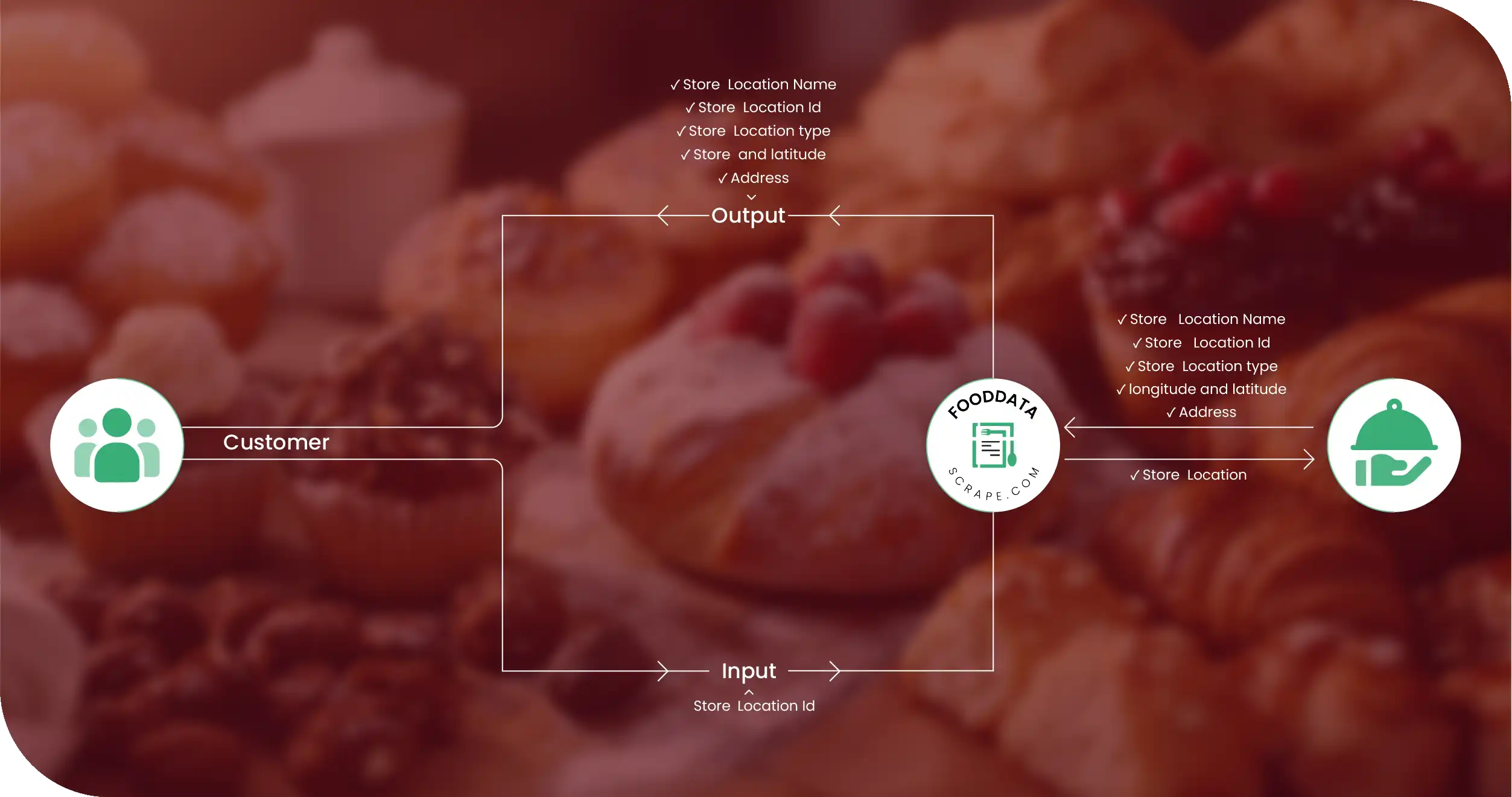
We identified relevant bakery categories and extracted publicly available business listing information from Zomato and Swiggy. The collection process focused on capturing consistent business attributes across selected markets while maintaining a structured approach to platform-specific differences and listing variations. -
Category Identification and Classification
Our team classified businesses according to bakery-related categories, including cake shops, dessert outlets, confectionery stores, pastry shops, and specialized bakeries. This classification helped distinguish relevant commercial prospects and enabled the client to understand the distribution of different bakery business types. -
Geographical Data Segmentation
We organized the collected records by city, locality, and postal code wherever available. Geographical segmentation helped identify high-density bakery clusters, compare regional distribution patterns, and create a structured foundation for sales territory planning and location-based customer acquisition. -
Data Deduplication and Standardization
We standardized business names, addresses, category labels, and other available attributes across both platforms. Potential duplicate records were flagged through matching parameters and consistency checks, helping reduce unnecessary repetition and improve the usability of the consolidated bakery outlet database. -
Dataset Validation and Delivery
We conducted structured checks to identify incomplete fields, inconsistent classifications, and formatting issues. After validation, the information was organized into a client-ready dataset with standardized columns, allowing business development, marketing, and sales teams to access relevant bakery intelligence efficiently.
Advantages of Collecting Data Using Food Data Scrape
-
Improved Market Visibility
Structured bakery outlet intelligence helps manufacturers understand where prospective customers operate and how businesses are distributed across different markets. Food Data Scrape enables companies to move beyond fragmented information and evaluate market opportunities using consolidated, location-oriented business datasets. -
More Effective Sales Territory Planning
Organized outlet information helps sales managers identify bakery clusters and evaluate geographical coverage. By understanding business concentrations, companies can allocate sales resources more effectively, prioritize promising localities, and establish territory-based customer acquisition strategies supported by measurable market intelligence. -
Better Customer Prospect Identification
Detailed bakery listings provide useful information for identifying potential commercial customers. Manufacturers can classify businesses according to location, category, and available business attributes, helping their sales teams develop relevant prospect lists and approach bakery operators with appropriate ingredient offerings. -
Cross-Platform Competitive Intelligence
Combining information from Zomato and Swiggy provides a broader view of businesses appearing across food delivery platforms. Food Data Scrape helps organizations compare listing visibility, category representation, and geographical presence to develop more informed market assessments and competitive positioning strategies. -
Scalable Business Intelligence Infrastructure
A structured dataset creates a reusable foundation for market monitoring, customer segmentation, and distribution planning. Manufacturers can periodically refresh relevant information, integrate datasets into internal analytics systems, and support expansion decisions with organized business intelligence rather than relying exclusively on manual research.
Client's Testimonial
"Food Data Scrape helped us approach bakery market expansion with a much clearer understanding of outlet distribution across Indian cities. Earlier, our teams depended on fragmented information and individual market research to identify potential bakery customers. The consolidated Zomato and Swiggy dataset provided valuable visibility into business locations, categories, and geographical concentrations. We particularly appreciated the structured classification and organization of the information, which made it easier for our sales and distribution teams to evaluate potential territories. The project has given us a useful foundation for improving customer prospecting, identifying underserved markets, and planning our dairy-ingredient distribution strategy more systematically. We look forward to exploring further data intelligence opportunities."
—Head of Sales and Distribution
Final Outcome
The project delivered a consolidated database of 66,230 bakery listings collected from Zomato and Swiggy, providing the dairy-ingredients manufacturer with a broader understanding of bakery business distribution across selected Indian markets. The structured dataset supported geographical segmentation, business classification, and prospective customer identification.
By analyzing bakery concentrations and available business information, the client gained a stronger foundation for prioritizing sales territories and evaluating potential distribution opportunities. The dataset also supported Ingredient Insights by helping the company understand the types of commercial food businesses operating across different locations.
Additionally, the broader analytical framework created opportunities to Scrape Non-Alcoholic Beverage Trends and explore adjacent foodservice categories for future market intelligence initiatives. Overall, Food Data Scrape transformed fragmented platform information into actionable business intelligence, helping the client improve market visibility, organize prospecting activities, and develop a more systematic approach to bakery-focused dairy-ingredient distribution.