The Client
The client is a retail analytics and market intelligence company focused on helping grocery brands, distributors, and retailers make data-driven decisions across Belgium’s competitive supermarket sector. The organization required a scalable solution to monitor product pricing, inventory fluctuations, promotions, and assortment changes across major grocery chains.
Through Belgium Grocery Pricing Data Scraping, the client gained access to real-time price movements and promotional trends, enabling accurate competitor benchmarking and pricing optimization. Their objective was to create a centralized database that could support category management, revenue forecasting, and strategic planning.
The project also involved Grocery SKU & Barcode Data Scraping from Colruyt, allowing the client to capture detailed product attributes, barcode information, package sizes, brand details, and stock availability across thousands of grocery items.
By leveraging Belgium Grocery Market Intelligence, the client transformed raw supermarket data into actionable insights, helping stakeholders identify emerging trends, improve assortment strategies, optimize pricing decisions, and strengthen their position within Belgium’s evolving grocery retail landscape.
Key Challenges
-
Managing Large SKU and Barcode Volumes
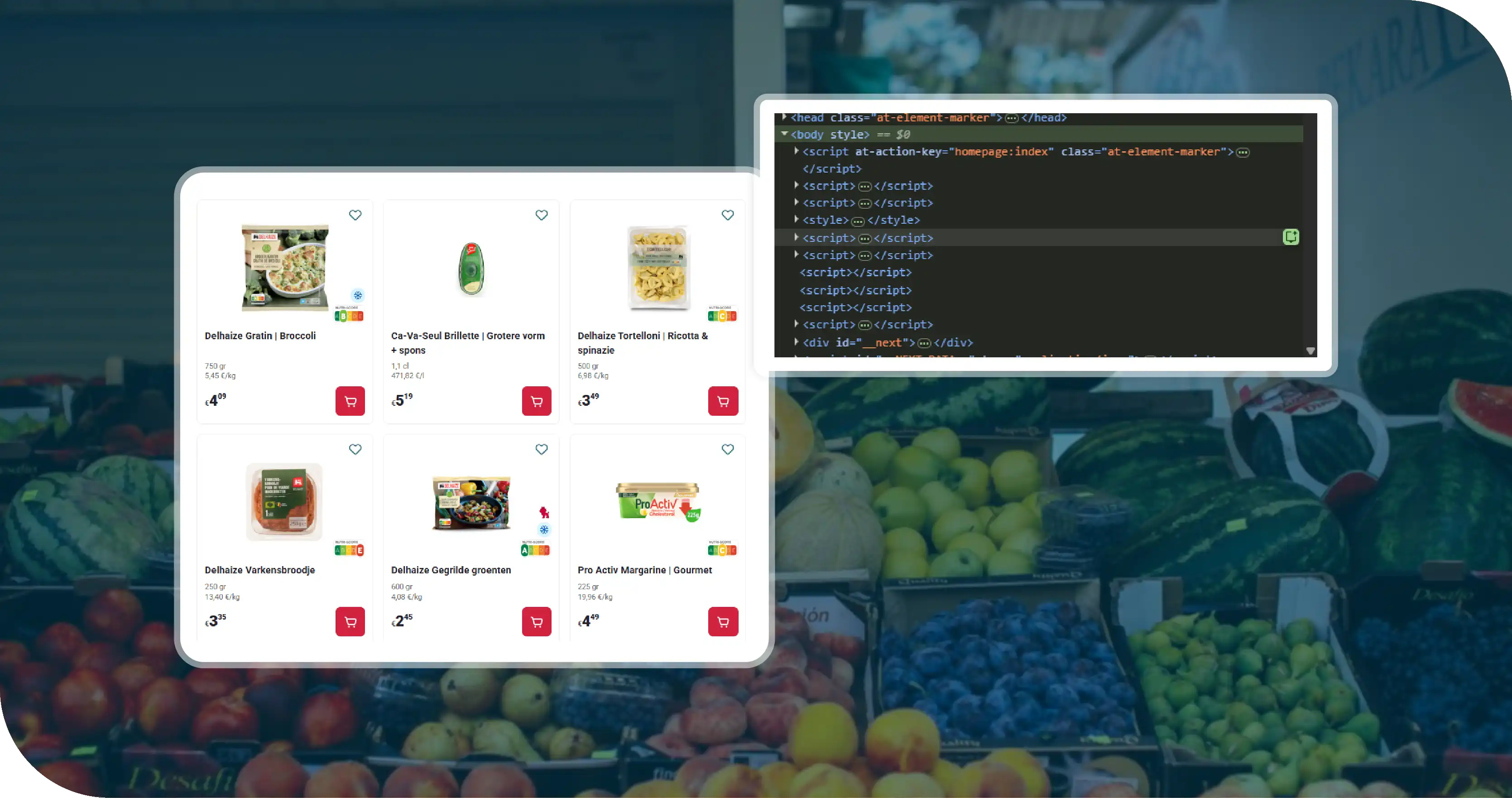
The client struggled to collect and maintain accurate product records across thousands of grocery items. Frequent catalog updates, missing identifiers, and inconsistent product attributes made Grocery SKU and Barcode Data Extraction challenging, limiting visibility into product availability, assortment changes, and category performance. -
Tracking Dynamic Pricing and Promotions
Rapid price fluctuations, promotional campaigns, and regional product variations created difficulties in obtaining reliable market data. The client required scalable Web Scraping Grocery Data solutions to monitor competitor pricing, discounts, stock changes, and promotional strategies without delays or data inconsistencies. -
Consolidating Multi-Source Grocery Data
Data was spread across multiple supermarket websites and grocery delivery platforms, making analysis complex and time-consuming. The absence of a unified Grocery Delivery Extraction API prevented efficient aggregation of inventory, pricing, and product information, reducing the effectiveness of market intelligence and decision-making processes.
Key Solutions
-
Automated Multi-Source Data Collection
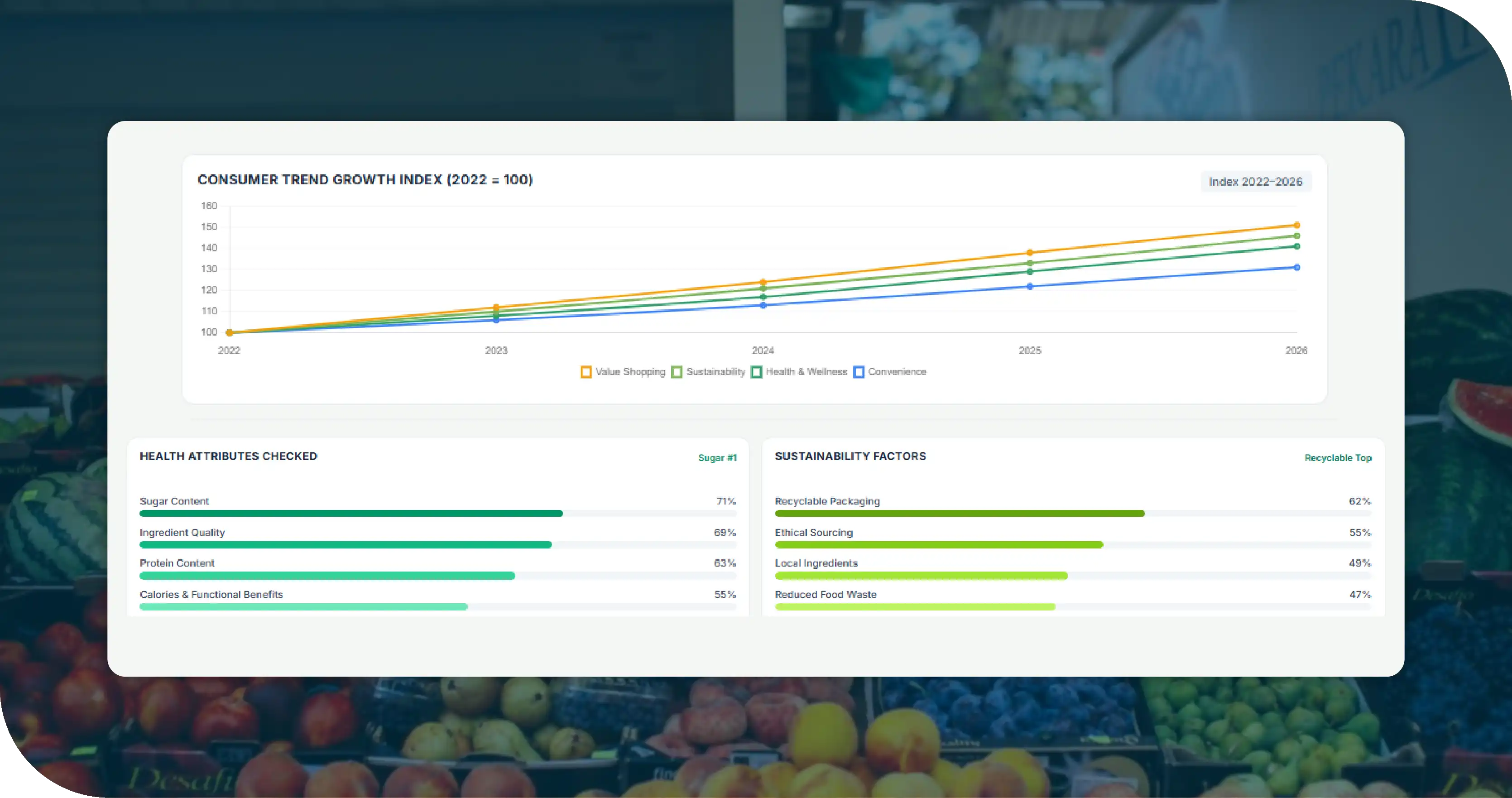
We deployed a scalable extraction framework that continuously collected product, pricing, inventory, and promotional information from multiple grocery platforms. This automation eliminated manual efforts, ensured consistent updates, and delivered reliable market visibility across more than 12,000 active SKUs. -
Advanced Pricing Intelligence Platform
Our team developed a centralized Grocery Price Dashboard that consolidated real-time pricing data from various supermarket sources. The platform enabled instant comparison of competitor prices, promotional campaigns, stock availability, and category-level performance metrics for faster decision-making. -
Unified Analytics and Market Monitoring
We implemented a comprehensive Grocery Price Tracking Dashboard powered by Grocery Data Intelligence capabilities. The solution standardized SKU records, barcode information, and product attributes while generating actionable insights on assortment trends, demand patterns, pricing strategies, and competitive positioning.
Solution Delivery Metrics
| Metric | Before Solution | After Solution | Improvement |
|---|---|---|---|
| Total SKUs Tracked | 3,500 | 12,000+ | — |
| Pricing Update Frequency | Weekly | Every 6 Hours | — |
| Barcode Coverage | 55% | 99.2% | — |
| Product Matching Accuracy | 78% | 98.7% | — |
| Supermarket Sources Monitored | 3 | 12 | — |
| Promotion Tracking Coverage | 40% | 96% | — |
| Data Processing Time | 18 Hours | 2.5 Hours | — |
| Stock Availability Monitoring | Partial | Real-Time | — |
| Dashboard Refresh Rate | Daily | Near Real-Time | — |
| Market Intelligence Reports | Monthly | On-Demand | — |
| Data Accuracy | 82% | 99% | — |
| Competitive Price Comparisons | Limited | 50,000+ Monthly | — |
Methodologies Used
-
Requirement Analysis and Data Planning
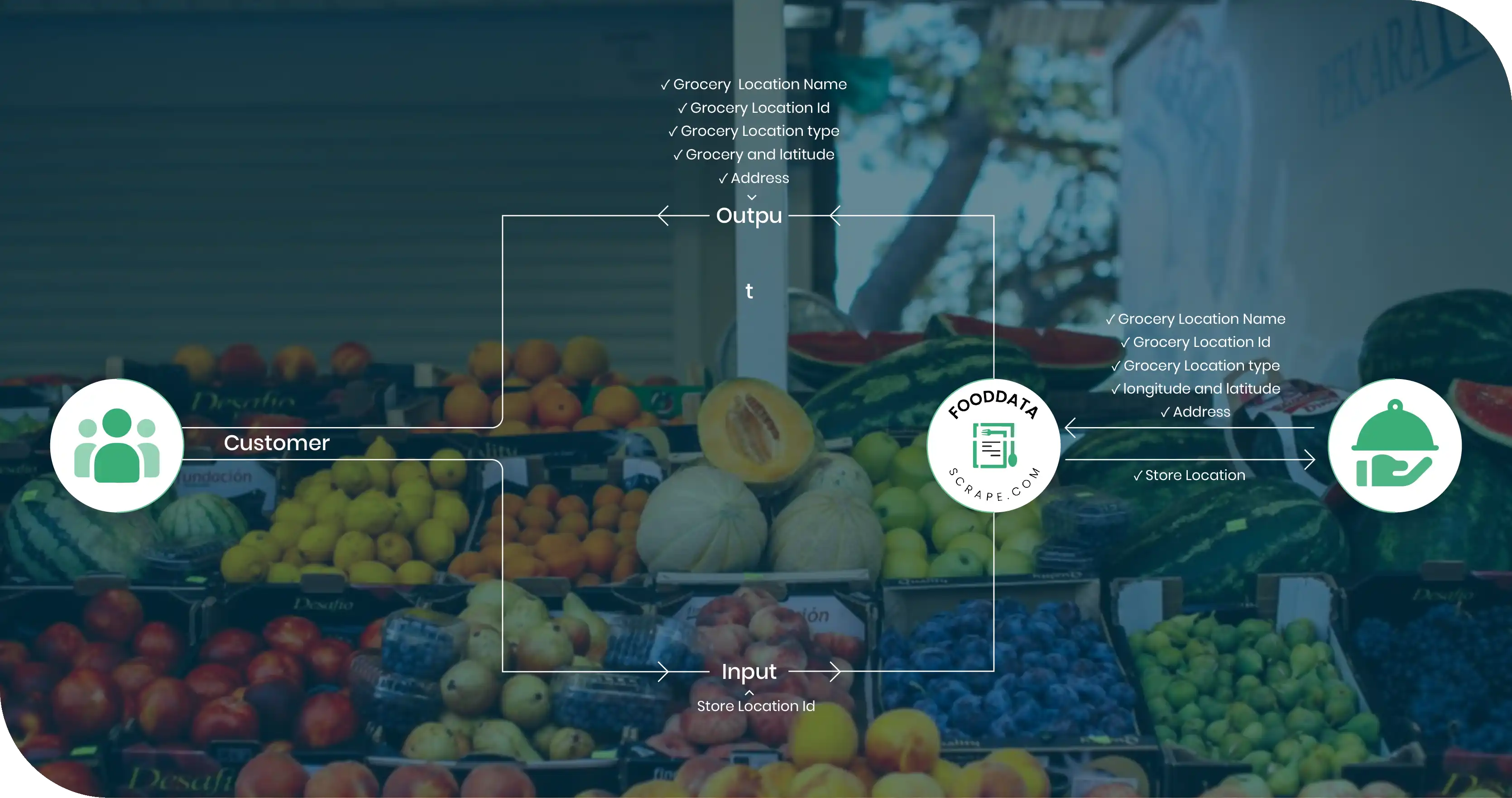
We first analyzed the client’s objectives, product categories, target supermarkets, and required attributes. A structured data collection plan was created to identify essential fields such as product names, prices, availability, brands, categories, and promotional details. -
Automated Data Extraction Framework
We developed an automated extraction process to gather grocery information from multiple online sources. The system was designed to handle large product volumes efficiently while maintaining accuracy, consistency, and regular updates across the complete catalog. -
Product Data Standardization Process
Collected information was cleaned, organized, and standardized into a unified format. We removed duplicate records, corrected inconsistencies, mapped product attributes, and created structured datasets that supported easier analysis and reporting. -
Real-Time Monitoring and Updates
A continuous monitoring mechanism was implemented to track changes in product listings, pricing, availability, and promotions. This ensured the client received fresh market information and could quickly identify important retail trends. -
Quality Validation and Data Delivery
Before final delivery, the extracted information went through multiple validation checks for accuracy and completeness. The final dataset was optimized for business analysis, competitive research, and strategic grocery market decision-making.
Advantages of Collecting Data Using Food Data Scrape
-
Faster Access to Market Information
Our data scraping services help businesses collect large volumes of grocery data quickly from multiple sources. This reduces manual research efforts, improves operational efficiency, and provides timely insights required for pricing analysis, product monitoring, and competitive market evaluation. -
Improved Pricing and Competitor Analysis
Businesses can track changing prices, discounts, product availability, and promotional activities with greater accuracy. Our solutions enable retailers to compare market trends, identify pricing opportunities, and make informed decisions based on reliable and updated information. -
Enhanced Product Catalog Management
We help organizations maintain structured and accurate product catalogs by collecting essential details such as names, categories, specifications, and availability. This improves inventory visibility, supports better assortment planning, and helps businesses manage product information effectively. -
Scalable Data Collection Solutions
Our scraping solutions are designed to handle expanding product catalogs, multiple retailers, and frequent updates. It can support businesses requiring extensive grocery market monitoring and long-term competitive intelligence solutions. -
Better Market Trend Analysis
We convert complex grocery information into meaningful insights that help organizations understand demand patterns, price movements, and consumer preferences. This enables smarter planning, stronger strategies, and improved performance across competitive grocery markets.
Client’s Testimonial
"The grocery data scraping solution delivered exceptional value to our business by providing accurate, structured, and regularly updated product information. The team successfully helped us monitor thousands of grocery items, analyze pricing trends, and improve our market research capabilities. Their approach ensured reliable data collection, quick processing, and seamless integration with our internal analytics systems. We were able to make faster decisions and gain better visibility into supermarket trends across Belgium. The quality of insights and professional support exceeded our expectations, making this partnership highly valuable for our retail intelligence initiatives."
— Head of Retail Analytics
Final Outcome
The final outcome of the project delivered a highly accurate and scalable grocery intelligence solution with a comprehensive database of over 12,000 product records. The client successfully gained access to structured product details, pricing information, availability updates, and promotional insights from multiple grocery sources. The extracted Grocery Datasets enabled advanced market analysis, competitor benchmarking, and better category management decisions. The automated system reduced manual data collection efforts while improving accuracy, speed, and reporting efficiency. With continuous monitoring and organized data delivery, the client achieved stronger visibility into Belgium’s grocery retail environment and developed a reliable foundation for future business strategies, pricing optimization, and consumer trend analysis.