Why “daily” is now the floor, not the ceiling (context — real, cited)
US grocery is moving from paper tags to software-speed repricing. Walmart is rolling out electronic shelf labels, targeting all US stores by the end of 2026 — cutting a price update from a two-day manual task to minutes (CNBC, Mar 2026). Kroger has run digital labels (its Microsoft-partnered “EDGE” system) since 2018, expanding to hundreds of stores (CNBC, Oct 2025; Warren–Casey Senate letter, Aug 2024).
The policy fight underlines the stakes: Senators Warren and Casey pressed Kroger over whether ESLs could enable demand-based “surge” pricing, and the FTC opened investigations into location/data-based pricing (eMarketer, 2024). Kroger and Walmart say prices are set centrally and are the same for every shopper in a given store (Newsweek, Mar 2026). Either way, the reality for a competitor is the same: rivals can change shelf prices far faster than a weekly manual check can catch.
The problem: weekly manual checks in a daily-repricing market
A regional US chain had category managers checking competitor sites by hand across trade areas. Collection took most of a day, so the weekly pricing meeting ran on numbers several days old. Competitors priced differently by region — a single “Kroger price” didn't exist — so the national figures under debate were fiction for any given store.
The solution
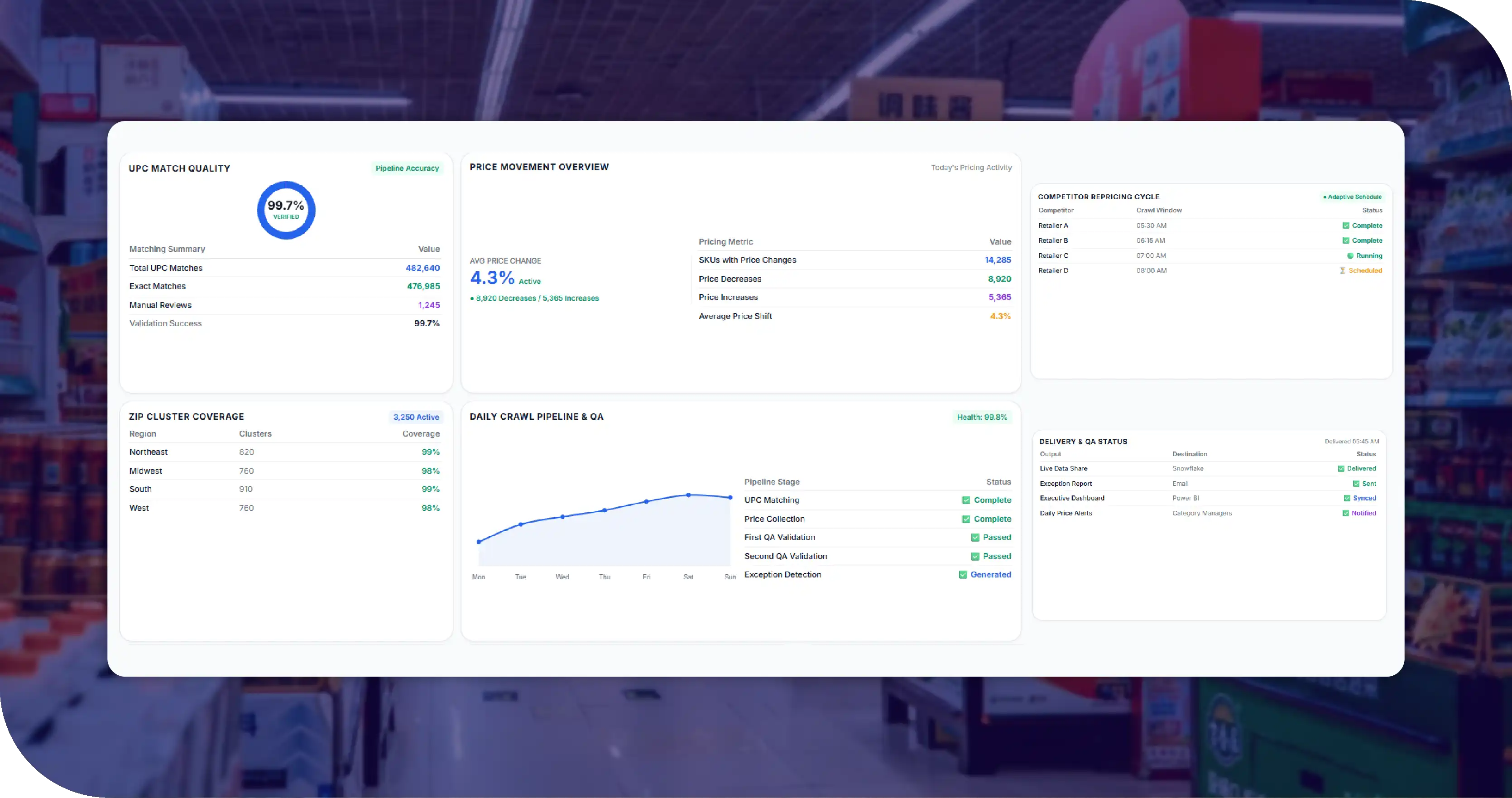
A matched-SKU pipeline (UPC-first), at ZIP-cluster level, with the daily crawl window aligned to each competitor's reprice cycle, two-pass QA, and delivery as a Snowflake share + an exception report (only SKUs whose price moved) emailed before the morning review.
What changed
1. The morning meeting runs on today's prices. The feed lands by 6 a.m. dated that morning; the team acts on same-day data instead of debating its age.
2. Selective matching, not blanket matching. The exception report meant touching only the ~8–12% of SKUs that moved daily, instead of re-reviewing all 500 — the source of most of the ~10 hours/week recovered.
3. Regional strategy became visible. ZIP-cluster granularity exposed a competitor running consistently lower dairy pricing in one metro — buried by the old national average — which the chain then matched only where it mattered.