Boo-st your food data. Save 20% on scraping services
Menus · Grocery · Alcohol · AI Intelligence, across 40+ countries

The Deliveroo & Just Eat Data Scraping research report explores how structured food delivery marketplace data enables businesses to gain actionable insights into restaurant performance, pricing strategies, menu updates, delivery efficiency, and customer engagement across the UK. By collecting and analyzing restaurant listings, menu information, promotional campaigns, ratings, and operational metrics, organizations can build comprehensive datasets that support competitive benchmarking and informed decision-making. The report highlights the value of continuous data collection for monitoring market trends, identifying regional opportunities, tracking menu pricing changes, and evaluating delivery performance across multiple cities. It also examines practical applications for restaurant chains, market intelligence firms, investors, delivery platforms, and food technology companies. Through historical and real-time datasets, businesses can improve pricing optimization, demand forecasting, menu engineering, expansion planning, and operational efficiency. Overall, the report demonstrates how Deliveroo and Just Eat marketplace intelligence serves as a powerful resource for organizations seeking data-driven strategies to strengthen their position in the rapidly evolving UK online food delivery industry.
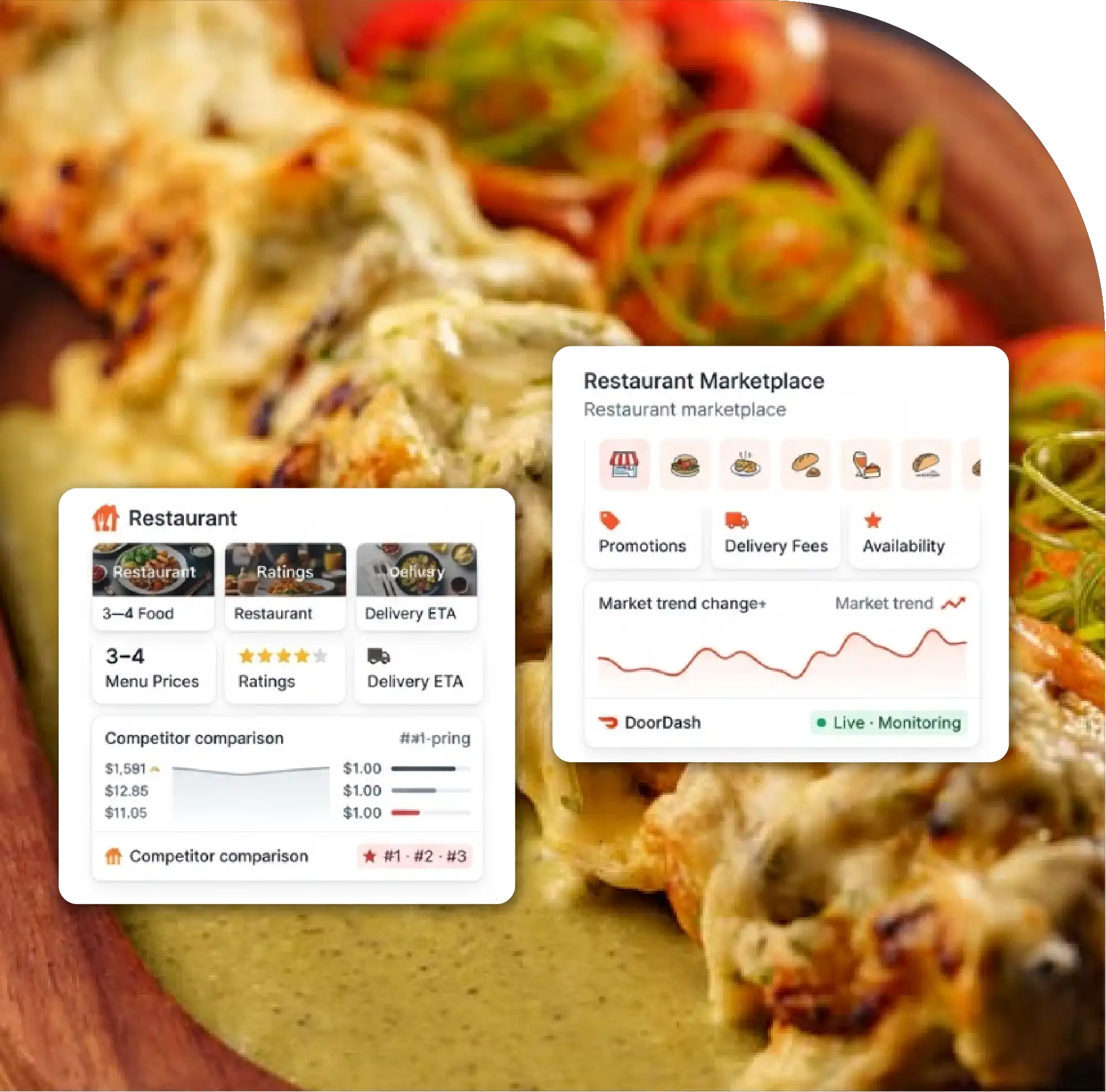
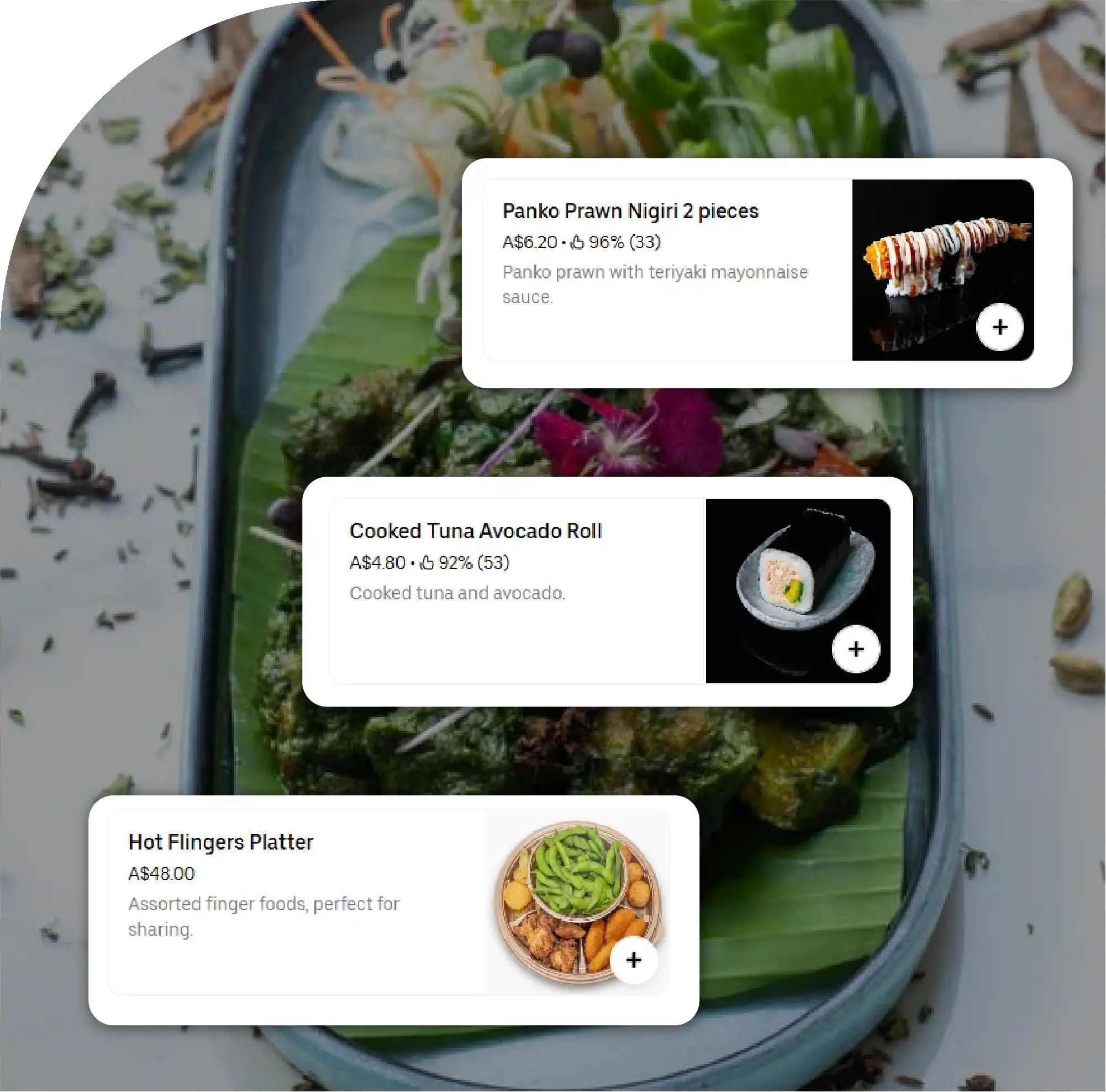
Market Intelligence
Tracks restaurant growth, pricing trends, delivery performance, and regional marketplace developments.
Menu Analytics
Reveals pricing changes, promotions, product launches, and historical menu evolution patterns.
Competitive Benchmarking
Compares restaurant positioning, discounts, customer ratings, and delivery efficiency across platforms.
Operational Insights
Measures preparation times, availability, fulfillment efficiency, and service quality improvements continuously.
Strategic Decisions
Supports expansion planning, forecasting, investment analysis, and revenue optimization using comprehensive datasets.

The UK food delivery ecosystem has transformed into one of the world's most data-driven digital commerce markets, with platforms continuously updating restaurant listings, menu availability, promotional offers, delivery fees, estimated delivery times, and customer ratings. Businesses that monitor these changes gain valuable competitive intelligence for pricing optimization, customer acquisition, market expansion, and operational planning. Deliveroo & Just Eat Data Scraping has therefore become an essential capability for restaurant chains, food technology companies, market researchers, and delivery aggregators seeking structured insights from dynamic online marketplaces.
Organizations increasingly invest in Deliveroo and Just Eat restaurant data scrape solutions to collect standardized restaurant information from multiple cities and regions. At the same time, Scraping Deliveroo and Just Eat menu data enables analysts to understand menu diversity, seasonal pricing trends, promotional campaigns, delivery performance, and consumer preferences at scale. By converting continuously changing marketplace information into structured datasets, companies can make faster and more informed strategic decisions.
The modern food delivery economy generates millions of records every day across cuisines, restaurant categories, meal combinations, delivery locations, and promotional offers. Data collected from Deliveroo and Just Eat helps identify neighborhood demand, price elasticity, cuisine popularity, restaurant density, and changing customer behavior. These datasets support investors, restaurant operators, supply chain managers, delivery platforms, market intelligence providers, and analytics teams that require accurate, frequently updated market information.
Instead of manually reviewing thousands of restaurant pages, automated collection systems continuously monitor changes in restaurant profiles, menu items, delivery fees, discounts, opening hours, ratings, reviews, estimated preparation times, and availability. This creates historical datasets that reveal market evolution over weeks, months, and years while reducing manual effort and improving analytical accuracy.
Deliveroo and Just Eat maintain extensive restaurant ecosystems that include independent restaurants, national chains, cloud kitchens, grocery partners, dessert brands, convenience stores, and specialty food providers. Every listing contains valuable structured and semi-structured information that supports multiple business intelligence applications.
Restaurant datasets generally include restaurant identification, cuisine classification, delivery zones, minimum order values, customer ratings, preparation estimates, delivery charges, promotional banners, operating schedules, featured products, bestseller rankings, dietary information, menu categories, pricing history, geographic coordinates, availability indicators, and payment options. Together, these fields create a comprehensive representation of the UK's online restaurant economy.
| No. | City | Restaurants | Avg Menu Items | Avg Delivery Fee (£) | Avg Delivery Time (min) | Avg Rating | Avg Discount (%) | Cuisine Categories | Active Promotions | Orders Index |
|---|---|---|---|---|---|---|---|---|---|---|
| 1 | London | 8,950 | 124 | 2.89 | 29 | 4.5 | 18 | 62 | 910 | 100 |
| 2 | Manchester | 3,420 | 118 | 2.55 | 31 | 4.4 | 16 | 48 | 410 | 78 |
| 3 | Birmingham | 3,150 | 114 | 2.60 | 32 | 4.4 | 17 | 45 | 398 | 74 |
| 4 | Glasgow | 2,280 | 109 | 2.42 | 30 | 4.5 | 15 | 39 | 275 | 63 |
| 5 | Liverpool | 1,960 | 107 | 2.39 | 31 | 4.4 | 16 | 35 | 242 | 59 |
| 6 | Leeds | 1,870 | 111 | 2.44 | 32 | 4.3 | 15 | 36 | 228 | 57 |
| 7 | Bristol | 1,520 | 105 | 2.48 | 30 | 4.5 | 17 | 34 | 205 | 54 |
| 8 | Edinburgh | 1,460 | 103 | 2.52 | 29 | 4.5 | 14 | 33 | 198 | 52 |
| 9 | Sheffield | 1,210 | 98 | 2.37 | 31 | 4.4 | 15 | 29 | 166 | 47 |
| 10 | Nottingham | 1,180 | 101 | 2.41 | 30 | 4.4 | 16 | 31 | 159 | 45 |
Large marketplace datasets reveal substantial differences in pricing behavior between cities, restaurant density, cuisine diversity, promotional intensity, and delivery efficiency. These variations provide valuable benchmarks for regional expansion strategies and competitive positioning.
Deliveroo menu pricing analytics allows analysts to compare identical menu items across cities while identifying localized pricing strategies, promotional frequency, bundle discounts, and premium delivery pricing during peak demand periods.
Restaurants frequently modify menus according to seasonal ingredients, sporting events, holidays, local festivals, and consumer preferences. Continuous monitoring captures these changes in near real time, allowing organizations to understand menu evolution rather than relying on isolated snapshots.
Food delivery menus contain significantly more information than simply item names and prices. Menu datasets often include descriptions, nutritional information, allergens, customization options, portion sizes, beverage pairings, add-ons, meal combinations, limited-time offers, dietary labels, preparation instructions, and product availability.
Historical menu intelligence enables organizations to observe pricing inflation, new product launches, discontinued products, premium upselling strategies, and cross-selling initiatives. Analysts can determine which cuisines introduce menu innovations most frequently and which restaurant categories rely heavily on promotional pricing.
Comparative analysis across multiple platforms further identifies whether restaurants maintain consistent pricing or adopt marketplace-specific pricing strategies. Restaurants often adjust prices to offset commission structures, delivery costs, and promotional campaigns unique to each platform.
A continuously updated Just Eat restaurant listings dataset provides detailed visibility into restaurant growth, closures, temporary suspensions, geographic expansion, cuisine diversification, and marketplace penetration. Historical listing information supports investment analysis, franchise planning, commercial partnerships, and competitive benchmarking.
Restaurant listings also reveal neighborhood-level competition, identifying areas with high restaurant density alongside underserved locations presenting expansion opportunities. Investors and restaurant chains frequently analyze these trends before selecting new operating locations.
Geospatial analysis combined with demographic information further improves forecasting by correlating consumer purchasing behavior with restaurant availability, pricing levels, and cuisine preferences.
Successful restaurant businesses increasingly rely on competitive restaurant analytics in the UK to evaluate market positioning. Comparing Deliveroo and Just Eat simultaneously enables organizations to identify pricing gaps, delivery performance differences, menu consistency, promotional strategies, and restaurant visibility.
Competitive benchmarking measures restaurant ranking positions, customer ratings, review volumes, average delivery estimates, discount frequency, bundle pricing, and sponsored placements. These insights help restaurant operators optimize their marketplace strategies while identifying opportunities to improve customer acquisition.
Marketplace intelligence also benefits food manufacturers, logistics providers, franchise operators, consulting firms, financial institutions, and private equity investors evaluating restaurant performance across multiple regions.
| No. | Cuisine | Restaurants | Avg Menu Price (£) | Avg Combo Price (£) | Avg Discount (%) | Avg Delivery Fee (£) | Avg Rating | Avg Menu Items | Avg Delivery Time (min) | Monthly Menu Changes |
|---|---|---|---|---|---|---|---|---|---|---|
| 1 | Burgers | 2,180 | 11.40 | 16.90 | 19 | 2.69 | 4.4 | 112 | 28 | 42 |
| 2 | Pizza | 1,940 | 13.80 | 22.30 | 21 | 2.88 | 4.5 | 124 | 31 | 39 |
| 3 | Indian | 1,760 | 12.70 | 20.10 | 17 | 2.49 | 4.5 | 138 | 33 | 36 |
| 4 | Chinese | 1,420 | 11.90 | 19.40 | 18 | 2.46 | 4.4 | 132 | 32 | 31 |
| 5 | Sushi | 920 | 15.60 | 24.80 | 13 | 2.92 | 4.6 | 116 | 29 | 27 |
| 6 | Mexican | 760 | 12.80 | 20.70 | 16 | 2.58 | 4.4 | 96 | 30 | 24 |
| 7 | Thai | 640 | 13.20 | 21.60 | 15 | 2.54 | 4.5 | 102 | 31 | 23 |
| 8 | Desserts | 1,080 | 8.60 | 13.70 | 22 | 2.35 | 4.6 | 84 | 26 | 34 |
| 9 | Healthy | 570 | 11.70 | 17.20 | 14 | 2.43 | 4.5 | 88 | 27 | 18 |
| 10 | Grocery | 890 | 9.90 | 15.80 | 20 | 2.74 | 4.3 | 540 | 24 | 46 |
Longitudinal menu datasets demonstrate how restaurants respond to inflation, ingredient shortages, consumer demand, and competitive pressures. Tracking thousands of menu revisions creates forecasting models capable of predicting future pricing behavior and promotional cycles.
Restaurants participating in digital delivery marketplaces continually optimize operational performance through menu restructuring, promotional scheduling, preparation efficiency, and delivery optimization. Deliveroo and Just Eat restaurant intelligence enables businesses to measure these operational improvements over time.
Analysts monitor delivery estimates throughout different periods of the day, identifying congestion patterns, staffing challenges, and service quality variations. Combined with customer ratings and review sentiment, operational datasets reveal how service quality influences marketplace visibility and customer retention.
Restaurant chains also compare branch-level performance across multiple cities, identifying best-performing locations and operational practices that can be replicated elsewhere.
Organizations apply Deliveroo Restaurant Data Scraping across numerous commercial functions including pricing intelligence, franchise benchmarking, customer behavior analysis, investment research, menu engineering, market entry planning, and promotional optimization. Historical datasets provide objective evidence for evaluating strategic decisions instead of relying on assumptions.
Retail analytics firms integrate restaurant datasets with demographic information, economic indicators, weather conditions, transportation data, and local events to develop sophisticated forecasting models. These integrated datasets improve demand prediction while helping restaurants optimize inventory and staffing requirements.
Food manufacturers also analyze restaurant menu adoption to understand ingredient popularity, emerging cuisine trends, plant-based product growth, beverage consumption, and seasonal demand fluctuations.
Similarly, the method to Scrape Deliveroo Food Delivery Data initiatives support logistics optimization by identifying peak delivery windows, regional demand concentrations, delivery radius variations, and operational bottlenecks affecting customer experience.
Advanced Deliveroo Food Delivery Scraping solutions further enable automated monitoring of menu changes, newly launched restaurants, discontinued brands, limited-time promotions, featured listings, sponsored placements, and localized pricing adjustments, creating valuable historical intelligence for long-term strategic planning.
As digital food delivery continues expanding throughout the United Kingdom, structured marketplace intelligence becomes increasingly valuable for restaurants, investors, technology providers, researchers, and commercial analytics organizations. Continuous monitoring transforms constantly changing marketplace information into reliable historical datasets that support smarter pricing strategies, operational improvements, competitive benchmarking, and long-term market forecasting.
Future innovation in Web Scraping Just Eat Food Delivery Data will further enhance predictive analytics, enabling businesses to anticipate pricing trends, restaurant expansion, promotional activity, and consumer demand with greater precision. Comprehensive datasets such as the JustEat Food Dataset provide the foundation for advanced machine learning models, while modern JustEat Food Delivery Scraping API solutions simplify integration with enterprise analytics platforms, delivering actionable intelligence that strengthens decision-making across the evolving UK food delivery ecosystem.
If you are seeking for a reliable data scraping services, Food Data Scrape is at your service. We hold prominence in Food Data Aggregator and Mobile Restaurant App Scraping with impeccable data analysis for strategic decision-making.