The Client
The client is a fast-growing FMCG brand with a diverse portfolio of everyday consumer products sold through supermarkets, grocery marketplaces, and digital retail channels. With increasing competition across online platforms, the brand needed better visibility into how its products were positioned, priced, and promoted compared with competing brands.
The company manages multiple SKUs across categories and regularly launches promotional campaigns to attract price-sensitive shoppers. However, differences in retailer pricing, stock availability, search rankings, and promotional visibility made it difficult to maintain consistent digital shelf performance.
To address these challenges, the client sought digital shelf intelligence for brands to create a clearer view of marketplace performance and competitive movements. The initiative also strengthened FMCG competitor price monitoring, helping teams identify pricing changes and promotional gaps faster.
Additionally, FMCG product visibility tracking enabled the brand to monitor listings, rankings, availability, and presentation across important online retail channels, supporting more informed decisions around pricing, distribution, and digital merchandising.
Key Challenges
-
Inconsistent Marketplace Data
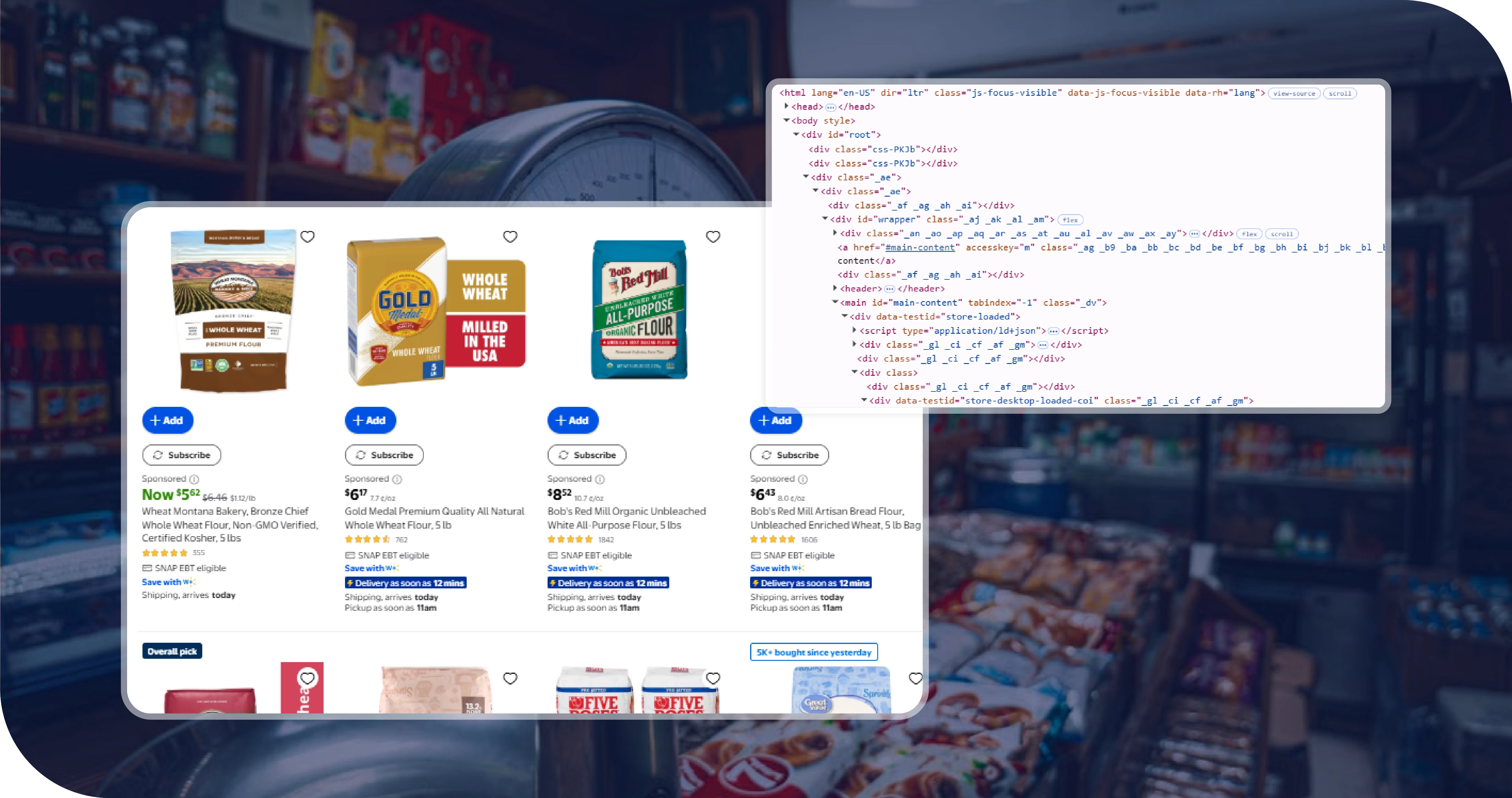
Product prices, availability, discounts, ratings, and promotional details varied frequently across online retailers, making consistent analysis difficult. The client lacked standardized data needed for effective digital shelf optimization for FMCG and timely comparison of marketplace performance across multiple channels. -
Complex Data Collection
Manually collecting thousands of product attributes from different retailers was time-consuming and prone to errors. Implementing Web Scraping FMCG Product Details Data was necessary to gather structured information efficiently while maintaining consistency across product categories, SKUs, pricing fields, and marketplace listings. -
Limited Competitive Visibility
The client struggled to identify competitor pricing changes, promotional activities, stock-outs, and ranking movements quickly. This limited its ability to respond strategically and maintain strong marketplace positioning, creating a clear need for continuous FMCG Brand Tracking across major digital retail platforms.
Key Solutions
-
Continuous Shelf Tracking
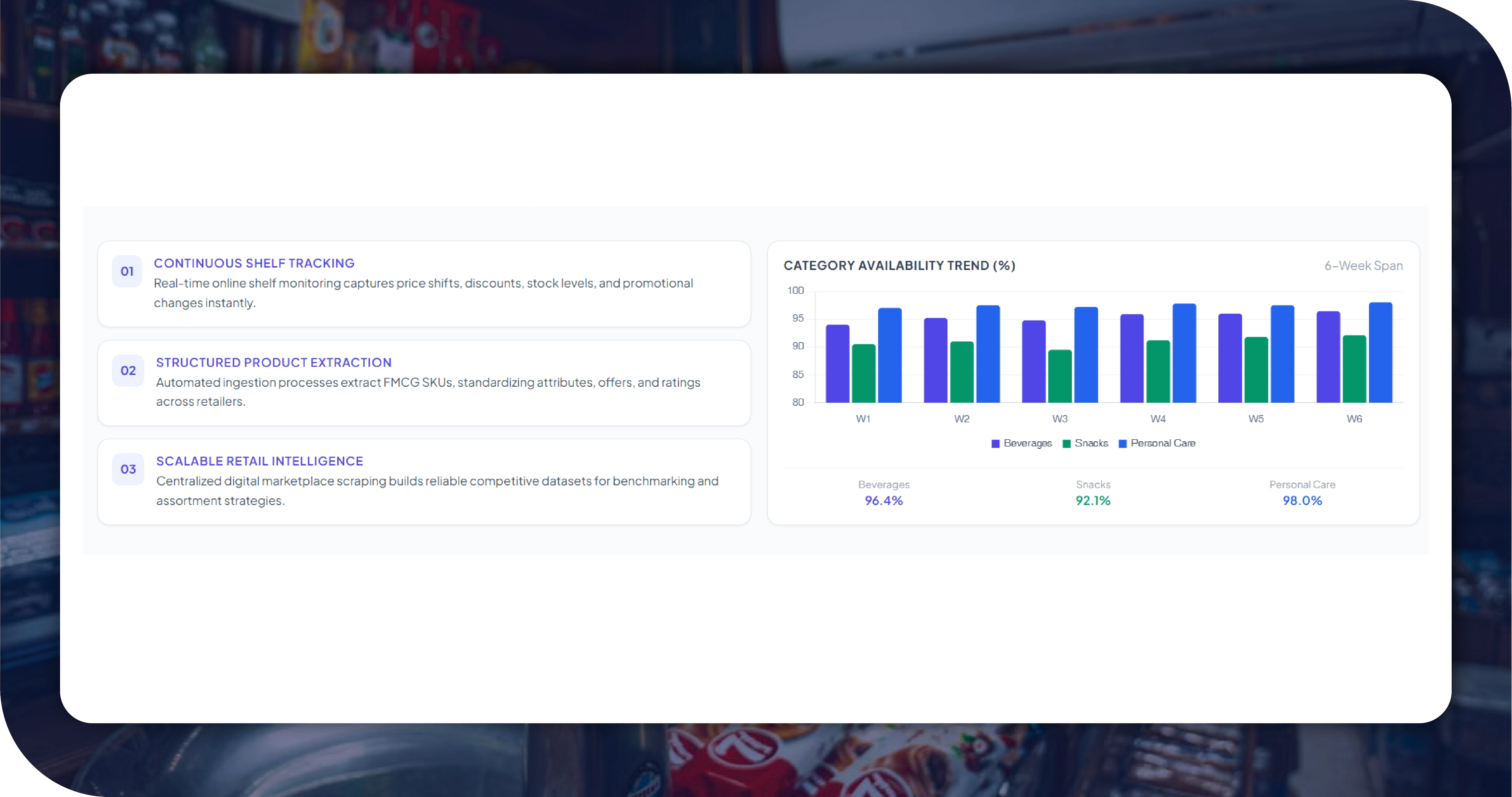
We implemented Real-Time Online Shelf Monitoring to capture frequent changes in product prices, discounts, stock status, rankings, and promotions. Automated monitoring helped the FMCG brand identify marketplace changes quickly and respond to pricing, availability, and visibility issues before they affected sales. -
Structured Product Extraction
Our solution used automated processes to Extract FMCG and Grocery Product Data from multiple online retailers. Product information was standardized into consistent fields, enabling the client to compare SKUs, categories, prices, brands, offers, ratings, and availability without relying on fragmented manual collection. -
Scalable Retail Intelligence
We deployed Retail Shelf Data Scraping across targeted digital marketplaces to create a centralized competitive dataset. The solution supported recurring data collection, historical comparisons, competitor benchmarking, and actionable reporting, helping the brand improve digital merchandising, pricing strategies, assortment decisions, and overall marketplace performance.
Scraped Data
| No. | Data Field | Sample Value | Data Type | Monitoring Frequency | Business Use |
|---|---|---|---|---|---|
| 1 | Product Name | Premium Wheat Flour 5kg | Text | Daily | Product identification |
| 2 | Brand Name | Brand A | Text | Daily | Brand comparison |
| 3 | SKU | FMCG-45821 | Text | Daily | SKU tracking |
| 4 | Category | Grocery > Staples | Text | Daily | Category analysis |
| 5 | Subcategory | Flour & Grains | Text | Daily | Assortment analysis |
| 6 | Product URL | Retailer product page | URL | Daily | Product reference |
| 7 | Regular Price | $8.99 | Numeric | Hourly | Price benchmarking |
| 8 | Discounted Price | $6.99 | Numeric | Hourly | Promotion analysis |
| 9 | Discount Percentage | 22.25% | Numeric | Hourly | Discount tracking |
| 10 | Promotion Type | Buy 1 Get 1 | Text | Hourly | Offer monitoring |
| 11 | Stock Status | In Stock | Text | Hourly | Availability tracking |
| 12 | Stock Quantity | 24 Units | Numeric | Hourly | Inventory intelligence |
| 13 | Product Rating | 4.5/5 | Numeric | Daily | Customer perception |
| 14 | Review Count | 1,284 | Numeric | Daily | Demand assessment |
| 15 | Search Ranking | Position 7 | Numeric | Daily | Visibility measurement |
| 16 | Seller Name | Official Store | Text | Daily | Seller monitoring |
| 17 | Pack Size | 5 kg | Text | Daily | Product comparison |
| 18 | Product Image | Image URL | URL | Daily | Visual validation |
| 19 | Product Description | Detailed product information | Text | Daily | Content analysis |
| 20 | Brand Position | Sponsored Listing | Text | Daily | Placement analysis |
| 21 | Delivery Availability | Available Today | Text | Hourly | Service monitoring |
| 22 | Delivery Fee | $2.99 | Numeric | Hourly | Cost comparison |
| 23 | Retailer Name | Online Grocery Store | Text | Hourly | Retail benchmarking |
| 24 | Location | Dubai | Text | Hourly | Regional analysis |
| 25 | Data Timestamp | 2026-08-19 10:30 | Date/Time | Every Capture | Historical tracking |
Methodologies Used
-
Automated Data Extraction
We developed automated scraping workflows to collect FMCG product information from targeted online retailers. These workflows captured product names, SKUs, categories, prices, discounts, availability, ratings, promotions, and other relevant attributes while reducing manual collection efforts and maintaining consistent data structures. -
Multi-Platform Monitoring
We monitored multiple digital marketplaces simultaneously to identify differences in pricing, stock status, product positioning, promotions, and visibility. A standardized monitoring framework allowed the client to compare competing retailers and brands while maintaining consistent tracking across different platforms and product categories. -
Data Standardization
Collected information was cleaned, normalized, and organized into structured datasets for reliable analysis. Duplicate listings, inconsistent product names, formatting differences, missing values, and pricing variations were processed systematically, creating a unified dataset suitable for benchmarking, reporting, historical comparisons, and strategic decision-making. -
Change Detection
Automated comparison mechanisms identified meaningful changes in prices, discounts, availability, rankings, and promotional activity between collection cycles. This methodology enabled faster recognition of competitive movements and marketplace disruptions, helping the brand respond promptly to important digital shelf changes. -
Quality Validation
We applied validation checks throughout the scraping and processing pipeline to improve data accuracy and completeness. Product records were reviewed for missing fields, unexpected values, duplicate entries, and inconsistencies, ensuring the final dataset remained dependable for ongoing digital shelf intelligence.
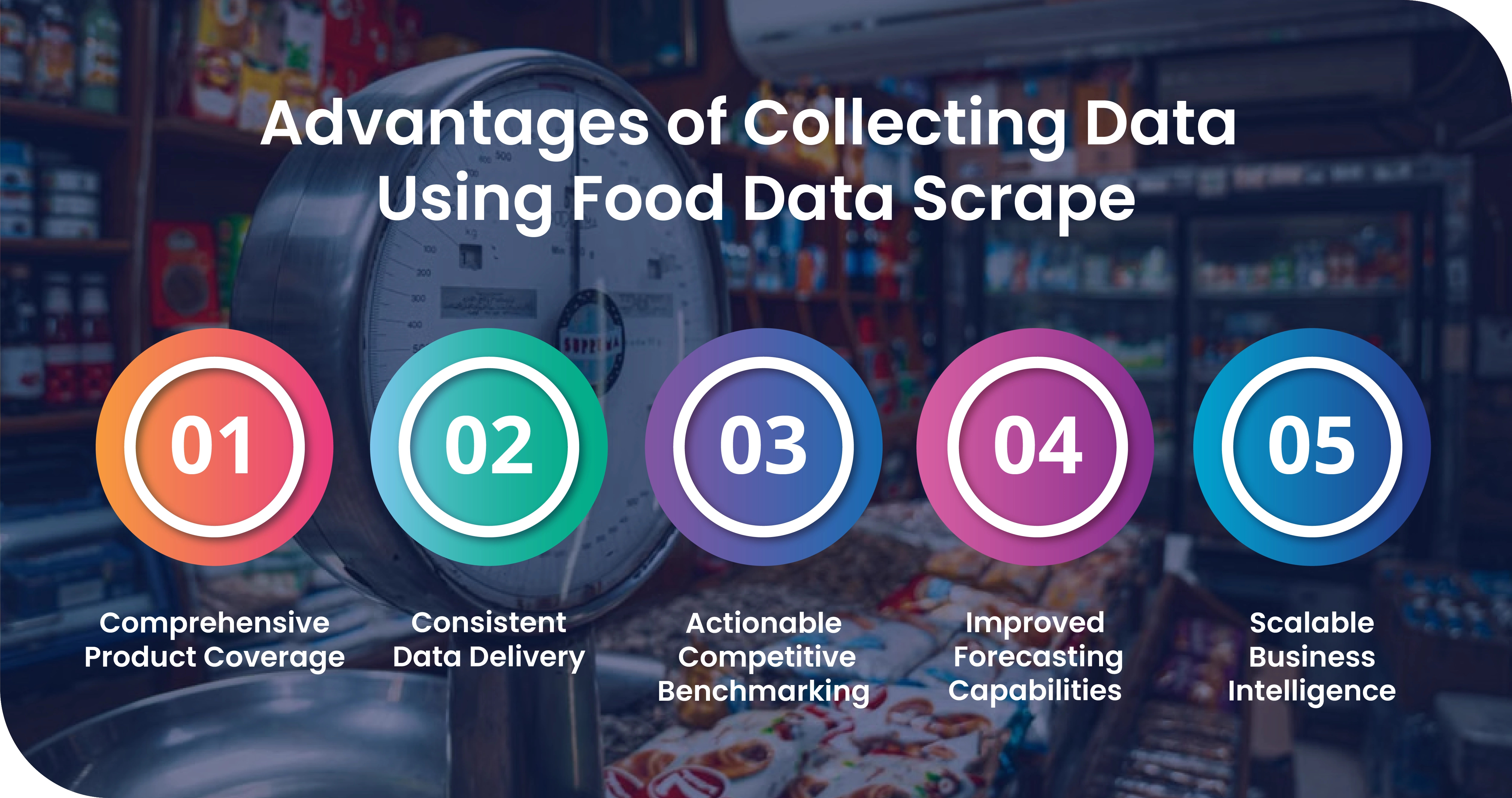
Advantages of Collecting Data Using Food Data Scrape
-
Better Market Visibility
Our data scraping services provide structured insights into product listings, prices, availability, promotions, and rankings across digital marketplaces. This gives FMCG brands a broader understanding of their online presence and helps teams identify opportunities requiring attention. -
Faster Competitive Analysis
Automated collection reduces the time required to gather competitor information manually. Brands can regularly compare pricing, discounts, assortment, product positioning, and availability, allowing commercial teams to recognize competitive movements quickly and make better-informed marketplace decisions. -
Improved Pricing Decisions
Consistent access to current pricing information helps brands evaluate their own prices against competitors. Historical datasets also reveal pricing patterns, promotional cycles, and market fluctuations, supporting more informed pricing strategies and helping maintain competitive positioning. -
Stronger Product Availability
Monitoring stock status across retailers helps identify products that become unavailable or experience recurring availability issues. These insights support better replenishment coordination, distribution planning, and marketplace management while reducing the risk of missed sales caused by stock-outs. -
Scalable Data Intelligence
Our scraping solutions can handle large product catalogs, multiple retailers, and recurring collection schedules efficiently. Structured outputs make the information easier to analyze, integrate, and use across reporting systems, supporting scalable digital shelf management as brands grow.
Client's Testimonial
"Working with the data scraping team has significantly improved how we manage our digital marketplace presence. Previously, tracking competitor prices, product availability, promotions, and visibility across multiple retailers required considerable manual effort and often resulted in delayed insights. The solution provided us with structured, reliable, and regularly updated data that made competitive analysis much faster. We can now identify pricing changes, stock issues, promotional movements, and product visibility gaps with greater confidence. The quality and consistency of the datasets have also helped our teams make better merchandising and pricing decisions. Overall, the service has become an important part of our digital shelf strategy and ongoing marketplace monitoring."
—Head of E-commerce & Digital Strategy
Final Outcome
The project delivered a centralized and reliable digital shelf intelligence system that transformed how the FMCG brand monitored its online marketplace performance. The client gained consistent visibility into product pricing, discounts, stock availability, rankings, promotions, ratings, and competitor movements across multiple digital retail channels. Automated data collection significantly reduced manual monitoring efforts while improving the speed and consistency of competitive analysis. Historical datasets enabled the team to identify pricing patterns, recurring stock-outs, promotional trends, and changes in product positioning over time. These insights supported faster pricing adjustments, improved replenishment planning, stronger promotional decisions, and better digital merchandising. The brand also gained a scalable foundation for continuous marketplace monitoring, enabling teams to respond more effectively to competitive changes and maintain stronger product visibility. Overall, the solution improved operational efficiency, strengthened decision-making, and created a more proactive approach to managing digital shelf performance.