The Client
The client was a growing food-tech and market research company seeking reliable restaurant data to strengthen its competitive analysis and strategic decision-making. Operating across multiple food delivery markets, the client needed structured information about restaurants, menus, prices, cuisines, ratings, locations, delivery options, and item availability.
The company wanted to develop DoorDash food delivery marketplace intelligence to understand restaurant trends, consumer-facing offerings, and competitive positioning across different locations. However, collecting this information manually was time-consuming and difficult to maintain at scale.
To improve its market analysis capabilities, the client required DoorDash restaurant pricing intelligence that could support price benchmarking, competitor comparisons, menu analysis, and promotional monitoring. The project therefore focused on creating a consistent and scalable data collection process. Through automated DoorDash pricing data Scraping, the client aimed to receive structured and regularly refreshed pricing information. The resulting dataset helped streamline research workflows, improve competitive visibility, identify pricing variations, and support data-driven decisions related to restaurant expansion, pricing strategies, and marketplace performance.
Key Challenges
-
Complex Data Collection
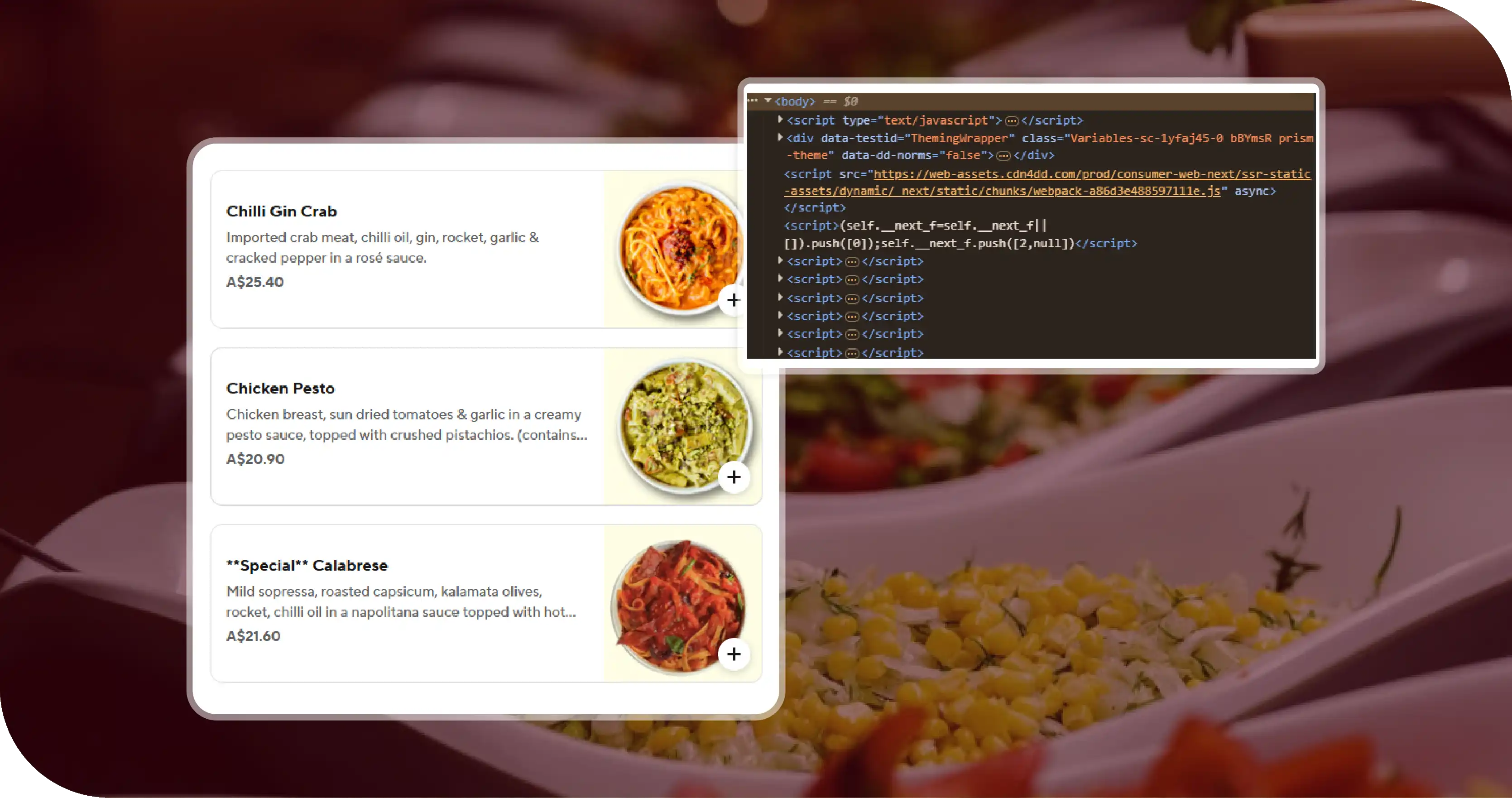
The client struggled to collect large volumes of restaurant information across multiple locations while maintaining accuracy and consistency. Building a reliable DoorDash Food Delivery Scraping API was essential for gathering restaurant names, menus, prices, ratings, availability, and delivery details efficiently at scale. -
Frequently Changing Information
Restaurant menus, item prices, availability, promotions, and operating hours changed frequently, making manual collection unreliable and outdated. The client needed DoorDash Restaurant Data Scraping capabilities that could continuously capture refreshed information while preserving structured records for competitive analysis and market intelligence. -
Data Structuring and Scalability
The client also faced difficulties organizing diverse restaurant and menu attributes into a standardized dataset suitable for analytics. A scalable solution to Scrape DoorDash Restaurant and Menu Data was required to simplify processing, enable comparisons, support pricing analysis, and reduce repetitive manual research efforts.
Key Solutions
-
Multi-Location Restaurant Extraction
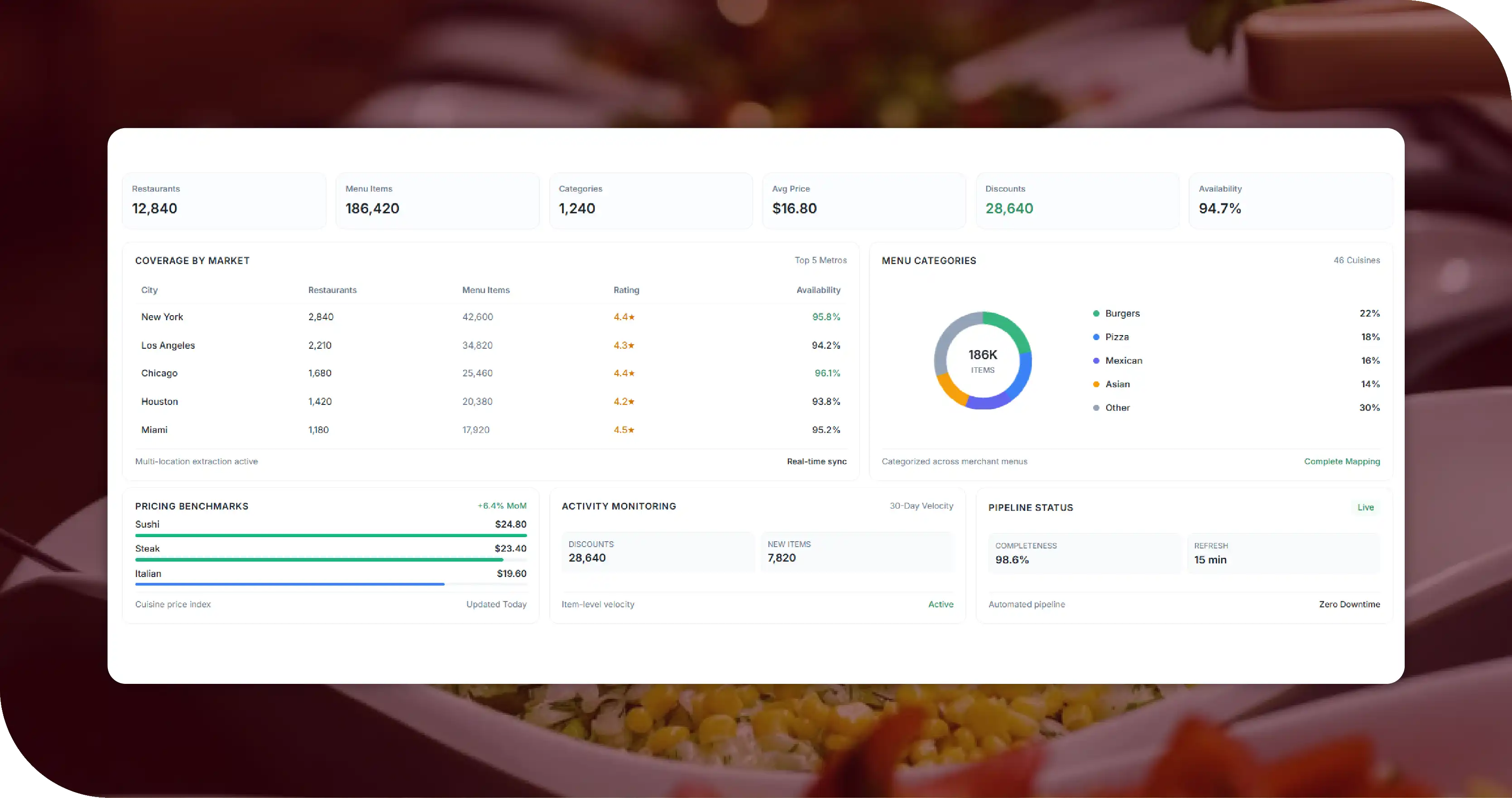
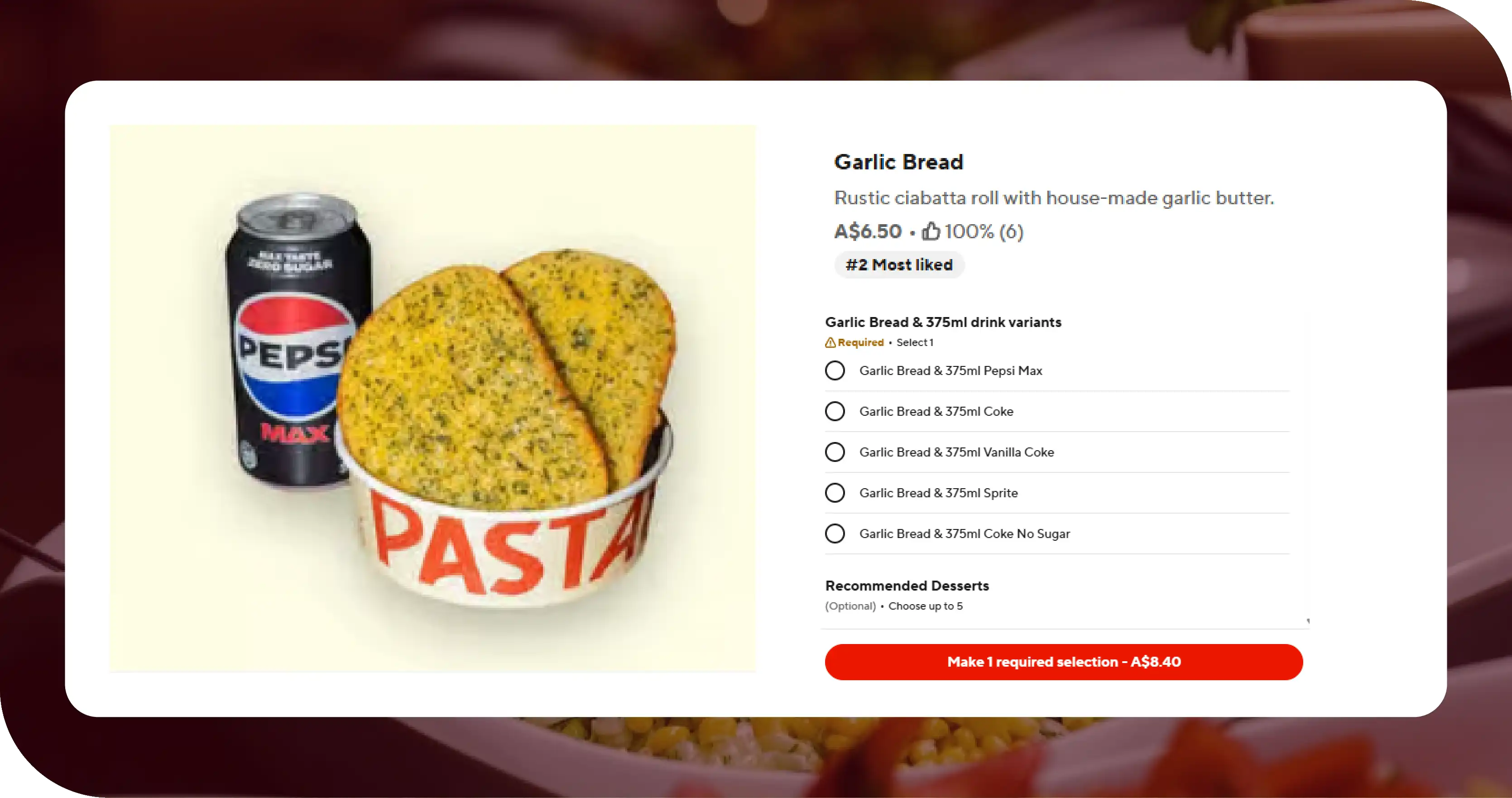
We created an automated workflow to Extract Food Delivery Data from DoorDash, covering restaurants across multiple cities and service areas. The solution captured names, addresses, cuisines, ratings, delivery information, menu categories, item details, prices, discounts, and availability in structured records. -
Comprehensive Menu Intelligence
The solution generated a detailed Food Delivery Dataset from DoorDash containing restaurant-level and item-level information. Data was standardized into consistent fields, allowing the client to compare menus, identify popular categories, evaluate price differences, monitor promotions, and conduct competitive market research. -
Continuous Data Updates
We established a repeatable extraction process for refreshing restaurant and menu information as marketplace data changed. Automated validation helped identify missing or inconsistent records, while structured outputs supported dashboards, pricing analysis, competitor monitoring, demand research, and other data-driven business applications.
Solution Performance Overview
| Data Type | Records Collected | Unique Restaurants | Unique Cities | Categories | Attributes | Update Frequency | Accuracy |
|---|---|---|---|---|---|---|---|
| Restaurant Profiles | 24,850 | 24,850 | 125 | 42 | 21 | Weekly | 98.6% |
| Menu Categories | 68,420 | 23,910 | 121 | 68,420 | 12 | Weekly | 98.2% |
| Menu Items | 512,760 | 23,910 | 125 | 186 | 18 | Weekly | 98.8% |
| Product Prices | 512,760 | 23,910 | 125 | 186 | 9 | Daily | 99.1% |
| Discount Records | 76,340 | 18,620 | 114 | 74 | 11 | Daily | 97.9% |
| Ratings & Reviews | 24,850 | 24,850 | 125 | 42 | 8 | Weekly | 98.4% |
| Delivery Information | 24,850 | 24,850 | 125 | 39 | 10 | Daily | 98.7% |
| Availability Records | 318,500 | 23,400 | 123 | 185 | 7 | Daily | 98.9% |
| Cuisine Information | 31,680 | 24,850 | 125 | 58 | 6 | Weekly | 99.0% |
| Restaurant Locations | 24,850 | 24,850 | 125 | 125 | 14 | Monthly | 99.2% |
| Operating Hours | 173,950 | 24,850 | 125 | 7 | 9 | Weekly | 98.5% |
| Overall Dataset | 1,794,810 | 24,850 | 125 | --- | --- | Mixed | 98.6% |
Methodologies Used
-
Location-Based Data Collection
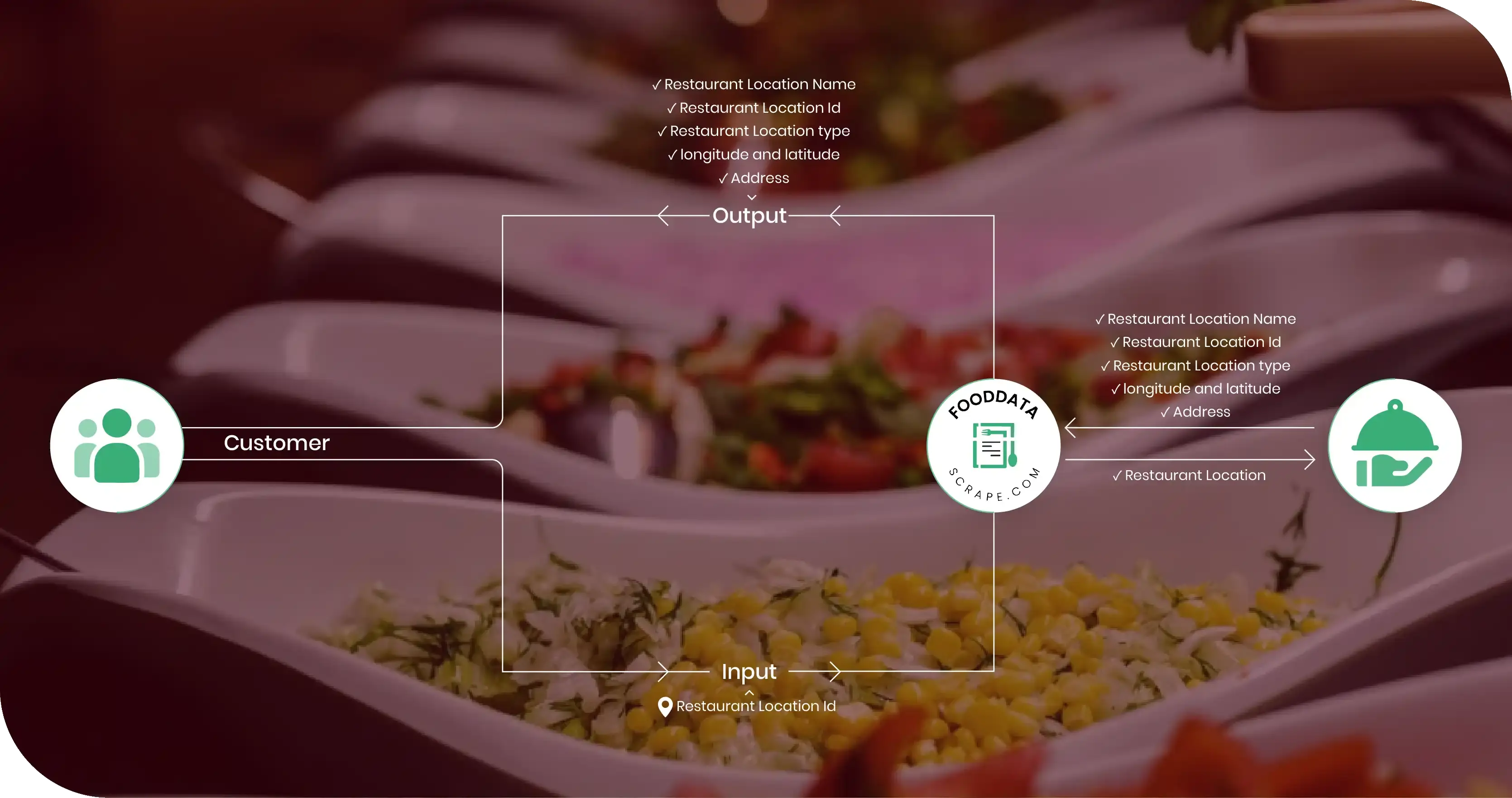
We segmented extraction activities by city, neighborhood, and delivery zone to capture geographically relevant restaurant information. This methodology enabled systematic coverage of target markets while reducing duplication and ensuring that restaurants serving different locations were appropriately represented within the collected dataset. -
Restaurant Discovery Process
We used structured discovery techniques to identify restaurants across targeted categories and locations. Restaurant names, cuisines, addresses, ratings, delivery information, and marketplace attributes were collected systematically, creating a broad foundation for subsequent menu, pricing, availability, and competitive analysis. -
Menu-Level Extraction
We extracted information at individual menu-item level rather than limiting collection to restaurant profiles. This included categories, item names, descriptions, prices, modifiers, dietary information, promotional details, and availability, allowing deeper analysis of restaurant offerings and menu structures. -
Schema-Based Organization
A predefined data schema was developed to organize extracted information into clearly defined fields. Restaurant, menu, pricing, location, rating, delivery, and promotional attributes were mapped into standardized structures, making the resulting dataset easier to search, compare, analyze, and integrate. -
Accuracy Monitoring
We introduced systematic quality-control procedures throughout the extraction pipeline. Records were reviewed for completeness, duplication, inconsistent values, and unexpected changes. Validation rules and exception checks helped identify problematic records early, improving overall dataset reliability and supporting dependable downstream analytics.
Advantages of Collecting Data Using Food Data Scrape
-
Faster Market Research
Food Data Scrape enables businesses to collect large volumes of restaurant and menu information much faster than manual research. Automated collection reduces repetitive tasks, accelerates market analysis, and provides structured information that teams can use for competitive intelligence and strategic planning. -
Better Competitive Analysis
Businesses can compare restaurant menus, pricing, cuisines, ratings, promotions, delivery options, and availability across multiple competitors. This broader visibility helps identify market gaps, understand competitor positioning, evaluate pricing differences, and develop informed strategies based on current marketplace information. -
Improved Pricing Decisions
Regularly collected pricing information helps businesses monitor fluctuations, discounts, promotional offers, and item-level price differences. These insights support competitive benchmarking, dynamic pricing strategies, promotional planning, and identification of pricing opportunities across restaurants, locations, cuisines, and individual menu categories. -
Scalable Data Collection
Automated extraction makes it possible to collect information from thousands of restaurants and millions of menu records without proportional increases in manual workload. Scalable workflows allow businesses to expand geographic coverage, add new data fields, and support larger research projects efficiently. -
Actionable Business Intelligence
Structured restaurant and menu data can be integrated into dashboards, analytical platforms, research systems, and reporting workflows. Businesses can transform collected information into actionable insights for menu optimization, competitor monitoring, market expansion, demand analysis, promotional evaluation, and long-term strategic decision-making.
Client's Testimonial
"Working with the team transformed the way we collect and analyze restaurant marketplace information. Previously, gathering restaurant, menu, pricing, and availability data across multiple locations required significant manual effort and produced inconsistent results. The delivered solution provided structured, accurate, and regularly refreshed data that integrated smoothly into our research workflows. We gained better visibility into competitor pricing, menu changes, promotions, and restaurant performance, allowing our team to make faster, more informed decisions. The overall process was efficient, scalable, and professionally managed from extraction through delivery. We highly recommend their data scraping services to businesses seeking reliable food marketplace intelligence."
—Head of Market Intelligence
Final Outcome
The project delivered a scalable and structured restaurant data solution that significantly improved the client's ability to monitor the food delivery marketplace. Large volumes of restaurant profiles, menus, item-level pricing, ratings, availability, promotions, cuisines, delivery details, and operating information were organized into an analytics-ready dataset. The automated workflow reduced dependency on manual research while improving data consistency, coverage, and accessibility. Regular data updates helped the client identify pricing changes, monitor competitor offerings, evaluate promotional strategies, and understand differences across locations. With standardized and validated records, the client could integrate the data into internal analytics systems, dashboards, and market research workflows. The solution ultimately enabled faster competitive analysis, improved pricing decisions, better market visibility, and more efficient data-driven planning for future expansion and strategy development.