Introduction
The growing availability of digital food information has transformed the way researchers, policymakers, and public health organizations study dietary behaviors and food environments. Today, online grocery stores, food delivery platforms, restaurant websites, and retail marketplaces contain vast amounts of valuable information that can help researchers understand food accessibility, nutrition quality, pricing patterns, and consumer choices. As a result, Food Data Scraping for Public Health & Academic Research has emerged as a powerful methodology for collecting large-scale food-related datasets that support evidence-based decision-making.
Academic institutions and health organizations increasingly rely on Food Data Scraping for Academic Research to investigate obesity trends, dietary inequalities, food accessibility challenges, and the impact of ultra-processed foods on public health outcomes. At the same time, Nutrition and Food Environment Data Collection enables researchers to examine how local food ecosystems influence purchasing decisions and long-term health behaviors.
The Growing Importance of Digital Food Data in Public Health
Food environments have become increasingly digitized. Consumers now browse grocery catalogs online, compare product prices through apps, and order meals through food delivery platforms. This shift creates new opportunities for researchers to collect real-time information that was previously difficult or expensive to obtain through traditional surveys and field studies.
Public health researchers can analyze thousands of products across multiple retailers simultaneously. This allows them to monitor nutritional quality, track changes in ingredient formulations, evaluate pricing trends, and measure product availability across different geographic regions.
Large-scale food datasets can reveal important patterns such as:
- Differences in healthy food availability across neighborhoods.
- Price disparities between nutritious and ultra-processed products.
- Marketing strategies targeting specific consumer groups.
- Variations in food accessibility based on socioeconomic conditions.
These insights help governments and health organizations design more effective nutrition policies and intervention programs.
Supporting HFSS Research Through Food Data Collection
HFSS (High Fat, Salt, and Sugar) products remain a major concern for health authorities worldwide. Excessive consumption of HFSS foods is associated with obesity, cardiovascular diseases, diabetes, and other chronic health conditions.
Researchers studying HFSS products often require extensive datasets containing nutritional information, serving sizes, ingredient lists, promotional activities, and pricing structures. Manual collection of such information is time-consuming and limits the scale of research.
Through Food Product Data Extraction for Public Health Studies, researchers can systematically gather nutritional profiles from thousands of food products available on e-commerce platforms and grocery websites. These datasets make it possible to classify products according to HFSS criteria and assess their prevalence across different retail environments.
Researchers can also monitor how HFSS products are marketed online, including promotional discounts, featured placements, and bundled offers that may influence consumer purchasing behavior.
Understanding NOVA Classification Through Digital Food Data
The NOVA food classification system categorizes foods according to their level of processing rather than simply their nutrient composition. The framework has become increasingly important in nutritional epidemiology and public health research.
The four NOVA categories include:
- Unprocessed or minimally processed foods.
- Processed culinary ingredients.
- Processed foods.
- Ultra-processed foods.
Identifying ultra-processed foods at scale requires detailed ingredient information and product descriptions. Food data scraping enables researchers to collect these attributes from thousands of products efficiently.
Using automated data extraction methods, academic teams can classify products according to NOVA standards and evaluate the distribution of ultra-processed foods across markets, regions, and retail channels.
This approach supports longitudinal studies examining the relationship between ultra-processed food consumption and health outcomes while providing policymakers with actionable evidence.
Food Swamp Studies and the Need for Comprehensive Data
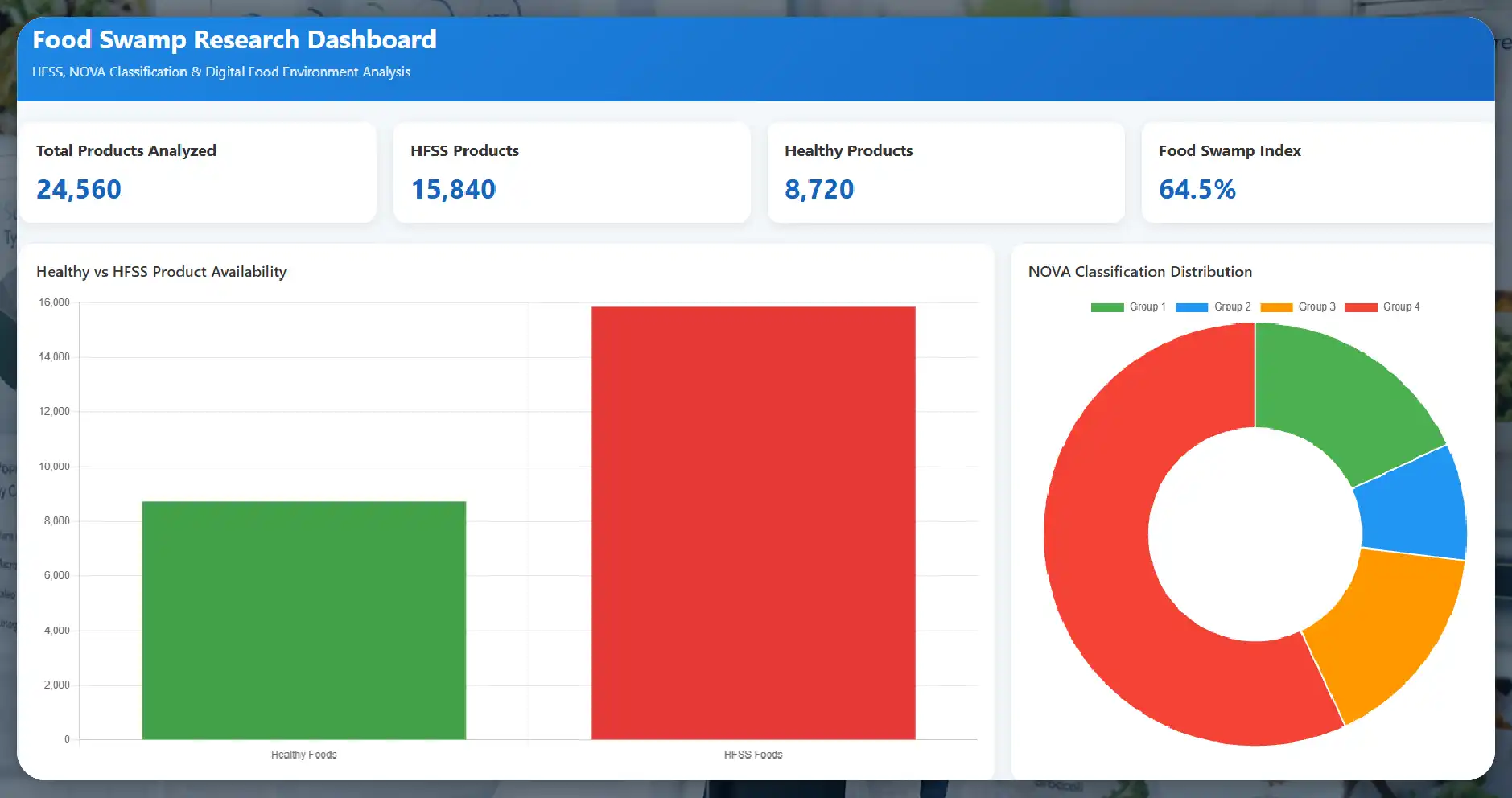
A food swamp refers to an environment where unhealthy food options significantly outnumber healthy alternatives. Unlike food deserts, which focus on limited access to food, food swamps emphasize the dominance of unhealthy food choices.
Modern food swamp studies increasingly rely on digital food availability data collected from online retailers and delivery platforms. Researchers can assess whether consumers are exposed to a disproportionate number of unhealthy products compared to healthier alternatives.
Food Data Scraping for HFSS, NOVA & Food Environment Studies enables researchers to map food availability patterns at unprecedented scale. By analyzing product catalogs, delivery coverage areas, and menu offerings, researchers can identify regions where unhealthy food dominates the local food ecosystem.
These insights contribute to urban planning initiatives, nutrition interventions, and community health programs designed to improve access to healthier food options.
Monitoring Food Prices and Affordability
Food affordability plays a critical role in dietary choices. Even when healthy foods are available, high prices can discourage consumers from purchasing nutritious products.
Food scraping technologies help researchers track price fluctuations across multiple retailers, geographic locations, and product categories. Continuous monitoring allows analysts to identify inflation trends and affordability challenges affecting vulnerable populations.
Price intelligence supports studies investigating:
- Cost differences between healthy and unhealthy foods.
- Regional disparities in food pricing.
- Impact of inflation on dietary behavior.
- Effectiveness of food subsidy programs.
Researchers can use historical pricing datasets to evaluate how economic conditions influence consumer purchasing decisions and nutritional outcomes.
Building Nutrition Market Intelligence for Policy Development
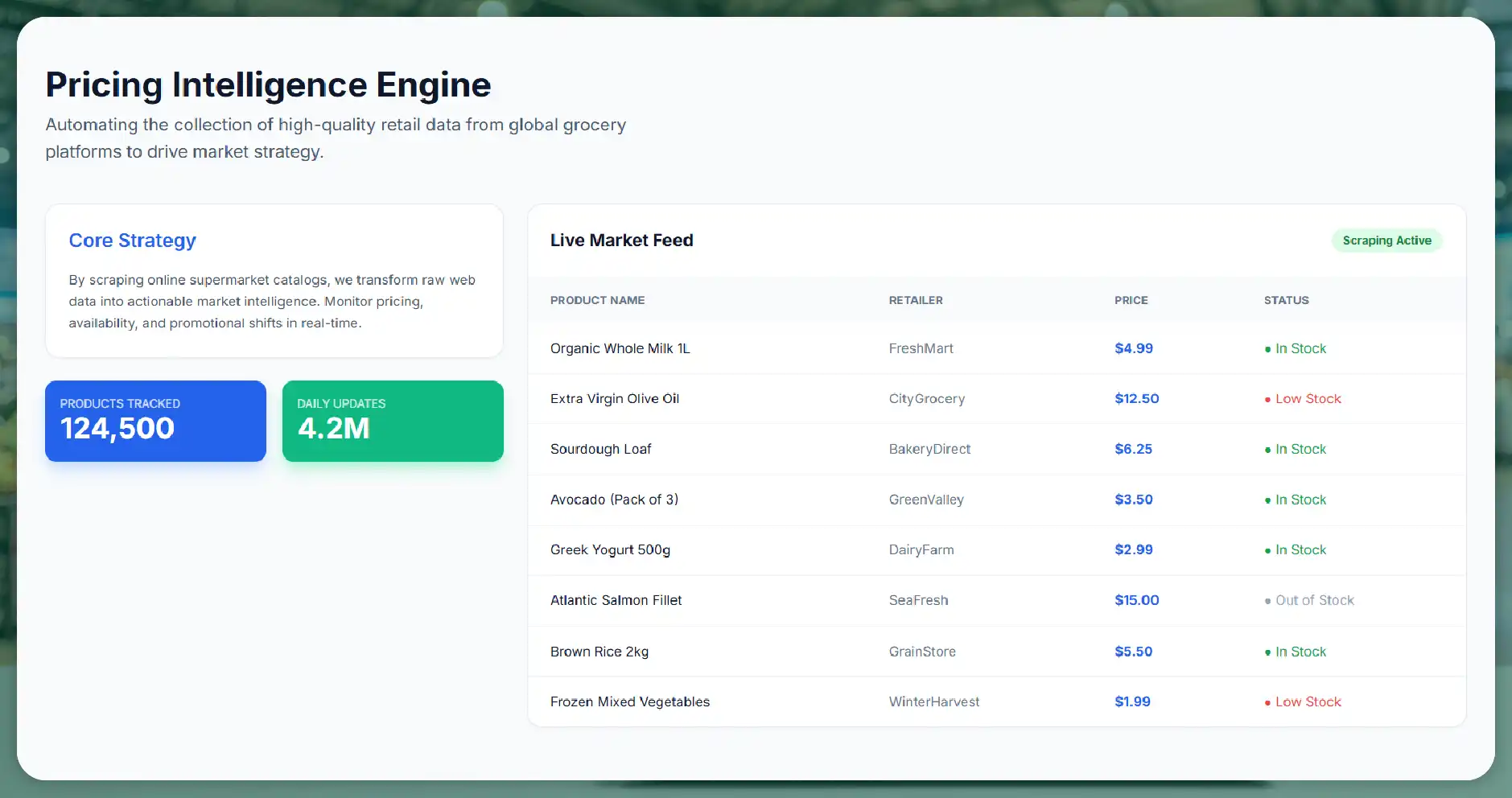
Modern public health strategies increasingly depend on data-driven policy design. Governments require accurate information regarding product availability, nutritional quality, and pricing structures before implementing regulatory measures.
Nutrition Market Intelligence provides stakeholders with comprehensive visibility into the food marketplace. Through large-scale data collection, policymakers can assess industry trends, identify emerging nutrition challenges, and evaluate the effectiveness of public health regulations.
Examples include monitoring sugar reduction initiatives, front-of-pack labeling programs, and restrictions on HFSS product promotions. Data-driven evaluations help ensure that interventions achieve their intended objectives.
Measuring Healthy Food Availability Across Regions
Access to healthy food remains a significant determinant of public health outcomes. Researchers frequently investigate whether consumers can easily purchase nutritious products within their communities.
Healthy Food Availability Analytics enables comprehensive assessment of food accessibility by examining product inventories across grocery platforms, supermarkets, and delivery services.
By comparing availability data across neighborhoods, researchers can identify underserved areas and evaluate potential inequalities in food access. Such findings support targeted interventions aimed at reducing nutrition-related health disparities.
These analyses also help retailers and policymakers understand where investments in healthier food options may have the greatest impact.
The Role of APIs and Automated Data Collection
As food datasets continue to grow in complexity, researchers increasingly depend on automated collection technologies. Manual approaches cannot efficiently capture the scale and frequency required for modern food environment studies.
Solutions such as Grocery Delivery Extraction API platforms allow organizations to gather structured information from grocery delivery services and online marketplaces in real time. These technologies streamline data acquisition while improving consistency and research reliability.
Automated systems can capture product details, nutrition information, pricing updates, stock availability, promotional campaigns, and category classifications across multiple platforms simultaneously.
The resulting datasets provide researchers with a continuously updated view of changing food environments.
Turn food data into actionable public health insights with our expert scraping solutions.
Leveraging Web Scraping for Food Environment Research
The adoption of Web Scraping Grocery Data methodologies has significantly expanded research capabilities. Instead of relying solely on traditional surveys or limited retail audits, researchers can now analyze millions of product records collected directly from digital sources.
This scalability improves the statistical robustness of studies and enables comparisons across regions, retailers, and time periods. Large datasets support advanced analytical techniques, including machine learning, predictive modeling, and geospatial analysis.
Researchers can uncover hidden patterns within food systems while generating insights that would be difficult to obtain through conventional methods.
Visualizing Data Through Interactive Dashboards
Once collected, food datasets must be transformed into actionable insights. Interactive analytics platforms help researchers explore complex relationships between nutrition, pricing, availability, and consumer behavior.
A Grocery Price Dashboard allows stakeholders to monitor pricing trends across product categories, retailers, and geographic locations. Visualization tools simplify the interpretation of large datasets while supporting faster decision-making.
Dashboards can also integrate nutritional indicators, HFSS classifications, NOVA categories, and availability metrics, creating a unified platform for food environment analysis.
How Food Data Scrape Can Help You?
Comprehensive Food Environment Monitoring
Our data scraping solutions collect large-scale food availability, nutrition, pricing, and
product information from multiple digital platforms, supporting comprehensive public health
research and food environment assessments.
Accurate HFSS and NOVA Classification Data
We extract detailed ingredient lists, nutritional values, product descriptions, and category
information, helping researchers accurately classify foods using HFSS and NOVA frameworks
efficiently.
Real-Time Pricing and Affordability Analysis
Our automated systems continuously track food prices across retailers and delivery platforms,
enabling researchers to analyze affordability trends, inflation impacts, and purchasing
behavior.
Scalable Data Collection for Academic Studies
We deliver structured, high-quality datasets from thousands of products and retailers, reducing
manual research efforts while supporting large-scale academic and public health projects.
Customized Dashboards and Research Intelligence
Our tailored analytics solutions transform raw food data into actionable insights through
dashboards, reports, and visualization tools that support evidence-based decision-making
processes.
Conclusion
Digital food ecosystems continue to generate unprecedented volumes of valuable information for public health and academic research. By leveraging advanced data extraction methodologies, researchers can better understand nutritional environments, monitor food accessibility, evaluate HFSS and NOVA classifications, and conduct comprehensive food swamp studies.
As the demand for evidence-based nutrition policies grows, technologies supporting food data collection will become increasingly important. Integrated solutions such as Grocery Price Tracking Dashboard platforms help transform raw food information into actionable intelligence for researchers and policymakers. Combined with advanced Grocery Data Intelligence capabilities and large-scale Grocery Datasets, these tools provide the foundation for more effective public health strategies, healthier food environments, and stronger academic research outcomes worldwide.
Are you in need of high-class scraping services? Food Data Scrape should be your first point of call. We are undoubtedly the best in Food Data Aggregator and Mobile Grocery App Scraping service and we render impeccable data insights and analytics for strategic decision-making. With a legacy of excellence as our backbone, we help companies become data-driven, fueling their development. Please take advantage of our tailored solutions that will add value to your business. Contact us today to unlock the value of your data.