The Client
Our client was a Hong Kong-based grocery intelligence and nutrition analytics company seeking a centralized view of packaged food products sold through supermarket websites, online grocery stores, and convenience retail platforms. The company wanted to improve its ability to compare nutritional information, monitor product availability, and identify changes in ingredient declarations across multiple retail channels.
The client required Hong Kong Supermarket Product Data Scraping to consolidate fragmented product information into a consistent, searchable database. Its business team also needed a reliable Hong Kong Supermarket Food Label Dataset containing nutritional values, ingredient lists, allergen declarations, serving sizes, package quantities, and product categories.
Additionally, the client aimed to strengthen its Hong Kong Food Product Intelligence Data capabilities for market research, dietary product comparisons, and retail analytics. Manual collection was time-consuming and difficult to maintain as product catalogs changed. Food Data Scrape was engaged to develop a structured data collection workflow that could support repeatable extraction, validation, standardization, and analysis while accommodating differences in product-page layouts and nutritional-label formats.
Key Challenges
-
Fragmented Product Information
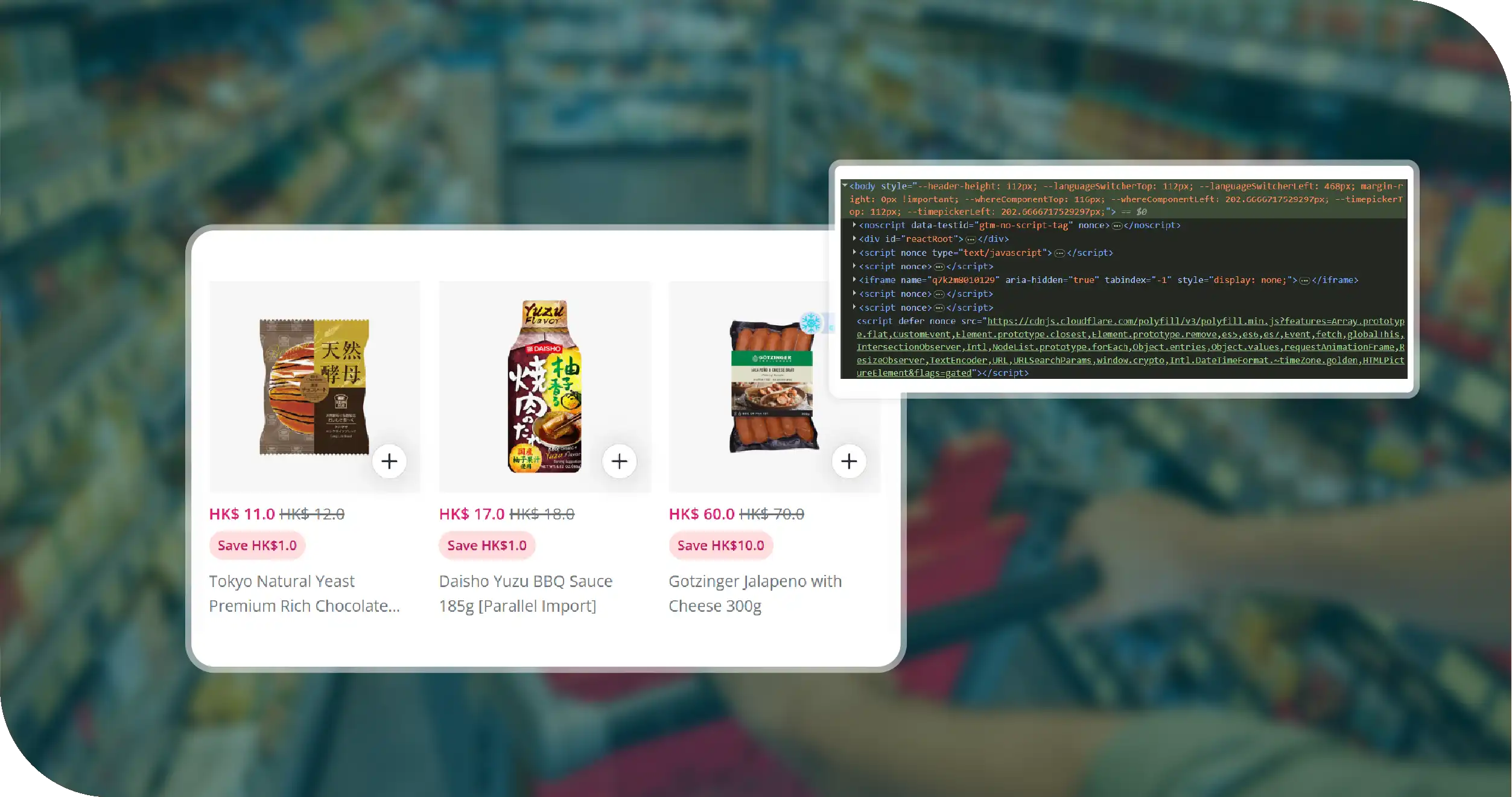
The client struggled to consolidate product information across supermarket websites, grocery platforms, and convenience stores. Different page layouts, inconsistent nutritional units, incomplete ingredient declarations, and varying product identifiers complicated efforts to Extract Hong Kong Convenience Store Product Data into a unified database for reliable comparison and analysis. -
Complex Dietary and Nutritional Attributes
Collecting specialized nutritional information required more than capturing product names and prices. Health & Specialty Diet Data Scraping needed to account for allergen statements, vegetarian and vegan claims, sugar-free labels, gluten-related declarations, and specialty dietary categories while distinguishing verified label information from retailer descriptions and promotional claims. -
Changing Catalogs and Multiple Delivery Channels
Frequent product updates, discontinued items, changing package sizes, and inconsistent listings across grocery delivery services made ongoing monitoring difficult. The client needed dependable Grocery Delivery Scraping API Services to organize available information, detect changes, reduce repetitive manual work, and maintain consistent records across supported sources.
Key Solutions
-
Centralized Grocery Product Data Collection
Food Data Scrape developed a structured collection workflow that consolidated publicly accessible supermarket and grocery product information into standardized records. The resulting Grocery Store Datasets included product names, brands, categories, package sizes, ingredients, nutrition values, allergen statements, and source references, with missing fields clearly identified rather than incorrectly estimated. -
Hong Kong Grocery Channel Integration
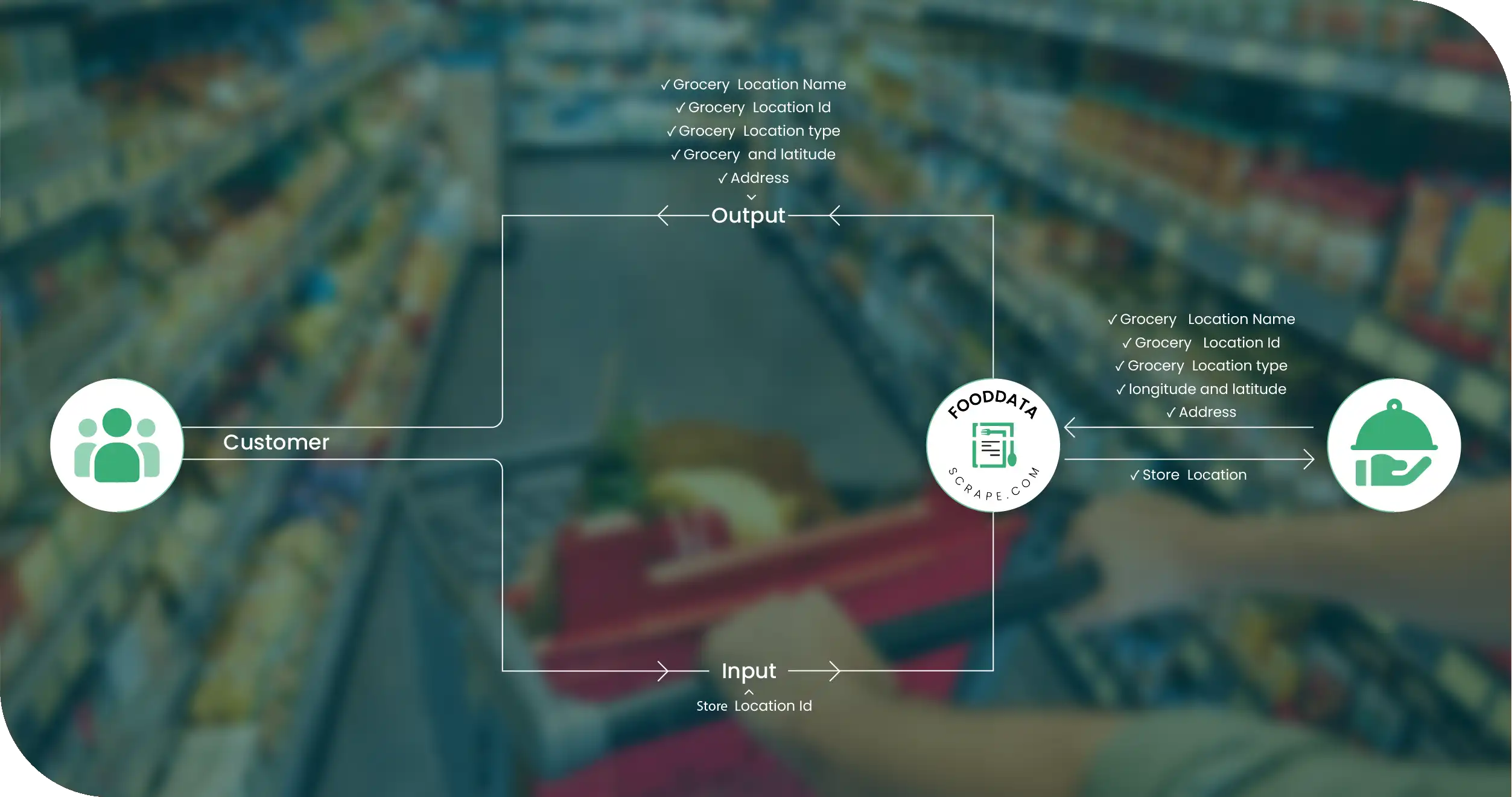
We organized product information from supported online grocery and supermarket channels into a consistent data framework. Our Grocery Delivery Data Scraping in Hong Kong solution helped the client compare product listings, identify duplicate records, review catalog differences, and maintain traceable information for subsequent nutritional analysis and retail intelligence reporting. -
Nutrition Analytics and Intelligent Classification
We implemented validation rules, nutritional-unit normalization, product categorization, and structured dietary attribute tagging. This framework supported AI Grocery Intelligence by preparing consistent inputs for product matching, nutritional comparisons, trend analysis, and future machine-learning applications without treating unverified dietary claims or missing values as confirmed facts.
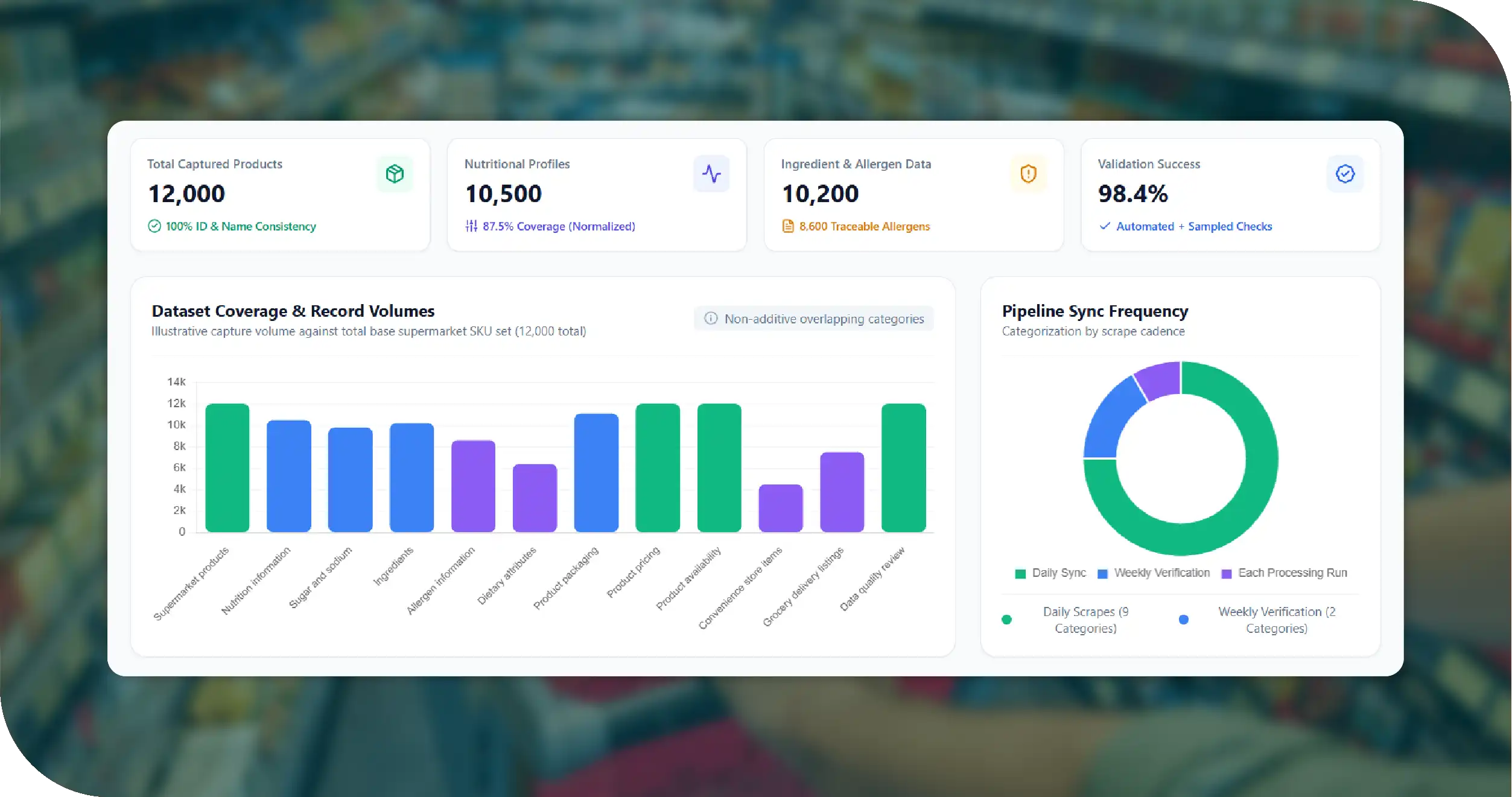
Detailed Data Collection and Processing Table
The following table illustrates a proposed project dataset structure and processing framework. The figures are illustrative planning values, not verified production results or actual client measurements.
| Data category | Fields captured | Illustrative records | Validation checks | Update frequency |
|---|---|---|---|---|
| Supermarket products | Product ID, name, brand, category | 12,000 | ID and name consistency | Daily |
| Nutrition information | Calories, protein, carbohydrates, fats | 10,500 | Units and value ranges | Daily |
| Sugar and sodium | Sugar, total sugars where available, sodium | 9,800 | Unit normalization | Daily |
| Ingredients | Ingredient list and declaration text | 10,200 | Text completeness | Weekly |
| Allergen information | Declared allergens and warnings | 8,600 | Source traceability | Daily |
| Dietary attributes | Vegan, vegetarian, gluten-related claims | 6,400 | Claim-source verification | Weekly |
| Product packaging | Net weight, volume, serving size | 11,100 | Quantity and unit checks | Daily |
| Product pricing | Listed price and package price | 12,000 | Currency and price validation | Daily |
| Product availability | Listed, unavailable, discontinued indicators | 12,000 | Status and timestamp checks | Daily |
| Convenience store items | Product identifiers and label attributes | 4,500 | Duplicate and category checks | Daily |
| Grocery delivery listings | Platform SKU, product URL, delivery listing | 7,500 | URL and product matching | Daily |
| Data quality review | Missing values, duplicates, validation status | 12,000 | Automated and sampled manual checks | Each processing run |
Note: Categories can overlap because a single product may appear across several channels and contain multiple types of nutritional information. Record counts therefore should not be added together to calculate unique products. Actual coverage, collection frequency, and completeness depend on source accessibility and project scope.
Methodologies We Used
-
Source Identification and Coverage Mapping
We identified relevant supermarket websites, online grocery platforms, and supported convenience retail sources. Each source was assessed for product coverage, available nutritional attributes, page structure, access permissions, and update behavior before inclusion in the collection workflow. -
Automated Data Extraction
We configured source-specific extraction rules to capture product identifiers, descriptions, package sizes, ingredients, nutrition panels, and other available attributes. Where permitted, automated collection reduced repetitive manual work while preserving source references and collection timestamps for traceability. -
Nutritional Standardization and Validation
We standardized comparable nutritional measurements into consistent units while preserving original values and serving-size context. Validation rules flagged missing measurements, unexpected values, ambiguous units, and inconsistent declarations for review instead of silently correcting or inventing nutritional information. -
Product Matching and Deduplication
We applied product identifiers, brand names, package sizes, and descriptive attributes to identify potential duplicates across supported channels. Matching rules helped distinguish identical products from different formulations, package variants, and similarly named items that required separate records. -
Quality Monitoring and Dataset Delivery
We monitored extraction completeness, field-level validation results, duplicate rates, and changes in source availability. Following quality checks, the client received structured datasets in agreed formats, enabling integration with analytics tools, internal databases, and reporting workflows.
Advantages of Collecting Data Using Food Data Scrape
-
Better Nutritional Comparisons
Structured nutrition records allow businesses to compare calories, sugars, fats, protein, and sodium across product categories. Consistent units and serving-size context make comparisons more meaningful and help analysts identify products with similar nutritional profiles. -
Reduced Manual Data Collection
Automated collection reduces repetitive copying from individual product pages. Teams can redirect time toward nutrition analysis, catalog management, and research while using validation checks to identify records that need human review or source verification. -
Improved Product Catalog Management
Consolidated grocery datasets help teams identify duplicate listings, missing nutritional fields, package-size differences, and product availability changes. These insights support cleaner product catalogs and more consistent information across retail applications and analytical systems. -
Stronger Market and Dietary Insights
Organized food label data supports research into nutritional trends, product positioning, specialty dietary offerings, and category-level differences. Analysts can investigate declared product attributes and compare market segments without relying entirely on scattered descriptions or manual spreadsheets. -
Scalable Data-Driven Decision-Making
A repeatable collection framework can expand as new sources, categories, and attributes become relevant. Food Data Scrape helps businesses establish structured data pipelines that support reporting, product intelligence, and future analytical applications, subject to source access and data quality.
Client's Testimonial
"Before working with Food Data Scrape, consolidating nutritional information from different supermarket and grocery platforms required considerable manual effort. Our team faced difficulties comparing product labels, standardizing nutritional values, and maintaining consistent product records across sources. The proposed data collection framework gave us a clearer structure for organizing product attributes, ingredients, allergen declarations, package sizes, and nutritional information. We particularly valued the emphasis on validation, source traceability, and identifying incomplete records instead of treating every listing as equally reliable. The structured dataset also created opportunities to improve our product comparison workflows and explore additional nutrition analytics capabilities. Food Data Scrape demonstrated an approach aligned with our requirements for organized grocery intelligence and scalable data processing. The project framework provides a useful foundation for improving how our team manages and analyzes supermarket product information."
—Head of Grocery Intelligence
Final Outcome
The proposed solution established a structured framework for consolidating supermarket, grocery delivery, and convenience retail product information in Hong Kong. Instead of relying exclusively on manual collection, the client gained a repeatable methodology for organizing product identifiers, nutritional values, ingredient declarations, allergen information, package sizes, and product availability.
Standardization and validation rules helped improve consistency across collected records, while source references supported traceability and further verification. Product matching procedures also provided a practical way to identify duplicate listings and distinguish between different package sizes or product formulations.
The resulting data framework can support nutritional comparisons, grocery catalog analysis, specialty diet research, and retail market intelligence. It also creates a foundation for future analytical applications, including automated classification and product recommendation workflows.
Actual business impact depends on source coverage, data completeness, refresh frequency, and implementation. With a clearly defined collection and quality-control process, Food Data Scrape helps organizations build a more maintainable foundation for data-driven grocery intelligence.