
The Kids Meal Menu Data Scraping Research Report provides an in-depth analysis of the evolving children's menu landscape across quick-service restaurants, casual dining chains, family restaurants, and food delivery platforms. By collecting and analyzing real-time menu data, pricing, ingredients, nutritional claims, flavor innovations, meal combinations, and promotional activities, the report uncovers valuable insights into changing consumer preferences and competitive market dynamics. It explores how restaurants are responding to growing demand for healthier options, customizable meals, global flavors, and convenient dining experiences while maintaining affordability and customer engagement. The report also examines regional menu variations, historical pricing trends, ingredient shifts, and emerging product categories to support strategic decision-making. Designed for restaurant operators, food manufacturers, market researchers, investors, and technology providers, this research delivers actionable intelligence that helps identify market opportunities, optimize menu development, benchmark competitors, forecast future demand, and improve business performance using comprehensive restaurant menu datasets collected from multiple digital sources.
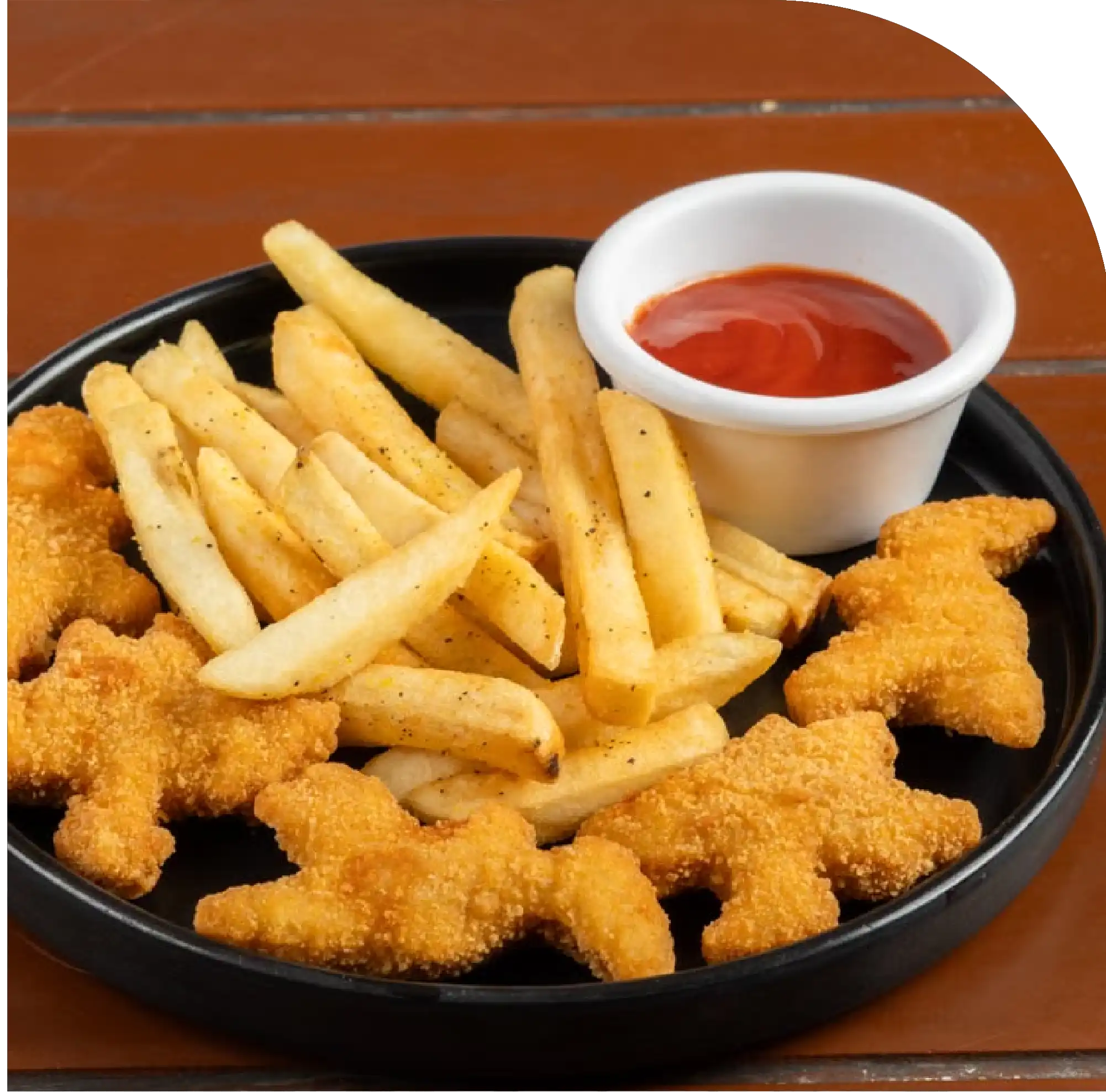
Market Evolution
Analyzes changing children's dining preferences through continuously updated restaurant menu and pricing intelligence worldwide.
Flavor Innovation
Tracks emerging global cuisines, ingredient trends, and menu customization across leading restaurant brands globally.
Pricing Insights
Monitors historical pricing movements, promotional offers, and competitive meal bundle strategies across markets.
Consumer Analytics
Reveals purchasing behavior, nutritional preferences, customization trends, and digital ordering patterns for families.
Future Forecasts
Provides predictive demand intelligence supporting menu planning, product innovation, and long-term business growth.

The children's dining segment has become one of the most dynamic categories within the global foodservice industry. What once revolved around simple combinations of burgers, fries, and beverages has transformed into a sophisticated market shaped by nutritional awareness, menu personalization, global flavors, and digital ordering experiences. Restaurants are increasingly investing in menu innovation to attract families while balancing affordability, quality, and customer satisfaction. As a result, businesses require continuous access to menu data that reflects real-time market movements rather than relying on occasional market surveys.
The growing importance of Kids Meal Menu Data Scraping lies in its ability to capture menu updates, pricing changes, ingredient modifications, promotional campaigns, and customer-facing nutritional claims from restaurant websites, delivery platforms, and mobile applications. Alongside by using strategy to Scrape Kids Meal Menu Trends 2026, organizations gain a comprehensive understanding of changing consumer preferences, competitive positioning, and regional demand patterns. Businesses also leverage Kids Menu Flavor Trend Analysis to evaluate how global cuisines, healthier ingredients, and customizable meals influence purchasing decisions across different restaurant formats.
Children's meals have evolved into a strategic business category rather than a secondary menu section. Families today expect menus that provide flexibility, balanced nutrition, appealing presentation, and interactive dining experiences. Restaurant operators have responded by introducing customizable meal combinations, premium ingredients, international flavors, and healthier beverage alternatives. These changes create valuable datasets that help businesses understand emerging market trends.
Continuous menu monitoring allows restaurant brands, food manufacturers, investors, and market researchers to identify opportunities that may otherwise remain hidden. Instead of relying solely on sales reports, businesses now analyze menu structures, pricing strategies, ingredient trends, and promotional activities to understand future demand.
The children's menu category experiences constant change throughout the year. Seasonal promotions, school holidays, limited-time offers, holiday campaigns, and regional product launches frequently alter menu offerings. Traditional market research often struggles to capture these rapid changes, making automated menu intelligence increasingly valuable.
Restaurant menu scraping enables organizations to collect structured information such as menu categories, product names, pricing, ingredients, nutritional claims, portion sizes, beverage options, side selections, promotional labels, meal bundles, images, availability, customer ratings, and regional variations. This continuous data collection supports faster decision-making while reducing the limitations associated with manual research.
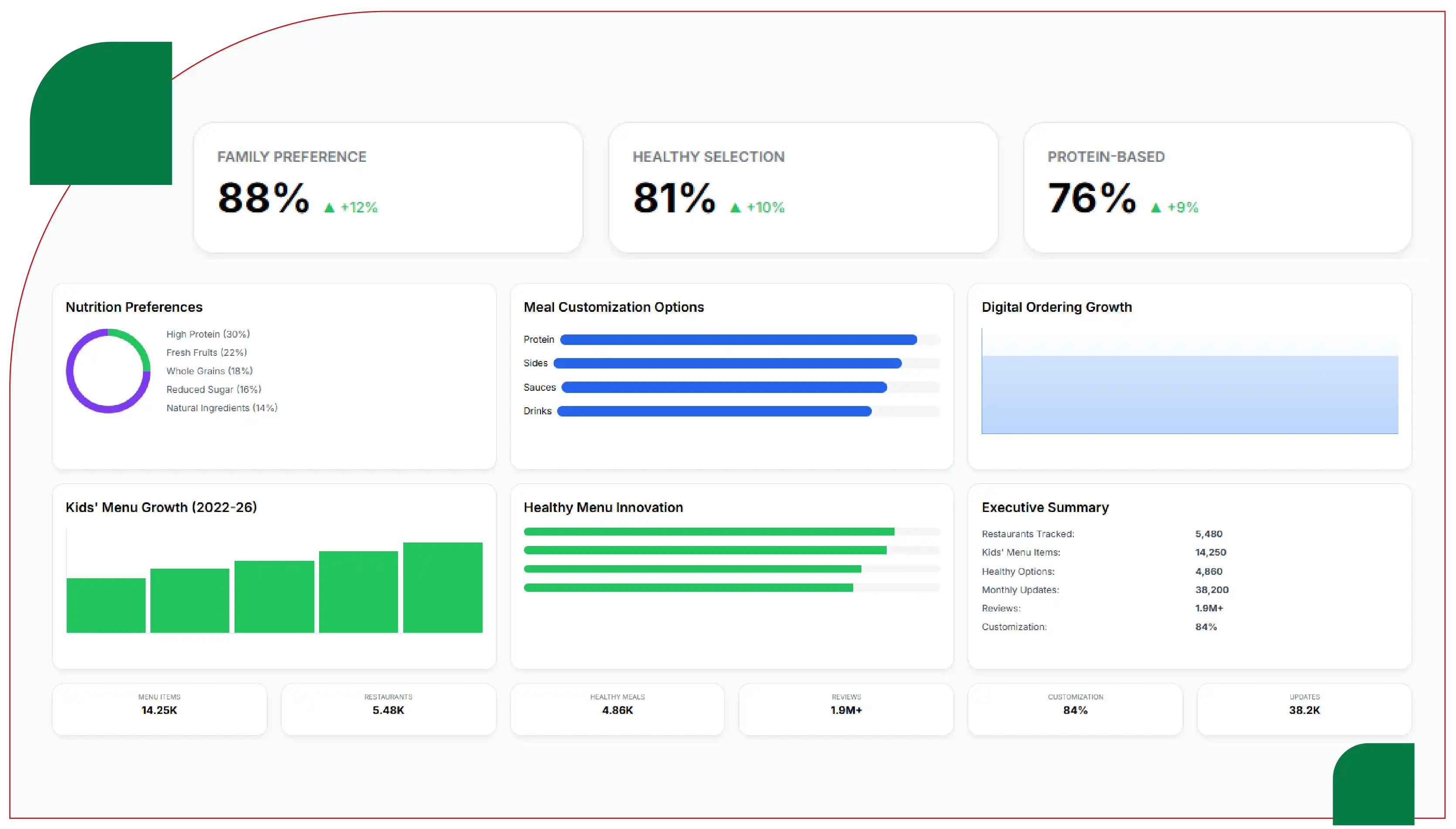
Parents increasingly seek meals that combine convenience with quality rather than focusing solely on traditional health claims. Consumers pay greater attention to protein content, natural ingredients, whole grains, reduced sugar, and fresh fruits while expecting meals that children genuinely enjoy eating. Restaurants that successfully balance nutrition with flavor often experience stronger customer engagement and repeat visits.
Customization has become another defining trend. Families appreciate the ability to select proteins, beverages, side dishes, sauces, and desserts according to individual preferences. This flexibility increases perceived value while improving customer satisfaction. Digital ordering platforms have further accelerated this trend by making meal customization simple during online ordering.
Restaurant intelligence platforms collect information from numerous digital sources to ensure comprehensive market visibility. Restaurant websites, food delivery applications, online ordering portals, mobile apps, digital kiosks, franchise websites, cloud kitchen platforms, and third-party aggregators contribute valuable information that reflects current menu availability and promotional activity. Historical datasets generated from these sources allow businesses to monitor long-term market evolution and identify recurring seasonal patterns.
| Restaurant Segment | Average Kids Meal Price (USD) | Protein-Based Meals (%) | Healthy Claims (%) | Build-Your-Own Meals (%) | Global Flavor Meals (%) | Digital Exclusive Meals (%) | Customer Engagement Growth (%) |
|---|---|---|---|---|---|---|---|
| Burger QSR | 6.85 | 72 | 45 | 36 | 18 | 22 | 12.6% |
| Pizza Chains | 7.15 | 69 | 42 | 40 | 24 | 29 | 11.8% |
| Chicken Restaurants | 7.60 | 84 | 47 | 39 | 20 | 31 | 15.7% |
| Casual Dining | 8.95 | 68 | 56 | 48 | 35 | 18 | 14.4% |
| Mexican Restaurants | 8.10 | 74 | 49 | 46 | 100 | 16 | 20.3% |
| Asian Restaurants | 8.55 | 79 | 58 | 44 | 100 | 15 | 18.8% |
| Family Dining | 8.30 | 65 | 60 | 41 | 28 | 13 | 13.9% |
| Café Chains | 6.55 | 54 | 63 | 34 | 14 | 27 | 10.2% |
| Hotel Restaurants | 9.75 | 71 | 65 | 38 | 42 | 9 | 16.4% |
| Theme Park Dining | 10.20 | 62 | 39 | 51 | 37 | 35 | 21.1% |
Flavor experimentation has become increasingly visible across children's menus. Restaurants are introducing globally inspired dishes that remain approachable for younger diners while appealing to parents seeking variety. Mild Mexican tacos, Japanese rice bowls, teriyaki chicken, Mediterranean wraps, baked pasta, and Asian noodle dishes are gradually becoming permanent additions to many restaurant menus.
Organizations conducting Kids Food Trend Data Scraping can measure how quickly these cuisines gain popularity across regions while identifying which ingredients consistently appear in successful menu launches. Historical flavor tracking also helps restaurants evaluate long-term product performance before expanding nationwide.
Rather than relying on broad wellness messaging, restaurants increasingly emphasize measurable nutritional attributes. Menu descriptions frequently highlight protein content, whole grains, reduced sugar, fresh vegetables, fruit sides, natural ingredients, and fiber-rich options. These detailed claims influence purchasing decisions because parents now seek transparent nutritional information instead of generic health statements.
Advanced menu analytics allow businesses to monitor ingredient-level changes across thousands of restaurant locations, creating detailed benchmarks that support future menu development and product innovation.
Modern restaurant operators increasingly depend on Kids Food Consumer Trend Analytics to understand purchasing behavior beyond simple sales figures. Digital ordering patterns reveal which meal combinations generate repeat purchases, how frequently customers substitute beverages, which side dishes remain most popular, and how premium upgrades influence average order value. These insights support pricing optimization while helping restaurants refine menu architecture according to actual customer behavior rather than assumptions.
Restaurant competition extends beyond pricing alone. Successful brands closely monitor competitor product launches, promotional campaigns, nutritional positioning, ingredient innovation, limited-time offers, seasonal bundles, and digital ordering experiences. Continuous menu scraping provides historical visibility into these changes, allowing operators to react quickly while identifying emerging whitespace opportunities before competitors establish leadership.
| Performance Indicator | Q1 | Q2 | Q3 | Q4 | Annual Growth |
|---|---|---|---|---|---|
| Average Kids Menu Items | 18 | 19 | 20 | 22 | 22.2% |
| Build-Your-Own Meals | 24 | 28 | 31 | 35 | 20.9% |
| High Protein Claims | 37 | 42 | 48 | 54 | 45.9% |
| Fiber Claims | 16 | 20 | 25 | 31 | 38.6% |
| Whole Grain Products | 22 | 25 | 29 | 34 | 30.5% |
| Fruit Side Options | 43 | 46 | 50 | 56 | 30.2% |
| Vegetable Side Options | 31 | 35 | 38 | 43 | 38.7% |
| Premium Kids Meals | 8 | 10 | 13 | 17 | 46.7% |
| Global Cuisine Meals | 20 | 24 | 29 | 35 | 42.8% |
| Digital Exclusive Offers | 15 | 18 | 23 | 29 | 48.3% |
| Interactive Meal Bundles | 19 | 23 | 28 | 34 | 44.1% |
| Healthy Beverage Options | 33 | 36 | 40 | 45 | 26.5% |
Artificial intelligence has significantly improved the efficiency of restaurant menu analytics by automatically classifying cuisines, ingredients, nutritional attributes, pricing changes, promotional labels, and seasonal products. Instead of manually reviewing thousands of restaurant menus, businesses can identify meaningful patterns within minutes. AI-powered systems also detect emerging flavor clusters, ingredient substitutions, and pricing anomalies that would otherwise remain unnoticed.
These capabilities support comprehensive Kids Meal Menu Intelligence, enabling businesses to benchmark competitors, evaluate market opportunities, and accelerate strategic decision-making using continuously updated datasets.
Historical menu intelligence becomes even more valuable when integrated with predictive analytics. Businesses increasingly rely on Kids Food Demand Forecasting to estimate future demand for menu categories, identify seasonal purchasing behavior, evaluate product launch success, optimize inventory planning, and improve regional expansion strategies. Forecasting models built upon long-term menu datasets reduce uncertainty while supporting evidence-based business planning.
As restaurants continue introducing premium children's meals, healthier ingredients, interactive ordering experiences, and international flavors, demand forecasting will become an essential component of menu strategy across the global foodservice industry.
Children's menus have become a powerful source of competitive intelligence, revealing valuable insights into consumer preferences, pricing strategies, nutritional positioning, and flavor innovation. Continuous Food Flavor Insights generated through automated menu monitoring help restaurant operators respond quickly to changing market expectations while improving product development and promotional planning.
Organizations that invest in Food Data Scraping gain access to structured, real-time information that supports better business decisions across restaurant operations, food manufacturing, market research, and investment analysis. Combined with advanced Restaurant Data Intelligence, businesses can identify emerging opportunities, monitor competitors more effectively, and build data-driven strategies that improve long-term performance. The ability to Extract Restaurant Menu Data at scale enables organizations to transform everyday menu updates into actionable intelligence, creating sustainable competitive advantages within the rapidly evolving kids' meal market.
If you are seeking for a reliable data scraping services, Food Data Scrape is at your service. We hold prominence in Food Data Aggregator and Mobile Restaurant App Scraping with impeccable data analysis for strategic decision-making.