
The Lieferando and Wolt food delivery ecosystem generates vast amounts of restaurant, menu, pricing, delivery, and promotional data that are valuable for businesses seeking market intelligence and competitive insights. This report explores how Lieferando and Wolt data scraping services enable organizations to collect structured, real-time datasets for monitoring restaurant listings, menu updates, pricing trends, customer ratings, delivery fees, and promotional campaigns. It highlights the role of automated data extraction in supporting pricing optimization, expansion planning, menu benchmarking, demand forecasting, and operational analytics across European markets. The report also examines the business applications of historical and live food delivery datasets, helping restaurant chains, aggregators, investors, and analytics firms make informed decisions. By transforming dynamic marketplace information into standardized datasets, organizations can improve competitive positioning, identify emerging consumer trends, optimize regional strategies, and develop data-driven business intelligence solutions that support long-term growth in the rapidly evolving online food delivery industry.
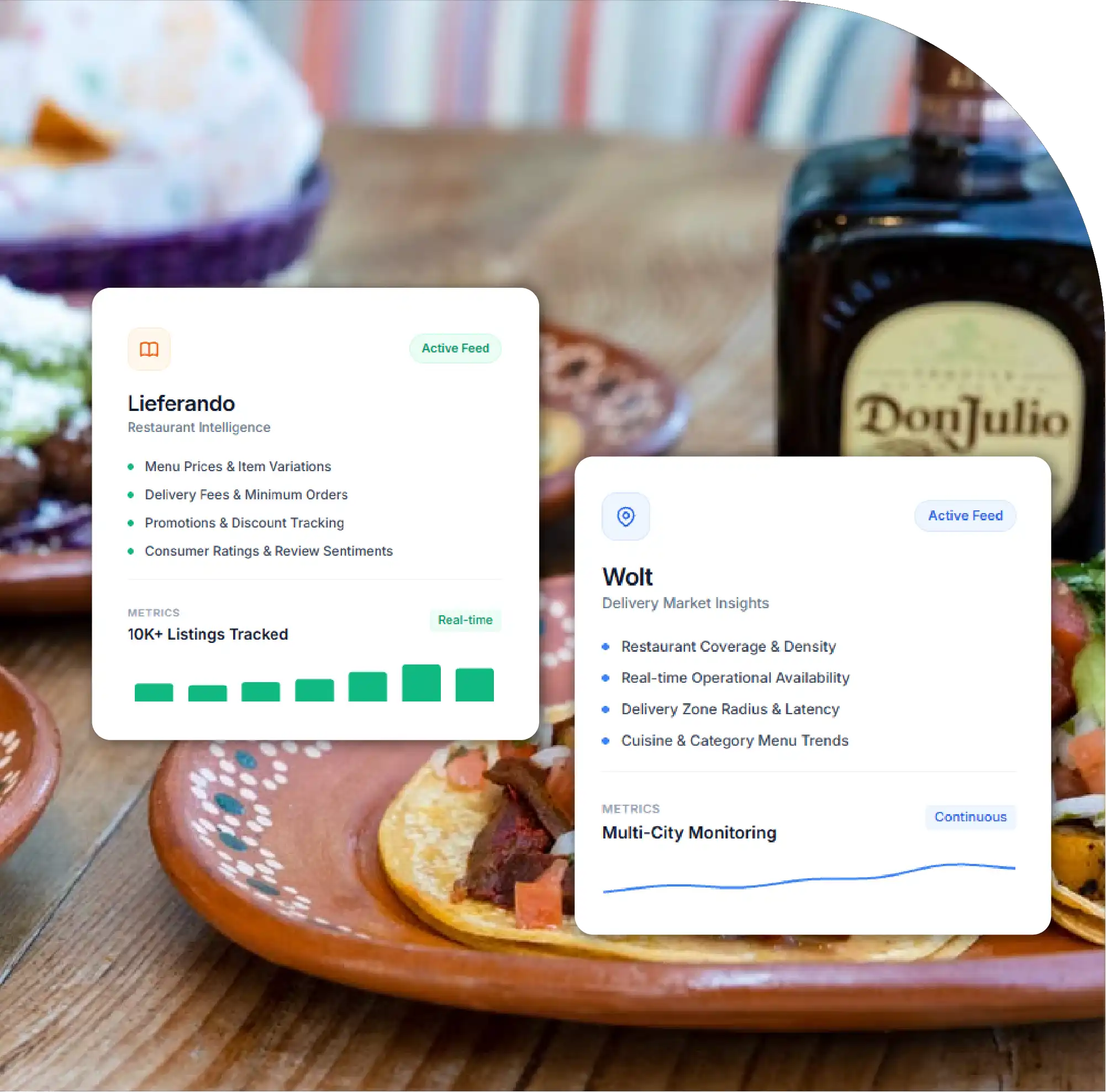
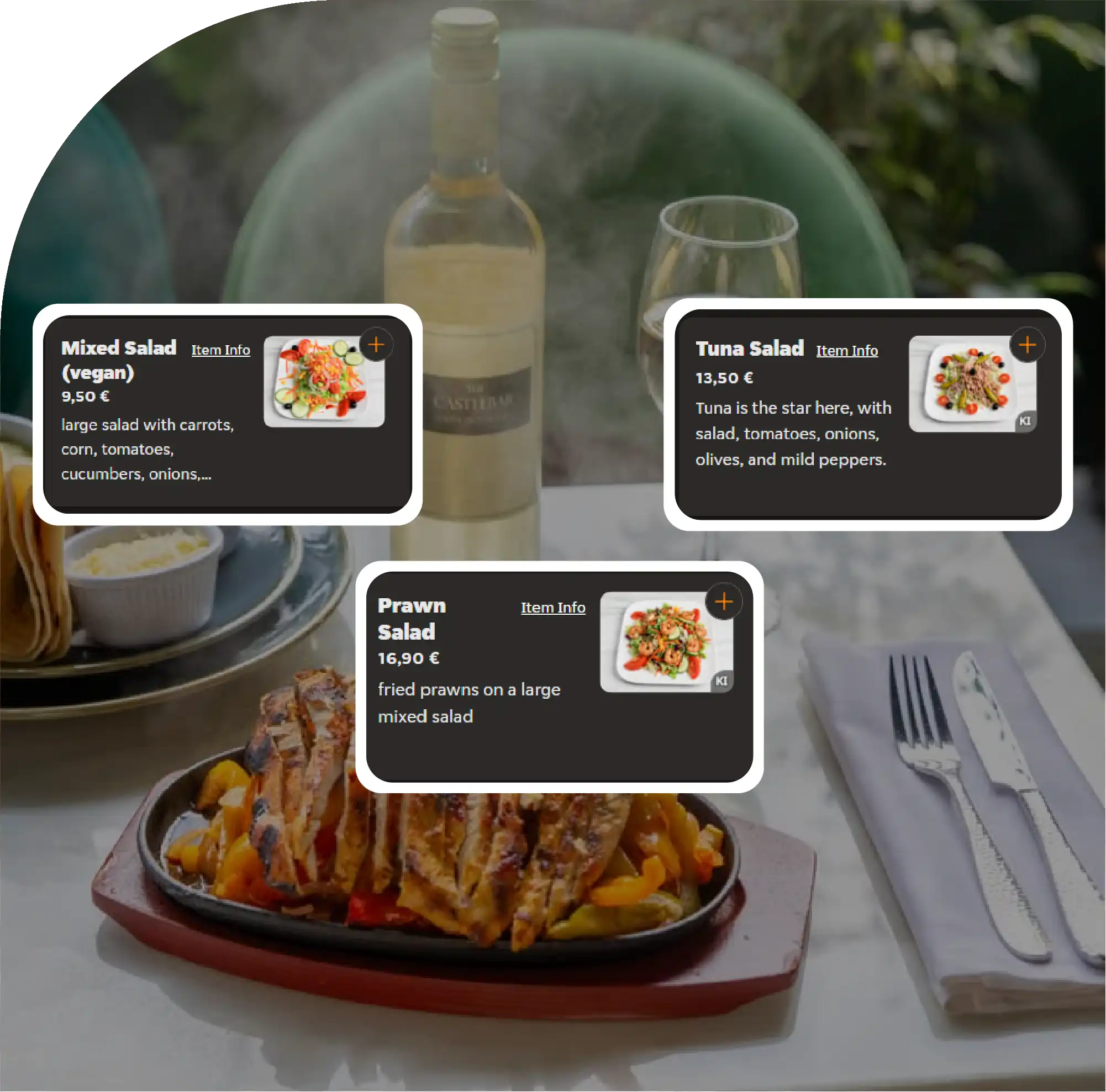
Market Intelligence
Real-time restaurant datasets reveal pricing, promotions, availability, and competitive market movements.
Menu Analytics
Tracks menu updates, category changes, pricing evolution, and customer dining preferences.
Pricing Insights
Historical pricing comparisons support forecasting, optimization, benchmarking, and profitability improvement strategies.
Regional Coverage
Monitors restaurant expansion, cuisine diversity, delivery zones, and geographic competitive landscapes.
Business Growth
Structured delivery data empowers smarter decisions, forecasting, innovation, and sustainable operational excellence.

The rapid expansion of online food delivery platforms has transformed the restaurant industry into a highly data-driven ecosystem. Businesses, restaurant chains, delivery aggregators, investors, and analytics firms increasingly depend on structured marketplace intelligence to understand changing consumer behavior, pricing strategies, promotional campaigns, and regional demand. Among Europe's leading food delivery platforms, Lieferando and Wolt provide extensive restaurant catalogs, menu information, pricing updates, customer ratings, delivery coverage, and promotional offers that represent valuable competitive intelligence. Lieferando & Wolt Data Scraping Services enable organizations to automate the collection of this dynamic information and convert it into actionable business insights. Through Lieferando restaurant and menu data scrape, enterprises can monitor thousands of restaurants simultaneously, while Wolt restaurant data scraping helps organizations build accurate datasets for pricing intelligence, market expansion, and operational benchmarking.
As food delivery marketplaces continue expanding across European cities, restaurant data changes multiple times every day. Menu prices fluctuate, promotional discounts appear for limited durations, delivery fees vary according to demand, and restaurant availability changes based on operating hours. Manual monitoring is no longer practical for organizations managing hundreds or thousands of locations. Automated data extraction delivers structured datasets that support market intelligence, revenue optimization, competitor tracking, and customer experience analysis.
Food delivery platforms have evolved beyond simple ordering applications. They now function as comprehensive digital marketplaces where restaurants compete through pricing, menu diversity, customer ratings, delivery speed, promotional offers, and seasonal campaigns. Every change made by a restaurant generates valuable competitive intelligence that can influence pricing strategies, expansion decisions, and promotional planning.
Restaurant brands operating across multiple European markets require continuous visibility into local competitors. They must understand which menu categories perform well, how discounts impact customer engagement, and how delivery costs differ across regions. Data scraping provides this visibility by collecting structured information from thousands of restaurant listings daily.
Businesses using marketplace intelligence can compare cuisines, analyze geographic coverage, identify pricing gaps, evaluate promotional frequency, and monitor new restaurant launches without depending on manually collected information.
Restaurant marketplaces contain diverse structured information that supports multiple business functions beyond competitive pricing. Modern data extraction solutions collect restaurant metadata, cuisine classifications, operating hours, menu categories, delivery estimates, customer reviews, discount campaigns, payment options, availability status, and promotional banners.
Lieferando menu pricing analytics allows restaurant operators to compare individual menu items with competing brands across cities and countries. Historical pricing trends further reveal seasonal adjustments, promotional cycles, inflation effects, and regional pricing variations.
Organizations can combine pricing information with customer ratings, restaurant popularity, cuisine segmentation, and delivery coverage to create advanced market intelligence dashboards that assist decision-makers in strategic planning.
The following table illustrates a detailed example of restaurant information typically collected through automated marketplace intelligence systems.
| Data Category | Records Collected Daily | Historical Storage (Months) | Average Update Frequency | Validation Accuracy (%) | Regional Coverage | Business Application | Processing Priority | Analytics Score |
|---|---|---|---|---|---|---|---|---|
| Restaurant Listings | 52,000 | 24 | 6 Hours | 99.4 | Germany | Expansion Analysis | 1 | 98 |
| Menu Categories | 146,500 | 24 | Daily | 99.2 | Finland | Product Mix Analysis | 2 | 97 |
| Individual Menu Items | 1,980,000 | 36 | Daily | 99.5 | Europe | Pricing Intelligence | 1 | 99 |
| Restaurant Ratings | 720,000 | 18 | Daily | 99.1 | Europe | Reputation Analysis | 3 | 96 |
| Delivery Charges | 310,000 | 12 | Every 4 Hours | 99.3 | Europe | Delivery Optimization | 2 | 97 |
| Promotional Campaigns | 142,000 | 18 | Hourly | 99.6 | Europe | Marketing Analysis | 1 | 99 |
| Estimated Delivery Time | 490,000 | 12 | Hourly | 99.0 | Europe | Service Benchmarking | 2 | 95 |
| Cuisine Classification | 89,500 | 36 | Weekly | 99.7 | Europe | Market Segmentation | 4 | 98 |
| Restaurant Availability | 560,000 | 12 | Hourly | 99.5 | Europe | Demand Monitoring | 2 | 97 |
| Customer Review Counts | 435,000 | 24 | Daily | 99.2 | Europe | Consumer Insights | 3 | 96 |
The structured datasets generated through continuous monitoring allow businesses to build comprehensive competitive intelligence platforms capable of supporting pricing optimization, operational planning, and restaurant performance evaluation.
Pricing remains one of the most influential competitive factors within food delivery marketplaces. Restaurants regularly modify prices due to ingredient costs, promotional events, seasonal demand, and competitive positioning.
Historical pricing datasets enable analysts to evaluate average menu inflation across different cuisine categories while identifying cities where price sensitivity differs significantly. Businesses can compare premium restaurants with budget-focused establishments and observe pricing consistency across franchise locations.
The availability of structured pricing information also supports predictive analytics models that estimate future pricing behavior based on historical market movements.
A continuously updated Wolt restaurant listings dataset helps organizations evaluate marketplace penetration across cities and neighborhoods. Restaurant density, cuisine diversity, premium dining availability, and quick-service distribution provide valuable indicators of regional competition.
Geographic intelligence supports expansion planning by highlighting underserved locations where demand exceeds supply. Restaurant chains entering new markets can identify potential competitors, understand customer preferences, and estimate pricing expectations before launching operations.
Location-based analytics further reveal changing marketplace dynamics as new restaurants enter or existing restaurants leave the platform.
Modern restaurant organizations require significantly more information than competitor pricing alone. Decision-makers analyze complete operational ecosystems including menu diversity, promotional frequency, delivery coverage, customer satisfaction, and regional positioning.
Lieferando and Wolt restaurant intelligence combines multiple datasets into unified dashboards capable of identifying competitive strengths and weaknesses. Executives can evaluate whether competitors emphasize premium offerings, family meals, healthy cuisine, or value-based promotions while tracking how these strategies evolve over time.
This intelligence assists restaurant chains in improving pricing consistency, refining menu portfolios, optimizing promotional calendars, and strengthening local market positioning.
Restaurant menus generate valuable analytical opportunities beyond individual item pricing. Organizations monitor category expansion, new product introductions, seasonal offerings, beverage combinations, meal bundles, dessert selections, and dietary options to understand changing customer preferences.
Lieferando & Wolt Menu Analytics for Restaurant Chains enables operators to benchmark their menu composition against competing restaurants within specific geographic markets. Historical comparisons identify which menu innovations achieve sustained marketplace adoption while revealing categories experiencing declining popularity.
Menu analytics also assists procurement planning by highlighting ingredient demand trends and identifying emerging cuisine preferences across European markets.
The following table demonstrates how large-scale restaurant datasets support advanced business intelligence across multiple operational functions.
| Dataset Type | Total Records | Daily Increment | Cities Covered | Restaurant Count | Menu Attributes | Pricing Variables | Historical Years | Data Freshness | Quality Index |
|---|---|---|---|---|---|---|---|---|---|
| Restaurant Profiles | 3,420,000 | 48,000 | 560 | 245,000 | 22 | 8 | 4 | Hourly | 99.5 |
| Complete Menus | 22,800,000 | 295,000 | 560 | 245,000 | 47 | 18 | 4 | Daily | 99.4 |
| Discount Campaigns | 8,640,000 | 162,000 | 560 | 198,000 | 16 | 14 | 3 | Hourly | 99.6 |
| Delivery Fees | 5,240,000 | 118,000 | 560 | 221,000 | 9 | 12 | 3 | Every 4 Hours | 99.3 |
| Restaurant Ratings | 11,300,000 | 104,000 | 560 | 238,000 | 15 | 4 | 4 | Daily | 99.2 |
| Customer Reviews | 41,600,000 | 426,000 | 560 | 212,000 | 34 | 2 | 5 | Daily | 98.9 |
| Delivery Availability | 9,700,000 | 265,000 | 560 | 245,000 | 11 | 5 | 2 | Hourly | 99.5 |
| Cuisine Mapping | 2,180,000 | 18,500 | 560 | 245,000 | 26 | 1 | 4 | Weekly | 99.7 |
| Promotional Visibility | 6,920,000 | 136,000 | 560 | 205,000 | 19 | 10 | 3 | Hourly | 99.4 |
| Operational Insights | 12,500,000 | 214,000 | 560 | 245,000 | 29 | 15 | 4 | Daily | 99.5 |
Such structured datasets provide the foundation for enterprise reporting systems, machine learning models, competitive dashboards, and predictive pricing algorithms.
Organizations across multiple industries leverage restaurant marketplace datasets for strategic decision-making. Restaurant chains optimize pricing structures, investors evaluate regional market maturity, consulting firms produce industry reports, logistics providers analyze delivery density, and technology companies develop recommendation engines.
Lieferando Food Dataset supports business intelligence initiatives by providing standardized restaurant information suitable for analytics platforms, forecasting systems, customer segmentation, and operational reporting.
Similarly, organizations that Scrape Wolt Food Delivery Data gain visibility into marketplace evolution, promotional effectiveness, delivery performance, and competitive positioning across rapidly changing urban markets.
Historical datasets also improve predictive modeling by identifying recurring pricing cycles, seasonal menu adjustments, holiday promotions, and long-term restaurant growth patterns.
Food delivery marketplaces continue evolving into highly competitive digital ecosystems where accurate data has become a strategic asset. Automated restaurant intelligence enables organizations to monitor pricing, menu changes, delivery performance, promotions, customer engagement, and geographic expansion with exceptional efficiency. Continuous marketplace monitoring transforms fragmented restaurant information into structured business intelligence that supports pricing optimization, market research, operational planning, and investment decisions.
As delivery platforms continue expanding across Europe, organizations increasingly depend on comprehensive datasets for faster decision-making and improved competitive positioning. A well-structured Wolt Food Delivery Dataset supports forecasting models, pricing strategies, and restaurant benchmarking across multiple cities. Advanced Wolt Food Delivery Data Scraping solutions provide continuous visibility into dynamic marketplace changes, while Lieferando Food Delivery App Data Scraping enables enterprises to build scalable analytics platforms capable of supporting long-term business growth, competitive intelligence, and data-driven strategic planning.
If you are seeking for a reliable data scraping services, Food Data Scrape is at your service. We hold prominence in Food Data Aggregator and Mobile Restaurant App Scraping with impeccable data analysis for strategic decision-making.